
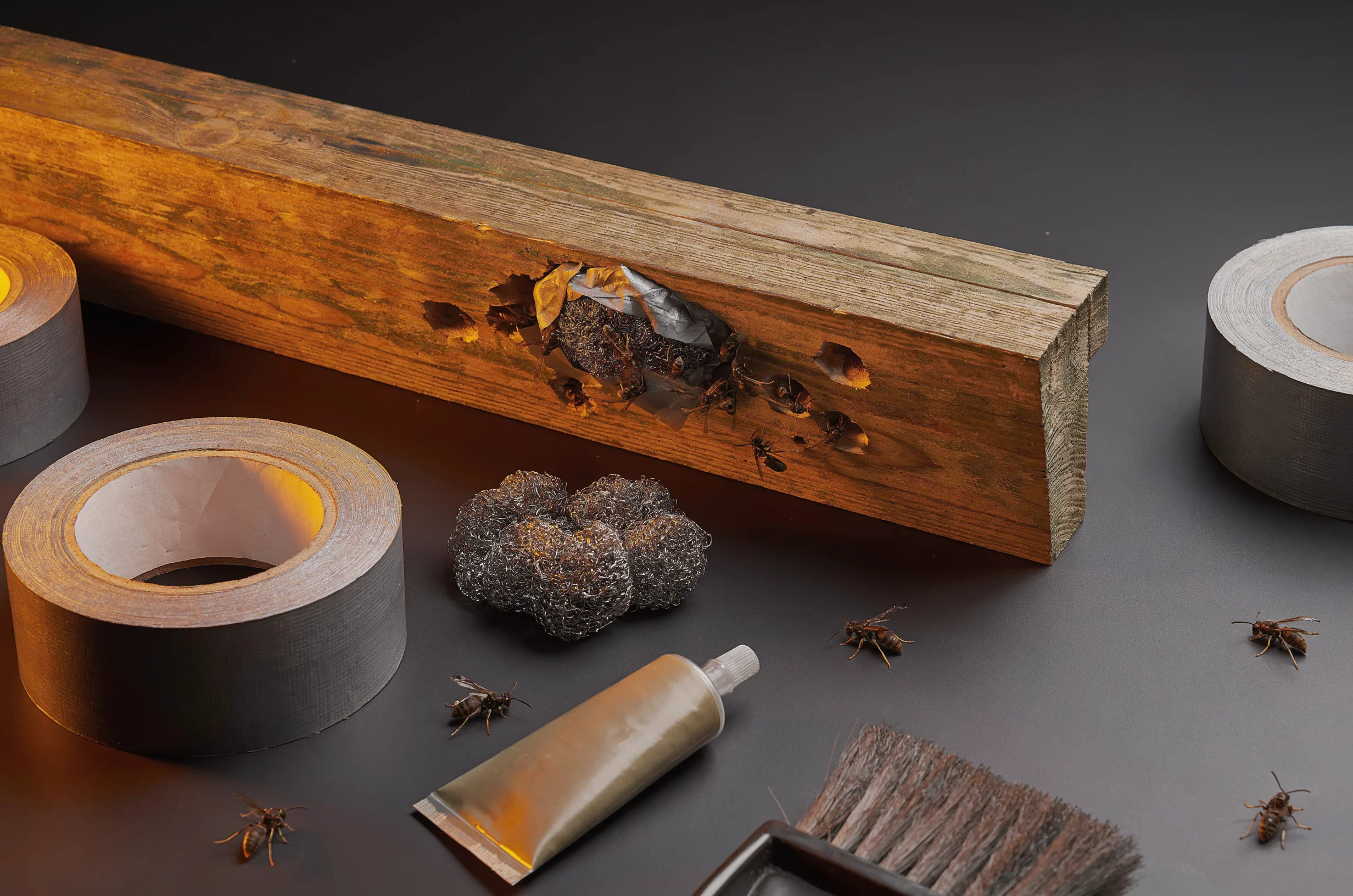
A plugged hole can make an active wasp nest harder to contain. The dangers of blocking active wasp nest entrance points include wasps finding routes indoors, defensive stinging and damage to weak building materials. Covering the opening changes their access; it doesn't establish that the colony inside has died.
If you've spotted wasps entering beneath your eaves or through a wall gap, reaching for sealant is understandable. You want to close the problem off. The safer order is to have the activity assessed, complete any necessary treatment, then repair suitable entry points once the technician confirms it's appropriate.
I'd rank these five risks by the evidence that should change your actions. Repeated wasps emerging inside an occupied room deserve attention first. Possible damage to a hidden ceiling needs investigation, but shouldn't be assumed from a blocked hole alone.
An active nest means a colony with living wasps using it. You don't need to expose the nest to report suspected activity.
1. Wasps can find another route into occupied rooms
Blocking an outside entrance can leave wasps searching within the building for another way through. Where a nest sits behind a wall or beneath the roof, that route may lead towards an occupied room.
The strongest warning is repeated indoor emergence from the same place. Wasps appearing around one ceiling gap, loft hatch or window surround are more informative than a single insect beside an open window. One visitor alone doesn't establish that a concealed nest connects to the room.
This risk comes first because it changes where people encounter the insects. A flight route outside may have been avoidable. Activity in a bedroom, hallway or kitchen brings the problem into everyday use.
The building's layout matters. A wall cavity, which is the space between wall layers, may connect with other gaps. The outside opening you can see may be some distance from the nest itself.
Respond to indoor emergence without tracing the route
If wasps begin appearing indoors after an entrance has been sealed, leave the affected room and keep others away. Close an internal door if you can do so without approaching the insects.
Don't remove a loft hatch, pull back insulation or take off a ceiling fitting to locate the nest. Those actions can disturb the area and expose another opening.
It can also be tempting to fill the indoor gap as soon as you notice it. That creates another obstruction while the location and extent of the activity remain unknown. Tell a technician where the wasps are emerging before making further changes.
In a London flat or converted house, include any activity in shared corridors or stairs when reporting the problem. Let the person responsible for the building know which areas are affected. A repair at one flat's exterior may need assessment from another accessible part of the property.
Record the room, the apparent emergence point and whether sightings are continuing. A photograph taken from a safe position can help; approaching the gap for a clearer image adds unnecessary exposure.
Repeated indoor emergence is the signal to stop using that room and arrange a prompt assessment. Leave the suspected route undisturbed.
2. Working at the entrance increases your exposure to stings
Applying foam, tape or mortar puts you beside a route used by live wasps. The immediate danger comes from approaching and disturbing the nest while trying to close it.
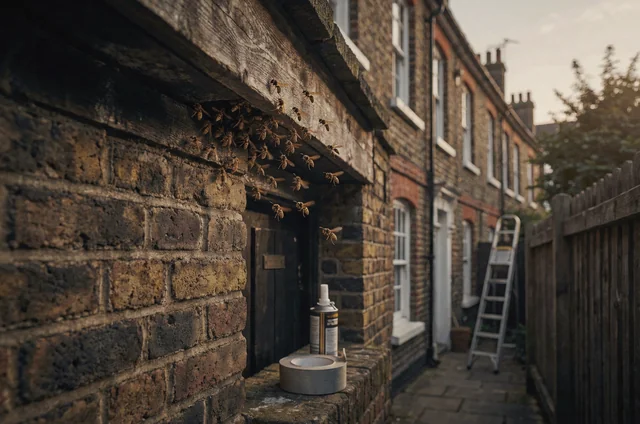
Look for insects repeatedly arriving at, leaving or gathering around one opening. That traffic tells you where people should keep their distance. It doesn't tell you how many wasps are concealed behind the surface.
This ranks second because the exposure can begin before the hole is fully blocked. A person holding a sealant gun may already be standing in the flight path. Knocking a soffit board, which is the panel beneath the eaves, can add disturbance.
Access makes the situation harder. On a ladder, you have fewer options for moving away calmly. A narrow side passage or doorway may also leave little space between the work area and people passing through.
A quieter entrance still needs distance
A temporary lull isn't a reliable invitation to finish the repair. Fewer visible insects tell you about that moment, rather than confirming that the nest is inactive.
Returning wasps gathering near an obstruction are another reason to step back. Trying to complete a neat seal while insects move around your hands prolongs the encounter.
Keep children and pets away from the entrance and any nearby gathering point. If the route crosses a regularly used door, use another entrance where practical. Tell other household members or building users where the activity is occurring.
The common mistake is treating the remaining gap as a small job that can be finished quickly. The amount of material left to apply has little bearing on the risk of disturbing live wasps.
Anyone with a history of a serious sting reaction needs particular care around suspected nest activity. Our guide to wasp sting emergency signs explains when a reaction needs urgent medical attention.
If you've already started sealing, stop adding material and move away. Don't climb back to tidy the surface or check whether the obstruction is holding. Leave further work until the live activity has been assessed.
3. Wasps may damage weak materials while seeking an exit
A blocked nest entrance can leave wasps seeking a route through vulnerable material. Local damage to a weak lining or patch is a possibility, especially where a concealed space borders a room.
The warning signs are specific: repeated emergence through one surface, a newly visible opening, or fresh debris beneath that point. Each deserves reporting. None, by itself, establishes the extent or cause of hidden damage.
This risk ranks below indoor emergence and direct disturbance because homeowners often cannot verify it from outside. A sealed opening doesn't reveal what lies behind the wall, how sound the materials are, or which routes already exist.
Wasps may use an existing gap rather than create a new one. That distinction matters when planning repairs. Filling the latest visible hole without understanding the route can repeat the original problem.
Separate a damaged lining from assumptions about the building
A thin internal lining and a load-bearing part of a house have different roles. Evidence of activity around plasterboard doesn't establish damage to roof timbers or masonry.
Keep the description factual when reporting it. “Wasps are emerging beside the upstairs ceiling joint” gives a technician something useful to assess. “They're destroying the roof” goes beyond what that observation shows.
The mistake here is opening the surface to see how far the damage extends. Pulling away a loose patch or pressing into a weakened area can disturb concealed activity. It can also make the original emergence point harder to identify.
Take any photograph from where you would normally stand, without touching the surface or placing a ladder beneath it. Note whether the opening or debris appeared before or after the outside entrance was blocked.
If the area already had a crack, loose finish or previous repair, mention that too. Existing defects can affect both the wasps' route and the work needed afterwards.
Once live activity has been dealt with, a suitable repair can address any confirmed damage. The timing should follow the assessment rather than the appearance of the outside seal.
Treat repeated emergence through a lining as a reason to keep clear. Ask for the insect activity and the building defect to be assessed before anyone opens or patches that surface.
4. The colony can remain active while the original entrance looks quiet
Sealing a hole can remove the most obvious sign of a nest without resolving the activity behind it. An apparently quiet patch can therefore give false reassurance.
This danger matters when the original flight route was your only evidence. After blocking it, you may stop seeing wasps there and assume the job has worked. That observation leaves several questions unanswered, including whether insects remain inside or are using another opening.
I'd put this fourth because its consequence is often delayed action. People resume using the nearby patio, send someone into the loft or let a contractor continue repairs before the situation has been checked.
A sealed entrance is an observation point you've changed. Comparing traffic at that spot before and after sealing cannot, on its own, confirm that the nest is inactive.
Judge the whole pattern rather than one quiet hole
Report new activity around nearby roof edges, wall gaps or indoor spaces. You don't need to walk around the building close to the walls to search for it. Share what you can see during normal, safe use of the property.
Timing also needs context. A short quiet spell, a change in weather or a different observation time can affect what you notice. There isn't a universal household waiting period that proves a concealed nest has died.
Repeated sightings carry more information than an isolated insect. Record where they happen and whether they continue, rather than treating every wasp on the property as evidence from the same nest.
For a landlord or letting agent, keep the original complaint open until the situation has been assessed. Ask occupants about indoor sightings and tell maintenance staff that the entrance was blocked while activity was suspected.
If work is already booked, pass that information on before the contractor attends. A roofer or decorator needs to know that a quiet-looking surface may conceal unresolved activity.
The practical decision is to avoid using the outside seal as proof of success. Keep people away from known activity and obtain confirmation before restarting work around the suspected nest.
5. A blocked entrance can complicate treatment and building repairs
Premature sealing changes the evidence a technician needs to assess the nest. The original route may be hidden, and any new activity may need to be traced before treatment or repairs can be planned.
That can mean more investigation. It doesn't automatically mean the wall must be opened or the nest physically removed. Those decisions depend on its location, current activity and safe access.
This ranks fifth because the inconvenience usually follows the earlier risks. Once wasps are appearing indoors or work has disturbed them, the immediate priority is keeping people clear. The treatment and repair plan comes afterwards.
Treatment, physical nest removal and sealing are separate tasks. Treating live activity doesn't itself repair the building. Equally, covering the access point doesn't demonstrate that the nest has been dealt with.
Give the technician the history before anyone reopens the hole
Whether you use BuzzKill Pest Control or another local provider, explain that the entrance has been blocked. Include what happened afterwards.
A useful handover contains:
- The original entrance location and where wasps were seen using it.
- What material was applied and approximately when the work happened.
- Any new indoor sightings or activity at nearby openings.
- Whether the area borders a bedroom, shared passage or regularly used door.
Keep packaging or a photograph of any product used, if already available. There's no reason to approach the entrance again to identify a sealant or retrieve a tool.
A simple digital checklist could collect those details and attach existing photographs for the visit. It should record observations rather than declare the nest safe.
If you're comparing quotes, our guide to wasp nest removal costs helps frame questions about access and the work included. Explain the blocked entrance before accepting an assessment based on the original flight route.
Ask who will confirm that repairs can begin and whether a separate building contractor is needed. Proofing means repairing suitable access points to reduce future entry; it needs to respect the building's ventilation and drainage.
Leave reopening, treatment access and the repair sequence to the people assessing the site. Don't remove the seal yourself to make the forthcoming visit easier.
Decisions after a wasp entrance has already been blocked
If the opening has already been sealed, the useful questions concern current activity, further disturbance and repair timing. You can provide helpful information without investigating the nest yourself.
Should I pull out the foam or remove the tape?
Leave it alone until a technician has assessed the situation. Removing an obstruction can bring you back into contact with live wasps and disturb the entrance again.
Explain whether the material covers the outside opening, an indoor gap or both. Mention any spraying, drilling or other work that happened at the same time.
If activity has moved indoors, keep people away from the affected room rather than attempting another repair. Where a shared entrance or essential access route is involved, tell the building manager or responsible person promptly.
You don't need to undo the first attempt before asking for an assessment. The technician needs an accurate account of what changed.
How can I tell whether the nest is still active?
Repeated wasps using the same opening are useful evidence of activity. Repeated emergence inside a room also needs reporting, especially when it begins after sealing.
A single insect gives less information. It may have entered through an open window, and its presence doesn't locate a nest.
Observe only from somewhere you can remain comfortably clear of the flight route. Don't tap the wall, insert anything into the gap or open a loft hatch to provoke a response.
If the entrance is hidden or inaccessible, say that activity is uncertain. A lack of visible traffic at the blocked point cannot settle the question.
Can the hole be sealed immediately after treatment?
Ask the treating technician when repairs are appropriate for that nest and treatment. Don't assume that the end of the visit is permission to close every nearby gap.
The relevant question is whether activity has been adequately resolved and what checks are needed before building work begins. Follow the site's instructions rather than a general waiting time found elsewhere.
Once repairs are approved, broader pest prevention sealing tips can help you plan other checks around the home. Keep this separate from dealing with a live nest.
Some openings have a building function. Ask the repairer to preserve ventilation and drainage rather than filling every visible space.
What if the insects turn out to be bees?
Identification should come before treatment or sealing. If you're uncertain, describe the insects, their behaviour and where they're entering. Share an existing photograph or take one only from a safe distance.
Colour alone may leave identification uncertain. Don't get closer or attempt to collect an insect to settle it yourself.
Our guide to bee relocation options explains why a suspected bee colony needs a different assessment. Tell the person attending that identification remains unconfirmed.
Leave the entrance undisturbed while that assessment is arranged.
Does every wasp nest need treatment?
The decision depends on its location, activity and the risk to people using the property. A nest away from occupied areas presents a different situation from repeated emergence into a bedroom or beside an essential doorway.
An assessment can establish whether treatment is needed and whether nearby work should pause. Sealing an active entrance is a poor substitute for that decision.
Of these five risks, repeated indoor emergence is the one to act on today: keep the affected room clear and report it promptly. Chewing damage is the risk to judge from visible evidence rather than assume; a blocked outside hole alone doesn't show damage to a ceiling or wall.
Need professional help? BuzzKill offers fast, reliable pest control services across London and Essex.