
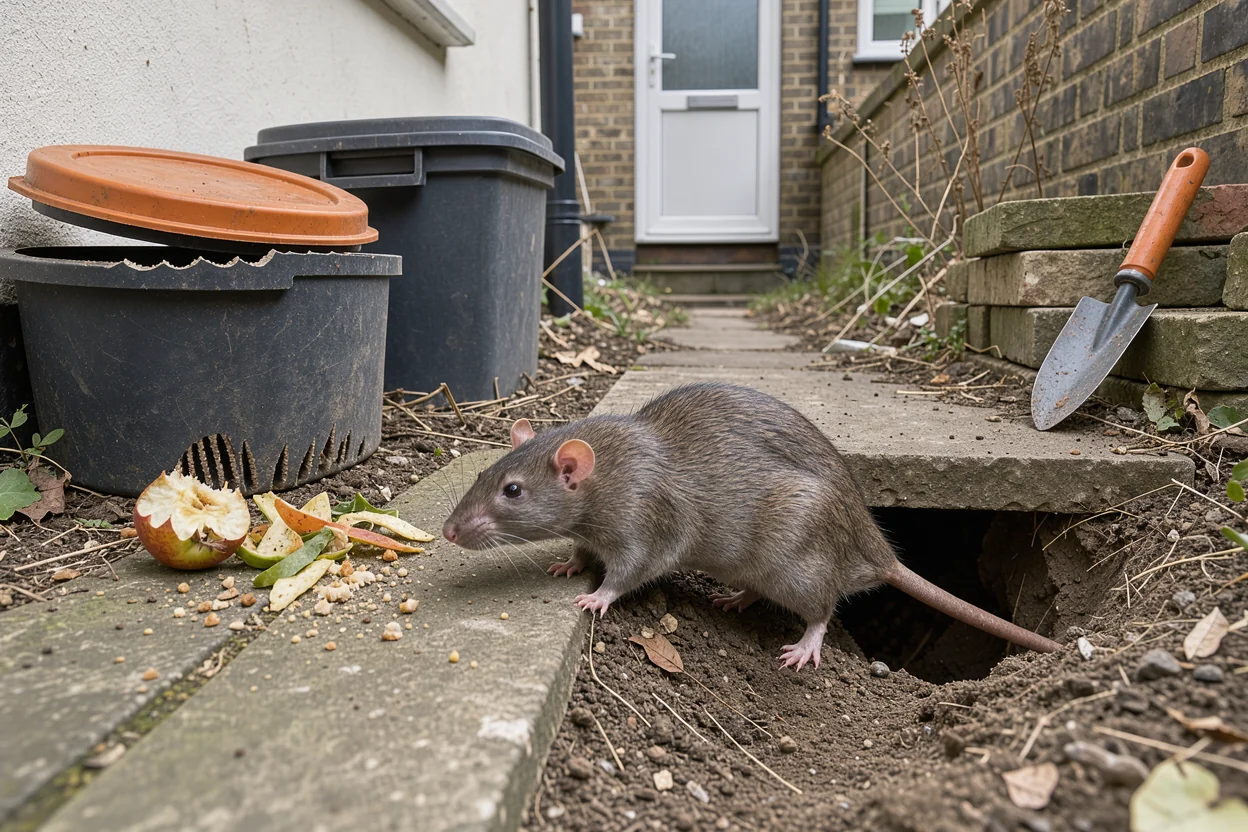
A warm compost bin deserves less attention than food lying within easy reach. If you’re checking rat burrows near compost bins, the risks depend on the surrounding evidence: fresh digging, accessible scraps, nearby building openings and signs that animals are returning. A hole beside the bin needs checking, but its position alone doesn’t prove rats are nesting inside.
You can have a well-kept garden and still find suspicious activity. In a small London garden, compost, bird feeding and household waste may all sit close together. The useful question is which part of that setup gives rats food, access or shelter.
I’d work through the seven reasons below in the order you can verify them. Start with visible food and damaged fittings. Leave assumptions about warmth until later, and treat suspected occupied burrows separately from routine compost maintenance.
A burrow beside the bin needs evidence before action
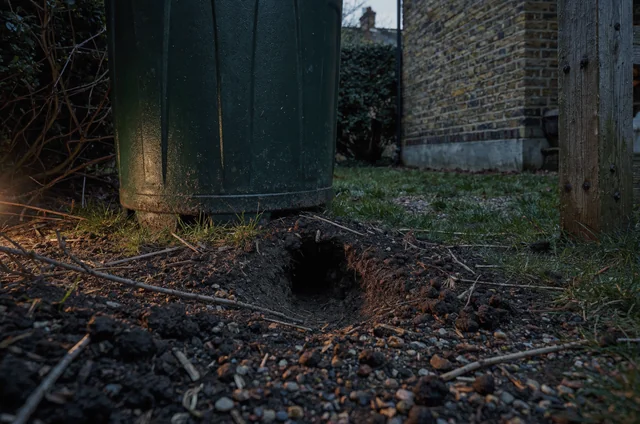
The concern with a possible rat burrow is what happens around it, rather than the hole’s appearance alone. Take a photograph from a safe position before moving anything.
Look for returning activity
A suspicious entrance becomes more meaningful when you also find freshly displaced soil, a worn route beneath a fence, gnawing or droppings nearby. No single sign gives you the whole picture. Other animals make holes, and an old opening may no longer be used.
Compare the area over successive checks without poking into the tunnel. A dated photograph makes changes easier to judge than memory does. Record whether soil has moved and whether nearby food has been disturbed.
Avoid handling droppings to judge their age. If identification remains uncertain, leave it uncertain until someone can assess the signs together.
Separate garden risks from building risks
Suspected rat activity creates practical concerns around handling compost, children or pets approaching animal waste, and digging beside frequently used paths. Keep access away from the affected patch while you establish what’s there. Wear gloves for ordinary garden work and wash your hands afterwards.
An entrance beside a shed or house also warrants a check of visible building gaps. It doesn’t establish that rats are indoors or that a drain is broken.
Where activity clusters around a drain cover or pipe route, our guide to drain rat entry points explains what may need investigating. Photograph the relationship between the hole, bin and nearby structures rather than digging to find a connection.
1. Food scraps are within easy reach
Accessible food belongs first because you can often see and change it immediately. Look for peelings left on top, fallen fruit beside the bin, or a kitchen caddy that spills during emptying. Scraps trapped beneath a loading hatch deserve attention too.
The mistake is assuming that a plant-based compost heap has nothing rats could eat. Keeping meat out is sensible, but fruit, vegetables and other edible material can still provide food.
For a basic garden composter, keep meat, fish, dairy and cooked leftovers out. Use an appropriate food-waste collection where available, and keep its container properly closed. Follow the instructions for your particular composting system.
If there are no signs of animals occupying the bin, mix suitable additions into the existing material rather than leaving a fresh layer exposed. Clear spills at the same time. Covering scraps with garden material may reduce exposure, but it cannot secure a damaged bin.
An overflowing caddy can undo careful composting. Check the short journey from the kitchen door to the bin, including any temporary bag or bucket where scraps wait.
If fresh excavation suggests an occupied burrow, pause turning or dismantling the heap until it has been assessed. You can still stop adding food and secure nearby waste.
The first job is to remove reachable food across the whole compost area, including the scraps outside the container.
2. An open base or damaged fitting gives rats access
A gap beneath the compost bin gives you a specific weakness to investigate. Check the bottom edge, removable hatch, lid and joins before buying a replacement container.
A lid can look secure while the lower hatch sits crooked. Uneven ground may leave space beneath one side, and a crack can be easy to miss behind stored pots. Inspect from outside without putting your hands underneath.
The common mistake is treating a closed lid as proof that the whole bin is protected. Rats may approach from below or through a damaged section. Food management and physical condition need checking together.
For an unoccupied bin, consider a purpose-made rodent-resistant base compatible with its design. A durable metal barrier needs secure edges and joins; a loose piece placed underneath can leave routes around it.
Follow the manufacturer’s fitting guidance, including requirements for drainage and ventilation. Avoid improvised changes that make the bin unstable or prevent you from inspecting its lower edge.
A rabbit fence elsewhere on an allotment doesn’t establish that the compost base is secure. Assess the actual container and its connections.
If digging continues beneath a repaired edge, stop treating the visible opening as the entire problem. There may be another route or food source nearby.
Repair an identifiable access gap once occupancy has been assessed, then photograph the finished edge so later movement is easier to spot.
3. Birdseed and pet food keep the compost area attractive
Food beside the compost bin can sustain rat activity even when the bin itself contains little worth eating. Check beneath bird feeders, around outdoor pet bowls and beside feed storage.
This earns an early place because the evidence is often visible. Scattered seed, a split sack or uneaten pet food gives you something concrete to remove.
A frequent mistake is repeatedly changing the compost recipe while leaving the surrounding food supply untouched. Replacing a lid won’t clear seed lodged beneath a feeder.
Clear spills regularly and store feed in a sturdy container with a secure lid. Bring pet food indoors after feeding rather than leaving a bowl outside overnight. If seed is continually accumulating, pause feeding while you assess the activity.
Pay attention to where food falls. A feeder above dense planting can make spilled seed hard to see and reach. Moving it to a more inspectable position may help you manage the ground underneath.
In shared gardens, ask whoever maintains the space about feeding arrangements. One person may be securing the compost while another leaves food nearby without realising the connection.
Finding a damaged feed bag also changes the task: inspect the storage area rather than assuming the compost is the centre of activity.
Before moving the bin, clear the nearby food supply and make sure the people using the garden follow the same routine.
4. An undisturbed heap provides shelter
A compost pile can provide shelter when parts of it remain dry and untouched. This moves higher on the list if you find a protected hollow, moved material or repeated activity around an unused section.
An abandoned heap at the back of a garden deserves a different inspection from a regularly managed bin. Cardboard stacked alongside it, spare sacks and a forgotten second container may add sheltered spaces.
The mistake is deciding that more vigorous turning will solve suspected rat activity. Routine mixing is compost maintenance. An occupied tunnel or nest needs an assessment before you disturb it.
Where there are no active animal signs, maintain the compost according to its instructions and avoid leaving large, unused stores of material around the base. Keep access clear enough to inspect the rear and sides.
Regular attention also makes changes easier to recognise. You’re more likely to notice a displaced hatch or new excavation when you can see the same ground each time.
Don’t reach blindly into a hollow or push a fork into a suspected tunnel. A sheltered space may contain an animal even when nothing is visible at the entrance.
Once an occupied area has been dealt with, review why that corner went unchecked. A bin that’s awkward to reach is difficult to maintain.
Keep the inspection route usable, including the space behind the container.
5. Dense cover hides the approach to the bin
Vegetation and stored objects around a compost bin can make animal routes harder to detect. Look for a narrow passage beneath a fence, a sheltered gap behind the bin or a worn line through low growth.
Cover matters most where it connects several useful places: a feeding spot, the compost area and a shed. The bin may be one stop along that route.
The common mistake is searching only inside the container. A secure bin can sit beside an active passage that continues beyond your garden.
Move loose clutter where you can do so safely, and create enough access to see the bin’s lower edges. Keep stacked materials orderly rather than packed against the container. You need inspection space, not a bare garden.
Avoid pulling apart dense cover if you suspect an occupied nest. Establish what’s using it before making disruptive changes.
In a terraced garden, note whether a route disappears beneath a boundary. That observation may help a survey, but it doesn’t prove where rats originate. Discuss visible evidence with neighbours without assigning blame.
A photograph of the route can be more useful than moving the bin a short distance along the same fence. Relocation alone leaves surrounding conditions unresolved.
Choose a position where you can inspect every accessible side, then keep the approach clear enough to spot fresh digging.
6. Compost warmth adds comfort to an already sheltered spot
Decomposing material can generate warmth, but a warm compost bin is weak evidence of rat occupation. That’s why warmth sits below food, access gaps and visible animal signs.
The mistake is assuming that heat explains every hole nearby. It can distract you from a loose hatch, spilled feed or another sheltered space beside the container.
Check what accompanies the warmth. A functioning heap with an intact base and no fresh animal signs calls for routine maintenance. Warmth alongside disturbed material and recurring excavation warrants closer assessment.
There’s no need to make healthy compost cold as a prevention measure. Manage moisture and mixing for the composting system you use, while addressing accessible food and physical gaps separately.
Hot composting also shouldn’t become a treatment plan for a suspected occupied burrow. Temperature varies within a heap, and feeling warmth at the surface cannot tell you what’s happening throughout it.
A newly purchased insulated bin won’t resolve food spills outside. Equally, replacing a warm container with a cooler open pile may introduce other access problems.
I’d treat warmth as background context until stronger evidence appears. It can help explain why a sheltered location is appealing, but it cannot identify the animal.
If the only change you’ve noticed is that the compost feels warm, inspect the fittings and surrounding ground before deciding there’s a rat problem.
7. Nearby water helps sustain garden activity
Water near the compost area deserves a check, particularly when it sits alongside food and shelter. Look for a dripping outside tap, a leaking hose connection or an unused container that repeatedly fills.
This comes last because water alone doesn’t identify rat activity or make the compost responsible. A garden can contain water without having a rat problem.
The mistake is pouring all your effort into drying out the heap. Compost needs appropriate moisture, and changing it won’t repair a leak beside the bin.
Fix avoidable leaks and empty unused vessels. Check beneath water storage where you can inspect safely, including concealed puddles around a faulty fitting.
Treat a wildlife pond differently from a forgotten bucket. Its presence doesn’t justify draining it. Focus on manageable food, shelter and access conditions around the compost, and include the pond’s location in a wider assessment if activity persists.
Water is also worth checking after you’ve tackled obvious food sources. Continuing signs may mean the garden still provides several useful resources, or that animals are travelling through from elsewhere.
Avoid promising yourself that one repaired tap will end established activity. It’s a useful maintenance job within a broader response.
Record the leak repair alongside your other changes, then watch for fresh excavation rather than judging success by the garden looking tidier.
Questions that matter when you find holes beside compost
Burrows near compost bins raise practical decisions about the house, the container and the compost itself. These answers depend on the evidence you actually have.
Does a garden burrow mean rats are inside the house?
No. A garden hole doesn’t establish indoor activity. Check separately for droppings, gnawing or repeated unexplained sounds inside, and note visible gaps around external doors and pipe entries.
If indoor signs accompany garden activity, include both in the same assessment. Photograph their locations so the survey can consider possible connections without assuming a route.
Should I block the hole straight away?
Avoid blindly filling or sealing a suspected active burrow. First establish what’s using it and how it relates to nearby structures.
A filled entrance can conceal the evidence you need, while another opening may remain unnoticed. Keep children and pets away from the patch, record changes and arrange assessment where fresh excavation continues.
Would a compost tumbler solve the problem?
A tumbler may remove some access weaknesses of a ground-level bin, depending on its construction and condition. It still needs secure closures and sensible food handling.
Buying one won’t clear spilled birdseed, repair a shed gap or explain an existing burrow. Compare how easily you can inspect, empty and clean the container before replacing your current setup.
Can I keep using the compost?
If you find droppings or suspected active nesting within the material, pause handling or spreading that batch until you’ve had suitable advice about safe handling. Appearance and warmth cannot establish its suitability.
You can still secure kitchen waste and manage unaffected garden areas. Record where you found the signs rather than mixing the material to make them disappear.
Fresh digging after repairs needs a wider survey
Repeated excavation after you’ve secured food and repaired obvious weaknesses suggests the compost bin needs assessing within the wider property. A new lid is a limited response when activity extends beneath a shed or towards the house.
Give the technician a useful record
Keep dated photographs of entrances, disturbed soil and damaged fittings. Note sightings and the changes you’ve made, including removed food sources. These observations help distinguish a persistent route from an isolated discovery.
An interactive compost-bin checker could make this easier: record exposed food, access gaps, fresh digging and indoor signs, then produce a dated inspection record. It should flag uncertainty rather than identify rats from a hole alone.
Ask what the survey will establish
A useful survey should consider the bin, surrounding food supplies, shelter and possible building access. Ask how activity will be monitored and what evidence will support the decision to close burrows or repair entry routes.
If you’re comparing BuzzKill Pest Control with another local provider, focus on the proposed assessment and follow-up arrangements. Our guide to pest controller credentials explains the credentials you may encounter. Where treatment is proposed, ask how children, pets and wildlife will be protected.
Act on reason one today: remove accessible food around the compost area. The feature easiest to overreact to is reason six, warmth. Give fresh digging, damaged access points and repeated animal signs more weight when deciding what needs investigating.

Need professional help? BuzzKill offers fast, reliable pest control services across London and Essex.