

Keeping your distance can help a sick rabbit more than immediately picking it up. If you’re searching for rabbits with myxomatosis in garden advice, start by keeping children and pets away, then contact a vet. You don’t need a confirmed diagnosis before asking for help.
A rabbit sitting beside your patio with swollen eyes is upsetting to find, especially if you keep rabbits yourself. These seven actions follow the decisions you can make safely: prevent disturbance, describe what you see, arrange professional assessment and protect other rabbits. Garden repairs come later. If the animal is struggling to breathe, collapsed or badly injured, make the veterinary call immediately.
Keep children, dogs and cats away from the rabbit
Your first useful action is to stop people and pets approaching the sick rabbit. Bring dogs indoors, keep children out of that part of the garden and prevent cats reaching it where you can.
This comes first because an attempted rescue can quickly become a chase. A rabbit beneath a bench or against a fence needs a quiet space while you arrange advice. Gathering the household around it makes that harder.
You don’t need to get close enough to examine its eyes. From a window or doorway, note where it is and whether it can move. If it shifts beneath a shrub, remember the location rather than following it through the planting.
In a shared London garden, tell neighbours what you’ve found. Ask them to keep pets away and leave the rabbit undisturbed. Give the same message to anyone arriving to mow, clear leaves or repair a fence.
Keep access clear without cornering it
Leave yourself and any responder a clear route through the garden. Move an unattended dog lead or children’s scooter if you can do so without approaching the animal.
Avoid surrounding it with chairs, garden netting or improvised barriers. Those objects can obstruct access and create another problem if the rabbit tries to move.
If it is beside a road, pond or another immediate hazard, explain that when you call. Let the vet or rescue adviser guide any necessary intervention.
For now, keep the garden quiet and choose one adult to monitor from a distance.
Observe the signs without trying to diagnose it
A rabbit that stays unusually still deserves attention, but stillness alone doesn’t establish myxomatosis. Describe what you can actually see rather than treating an online photograph as a diagnosis.
Myxomatosis is a serious viral disease of rabbits. Possible signs include swelling around the eyes and face, eye discharge, skin lumps or scabs, low energy and breathing difficulties. PDSA’s guidance on recognising myxomatosis symptoms explains these signs.
Other illnesses and injuries also need veterinary assessment. Your job is to give an accurate description, including anything that makes the situation urgent.
Useful observations include:
- Whether the rabbit is upright, lying on its side or repeatedly falling.
- Whether its eyes appear swollen, closed or discharging.
- Whether breathing looks difficult.
- Whether it moves by itself.
- Whether there is an obvious wound or evidence of a dog or cat attack.
Don’t touch it to check its temperature or open its eyelids.
Take a photograph only if it leaves the rabbit undisturbed
A photograph taken with your phone’s zoom may help the person advising you. Keep it brief and stay where you are.
There’s no need to move plant pots, lift a shed panel or coax the animal into daylight for a clearer image. A description of poor breathing matters more than a perfect photograph.
Write down when you first noticed it. Distinguish what you know from what you assume: you may have seen it for ten minutes without knowing how long it has been there.
An unusually coloured coat or floppy ears may also raise the possibility of an escaped pet. Mention that uncertainty when you call. Ask for advice based on its condition, even if you cannot identify the disease or whether it is wild.
Contact a vet promptly and agree how help will reach it
A sick wild rabbit needs veterinary guidance before you attempt capture or treatment. Once pets are away, make that call rather than spending the afternoon comparing symptoms.
The RSPCA’s sick wild rabbit guidance recommends contacting a vet when a rabbit appears ill or injured. A wildlife rescue may also help with local arrangements, but establish who can assess the animal and what they need you to do.
Call before travelling. Explain that you have a potentially infectious rabbit so the practice can give arrival instructions and avoid unnecessary contact with other rabbits.
Give the information that changes the response
Have your postcode and the rabbit’s precise location ready. Mention whether it is accessible through a side gate or only through the house.
Then describe its condition. Breathing difficulty, collapse, visible injury or a known animal attack should be stated at the start of the conversation.
Ask directly:
- Can the rabbit be assessed, and where?
- Should it remain where it is while help is arranged?
- Is collection available, or is transport needed?
- What handling precautions apply?
- Who should you contact if its condition worsens?
If the first organisation cannot help, ask for another appropriate contact. Don’t assume that leaving a message means someone is coming.
Handle or transport it only as advised
Tell the adviser if you cannot safely catch the rabbit or have pet rabbits at home. Ask for an alternative arrangement.
If you are instructed to contain it, follow the specific advice about handling, ventilation and the carrier. Keep it away from your own rabbits, their bedding and their equipment.
Severe myxomatosis may lead a vet to recommend euthanasia, meaning putting the rabbit to sleep to prevent further suffering. PDSA’s treatment and outlook advice explains why this can be the kindest option. That decision needs professional assessment.
Don’t attempt to put the rabbit down yourself. Before ending the call, confirm who is doing what and when you should seek further advice.
Protect pet rabbits and check their vaccination records
If you keep rabbits, their protection needs attention while help is arranged for the wild animal. Prevent contact with it and keep their food, bowls, carriers and cleaning tools away from the affected area.
This action belongs near the top because pet owners have another practical decision to make immediately. Fencing repairs won’t answer whether a rabbit’s vaccinations are current or whether a possible exposure needs assessment.
Contact your usual vet and explain what has happened. Give the date and name of the most recent vaccination if you have that information. If you cannot find the record, ask the practice to check.
PDSA recommends vaccination for indoor and outdoor rabbits. Its rabbit vaccination advice explains that staying indoors does not remove every route of exposure.
Ask about your rabbits’ circumstances
Tell the vet whether your rabbits used the same lawn, approached the wild rabbit or shared an item that touched it. Include any contact you cannot rule out.
Ask whether they should stay out of the garden, whether their vaccination protection needs reviewing and what changes to watch for. Follow advice specific to their health and vaccination history.
Avoid treating a newly booked vaccination appointment as permission to resume normal garden access. Ask the vet when protection is expected and what precautions apply meanwhile.
Report illness without waiting for every symptom
A pet rabbit that develops swollen eyes, breathing difficulty or a marked change in appetite needs prompt veterinary advice. Mention the possible exposure when you call.
Keep a short written record of the discovery, possible contact and advice received. This is especially useful if several household members share rabbit care.
Check the vaccination status of every rabbit you own. Don’t assume that a companion has the same record because they live together.
Reduce insect exposure without reaching for garden sprays
Fleas and mosquitoes can spread myxomatosis between rabbits, so reducing exposure is useful. It does not mean the whole garden needs insecticide.
Start with the parts of the property you can manage safely. Empty unused buckets and plant saucers that hold standing water. Keep pet bedding clean and ask your vet about suitable protection against external parasites.
A sick rabbit on the lawn does not prove there are fleas inside your home. Look for a separate reason to investigate, such as insects found on a pet or a problem confirmed by a vet.
Match flea action to the animal and the evidence
Speak to a vet before using any flea product on a rabbit. A treatment intended for another species should not be assumed suitable.
The same care applies to household sprays. Check the label, explain that rabbits live at the property and follow advice about where animals can safely stay during treatment.
If fleas are confirmed indoors, a home flea control checklist can help organise cleaning around the rooms and pet resting places involved. Keep the response focused on evidence rather than treating every room automatically.
Deal with bedding according to its care instructions
Keep bedding used for the sick animal away from your pets’ belongings. Ask the vet or rescue how it should be cleaned or disposed of.
For your own pets’ washable bedding, check the fabric care label before choosing a wash cycle. Advice about washing flea-exposed bedding concerns flea control; laundering alone should not be treated as proof that an item is safe after contact with a sick rabbit.
Avoid foggers, improvised chemical mixtures or spraying the place where the rabbit is sitting. Ask about rabbit-safe parasite precautions before buying a treatment.
Clean affected equipment and keep pet supplies separate
Once the rabbit has been collected or moved under professional guidance, concentrate on items that actually contacted it. A towel, carrier or pair of gloves needs a different decision from an untouched flower bed.
This is where a focused approach helps. Make a short list of what was used, where it went and whether it belongs to your own pets.
If you handled the rabbit, wash your hands thoroughly. Before returning to pet-rabbit care, ask whether your clothing, footwear or equipment needs further cleaning.
Don’t carry a used carrier straight into your rabbits’ enclosure. Put it somewhere they cannot reach while you obtain cleaning instructions.
Ask for a suitable cleaning method
Tell the vet or rescue what materials are involved. A hard plastic carrier, a fabric towel and a wooden shelter may need different handling.
Ask which cleaning product is appropriate, how it should be used and whether an item should instead be discarded. Follow the product’s dilution, contact time and rinsing instructions.
Never mix cleaning chemicals. Keep rabbits away from products and treated equipment until the relevant instructions say it is safe.
There is no reason to pour disinfectant over the lawn or flower beds as a general response. Ask specifically about any outdoor surface that concerns you.
Leave uncertain items out of use
If several people helped, check whether anyone moved bowls, blankets or tools between areas. A simple note beside the stored equipment can prevent accidental reuse.
For shared gardens, an interactive checklist could record the items used, who received cleaning advice and whether each item is ready for reuse. It would help neighbours avoid conflicting assumptions.
Keep uncertain equipment separate until the person advising you has confirmed what to do with it.
Check rabbit access after the sick animal is accounted for
Garden exclusion belongs after the welfare response. Before closing a gap or repairing mesh, establish whether the sick rabbit or another animal is still inside.
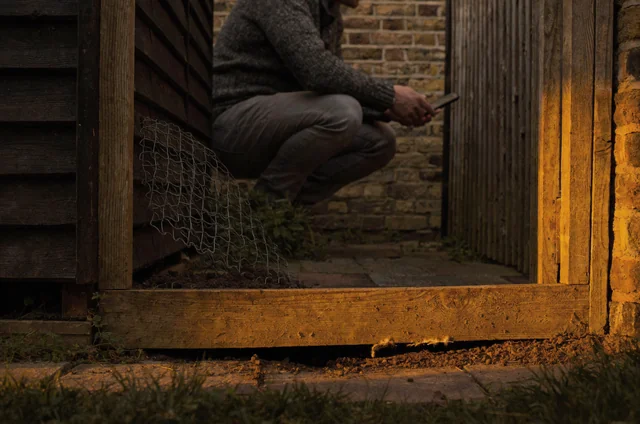
Look at the route you actually observed. A gap beneath a side gate, damaged fence corner or opening beside a shed is more useful evidence than a guess about the whole boundary.
Take photographs and note which openings connect to neighbouring gardens. In a London terrace, a repair on one side may leave another route open behind the shed.
Avoid chasing the rabbit towards an exit to test your theory. If it remains in the garden, tell the vet or rescue about the access problem.
Repair the confirmed weak point
Once the animal is accounted for, repair loose panels, damaged mesh and gaps around gates. Check any barrier for sharp edges or loose sections that could catch an animal.
For a longer boundary repair, a rabbit-proof fencing guide can help you consider the fence, ground level and gate together.
Don’t block a burrow or fill a hole without establishing whether it is occupied. If you cannot tell, seek wildlife advice before work begins.
Check the enclosure separately from the boundary
A garden fence and a pet-rabbit enclosure need separate inspections. Examine the enclosure’s doors, mesh, latches and the place where its base meets the ground.
Keep food containers closed and clear spilled feed around pet housing. These are sensible maintenance jobs, but neither replaces vaccination advice.
If rabbits continue entering, record where and when you see them before choosing further work. Recheck the repaired opening and any neighbouring gap before ordering a larger fencing job.
Questions about the sick rabbit and your pets
Can people, dogs or cats catch myxomatosis?
Blue Cross states that myxomatosis affects rabbits and cannot be passed to people or other pets. Its myxomatosis guidance for owners also advises against taking an infected rabbit home if you keep rabbits.
That reassurance does not establish what is wrong with an undiagnosed animal. Continue to keep pets away, avoid unnecessary handling and wash your hands after any contact.
Should I give it food, water or medicine?
Ask the vet or rescue before attempting hands-on care. Never force food or water into the rabbit’s mouth or give human medicines, leftover antibiotics or another pet’s treatment.
If you are advised to place something nearby, follow those instructions without repeatedly approaching. Tell the adviser if the animal appears unable to swallow, remain upright or breathe comfortably.
What if the rabbit dies before help arrives?
Update the vet or rescue and keep children and pets away from the body. Ask who can arrange removal and what handling or disposal advice applies locally.
Don’t assume a motionless rabbit is dead if you are uncertain. Describe what you can see and follow professional instructions.
If collection is arranged, explain the suspected illness and whether pet rabbits live at the property.
When can my rabbits use the garden again?
There is no reliable garden-wide waiting period that can be chosen from the sighting alone. The answer depends on possible contact, vaccination status, affected equipment and the advice for your rabbits.
Ask your vet for a clear return plan. Include the lawn, enclosure and any carrier or bedding that was involved. Keep rabbits out of the uncertain area until that plan is agreed.
The action to prioritise today is contacting a vet about the sick animal. Whole-garden spraying is the response to resist: keep chemicals away from the rabbit and base any pest treatment on confirmed evidence.
Need professional help? BuzzKill offers fast, reliable pest control services across London and Essex.