
title: Bed Bug Bites: 6 Professional Treatments That Eliminate the Source slug: bed-bug-bites-6-professional-treatments-that-eliminate meta_title: Bed Bug Bites: 6 Professional Treatment Methods meta_description: Woke up with bed bug bites? Compare 6 professional treatments — heat, chemical sprays, steam, dusts, fumigation, and freezing — that eliminate the source. London pest control advice from BuzzKill. primary_keyword: bed bug treatment methods tags:
- bed bugs
- bed bug bites
- bed bug treatment
- professional pest control
- heat treatment
- chemical spray
- London pest control
Bed Bug Bites: 6 Professional Treatments That Eliminate the Source
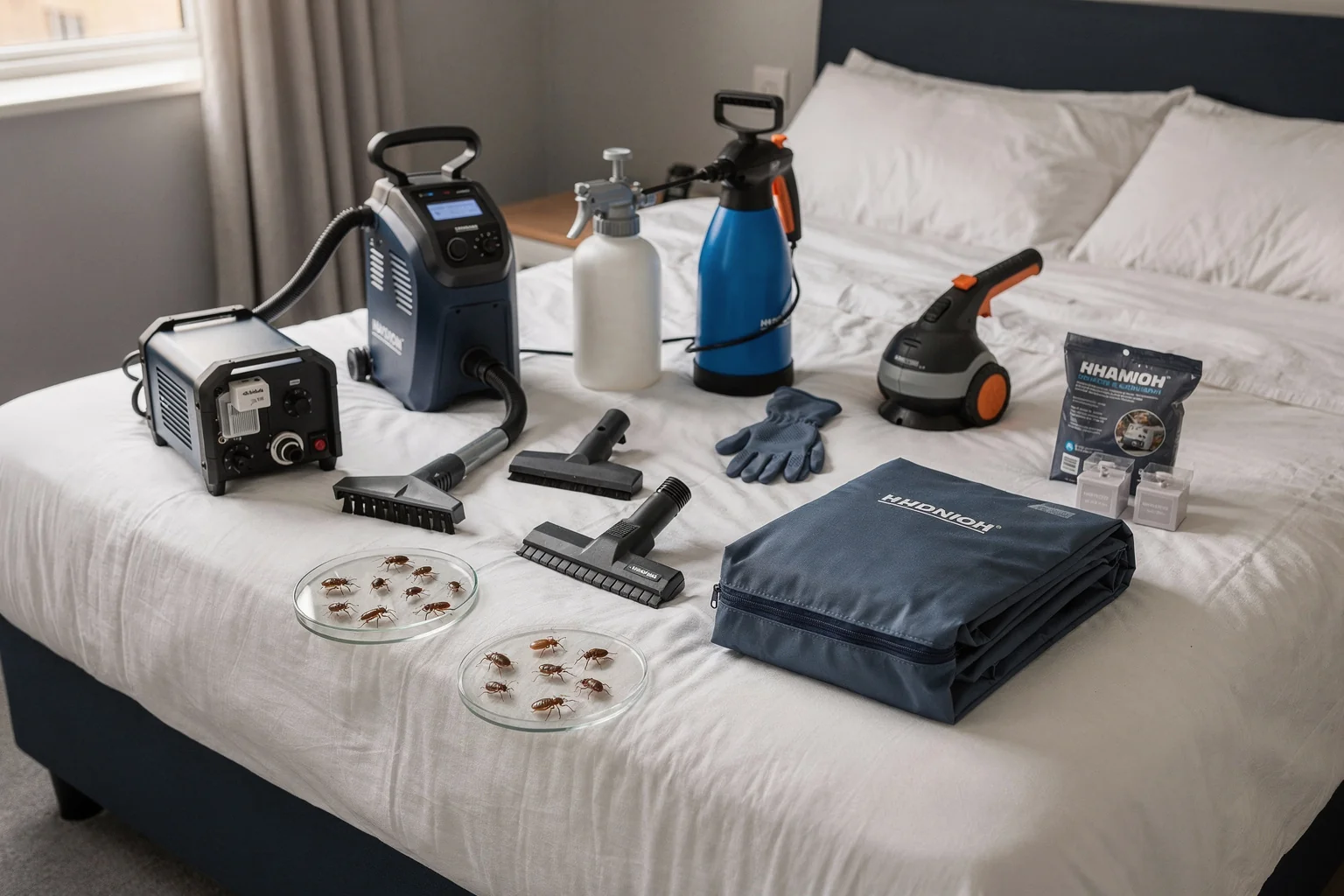
You wake up with a cluster of small, red welts running along your forearm. The itching starts a few hours later. You strip the bed, lift the mattress, and there it is: a scattering of dark specks along the seam, maybe a few translucent cast skins. The bites were the first clue, but the signs around your bed confirm it — you have bed bugs.
The feeling is somewhere between frustration and mild panic. I get it. Anyone in that position wants two things: to know the bites are not dangerous, and to understand which treatment will actually end the problem, not just knock it back for a week.
According to Healthdirect Australia, bed bugs are not known to transmit disease, but the itching, lost sleep, and occasional allergic reactions they cause are real enough. The CDC confirms that while bites can lead to secondary skin infections from scratching, they do not spread illness. A clinical review notes that reactions vary widely — some people develop large wheals, others show no visible mark at all.
If you are still working out whether those red dots are bed bug bites or something else, our guide to spotting bed bug bite signs can help you decide before you book a treatment.
What matters now is getting rid of the source. I’m going to walk through six professional methods that pest control technicians use across London and Essex to wipe out an infestation completely — this is not about supermarket sprays or home steam cleaners. It is about the real-world, evidence-based options a qualified technician will choose from when they arrive at your door.
What puts a treatment on this list
I am not ranking these by “best” because a method that excels in one home might be wrong for another. Each option here earned its place because it meets four criteria:
- It is a professional-grade approach, not a DIY kit.
- It targets every life stage — eggs, nymphs, and adults — when applied correctly.
- It is backed by field results and published guidance on bed bug control.
- It is available from reputable pest control companies in the UK.
Excluded are treatments that lack evidence, such as ultrasonic repellers, or methods that a householder could botch without proper training, like uncertified pesticide foggers.
Whole-room heat treatment
Heat treatment raises the temperature of an entire room — and everything in it — to a point where bed bugs cannot survive. The target is typically 56°C to 60°C, held for a sustained period. Industrial heaters, high-volume fans, and temperature sensors ensure the heat penetrates mattress seams, skirting boards, and furniture joints, the places where eggs hide.
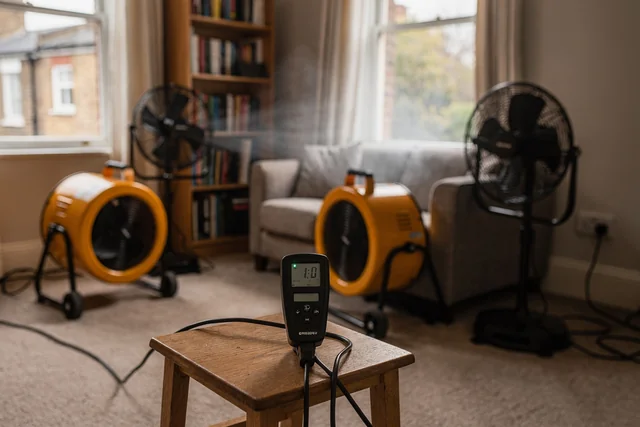
Why it works so well is straightforward: bed bug eggs are notoriously resistant to many insecticides, but protein denatures at high temperatures no matter where the egg is tucked away. Adult insects, nymphs, and eggs die in a single session. You can return to the room the same day, usually within four to six hours.
This method has become the default recommendation for many London pest controllers. One large national firm reported that heat treatments now account for 46 per cent of its bed bug work, up from 41 per cent the previous year. The surge is driven by a desire to avoid repeat visits: when done properly, a heat treatment often resolves the infestation in one appointment.
What limits it. Heat does not leave a residual; once the room cools, new insects brought in later are not protected. The process also requires careful preparation — heat-sensitive items like candles, certain plastics, and pressurised canisters must be removed beforehand. A technician will provide a checklist. For properties with electronic security systems or delicate antiques, the pre-treatment walkaround is especially important.
Who it suits best. Flats, terraced houses, and any property where the bedroom and living area can be sealed off for a few hours. It also appeals to people who want a chemical-free option, including parents with small children, pet owners, and anyone managing asthma. Our article on heat treatment advances explains why this technology has pulled ahead of older spray-only routines.
Residual insecticide spraying
Chemical spray remains the most widely recognised professional treatment. A technician applies a targeted residual insecticide along skirting boards, bed frames, mattress seams, and other harbourages. Modern formulations — often based on pyrethroids, neonicotinoids, or newer chemistries like alphacypermethrin — continue to kill bed bugs for weeks after the initial application.
The strength of this approach lies in its persistence. When bed bugs crawl across a treated surface, they pick up a lethal dose that can continue working for up to five weeks. Spraying is especially useful for cracks and crevices that are difficult to heat or steam evenly, and it can be combined with other methods.
However, bed bug resistance to older pyrethroids is well documented. A technician will choose a product that still shows strong results in the local population, and they may rotate active ingredients between visits. Spraying alone rarely clears a heavy infestation in one session — two or sometimes three visits are normal.
What limits it. Chemical treatments do not kill eggs reliably, so a follow-up is needed once the eggs hatch. Occupants must also stay out of treated rooms for a few hours while the product dries. For households with crawling toddlers, pregnant residents, or pets that lick surfaces, the safety conversation before treatment matters. A qualified technician will use only CRRU-approved products and place gel baits or dusts where contact risk is minimal.
Who it suits best. Large, multi-room infestations where chasing bugs into deep voids is necessary. Landlords and commercial property managers often pick it because it protects empty units between tenants. If you are comparing the two big choices, our heat versus chemical treatment guide lays out the decision points in more detail.
Steam treatment
Steamers deliver a narrow jet of dry vapour at temperatures exceeding 100°C. The instant contact kills bed bugs and their eggs on surfaces like mattress piping, upholstered headboards, and curtain folds. Because it leaves no residue, steam is the go-to for items that cannot be sprayed — think baby cots, armchairs, and soft luggage.
A professional-grade steamer is a long way from the handheld unit you might clean a bathroom with. Industrial models reach temperatures high enough to penetrate fibres without soaking the material, which would create a mould risk later. Technicians often use steam alongside other methods, treating the visible surfaces while sprays or dusts go into the hidden voids.
What limits it. Steam kills only on contact. If the nozzle misses an egg tucked inside a screw hole, that egg will still hatch. It also cannot reach deep inside walls or floor cavities. For those reasons, steam is rarely a standalone solution for an established infestation — it functions best as a precision finishing tool.
Who it suits best. Anyone who needs immediate relief on a mattress they cannot replace, or who wants an active measure before a full heat treatment later in the week. It also shines in nursing homes and allergy-sensitive environments because it uses no chemicals. Our comparison of heat, chemical, and steam methods shows how the three approaches can be sequenced to raise the success rate.
Insecticidal dusts
Professionals use fine desiccant dusts — silica gel, diatomaceous earth, or synthetic silicates — in wall voids, behind electrical sockets, and along pipe chases. The particles abrade the insect’s waxy cuticle, causing it to dry out and die over several days. Unlike sprays, dusts do not degrade rapidly; they can remain effective for months if kept dry.
Because dusts work mechanically rather than chemically, bed bugs do not develop resistance to them. This makes them a valuable tool when an area has seen repeated spray treatments. A technician will apply them with a bulb duster, targeting the narrow spaces where bed bugs travel but where people and pets cannot contact the powder.
What limits it. Dusts are slow. An adult bed bug might take three days to succumb, and nymphs can take longer. They also require precision — a clumsy application that leaves visible piles is both ineffective and a mess. DIY users frequently over-apply, which can cause respiratory irritation; a professional knows how to use the minimum effective amount.
Who it suits best. Flats with shared walls and recurring introductions from neighbouring units. Restaurants and offices with raised floors often benefit from dust treatments in cable trays and expansion joints. It is rarely the headline treatment but provides an invisible safety net that catches stragglers after the main event.
Fumigation
Whole-structure fumigation is the most drastic option on this list. The building is sealed, and a fumigant gas — typically sulfuryl fluoride — is released to penetrate every cubic metre of air. The gas reaches where no spray, dust, or heat can: inside wall cavities, under floorboards, and through the pages of books. After a set exposure period, the building is ventilated and cleared for re-entry.
Fumigation kills all life stages in one operation and leaves no chemical residue. It is occasionally used for severe bed bug problems in hotels, care homes, and historic properties where a single comprehensive treatment is worth the logistical cost.
What limits it. The building must be vacated for up to 48 hours. All food, plants, and animals must be removed, and the perimeter must be securely sealed — a challenge in a London terrace with adjoining walls. Fumigation also requires a specialist licence, so the number of companies offering it for bed bugs in the UK is small. The cost runs into thousands of pounds, making it disproportionate for a typical flat.
Who it suits best. A furniture warehouse, a listed building, or a hotel floor where closure is unavoidable anyway and a return call would be more expensive than getting it right the first time. For most residential situations, the inconvenience and expense push fumigation well down the list.
Cryonite (freezing)
Cryonite devices shoot a blast of frozen carbon dioxide “snow” at −78°C, flash-freezing the bed bugs on contact. The ice particles are non-toxic and evaporate instantly, leaving no moisture or residue. This makes Cryonite the preferred method for treating electronics — computers, televisions, medical equipment — where water or chemicals would cause damage.
The treatment is quiet, portable, and safe for food preparation areas because the CO₂ is food-grade. Technicians can target individual items without shutting down an entire room.
What limits it. Like steam, freezing only kills what it hits directly. It provides no residual protection, so it must be paired with monitoring or a follow-up visit. Large open spaces also struggle to maintain the cold shock long enough for deep penetration; it works best on discrete objects and small enclosed volumes.
Who it suits best. Hotels and care homes that need to treat guest-room electronics without taking them offline. Libraries and archives use Cryonite to protect rare books from insecticide staining. It is a specialist tool, but one that is becoming more common as bed bugs continue to hitchhike inside laptops and phones.
How to match a treatment to your property
The decision usually comes down to three things: how many rooms are affected, who lives or works in the space, and how soon the building must be operational again.
A family in a two-bed Hackney flat with a new infestation will often get a same-day resolution with heat treatment. A bedsit in a converted Victorian house with multiple entry points might need a combination of residual spray and dusts, followed by a second visit three weeks later. A restaurant manager who cannot close the kitchen will lean toward targeted steam and gel baits applied after hours.
If you are weighing the options for a London property, our look at London heat chemical removal details how building age, construction type, and tenancy rules influence which method a technician recommends.
The single most overlooked step is the follow-up. Bed bug eggs sometimes survive even the most careful treatment, and a second quick inspection two to three weeks later catches any late hatchlings before they restart the cycle. Any professional company should include that follow-up as standard, not as an optional extra.
Bites on your skin are the wake-up call. The treatment that matters is the one that accounts for where the bugs are actually hiding, how your building is built, and who is going to be walking through the door afterwards. A technician who arrives with a single method in mind is less useful than one who can assess the scene and pick from several. If you are in East London or Essex, you can reach us on 0203 468 1999 to talk through which approach fits your situation before we send anyone out.
Need professional help? BuzzKill offers fast, reliable pest control services across London and Essex.