
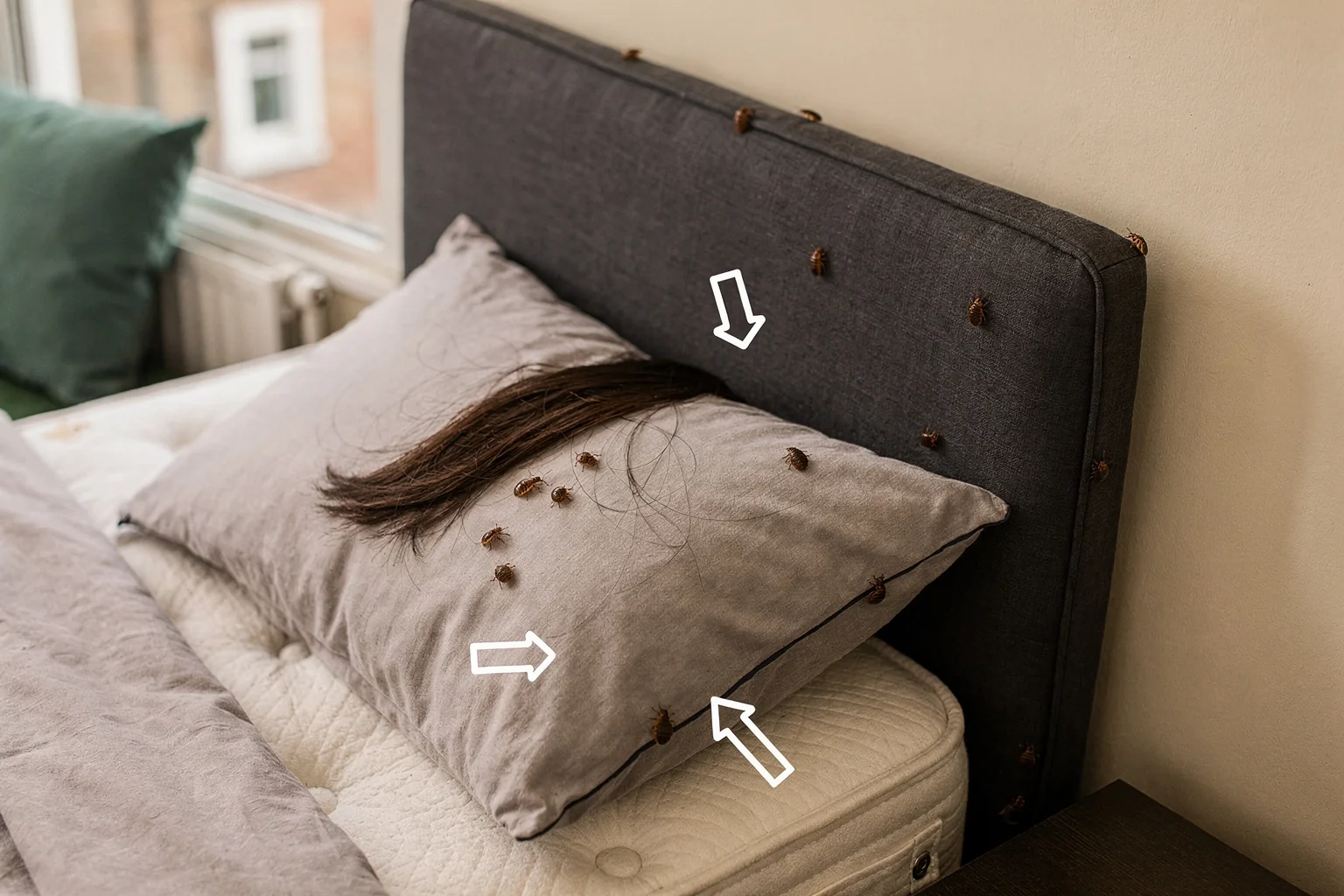
Waking up with an itchy scalp and spotting something small in your hair is enough to send anyone into a panic. Your mind jumps straight to the worst possibility: bed bugs. After all, they're back in the headlines across the UK, with cases rising sharply in London and travellers bringing them home from summer holidays. But before you reach for the medicated shampoo or start stripping your bedroom bare, it helps to know what these insects actually do—and more importantly, what they don't do.
The short answer is that bed bugs do not live in human hair. They lack the claws, body shape, and behaviour patterns that would let them cling to hair shafts or set up home on your scalp. That said, they can still bite your head and neck while you sleep, and the signs are easy to mistake for other problems. This guide walks you through how to check your hair and bedding, what symptoms to look for, and when the issue moves beyond a simple worry into something that needs professional bed bug removal.
Why Hair Doesn't Work for Bed Bugs
Bed bugs are built for hiding in tight, dark, undisturbed spaces—not for holding onto a moving, grooming human. Their bodies are flat and oval, designed to slip into cracks as thin as a credit card. They do not have the hooked claws or gripping legs that lice or fleas use to anchor themselves to hair. As Healthline notes, bedbugs aren't adapted to clinging to your hair follicles and would likely get washed out during normal bathing.
This matters because it shapes everything else about how bed bugs behave. They want to feed and retreat. A scalp is warm, exposed to light when you wake, and regularly disturbed by touching, brushing, and washing. That makes it one of the worst possible hiding spots for an insect that depends on staying unseen.
What Their Bodies Can and Can't Do
Unlike head lice, which have specialised claws for gripping individual hair shafts, bed bugs have relatively smooth legs ending in simple pads. They can crawl across skin and fabric efficiently, but they cannot hang on when hair moves. Terminix confirms that bed bugs lack the proper anatomy to effectively cling to hair, which is why they prefer to migrate via luggage and fabrics rather than by staying on a person.
Their feeding style also works against scalp residence. A bed bug feeds for roughly five to ten minutes, then returns to its harbourage—typically within two metres of where you sleep. It does not remain on your body, does not lay eggs on skin or hair, and does not build nests. The eggs are glued to rough surfaces like wood, fabric seams, or cardboard, never to smooth hair shafts.
How Bed Bugs End Up Near Your Scalp Anyway
If they won't live in your hair, why do people find bites on their heads and necks? The answer lies in how bed bugs find their meals. They are attracted to the carbon dioxide you exhale and the warmth of your body. When you lie still in bed, your head and neck are exposed, making them easy targets. A bed bug may crawl across your pillow, traverse your hair briefly, and bite the skin of your scalp, forehead, or neck before retreating.
This transient contact explains the confusion. You might feel something moving, discover a bite later, or even spot a bug that fell from your bedding into your hair. But finding a bed bug in your hair does not mean it has taken up residence there. As PestKill clarifies, bed bugs do not live in hair—they lack the physical adaptations necessary to cling to hair, fur, or feathers, and if one appears there, it most likely crawled up from bedding while seeking exposed skin to feed.
The Difference Between a Visitor and a Resident
A single bed bug in your hair is almost certainly a temporary traveller. It has fallen from a pillow, headboard, or nearby furniture and is trying to get back to safety. By contrast, lice live their entire lifecycle on the human scalp, glue eggs to hair shafts, and cannot survive more than a day or two away from a host. Fleas can jump into hair and stay longer, though they too prefer animal fur. Spiders and ants occasionally end up in hair by accident but have no interest in staying.
If you are finding multiple insects, eggs attached to hair, or persistent crawling sensations, you are likely dealing with something other than bed bugs. Proper identification matters because the treatments differ completely.
Checking Your Scalp and Hair Properly
When worry strikes, the best first step is a methodical check. You need good light, a fine-toothed comb, and a hand mirror or second person to examine the back of your head. Work in sections, parting the hair and looking at the scalp itself, not just the strands.
What to Look For
Bed bug bites on the scalp tend to appear as small, raised red bumps, often in a line or cluster of three—the classic "breakfast, lunch, and dinner" pattern. They may itch intensely or feel like a mild burn. However, these symptoms overlap with many other conditions:
- Head lice: Itchy scalp with visible nits (tiny white or yellow eggs) firmly attached to hair shafts near the scalp. Live lice move quickly and are greyish-brown.
- Fleas: Small, very itchy bites, often around the hairline, neck, and ears. You might see tiny black specks (flea dirt) that turn red when wet.
- Seborrheic dermatitis or dandruff: Flaky, irritated scalp without distinct bite marks.
- Allergic reactions to hair products: Redness and itching that follows product use.
- Mosquito or midge bites: Raised, itchy bumps that appear after outdoor exposure, often random rather than patterned.
Actual bed bugs in hair are rare enough that finding an insect warrants careful identification. Capture it if possible—sticky tape works—and compare it against a bed bug identification guide. Adults are roughly 5-7mm, mahogany brown, and oval. Nymphs are smaller and paler. They do not jump or fly.
When to Rule Out Bed Bugs
If your inspection finds no insects, no eggs on hair shafts, and no faecal spotting (tiny black dots) on your pillow or bedding, bed bugs are unlikely to be the cause of your scalp symptoms. Consider other explanations and, if the itching persists, consult a pharmacist or GP. They can distinguish between parasitic, allergic, and dermatological causes.
Inspecting Your Bedding and Bedroom
Because bed bugs live near where you sleep, not on your body, the real investigation happens in your bedroom. This is where the how-to aspect becomes practical and urgent. A thorough inspection takes 30-60 minutes and should cover these priority areas:
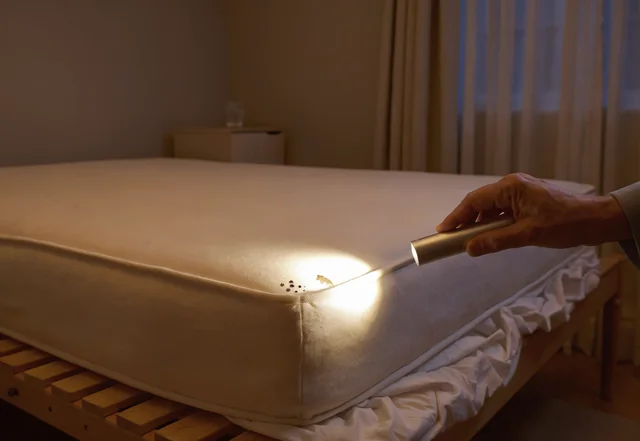
The mattress and bed frame Strip the bed completely. Check the seams, tags, and corners of the mattress with a torch. Look for live bugs, shed skins, tiny white eggs, and black faecal spots. Examine the headboard, especially if it has joints, cracks, or fabric covering. Bed bugs favour wooden frames over metal, but any harbourage will do.
Nearby furniture and walls Inspect bedside tables, skirting boards, electrical outlets, and picture frames within two metres of the bed. Check cracks in plaster, loose wallpaper, and the undersides of drawers. Bed bugs spread to adjacent rooms over time, but they always start close to their food source.
Luggage and recent purchases If you have travelled recently, inspect your suitcase, wash all clothing on a hot cycle, and vacuum the bag's interior. Second-hand furniture, especially beds and sofas, is a common entry route. The BBC reported a Cambridge Travelodge bedbugs ordeal where a guest woke to "red lumps over her body and blood spots smeared on the bedding"—classic signs that develop overnight in infested accommodation.
What You Might Find
| Sign | What It Looks Like | What It Means |
|---|---|---|
| Live bugs | Small, flat, reddish-brown insects, 5-7mm | Active infestation present |
| Shed skins | Translucent, empty bug-shaped casings | Growing population with multiple life stages |
| Eggs | Tiny white ovals, about 1mm, in clusters | Breeding colony established |
| Faecal spots | Small black dots that smear when damp | Regular feeding activity nearby |
| Blood smears | Small rust-coloured stains on sheets | Bugs crushed after feeding, or bleeding from bites |
Finding any of these signs means the problem extends well beyond your hair. Bed bugs reproduce quickly—a female lays 200-250 eggs in her lifetime—and early intervention prevents the population from establishing throughout your home.
Why UK Bed Bug Cases Are Rising Now
Understanding the broader context helps explain why you might be dealing with this worry in 2026. Bed bug activity in the UK rose by an average of 44 per cent year-on-year between 2023 and 2025, according to figures reported by JG Pest Control. London accounts for a disproportionate share of callouts, with 4,703 bed bug-related jobs in the most recent 12-month period mapped by postcode.
Several factors drive this increase. International travel has rebounded strongly, with insects hitchhiking in luggage from hotels abroad. The Paris outbreak in late 2023 raised awareness but also spread bugs across channel crossings. Perhaps most significantly, bed bugs have developed resistance to common pyrethroid insecticides. Metro News reported that mutant bed bugs are surging in the UK after building resistance to insecticides, with pest controllers noting that "the insecticides used to kill bedbugs increasingly fail to do so."
Heatwaves also accelerate bed bug metabolism and breeding cycles. The Mirror noted that heatwave conditions have helped blood-sucking bugs invade UK homes, with experts warning that current populations have "mutated to resist pest control" methods that worked a decade ago.
For Londoners, this means vigilance is especially warranted. The density of flats, frequent travel, and shared laundry facilities in many boroughs create ideal conditions for spread.
What to Do If You Find Evidence
Your response depends on what you discover. A single suspicious bite with no other signs warrants monitoring but not panic. Multiple bites plus bedroom evidence demands immediate action.
Immediate Steps (Today)
- Wash and heat-dry bedding at 60°C minimum. High temperatures kill all life stages.
- Vacuum thoroughly around the bed frame, mattress, and nearby cracks. Dispose of the vacuum bag or empty the canister outside immediately.
- Encase your mattress in a zippered cover if you have one. This traps any bugs inside and prevents new ones from establishing.
- Reduce clutter around the bed to eliminate hiding spots.
Short-Term Monitoring (This Week)
Place interceptor traps under bed legs if available. These simple devices catch bugs attempting to climb up from the floor. Check them daily for a week. Meanwhile, inspect your skin each morning for new bites and note their location and pattern.
When DIY Reaches Its Limit
Bed bugs are among the most difficult household pests to eliminate without professional help. Their eggs are resistant to many chemicals, their hiding spots are numerous, and re-infestation from adjacent flats is common in London's terraced housing and apartment blocks.
The shift toward heat treatment reflects this challenge. JG Pest Control reported that bed bug heat treatments are up 36 per cent year-on-year, now accounting for 46 per cent of professional bed bug work. Heat works by raising room temperature to roughly 56°C and holding it long enough to penetrate mattresses, furniture, and wall voids—killing every life stage including eggs, without chemical residue.
Chemical treatments remain common but typically require two to three visits over several weeks, with costs ranging from £200-£400 per room depending on property size and infestation severity. The British Pest Control Association and letting agents have both warned that bed bug cases are rising across the rental sector, making professional intervention increasingly necessary for landlords and tenants alike.
Distinguishing Bed Bugs from Look-Alikes in Your Hair
Because the initial worry often stems from finding something in your hair, a quick comparison helps direct your next move correctly.
Head lice are the most common confusion. They are smaller than bed bugs (2-3mm), move quickly, and glue their eggs firmly to hair shafts. You cannot shake lice out; they require medicated treatment or wet-combing over two weeks.
Fleas jump rather than crawl, are narrower and darker, and leave characteristic "flea dirt" that combs out as black specks. They prefer pets but will bite humans, especially around ankles and the hairline.
Booklice are tiny, pale, and harmless. They feed on mould and damp paper, not blood, and die quickly in dry conditions.
Spider beetles resemble small spiders with long legs. They infest stored food and bird nests, not beds.
If you capture an insect and cannot identify it, your local council's pest control team or a private specialist can confirm what you are dealing with. Misidentification leads to wasted effort and delayed proper treatment.
Protecting Yourself During Travel and Daily Life
Prevention is more effective than cure, particularly given London's current bed bug climate. These habits reduce your risk significantly:
In hotels, inspect the mattress seams and headboard before unpacking. Keep luggage on a rack away from the bed and wall, not on the floor or bedspread. Upon returning home, wash all travel clothing on a hot cycle and vacuum your suitcase.
For second-hand furniture, inspect joints, seams, and crevices with a torch before bringing items indoors. Avoid discarded mattresses and upholstered items left on streets entirely.
In multi-occupancy buildings, seal cracks around pipework and electrical outlets where bugs might travel between flats. Report suspected infestations to your landlord promptly—early treatment in one unit prevents spread to neighbours.
Regular laundering of bedding at high temperatures, plus periodic vacuuming of mattress seams and bed frames, disrupts any incipient population before it establishes.
What Professional Treatment Involves
If your inspection confirms bed bugs beyond isolated suspicion, professional intervention follows a clear pattern. A technician will first survey the property to map infestation extent, identify harbourages, and assess access for treatment equipment.
Heat treatment requires specialised heaters and fans to raise and maintain room temperature. The process takes several hours and requires removing heat-sensitive items like candles, aerosols, and some electronics. Residents typically vacate during treatment.
Chemical treatment involves applying residual insecticide to all harbourage areas, with follow-up visits to catch newly hatched nymphs from eggs that survived initial application. This is where insecticide resistance becomes problematic—some populations now require alternative active ingredients or combined approaches.
Integrated pest management, combining heat, targeted chemicals, physical removal, and monitoring, offers the most reliable outcome for resistant populations. This is the approach BuzzKill technicians use across East London and Essex, adapted to each property's construction, occupancy, and infestation level.
Questions Readers Often Ask
Can bed bugs lay eggs in my hair? No. Bed bugs glue their eggs to rough, stationary surfaces like wood, fabric, and cardboard. Smooth hair shafts do not provide suitable attachment, and the scalp environment is too disturbed and exposed.
Why do I feel crawling sensations if it's not bed bugs? Phantom itching is common after reading about infestations or experiencing stress. Actual parasitic sensations more often indicate lice, fleas, or skin conditions. A GP or pharmacist can help distinguish psychological from physical causes.
Can bed bugs spread disease through scalp bites? Unlike mosquitoes or fleas, bed bugs are not known to transmit disease pathogens. Their bites cause itching, possible allergic reactions, and secondary infection from scratching, but not systemic illness.
Should I cut my hair if I suspect bed bugs? There is no medical or pest-control reason to cut hair for bed bugs. Since they do not live in hair, removal would not address the actual problem in your bedroom environment.
How quickly can a professional respond in London? Same-day or next-day inspection is standard across most London pest control services, including BuzzKill's coverage of boroughs from Camden and Islington eastward through Tower Hamlets, Newham, and Barking and Dagenham. Rapid response matters because bed bug populations double roughly every 16 days under favourable conditions.
If your bedroom inspection turns up the tell-tale signs—live bugs, eggs, faecal spotting, or a pattern of fresh bites—your next step is a professional survey. The sooner treatment begins, the smaller the population, the lower the cost, and the faster you return to undisturbed sleep.

Need professional help? BuzzKill offers fast, reliable pest control services across London and Essex.