
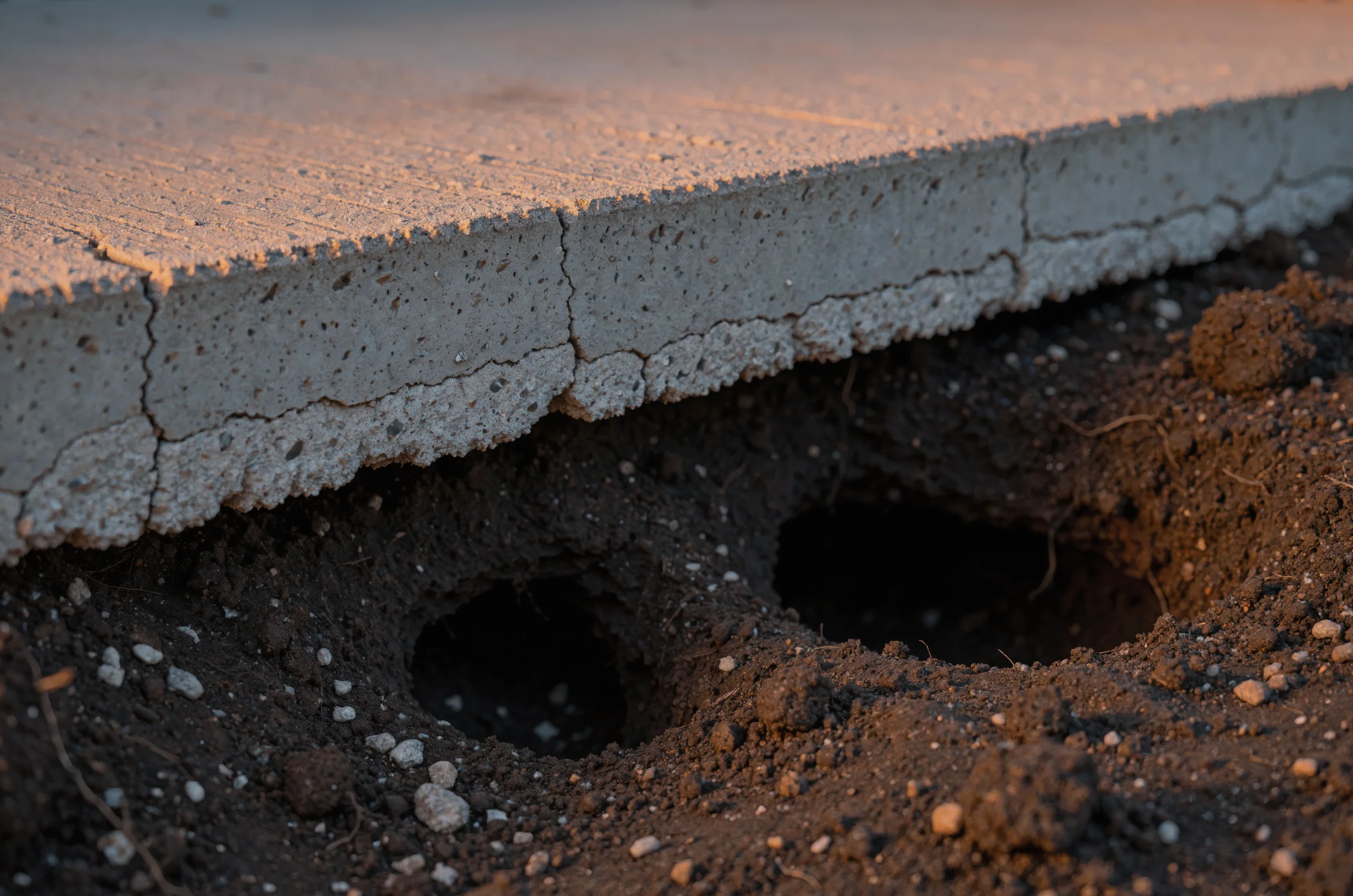
Rats can contribute to slab damage by removing supporting soil, although a burrow beside your home doesn't prove structural damage. For homeowners checking rat burrowing under concrete slab foundation risks, the concern is what supports the concrete and whether digging or escaping water has disturbed it.
Finding a hole beside a kitchen extension, garage or patio is unsettling. You don't need to decide how serious it is from the entrance alone. We'll separate evidence of rat activity from signs that the ground, drains or building need investigation, so you can choose the right help without rushing into repairs.
Can rats chew through a concrete slab?
Sound concrete is a substantial barrier; existing gaps, weak edges and the soil beneath a slab are more plausible access routes.
The distinction matters because a hole beside concrete can look as though something has eaten through it. Look at where the opening actually starts. An entrance through a flowerbed, an open joint beside a wall or a gap around a pipe tells a different story from damage through the slab itself.
Loose mortar and deteriorated concrete deserve attention, but their condition doesn't establish what caused the damage. Weathering, previous repairs and movement may have left an opening that rats then used. Gnawing nearby can be evidence of activity without explaining the original defect.
Under a slab, rats may find shelter by excavating accessible ground or following an existing space. The concrete can remain visibly intact while material underneath has been disturbed.
That means covering the visible entrance may leave the important question unanswered: where does the route lead?
Photograph the opening and surrounding surface before anything is repaired. Include nearby pipes, wall junctions and any displaced soil. Don't chip away concrete or dig along the edge to find the tunnel yourself. If the opening appears to continue beneath the building, arrange an inspection that considers the route as well as the entrance.
Is the hole beneath a patio, a floor slab or a foundation?
The risk depends partly on what the concrete supports, so a patio burrow and a hole beneath a house floor need different assessments.
A patio slab usually forms an outdoor walking surface. A ground-bearing floor rests on prepared material beneath it. A suspended floor spans between supports instead. A raft foundation is a structural concrete base that spreads building loads across the ground.
Those differences aren't always visible from outside. A concrete surface beside an extension might be paving, a doorstep or part of the building. Walls may also stand on foundations separate from the floor slab.
For that reason, a tunnel beneath a patio doesn't automatically mean rats have undermined the house foundations. Equally, an opening beside an internal floor shouldn't be dismissed because the concrete looks thick.
Useful records include extension drawings, drainage plans and photographs taken during building work. If you're a tenant, send the location and photographs to the landlord or managing agent. Describe what you can see rather than naming a structural fault.
Where records are missing, a building professional can establish the construction if there are signs of movement or lost support. Pest identification and structural assessment answer different questions.
Until the construction is understood, avoid excavating beside walls or lifting heavy slabs over a suspected void. Mark the location on a simple sketch and keep people away from any surface that has become unstable.
How do burrows and leaking drains create spaces beneath concrete?
Burrowing can remove soil, while escaping water can carry ground material away; either process may leave a space beneath a slab.
That space is often called a void. Its presence, size and position cannot be established from the entrance of a burrow alone.
Digging may create a passage near the slab edge. Whether that passage affects support depends on the ground, the construction and how far it extends. A small visible opening doesn't reveal the shape of the space beyond it.
A damaged drain raises another possibility. Water escaping from a defective pipe or joint can disturb surrounding ground. Rats may also use a drain defect to reach soil outside the pipe. In that situation, rat activity and ground loss can share a drainage problem.
The order matters. Rats might exploit a space that already exists, so finding them doesn't prove they caused all the missing material.
Check for clues around the same location: repeat blockages, persistent damp ground, unusual smells or a patch that sinks again after repair. These signs need investigation, although none identifies a broken pipe by itself.
Our guide to rat entry points in drains explains the access question in more detail. Where drainage is suspected, ask whether a camera survey is appropriate before the opening is covered. Keep notes about when dampness, digging and drainage trouble first appeared.
Does a burrow mean the slab will crack or sink?
A burrow alone doesn't establish that a slab will move, but evidence of lost support or changing levels needs a building assessment.
Concrete behaviour depends on its design, condition, reinforcement and the ground beneath it. Reinforcement is material, usually steel, placed within concrete to help it resist forces. You generally cannot judge those details from an exposed edge.
A crack also needs context. It may pre-date the rat activity or have another cause. Finding a burrow and a crack together doesn't establish a link between them.
More useful questions concern change. Has the crack appeared recently? Is one side now higher than the other? Has a previously firm surface started rocking? Are doors catching at the same time that floor levels seem to change?
Take photographs from a repeatable position. Include a ruler beside a visible crack if you can do so safely, and record the date. A photograph provides a comparison; it doesn't measure the strength of the floor.
Avoid testing a suspected void by jumping on the slab, striking it or placing a heavy load over it. A hollow sound cannot tell you whether the surface is safe.
If the floor is moving or the ground is dropping away, arrange a building assessment alongside the pest investigation. Give both professionals the same photographs and a clear account of what changed first.
How can I tell whether rats are still using the hole?
Fresh digging, repeat sightings and renewed disturbance can support an assessment of active rat use, but the hole's appearance alone is inconclusive.
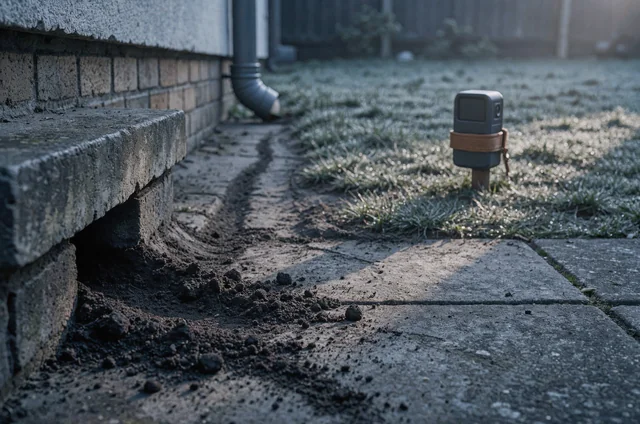
An opening may remain after animals have left. Other animals and ground defects can also produce holes, so identifying the cause matters before treatment or sealing.
From a safe distance, look for loose soil that has appeared since your last check. Note any repeated movement along the same wall edge, fresh disturbance beside a pipe or sightings near food sources. Droppings and gnaw marks may add evidence, but avoid handling them to inspect them more closely.
Record where each sign appears. Activity beside a compost bin and an opening under the kitchen extension could be connected, but that connection needs checking.
Don't block the entrance as a test or push objects into it. That can interfere with the route and make later findings harder to interpret. A lack of visible activity during one check also doesn't confirm that the space is empty.
If you already have an outdoor camera, footage from a safe position may help identify what uses the opening. Keep children and pets away from the area while the cause is assessed.
Photograph fresh soil before clearing nearby garden debris. Share the dates and locations with the technician so treatment decisions rest on several pieces of evidence rather than the shape of one hole.
Which signs need urgent attention?
New floor movement, an opening ground surface or visible loss of support needs prompt building attention, whether rats are present or not.
A burrow beside otherwise stable paving calls for investigation. A slab that is sinking, tilting or breaking under use presents a more immediate concern. Keep people away from an affected surface rather than walking across it to check how much it moves.
Drainage signs deserve their own response. Wastewater escaping near the building, repeated backing-up or a drain cover that has become unstable should be assessed by a drainage professional. Keep children and pets away from affected ground.
A pest-control appointment doesn't replace an assessment of a moving floor. Likewise, a building inspection won't necessarily establish whether a rat route remains active.
When reporting the problem, use observable details:
- The floor has dropped beside the back door.
- A gap appeared beneath the concrete after rain.
- Fresh soil keeps appearing beside the same pipe.
- A crack has changed since the previous photograph.
Those descriptions help the right person judge the next action. Saying only that rats have damaged the foundations may send the investigation towards a cause that hasn't been established.
If a surface appears at risk of collapse, stop using that area and seek urgent building-safety assistance. For slower changes, keep a dated record and arrange assessment promptly rather than waiting for pest treatment to explain the movement.
Can I fill the burrow or pour concrete into it?
Avoid filling an unexplained opening beneath a slab until the animal activity, drainage and condition of the surrounding ground have been assessed.
It's understandable to want the hole closed immediately. The difficulty is that filling the entrance doesn't establish what lies beyond it.
Loose soil may conceal a continuing passage. A hard plug may cover the visible opening while another access point remains. If a defective drain is involved, sealing the surface won't repair the pipe or stop water escaping.
Pouring concrete into an unknown tunnel also gives you little control over where it goes. It doesn't provide evidence that support beneath the slab has been restored.
The repair needs to match the fault. Pest proofing closes an animal access route. Drain repair addresses defective pipework. Ground repair restores suitable support beneath a surface. A property may need more than one of these jobs.
While waiting for assessment, keep people away from an unsafe edge and remove accessible food nearby. Don't flood the burrow or pour household chemicals into it. Leave treatment and any excavation near the building to people who can assess the route and surrounding services.
If a hole has already been filled and reopened, photograph the new disturbance. Tell the inspector what material was used and when. Repeated reopening is a reason to investigate the remaining access rather than add another surface patch.
What should a rat and drain inspection establish?
An inspection should establish what is active, where access is likely and whether a separate drainage or building investigation is needed.
A BuzzKill Pest Control inspection can address rat activity and suspected entry routes. A drainage contractor or structural engineer may also be needed where pipe defects, ground loss or slab movement are suspected.
Useful findings should distinguish observations from possibilities. A rat seen entering beneath a wall is observed activity. A suspected broken drain remains a possible cause until supporting evidence is available.
For the pest investigation, ask which signs indicate current activity, what food or shelter is accessible and which openings need further examination. The inspection should also consider whether other routes could remain after the visible hole is closed.
Where a drain survey is arranged, ask for an explanation of any defect's location and its possible connection to the affected area. Existing and altered drainage routes may need checking against available plans.
A camera survey examines the pipe interior. It doesn't, by itself, establish the bearing capacity of surrounding ground or the condition beneath the whole floor.
Keep copies of photographs, survey findings and proposed repairs together. If you're managing a rented property, share the same record with the tenant and each contractor. Ask who will investigate any unresolved movement before authorising work that hides the opening.
How are rats controlled beneath a slab?
Control needs to address active rats and their access route, with proofing and repairs arranged in a suitable sequence.
The approach depends on where the animals can be reached safely, what the inspection establishes and whether drainage defects are involved. An inaccessible space beneath concrete needs a site-specific plan rather than a guessed placement of traps or bait.
When reviewing a BuzzKill Pest Control treatment proposal, ask how activity will be monitored and what findings will support closing the identified openings. Make sure the plan accounts for children, pets and access to treatment equipment.
If pesticides are proposed, ask why they are suitable for that location and how exposure will be prevented. Follow the technician's safety instructions throughout treatment.
Food management can start alongside the investigation. Secure household waste, remove spilt bird food and avoid leaving pet food accessible outside. For a nearby garden food source, the guide to compost bins attracting rats covers practical prevention measures.
These steps help address attraction, but an active route beneath the building still needs attention.
Ask for the follow-up arrangements and the evidence needed to assess progress. Fewer sightings are useful information, although they don't establish that a drain has been repaired or a void has been made safe. Keep the pest findings separate from the record of building and drainage repairs.
What repairs help prevent rats returning beneath the slab?
Lasting prevention depends on repairing the identified access route and any underlying ground or drainage fault.
If a drain defect has been confirmed, the repair should address that defect. If rats are entering beside a service pipe, the opening needs a suitable proofing repair. If supporting material has been lost, a building professional should determine how it is restored.
Those repairs may involve different contractors. Ask who will coordinate the sequence so that one job doesn't hide an unresolved problem from another.
Materials need to suit the location, including exposure to moisture and any movement at the joint. Keep ventilation openings and drainage paths functional. Sealing every visible gap without understanding its purpose can create another property problem.
A repaired surface should also be distinguishable from a repaired cause. Fresh paving over disturbed ground doesn't show that a leaking pipe has been fixed.
For accessible openings elsewhere around the home, these homeowner pest prevention tips can help you organise a wider check after the immediate route is addressed.
Keep photographs taken before concealed work is covered. Retain a record of which pipe, joint, opening or ground area was repaired. If the problem returns, those details help the next investigation establish whether the same route has failed or activity has moved elsewhere.
What should I watch for after treatment and repairs?
Watch for renewed rat activity and further changes to the ground or concrete, because either can require another assessment.
Use the same photo positions as before treatment. Compare the slab edge, nearby ground and any previously recorded cracks. Note fresh digging, recurring damp patches, reopened gaps and changes in levels.
Keep observations factual. A fresh hole shows disturbance; it doesn't tell you whether rats have returned through the repaired route. A new crack needs assessment even if there have been no further sightings.
An interactive inspection checklist could pair dated photographs with entries for digging, dampness, sightings and floor movement. It should prompt a review when signs change rather than calculate a structural safety score.
Tenants can send the record to the landlord or managing agent. Owners and facilities managers can share it with the pest technician and relevant repair contractor. Include the dates of treatment and repairs so changes can be compared against the work completed.
Ask what follow-up is planned and which findings should be reported sooner. Don't wait for a routine pest visit if the floor starts moving or the ground opens further.
Fresh digging needs a review of animal activity and access. Renewed sinking, tilting or spreading cracks needs a building assessment. Keep the photographs, inspection findings and repair records together so everyone can work from the same evidence.

Need professional help? BuzzKill offers fast, reliable pest control services across London and Essex.