
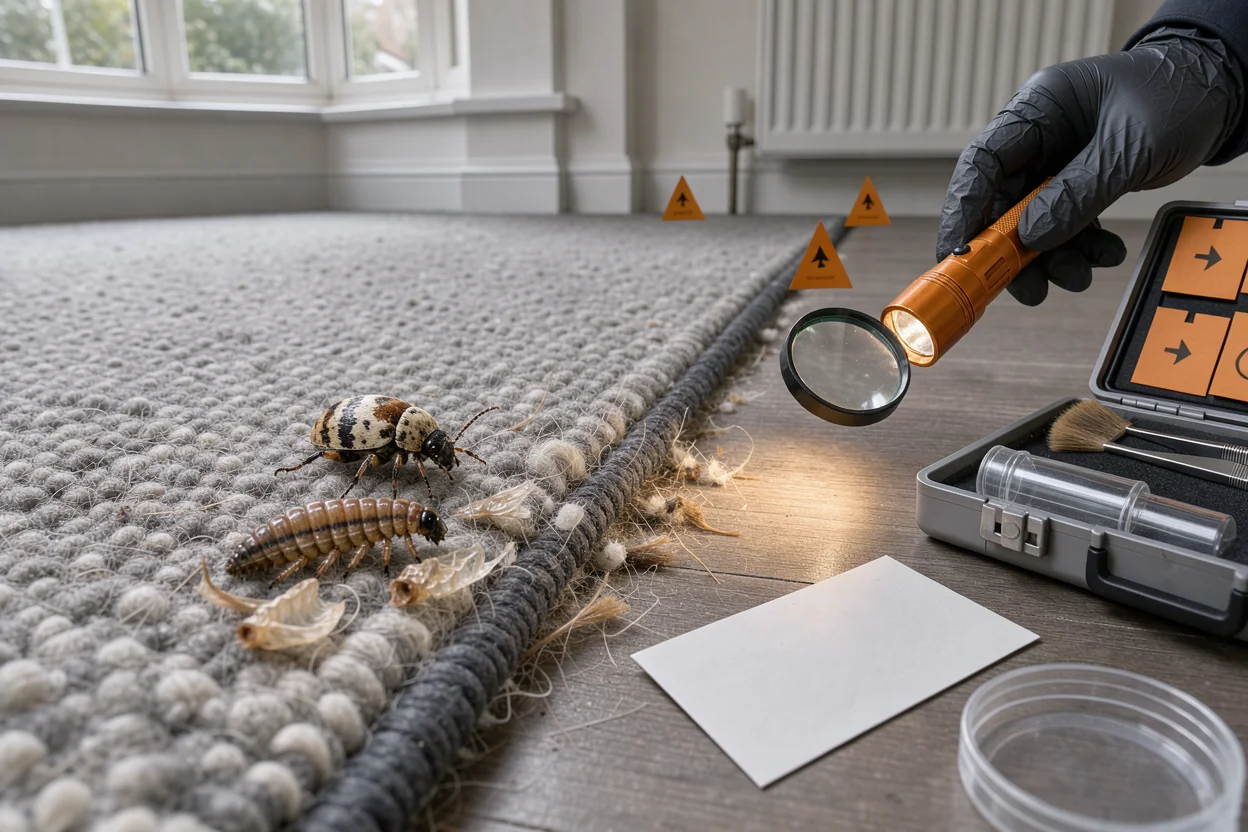
If your search for carpet beetle pest control London began with an insect on the bed, this six-point check will help you gather evidence. Carpet beetle larvae, the young feeding stage, can damage susceptible fabrics; bed bugs feed on blood and need a different treatment approach.
Finding either is unsettling, especially when you’re unsure what the marks on your skin mean. I’d work through the room in the order below, keeping useful evidence to discuss with BuzzKill Pest Control before agreeing to treatment.
Set up a 30–60-minute bedroom inspection
Allow 30–60 minutes for one bedroom and its adjoining storage areas. This is a first inspection of accessible places; a technician may need to examine furniture or building spaces you cannot reach.
Gather a torch, your phone camera, a magnifying glass if available, and a small clear container with a secure lid. Keep a ruler nearby so an insect’s size can be recorded without relying on a zoomed photograph.
Work from the bed to the carpet edges, then the windows and wardrobe. Finish by checking your notes against skin symptoms and deciding whether another room needs attention.
Photograph evidence before vacuuming, washing bedding or wiping surfaces. Record the room, exact location and date so old marks can be distinguished from anything that appears later.
Keep bedding and clothes from different rooms separate during the check. If you move suspect textiles, contain them first and label where they came from.
A clear result means you found no live insects, relevant shed skins, suspicious clusters of spotting or fresh fabric damage in the places inspected. Record that result with a date; concealed activity may still require a closer inspection.
An optional interactive evidence checklist could attach room-labelled photographs to each finding and create a record for a technician. It should leave identification uncertain whenever the photographs or physical evidence are inconclusive.
1. Keep the insect and examine its shape
An insect found on a bed needs identification before its location is treated as proof of bed bugs. Start with the body itself, then record the surface where you found it.
Photograph the body and any visible hairs
Take a photograph from directly above and another from the side if possible. Place the ruler beside the container, and keep an original photograph alongside any enlarged version.
Carpet beetle larvae usually look elongated, segmented and noticeably hairy. Their bristles can make them resemble a tiny furry caterpillar, which explains the familiar name woolly bear.
Adult bed bugs have a flattened, oval body and are generally reddish-brown. Young bed bugs, called nymphs, are smaller and paler, so colour alone can be misleading.
Terminix’s guide to insect identification differences explains the distinction between hairy carpet beetle larvae and bed bugs. Compare several visible features rather than choosing whichever online photograph seems closest.
A clear photograph showing an elongated, bristly larva supports the carpet beetle possibility. Keep the sample and move on to the carpet and fabric checks before deciding how extensive the problem is.
Compare live insects with their shed skins
Both pests leave shed skins, the empty outer coverings discarded as they grow. A skin can remain after the insect has moved, so finding one establishes evidence at that location rather than confirming current activity.
Carpet beetle larval skins retain their elongated shape and may show obvious bristles. Bed bug skins are more recognisably insect-shaped, with a pale outline of the body and legs.
If the insect is crushed, blurred or partly hidden in fluff, mark its identity as uncertain. An uncertain photograph is still useful when its location and the surrounding evidence are recorded accurately.
Keep any sample securely contained, away from children and pets. Write down whether it was moving when found, because a live insect and an old shed skin answer different questions about activity.
2. Follow the mattress seams to the bed frame
Bed bug evidence often becomes more useful when several signs occur around a sleeping place. Inspect the mattress and frame together, keeping each finding linked to its exact position.
Check seams, piping and mattress labels
Pull back the bedding slowly and use the torch along stitched seams, piping and labels. Look at accessible corners before turning or lifting anything heavy.
Bed bug faecal spotting means marks left by their droppings. These can appear as small dark spots, particularly around places where insects hide.
Several dark spots beside a suspect insect, eggs or shed skins are more concerning than one isolated mark. Photograph the whole area first, followed by a closer view of the individual evidence.
Blood marks on sheets can add context, but they have other possible causes. A stain alone cannot identify the insect responsible or establish that an infestation is active.
If you find a cluster of evidence, record it before cleaning. The guide to signs of bed bugs can help you organise what you’re seeing without making the decision from a sheet stain.
Examine joints and the nearby furniture
Follow the mattress edge down to accessible bed-frame joints, screw recesses and the headboard. Use the torch at an angle so shallow gaps and pale skins are easier to see.
Look around a bedside table and nearby upholstered furniture where you regularly sit or sleep. Keep the inspection manageable; stop if reaching a gap requires unsafe lifting or dismantling.
A flattened insect beside repeated spotting in a frame joint is a stronger reason to seek identification than a single insect crossing the duvet. Keep both the insect photograph and the wider photograph of the joint.
If this check is clear, record which parts of the frame you could inspect and which remained inaccessible. A solid headboard, enclosed divan base or tightly fitted furniture can leave gaps in the evidence.
Keep the bed’s findings separate from those elsewhere in the room. That distinction will help explain whether activity appears concentrated around a sleeping place or around stored fabrics.
3. Inspect the carpet edge and fabrics beneath the bed
Carpet beetle larvae are the fabric-damaging stage, so check the materials and sheltered edges near the original finding. Pay particular attention to places that are rarely disturbed during ordinary cleaning.
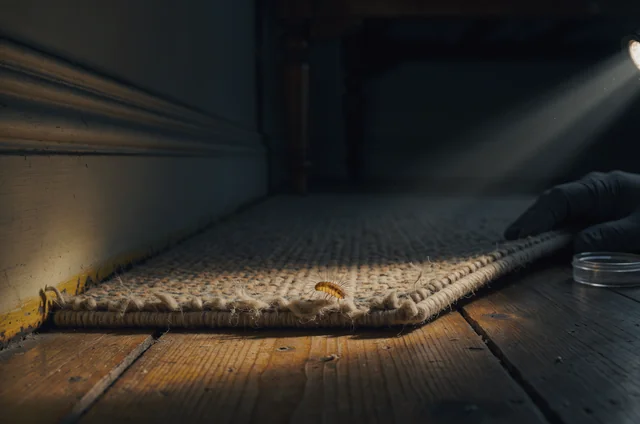
Look for bristly skins beside fabric damage
Use the torch along the carpet edge, behind accessible furniture and beneath the bed. Check the underside and folded edges of any rug you can lift safely.
Look for hairy larvae, bristly shed skins and damage to susceptible materials. Wool, feathers and other animal-derived materials can provide food for carpet beetle larvae.
Microbee’s carpet beetle information sheet describes their feeding materials and habits. A source check therefore needs to include stored textiles and accumulated material around furniture.
Holes or thinning patches in fabric are useful clues, although clothes moths and ordinary wear can also cause damage. The strongest finding is damage accompanied by an identifiable larva or characteristic shed skins.
If you find that combination, photograph the damaged area and nearby evidence together. Keep the affected item contained while you decide whether cleaning is manageable or professional inspection is needed.
Establish whether the damage is changing
An old hole cannot tell you when feeding happened. Compare it with earlier photographs if available, or take a dated photograph that you can use for future checks.
Inspect the seams and underside of nearby upholstery, especially where dust, hair or feathers collect. A room with synthetic flooring can still contain other materials that deserve examination.
Check accessible storage beneath the bed, including fabric bags, folded blankets and rarely worn clothing. Avoid carrying suspect contents into another room while you sort them.
If several items or separate carpet edges contain larvae or skins, expand your record beyond the first damaged patch. Multiple locations make it harder to solve the problem by cleaning one visible spot.
Before vacuuming, save a sample or a clear photograph of the evidence. Afterwards, record what was cleaned so any later larvae, skins or damage can be compared with a known starting point.
4. Check the windows, then open the wardrobe
Adult carpet beetles at a window can help explain an unfamiliar insect in the bedroom. The wardrobe check then looks for evidence that larvae are feeding nearby.
Record beetles at the window separately
Inspect the inside sill, window frame and nearby floor. Photograph any small oval beetle clearly enough to show its colour pattern and body shape.
Some adult carpet beetles have mottled markings, while others are darker and more uniform. A small dark insect should therefore remain unidentified until its other features have been checked.
Adult carpet beetles can fly; bed bugs cannot fly. Merlin Environmental’s explanation of how the insects differ includes this useful distinction.
If you actually saw the insect fly, record that observation alongside its photograph. It helps rule against bed bugs, although many other household insects also fly.
One adult beetle on a sill does not establish a widespread fabric problem. Continue into storage and look for larvae, shed skins or damage before choosing treatment.
Inspect folds, shelf corners and wardrobe bases
Check wool clothing, blankets and other susceptible stored items, especially those that have remained untouched. Examine folds, seams and the corners where garments rest against shelves.
Look along the wardrobe base and behind items that can be moved easily. Keep findings linked to the item or shelf where they appeared rather than combining everything into one bag.
A positive result is a hairy larva or characteristic skin beside damaged fabric. Photograph both, contain the item, and inspect the materials stored immediately around it.
If the wardrobe is clear, note which shelves and items you examined. Leave inaccessible gaps on the inspection record rather than assuming they were clear too.
An adult at the window and larvae in stored wool give you a more coherent carpet beetle picture. Record those as two separate findings, because the adult’s location may differ from the feeding source.
5. Compare skin symptoms with the room evidence
Skin symptoms can prompt the search, but they cannot reliably identify either pest. Use them as context while keeping the insect and room findings at the centre of the decision.
Separate bites from irritation caused by hairs
Carpet beetles do not bite people. Contact with carpet beetle larval hairs can cause irritation in some people, which may be confused with insect bites.
Ehrlich’s explanation of larval hairs and irritation describes this distinction. The relevant evidence remains the larva, its hairs and the materials where it was found.
Bed bugs bite to feed on blood, but people’s reactions vary. A particular arrangement of marks on the skin cannot confirm that bed bugs are present.
Record when symptoms were first noticed and whether there is supporting room evidence. Keep photographs of skin symptoms separate from insect photographs so neither is mistaken for proof of the other.
If you have an ongoing skin concern, it may need a separate healthcare assessment. A pest inspection can establish insect activity; it cannot diagnose the cause of a rash.
Match the dates without forcing a diagnosis
Write down where you slept or sat before noticing symptoms, and whether anyone else has reported similar concerns. These notes can help direct an inspection without establishing which pest is responsible.
A room containing hairy larvae and damaged wool supports investigating carpet beetles. Dark spotting, insect-shaped skins and identifiable bed bugs around the frame support a different treatment discussion.
The article on bed bug bite patterns provides additional context, but keep the physical findings beside any symptom record. Avoid choosing a treatment from a photograph of skin alone.
If you have symptoms but no insect evidence, record that uncertainty plainly. Recheck the accessible sleeping area and arrange identification if concern continues.
If you have insect evidence without symptoms, keep it on the record. The absence of a reported skin reaction does not cancel an identifiable insect or a cluster of relevant signs.
6. Map the findings before choosing treatment
The treatment decision should follow the evidence’s identity, location and spread. Use your notes to separate a single incidental finding from activity that involves several items or rooms.
Monitor an isolated adult finding
If you found one adult carpet beetle at a window and the fabric checks were clear, monitoring is a reasonable first response. Keep its photograph and record the date.
Choose a repeat check about a week later as a practical monitoring appointment. Examine the same sill, carpet edges and stored materials so you can compare the findings.
Record new insects separately from old marks or damage. A dated clear check is useful, but continued adult sightings or any larvae should prompt another source inspection.
You can keep the record brief: location, evidence, photograph and what changed. A consistent record is more useful than repeatedly searching the whole home without noting the results.
Clean a confirmed, accessible fabric source
If identifiable carpet beetle larvae are limited to one accessible item or small area, cleaning and source removal can be a first step. Photograph the evidence before starting.
Vacuum accessible edges, furniture gaps and the affected storage area, then contain and dispose of collected debris appropriately. Clean or launder affected items according to their care labels.
Keep suspect items contained while arranging suitable cleaning for delicate fabrics. Avoid assuming every material can tolerate a hot wash.
Inspect nearby materials after cleaning and record any fresh larvae or damage. Repeated findings mean the visible patch may be only part of the problem.
BuzzKill Pest Control’s London carpet beetle treatment is relevant when confirmed activity persists or extends beyond a manageable source. Share the locations and cleaning record when discussing the scope of inspection.
Seek prompt identification for bed bugs or wider activity
Evidence suggesting bed bugs deserves prompt professional identification, especially when live insects and several supporting signs occur around the bed. Ask for same-day advice where possible rather than starting an uncertain spray treatment.
The route for professional bed bug removal differs from addressing a fabric-feeding source. Keep bedding contained during any movement and follow the preparation instructions provided for the identified pest.
For carpet beetles, escalate when larvae occur in several rooms, fresh damage continues after cleaning, or the suspected source is inaccessible. Note any relevant loft or eaves location from a safely accessible position.
Leave bird nests alone and flag their location to the technician. In a London flat, also record which affected areas are private and which involve shared building spaces.
Questions when the bedroom evidence is mixed
Mixed findings deserve an inspection record that preserves uncertainty. These questions help you decide what to ask before treatment begins.
Can carpet beetles and bed bugs be present together?
Yes, finding evidence of one does not exclude the other. Keep window beetles, hairy larvae and mattress findings recorded separately until each has been identified.
For example, an adult beetle at the sill does not explain every dark mark on the bed frame. Ask the technician to assess each group of evidence rather than fitting the whole room to one diagnosis.
Should a landlord arrange a wider building inspection?
Start with the affected property’s dated findings and pass them to the landlord or managing agent. Separate confirmed insect evidence from reports of itching or unexplained marks.
If other flats have relevant findings, or a suspected source involves shared spaces, ask whether the inspection should extend further. Keep each report labelled by property and room so the technician can assess the pattern.
Can I spray the mattress while waiting for identification?
I’d preserve the evidence and establish the pest first. Any pesticide use must follow the product label for the pest, surface, application and access restrictions.
Before treatment, explain whether children, pets or sensitive occupants use the room. Ask what needs covering or removing, when the room can be used again and whether any cleaning must wait.
What should the treatment quote explain?
Ask which pest has been identified, what supports that finding and which rooms or materials the proposed treatment covers. An uncertain identification should remain visible in the plan.
The plan should explain preparation, occupant and pet precautions, any follow-up arrangements and how progress will be assessed. For confirmed bed bugs, the guide to bed bug treatment options can help you prepare questions.
Ask what happens if fresh evidence appears after treatment, and which work is included in the quoted price. Keep the written plan beside your dated photographs and inspection notes.

Need professional help? BuzzKill offers fast, reliable pest control services across London and Essex.