
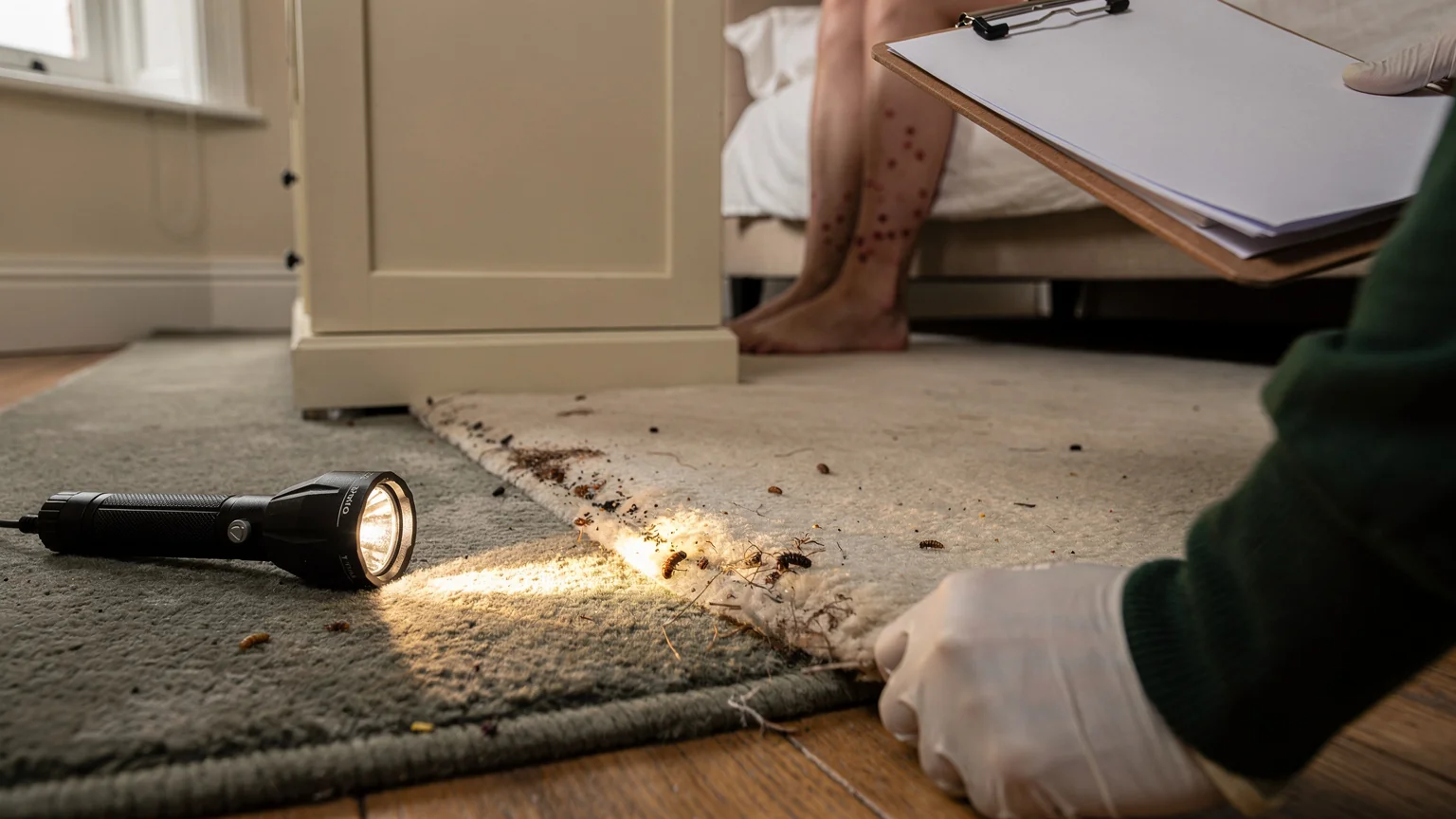
Check Your Wardrobe and Rugs for Carpet Beetle Larvae
Run this 45-minute inspection to find carpet beetle larvae before they ruin woollens, rugs, and soft furnishings. You will need a torch with a narrow beam, a pair of light-coloured gloves, a phone for photographs, and a vacuum cleaner with a crevice tool. Work methodically through each zone. A "yes" on any item means you have found either the pest, its damage, or conditions that support it.
What carpet beetle larvae actually are
The adult beetle is small, oval, and often mistaken for a speck of dirt. It feeds on pollen outdoors and does not damage your home. The problem stage is the larva, sometimes called a woolly bear, which eats keratin-based fibres. According to Bromley Council guidance, these larvae measure roughly 4–5 mm, carry distinctive brown, yellow, and black bands, and have a hairy body. They live in darkness, move slowly, and can remain hidden for months.
The larvae do not bite in the way fleas or bed bugs do. The irritation people report, sometimes searched as carpet beetle bites, is actually contact dermatitis from the larval hairs. These hairs break off and can cause a raised, itchy rash on skin that touches infested fabric. Knowing this distinction matters because it changes where you look and what treatment you need.
Two species cause most household problems in the UK. The varied carpet beetle (Anthrenus verbasci) is the smaller adult at roughly 2–3 mm, with a mottled pattern of white, brown, and yellow scales. The museum beetle (Anthrenus museorum) is slightly larger. Both produce larvae of similar appearance and identical appetite for natural fibres. Identification to species level is not necessary for control, but recognising the larval form is essential.
Bedrooms and wardrobes
This is where most people first notice damage. Larvae prefer undisturbed, dark, protein-rich materials.
Check the back corners of wardrobes and drawers — what "yes" looks like: tiny cast skins, live larvae, or irregular holes in wool, silk, cashmere, or fur. What "yes" means: the larvae have established a feeding site. Remove the item, seal it in a bag, and inspect adjacent garments.
Check under the bed and inside storage boxes — what "yes" looks like: fine, bristly hairs on fabric surfaces, or larvae curled in folds of seldom-worn clothing. What "yes" means: the population has spread beyond the main wardrobe. Photograph the area before disturbing it.
Check mattress edges and headboard crevices — what "yes" looks like: no larvae here typically, but you may find adult beetles attracted to light from windows. What "yes" means: adults are entering from outside, so inspect window frames and external flower beds next.
Mrs. Henderson, a customer in Islington, found her grandmother's wool shawl reduced to loose threads in a drawer she had not opened since autumn. The larvae had been feeding undisturbed for eight months. This is typical: damage accumulates slowly, then seems sudden when discovered.
Wardrobes with solid backs and sides are especially vulnerable because they block light and air movement. Seasonal clothing stored in plastic vacuum bags is generally protected, but garments left on open shelves or in wooden drawers with gaps provide easy access. Check the seams of tailored garments, where fibres are dense and stitching provides crevices for larvae to hide.
Living rooms and rugs
Wool carpets, antique rugs, and upholstered furniture provide ideal habitat.
Roll back rug corners and inspect the underside — what "yes" looks like: bare patches in the pile, frass that resembles fine sand, or larvae in the backing. What "yes" means: the rug is a primary food source. Stop walking on it to avoid spreading hairs, and plan for professional treatment.
Check beneath sofa cushions and inside hollow furniture legs — what "yes" looks like: shed skins in dark crevices, or live larvae in dust accumulations. What "yes" means: the infestation has reached soft furnishings. Vacuum thoroughly, then dispose of the bag or empty the cylinder outside.
Inspect curtains and pelmets, especially wool or silk blends — what "yes" looks like: thinning fabric at the lower edges, or larvae in the hem folds. What "yes" means: larvae climb upward in search of new food. Check the floor directly below for concentration.
The London Borough of Hammersmith and Fulham notes that carpet beetle damage includes holes and trail-like patterns in fur, feathers, hair, and even dried specimens or paintings. If you own taxidermy, natural history collections, or vintage textiles, expand this inspection to include display cabinets and storage chests.
Persian and Oriental rugs with wool piles and cotton foundations are particularly at risk because the wool provides food and the cotton allows moisture retention. Synthetic rugs with food spills or heavy soiling can also harbour larvae, though they cannot digest pure polyester or nylon. The frass you find under a rug is not just excrement; it includes chewed fibre fragments and shed larval skins, which confirms active feeding rather than old damage.
Lofts and roof voids
This is often the original source that seeds infestations throughout the house.
Check for old bird nests in eaves and chimneystacks — what "yes" looks like: intact or abandoned nests with debris below them, or larvae in the nesting material. What "yes" means: the nest is a reservoir. Remove it if safe to do so, wearing gloves and a dust mask, or book professional clearance.
Inspect stored cardboard boxes and natural fibre insulation — what "yes" looks like: holes in box corners, larvae in woollen items packed for storage, or frass on the loft floor. What "yes" means: the loft is an active breeding site. Do not bring infested items downstairs without sealing them first.
Check around loft hatches and light fittings — what "yes" looks like: adult beetles near the hatch, attracted by light from below. What "yes" means: adults are dispersing into the living space. This often happens in spring, between March and June, when adults emerge and seek pollen outdoors.
According to Powys County Council pest advice, old birds' nests in lofts and eaves should be removed as part of control. The same document recommends thorough vacuuming of infested areas, paying particular attention to cracks and crevices, before any insecticide application.
Lofts in Victorian and Edwardian terraced houses, common across East London, are especially prone to bird nest accumulation because of original roof designs with multiple access points. Even if you cannot see a nest, check for accumulations of twigs, feathers, and droppings in guttering and behind fascia boards. These materials support not just carpet beetles but also clothes moths and other fabric pests. If your loft has been converted, inspect the eaves storage areas that remain unheated and undisturbed.
Kitchens and utility areas
Less obvious but still vulnerable, especially where food debris and natural fibres coincide.
Check under kickboards and behind appliances — what "yes" looks like: larvae in accumulated dust and food particles, or in woollen draught excluders. What "yes" means: the kitchen provides both food and harbourage. Clean thoroughly and remove any natural fibre items.
Inspect pet bedding and feeding areas — what "yes" looks like: larvae in woollen pet blankets, or irritation on your pet's skin that resembles the human rash. What "yes" means: the pet's bedding is a secondary host site. Wash at 60°C or replace.
Check window sills and door frames — what "yes" looks like: adult beetles, alive or dead, concentrated where light enters. What "yes" means: entry points exist. Seal gaps and consider insect-proof mesh on vents.
Kitchens with underfloor heating can accelerate larval development because warmth speeds up the life cycle. A carpet beetle larva that might take two years to develop in an unheated loft can mature in under twelve months in a warm kitchen. This means populations build faster than many homeowners expect. Check particularly behind freestanding units where vacuum cleaners do not reach regularly.
Hallways and less-used spaces
These transitional areas are often overlooked but can sustain significant populations.
Inspect doormats and stair runners — what "yes" looks like: bare patches in wool matting, especially at edges where vacuuming is less thorough. What "yes" means: the hallway is an active feeding site. Replace or treat the mat, and check adjacent carpet edges.
Check inside shoes and boots stored in cupboards — what "yes" looks like: larvae in wool-lined footwear, or in the leather itself if it retains natural oils. What "yes" means: the cupboard is undisturbed enough to support breeding. Empty and vacuum thoroughly.
Examine coat racks and hat shelves — what "yes" looks like: damage to felt hats, wool coats, or fur trim. What "yes" means: these items have become a food source. Store in sealed garment bags or cedar-lined chests after inspection.
Hallways suffer from irregular heating patterns: warm when the front door opens, cold at night. This temperature fluctuation does not harm larvae, which tolerate a wide range, but it can confuse homeowners who assume the problem is seasonal. Damage discovered in January may have started the previous spring.
What to photograph and record
Clear documentation helps a professional assess severity without a second visit. Photograph any live larvae, damage patterns, and the location where found. Note the date and room. If you have experienced skin irritation, photograph the rash as well, though this is for your own records rather than pest identification. A technician cannot diagnose dermatitis, but the pattern of rash distribution, clothing contact areas, and timing relative to finding larvae, supports the link between symptoms and the infestation.
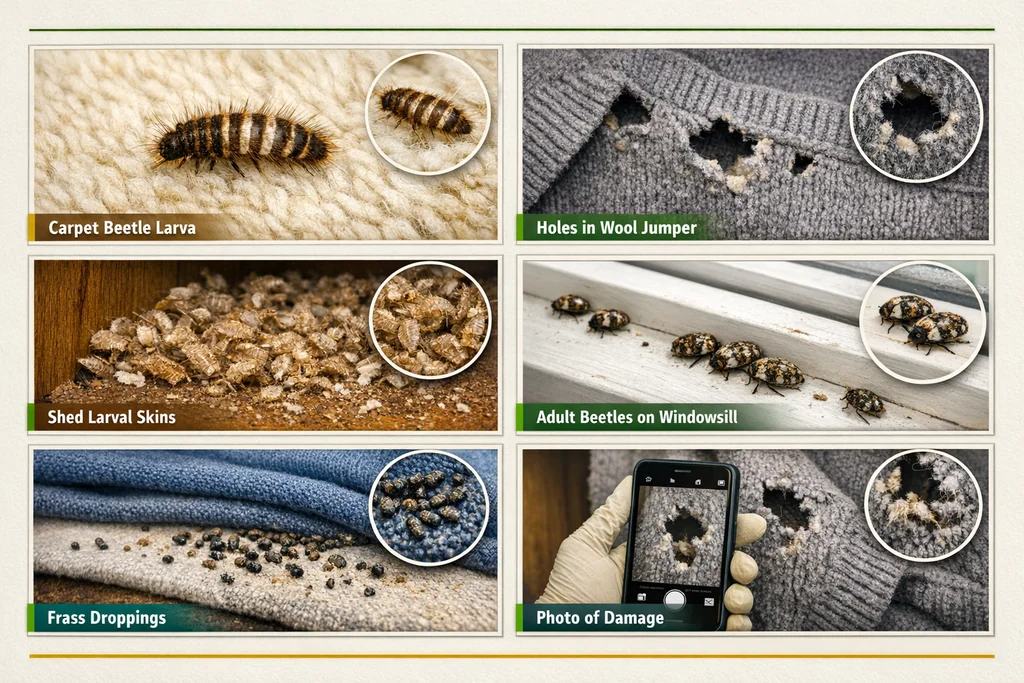
When photographing larvae, include a coin or ruler for scale. The 4–5 mm length is distinctive, but camera lenses can distort perception. Photograph the underside of rugs where damage often starts, not just the visible pile surface. If you find cast skins, photograph these too: they confirm the presence of developing larvae even if no live specimens are visible at that moment.
Keep a simple log: date, room, what you found, and any action taken. This helps track whether the problem is spreading or localised, and it prevents redundant checking of the same areas. If you later book professional treatment, this log allows the technician to prioritise inspection zones.
If any of these were yes
A single larva or small patch of damage does not require emergency response, but it does require action within days, not weeks. Vacuum the area thoroughly, seal damaged textiles in plastic bags, and place them in a freezer for 72 hours if the item is small enough. This kills larvae and eggs without chemicals. For larger items, or if you found larvae in multiple rooms, the infestation has likely spread beyond what freezing or surface cleaning can reach.
Book a professional inspection when: you find larvae in three or more zones, damage is visible on valued textiles, or skin irritation persists despite removing suspect items. A technician will trace the source, treat cracks and crevices with appropriate insecticide, and advise on preventing reinfestation. Carpet beetle pest control across London and Essex includes this full assessment, with treatment targeted at the larval stage that causes both fabric damage and the skin reactions mistaken for carpet beetle bites.
Frequently asked questions
Do carpet beetles bite humans?
No. Adult carpet beetles do not bite. The larval hairs cause a contact rash that people often mistake for bites. The medical term is carpet beetle dermatitis.
How do I tell carpet beetle larvae from moth larvae?
Carpet beetle larvae are shorter, more compact, and distinctly hairy with banded colouring. Moth larvae are usually smoother, paler, and may produce silk webbing. Both damage wool and silk, so the treatment approach overlaps.
Can I treat carpet beetles myself?
Small, contained infestations sometimes respond to thorough vacuuming, freezing, and removing the food source. However, larvae hide in cracks and under skirting boards where domestic products do not reach. Professional treatment is advisable when the source is unclear or damage is spreading.
Why do I keep finding them after cleaning?
The reservoir is often in the loft, within a bird nest, or inside hollow furniture that was not treated. Until the source is removed, new larvae will continue to appear. A professional inspection traces this reservoir.
Are my synthetic carpets safe?
Larvae cannot digest pure synthetic fibres, but wool-synthetic blends, food stains on synthetics, and accumulated dust with skin flakes can still support limited feeding. Clean carpets are less vulnerable than soiled ones.
How long does professional treatment take?
Most residential treatments require one visit, with the property vacated for at least three hours during insecticide application. The technician will advise on ventilation and re-entry timing. Follow-up visits are sometimes needed for heavy infestations or where multiple sources exist.
Need professional help? BuzzKill offers fast, reliable pest control services across London and Essex.