
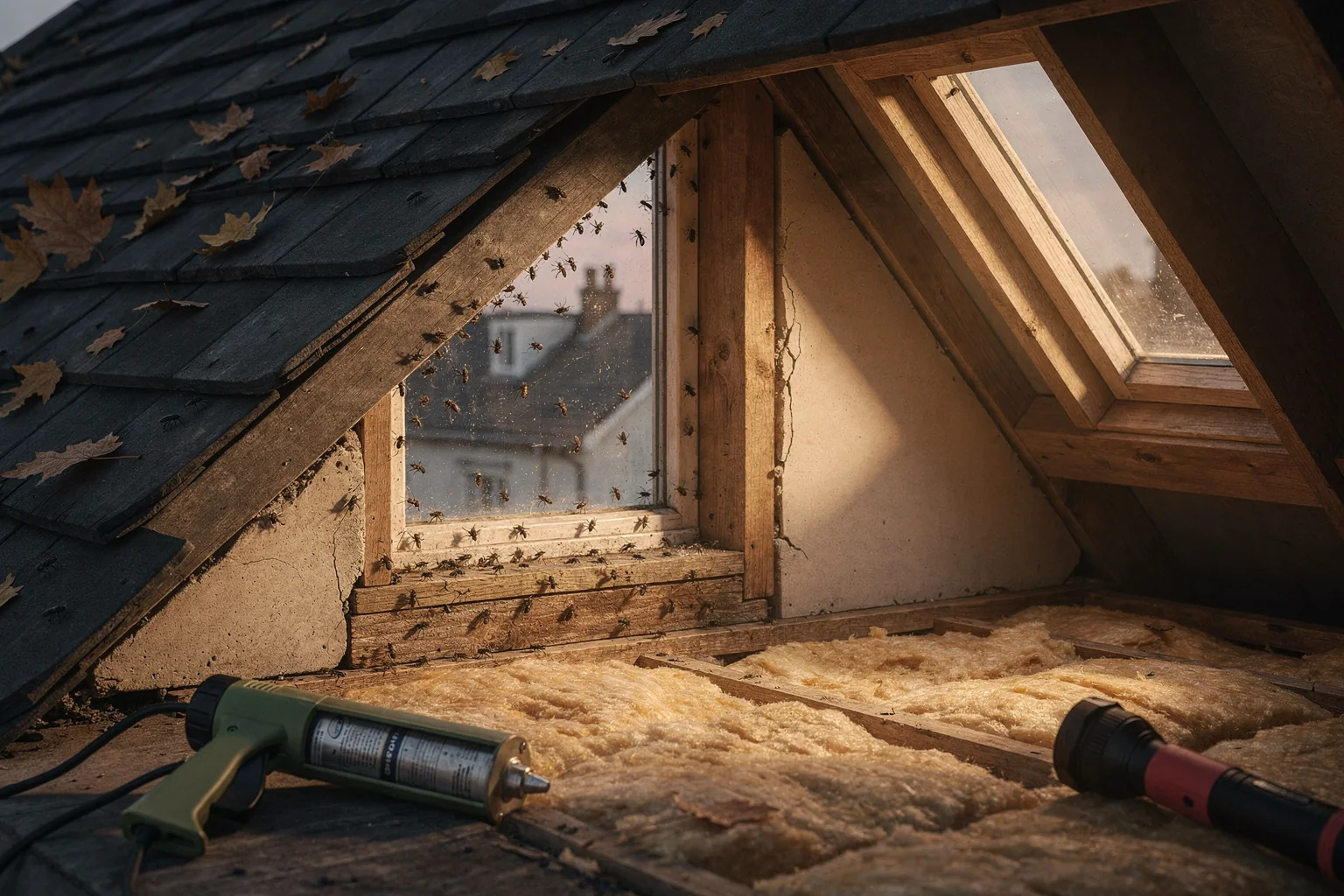
If cluster flies keep coming back to the same loft, spare room or sash window every September, the sealing job you did last year probably wasn't the problem. The gaps you missed were. Cluster fly infestation prevention in autumn works on a narrow window of timing, and most DIY attempts start too late, cover too little, and leave the two or three routes the flies actually use wide open. This companion piece follows a short field video from Hanbleceya Ranch, where the owner describes years of battling autumn flies with vacuum cleaners and sticky traps before working out what the flies were really doing.
Video: Get Rid of Cluster Flies Fast!
That video is worth two minutes of your time because it captures something most written guides skip: the flies inside your house are not trying to stay. They are trying to leave. Once the temperature drops and then briefly rises, the cluster that settled in your roof void becomes active again and heads for daylight. The video's owner found that simply opening a door moved more flies out than any trap. That observation lines up with what we see on inspections across East London, and it also explains why sealing alone, done badly, changes nothing.
What the video gets right about autumn fly behaviour
The Hanbleceya Ranch footage shows a northern Maine property in early autumn, and the pattern holds for London. As temperatures fall, cluster flies look for somewhere to hunker down for winter. They are not feeding or breeding indoors. They are sheltering.
That single fact changes how you should read every product label and every piece of advice online. A fly that has no interest in your kitchen bin will not be drawn to a bait station. A fly that is dormant in a wall cavity will not land on a hanging strip until it wakes up. Traps catch the stragglers that emerge into a room. They do nothing about the thousands still tucked into the felt and insulation above your head.
The video's second useful point is about timing. The owner notes that on warm days the flies become active and try to get out. That is your window for mechanical removal, and it is also the reason autumn treatment plans are split into two jobs: knock down what is already inside, then stop the next wave getting in.
What the video doesn't cover is why the same house gets chosen year after year, and that is the part that matters most if you're reading this in a London terrace or a 1930s semi with a converted loft.
Why the same loft gets picked every single year
Cluster flies return to the same overwintering sites year after year, following pheromone trails left by previous occupants. Falcon Environmental Services makes this point directly: without treatment and proofing, the problem is highly likely to repeat. That is the mechanism behind the frustration in the video. It isn't bad luck and it isn't a new swarm arriving from a neighbour's garden. It is the same building, marked.
There's a second reason older London properties are vulnerable. The flies get in through gaps around roof tiles, fascia boards, soffit vents and where utility pipes enter the building, and sealing those in late summer, before the flies begin looking for overwintering sites in September, is the most effective preventative measure. On a period property with original sash windows, a slate roof and a century of cable runs drilled through the brickwork, finding every access point is genuinely difficult without a proper inspection.
So you have two compounding problems. The building is chemically marked as a good place to sleep, and the building has more entry points than a homeowner can reasonably find with a tube of sealant and a ladder.
The scent trail nobody tells you about
Pest UK notes that it is not uncommon for cluster flies to leave a scent that can encourage more to return the next year. That scent persists in voids, behind skirting and in loft insulation long after the visible flies are gone. Vacuuming the loft floor clears the bodies. It does not clear the marker.
This is why a spring clean of the loft, however thorough, doesn't break the cycle. You need to treat the harbourage itself, not just the floor beneath it.
Where DIY sealing quietly fails
Most homeowners do the same three things: they squirt sealant around the loft hatch, they block the obvious gap under the eaves, and they put mesh over the air bricks. All three are reasonable. None of them address the routes cluster flies actually use.
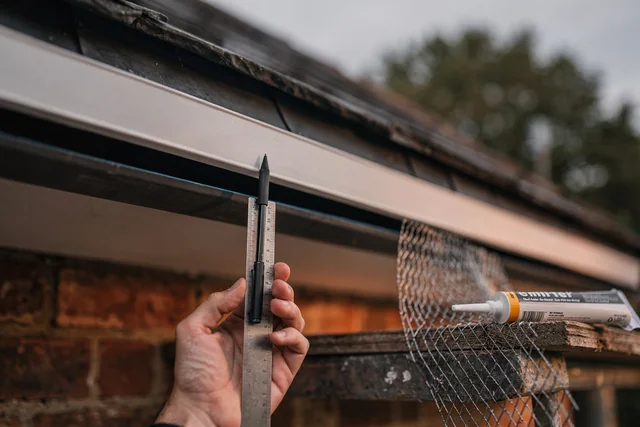
Here's what we typically find when we inspect a loft after a failed DIY attempt.
The soffit vents are the big one. On many London homes, the soffit has a continuous ventilation strip running the length of the roof. It's designed to let air move through the roof space and stop condensation. It also lets flies in, and it's usually too fine to notice from ground level. Sealing it completely would trap moisture and cause rot, so the fix is a fine mesh that keeps air moving and flies out.
Fascia boards come second. Older timber fascias shrink and cup over time, opening a gap along the roofline that runs for metres. You can't see it from the garden. You can see it from inside the loft with a torch, which is why the video's approach of actually climbing up and looking is the right instinct.
Window frames are the third. Sash windows in Victorian and Edwardian terraces often have gaps at the meeting rail and around the box frame. Cluster flies squeeze into spaces as narrow as a pen's diameter, so a gap you'd dismiss as cosmetic is a doorway.
Then there's the category nobody thinks about: service entries. Gas pipes, soil stacks, aerial cables, satellite dish mounts, and the cable runs from a previous broadband installation. Each one is a hole through the external wall, and most are sealed with a squirt of expanding foam that has since shrunk or cracked.
Why "seal everything" is the wrong instruction
If you block every gap in a roof void, you create a damp problem. Roof spaces need ventilation, and a sealed loft in a London winter will grow condensation, then mould, then rot in the rafters. The goal isn't a sealed box. It's a building that breathes through mesh rather than through open gaps.
That distinction is where most DIY guides fall down, and it's why a technician will often recommend mesh screens rather than sealant in the areas that matter most.
What the aerosol fog video shows, and what it leaves out
The second video in the source pool, from the channel Filth, shows a technician dealing with an active loft problem using an aerosol generator. The footage is useful because it shows the scale. The technician checks the loft first to see the extent of the problem, then releases an insecticidal mist that the video describes as penetrating and fast-acting, with the machine emitting enough mist to do the job in around 30 seconds.
Two things are worth taking from that clip.
First, the loft inspection comes before any treatment. You cannot treat a harbourage you haven't located, and the video makes that sequence explicit. Second, the method is a space treatment rather than a surface spray. Anticimex describes the same approach: by the time large numbers have gathered, the most effective treatment is a space treatment, with a trained technician using a ULV fog to penetrate the harbourage areas and knock down the cluster where it rests.
What the video doesn't show is the preparation and the aftermath. Lofts need clearing of stored items, and the dead flies have to be vacuumed up afterwards or they attract a second problem. Rochdale Borough Council's guidance is blunt about this: dead cluster flies on the loft floor can lead to infestations of undesirable insects such as carpet beetles. If you've ever dealt with carpet beetles, you know that trading one fly problem for another is a bad deal.
There's also a legal layer the video skips entirely. Insecticidal fogging in the UK is not a general-purpose DIY activity. Product choice, application rate and the competence of the person applying it all matter, and using the wrong product in the wrong space is both ineffective and potentially non-compliant. If you want to understand how these rules work in practice, our guide to pesticide use regulations covers the legal side for London properties.
The autumn window is narrower than you think
Timing is the single biggest variable in whether prevention works. The flies start moving toward buildings as temperatures drop and daylight shortens. Luke Tilley, an entomologist and Fellow of the Royal Entomological Society, puts it plainly: in autumn, cluster flies seek out warm, dry spaces to hibernate, often squeezing into lofts, wall cavities and around window frames, and this behaviour is triggered by falling temperatures and shorter daylight hours.
In London, that means the useful prevention window runs from roughly late August into early October. Miss it and you're into treatment territory rather than prevention.
There's a visible warning sign before they get inside. OCS notes that cluster flies are commonly seen congregating on the sunniest sides of buildings, typically south or south-west facing walls, in late summer and autumn. If you notice a concentration of sluggish flies on a warm wall in September, that's your cue. They're scouting, and the building they're scouting is probably yours.
A simple autumn timeline for London homes
Late August to early September: walk the exterior, note where flies are gathering, and book an inspection if you see clusters on south or west-facing walls.
Early to mid September: get entry points surveyed and proofed. This is the point where mesh screens, sealant and gap repairs actually do their job, because the flies haven't committed to your loft yet.
Late September to October: if flies are already inside, treatment comes first and proofing follows. Treating a building that still has open routes just means you'll repeat the job next year.
November onwards: clear dead flies, vacuum thoroughly, and address any secondary insect activity in the loft.
That sequence matters because the order is not interchangeable. Proofing before treatment traps flies inside. Treatment without proofing leaves the door open for next autumn.
What actually blocks cluster flies from a London loft
The materials are not exotic. The difficulty is coverage and access.
Fine mesh screening over soffit vents and air bricks keeps ventilation intact while excluding flies. Stainless or aluminium mesh lasts longer than plastic in a London roof space, where temperature swings and damp will degrade cheap alternatives within a couple of seasons.
Silicone or silicone-latex caulk works for cracks around windows, doors, siding, utility pipes, behind chimneys, and underneath the fascia, and damaged screens on doors and windows should be repaired or replaced. That list comes from Penn State Extension's guidance, and it's a good checklist because it names the awkward spots most people skip.
For larger voids around pipe entries and cable runs, a combination of mesh and a flexible sealant works better than expanding foam alone, which shrinks as it cures and reopens the gap within a year or two.
Where a building has too many entry points to seal individually, exterior insecticide applications can offer some relief. Penn State Extension notes that these should use a synthetic pyrethroid or a neonicotinoid, applied by someone who knows what they're doing. This is not a job for a general-purpose garden sprayer pointed at a roofline.
A quick self-check before you call anyone
Stand outside your home on a warm September afternoon and look at the south and south-west facing walls. Count the flies. Then go into the loft with a torch and look along the roofline for daylight. Check the soffit for a continuous vent strip. Look at where pipes and cables enter the wall. Check the meeting rails on any sash windows.
If you find daylight, you've found an entry point. If you find more than three, or if you can't safely access the roofline, that's your signal to bring someone in rather than spend another autumn on a ladder.
If you've already tried and failed at this kind of work before, our piece on signs DIY pest control failing covers the same decision point for a different pest, and the logic transfers.
When the problem has moved past prevention
There's a clear line between a building that needs proofing and a building that needs treatment. Here's how to tell which one you're standing in.
If you're seeing a handful of flies around a window in October, you're probably in prevention territory. Proof the building, vacuum what's there, and monitor.
If you're seeing dozens on a windowsill, or you can hear a faint buzzing in a wall cavity on a warm afternoon, the cluster is already established. At that point, sealing the exterior without treating the interior just locks the problem in.
If you're seeing them in spring as well as autumn, the harbourage has been in use for at least one full cycle, and the scent trail is well established. That's a treatment-and-proof job, not a sealing job.
And if you're finding dead flies accumulating in the loft alongside small, hairy, patterned beetles, you've got secondary activity and you need both problems addressed together.
For landlords and letting agents, there's an extra layer. A recurring cluster fly issue in a tenanted property generates complaints every autumn, and each complaint costs you a callout. Getting the building proofed properly once is usually cheaper than three years of reactive visits. If you're weighing up whether to vet a contractor carefully or go with whoever answers first, our guide to checking pest controller credentials explains what accreditation actually means.
Questions we get asked every September
Do cluster flies bite or spread disease? No. They're a nuisance pest rather than a health risk. The problems they cause are the smell of a large cluster, the mess of dead flies, and the secondary insects that follow.
Will a bug zapper deal with them? Once flies are inside and active, a zapper will catch some. It won't touch the thousands still dormant in the void. We've written separately about bug zapper effectiveness if you want the detail.
Can I just vacuum them up and leave it? Vacuuming removes the visible flies but not the scent trail, and it doesn't stop next year's arrival. It's part of the job, not the whole job.
Is it worth treating in spring instead? Spring treatment deals with flies emerging from hibernation, which reduces the population that will breed outside. It doesn't stop the autumn return. For prevention, autumn is the season that counts.
My neighbour doesn't have this problem. Why me? Older buildings with more gaps, south-facing walls, and a history of previous occupation are more attractive. Once a building has been used, the pheromone trail makes it more likely to be chosen again.
How long does proofing last? Mesh screens and properly applied sealant typically hold for several years. Expanding foam and cheap plastic mesh often fail within two. The materials matter as much as the workmanship.
Reading the signs before next September
The pattern in the Hanbleceya Ranch video is the pattern we see constantly. Years of traps and vacuums, then the realisation that the flies were leaving, not arriving, and that the building itself was the problem. The video's fix, opening a door, is a good temporary measure for an active cluster. It is not prevention.
Prevention is a September job done on the outside of the building, before the flies commit. It means mesh rather than sealant in the ventilated areas, proper inspection of the roofline rather than a hopeful squirt of foam at the loft hatch, and treatment of the harbourage if the cluster is already established. If you're seeing daylight through your roofline, or flies gathering on a warm wall this month, that's the moment to act, because the window closes fast once October arrives.

Need professional help? BuzzKill offers fast, reliable pest control services across London and Essex.