
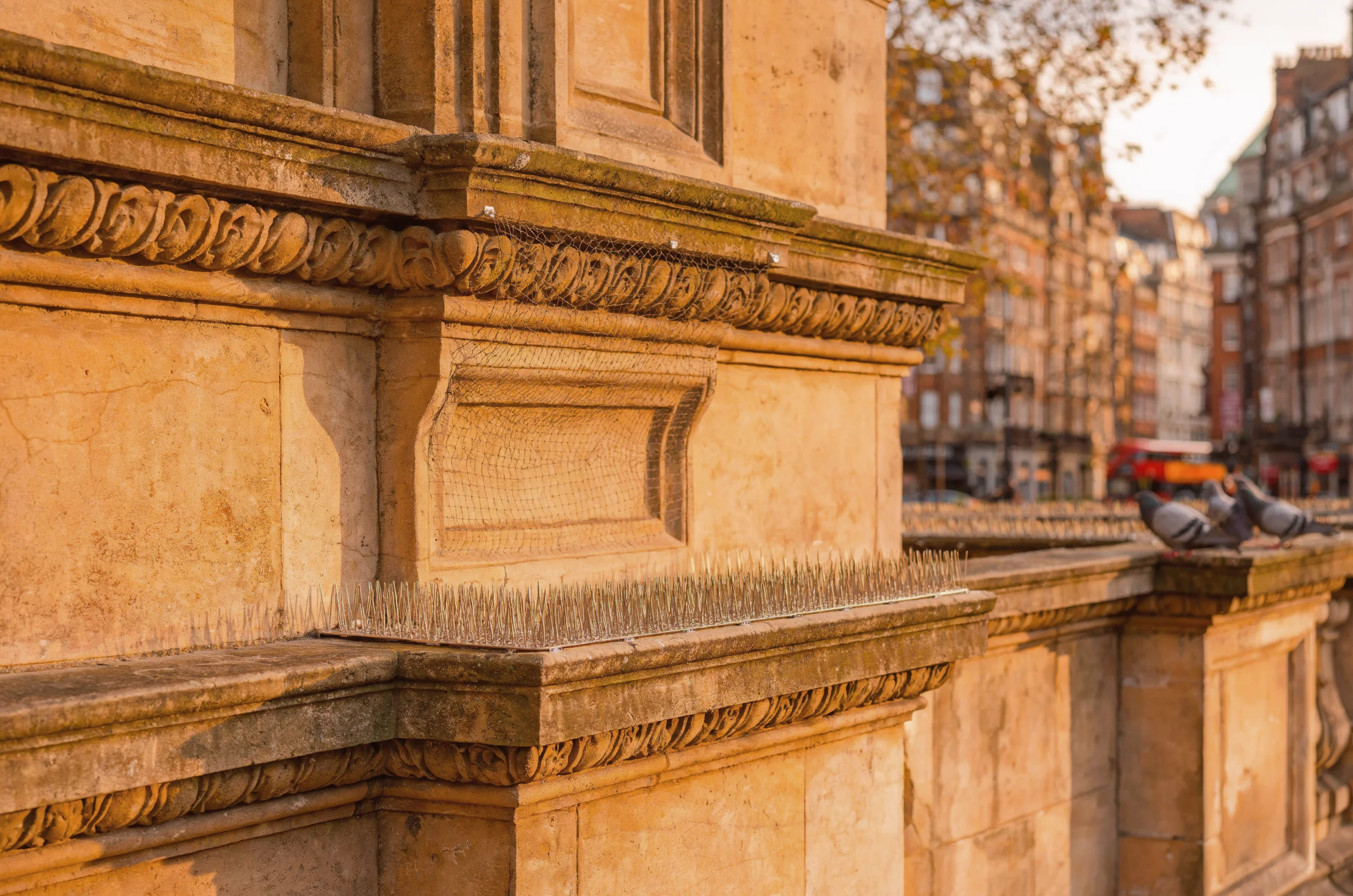
Yes, you may need listed building consent before installing bird deterrents if the work affects the building’s special architectural or historic character. Reversible fixings, discreet wires and small installations still need careful assessment.
For bird proofing listed buildings, UK consent requirements depend on the location and proposed work. This article focuses on London and England. Scotland, Wales and Northern Ireland have their own heritage arrangements, so check the relevant process locally. The practical starting point is a clear proposal showing where the deterrent will sit and how it will attach.
Does every listed building need consent for bird deterrents?
Consent depends on the effect of the proposed work, so there isn’t a universal answer for every listed property or deterrent.
In England, the central question is whether an alteration would affect the building’s character as a place of special architectural or historic interest. That involves its appearance and its historic materials. A fixing can raise concerns even when it is difficult to see from the pavement.
For example, imagine netting across a decorative stone balcony. Its supporting wires might change the view of the stonework, while the anchors might require holes in it. Both details belong in the assessment.
A Grade II listing does not give an automatic exemption for small works. Nor should you assume that protection stops at the front wall or the features mentioned in the list description.
I’d begin by photographing the affected ledge, roof or opening, including wider views that show its position on the building. Record existing damage and any old deterrents separately.
If the contractor cannot explain where every fixing will go, the proposal needs more detail before anyone can assess its heritage impact. Get those details before agreeing an installation date.
Who decides whether my London building needs consent?
Your local planning authority is the starting point for advice about listed building consent, usually through its planning or conservation team.
A conservation officer advises on protecting historic buildings. Send them a specific proposal rather than asking whether bird spikes are generally allowed. A photograph of the frontage alone leaves unanswered questions about materials, attachment points and visibility.
Useful information includes the address, listing details, photographs and a marked drawing of the proposed installation. Explain the problem too: repeated roosting above an entrance requires a different assessment from birds entering a roof opening.
Ask the council what process it recommends and what written confirmation it can provide. Informal advice and formal consent have different roles. Keep the response with your property records, and check that it addresses the actual design you intend to install.
A contractor’s assurance cannot replace a decision from the relevant authority. Equally, a neighbour’s approved installation does not establish what is acceptable on your building.
If the council needs a heritage professional’s assessment, ask what level of detail would answer its concerns. That helps you commission useful advice without producing a report that misses the fixing locations.
Are reversible or hidden fixings exempt from consent?
Reversible or hidden fixings can reduce the impact of bird proofing, but neither quality automatically removes the need for consent.
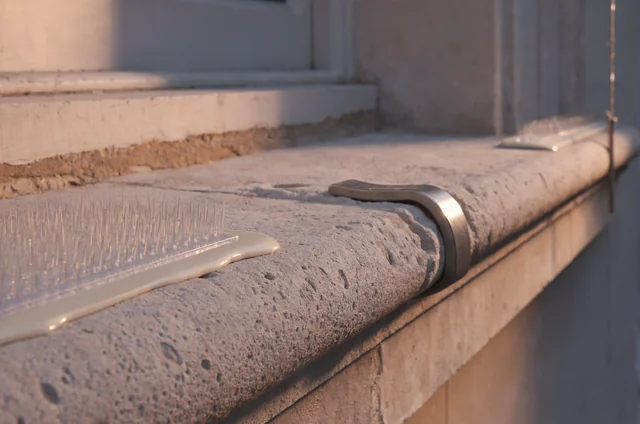
A reversible installation is one that can be removed with little lasting change to the building. The useful question is what remains afterwards: holes, adhesive residue, staining, damaged paint or missing surface material.
Adhesive-mounted spikes may avoid drilling, yet removal could disturb a fragile finish. A clamp may leave no hole but still place pressure on a weak edge. Fixing into a mortar joint also needs assessment of the joint’s condition and the loads involved.
Visibility needs similar care. A deterrent hidden from the street might be prominent from a courtyard, neighbouring window or another important viewpoint. Supporting posts can be more noticeable than the wire or net itself.
Ask the installer to describe installation and removal in writing. Include the proposed fixing material, attachment points and any repair expected after removal.
Where the surface is delicate or its condition is uncertain, involve someone with appropriate conservation knowledge before choosing an adhesive or anchor. Any trial attachment should be agreed beforehand; an unauthorised test can leave the very damage you are trying to avoid.
Which proofing methods should I discuss with the council?
Discuss methods that address the birds’ actual behaviour and can be explained through a detailed fixing and maintenance plan.
The suitable design depends on whether birds are landing on a ledge, sheltering beneath an overhang or entering an opening. Product names alone tell the conservation officer very little about the finished installation.
| Method | Property detail to assess | Installation questions to resolve |
|---|---|---|
| Tensioned bird wire | Narrow ledges and window details | Where will posts attach, and how will tension affect the supporting material? |
| Bird spikes | Ledges, pipes and other landing points | How will bases attach, how visible are they, and what would removal leave? |
| Bird netting | Recesses, courtyards and sheltered spaces | Where will perimeter anchors sit, and how will inspection access be maintained? |
| Mesh or chimney guards | Openings, vents and chimney terminals | Will the design preserve ventilation, drainage and any working flue? |
These are issues for assessment, rather than a list of methods accepted on listed buildings.
Our guide to chimney pigeon proofing options explains the different installations an owner might encounter. A working chimney also needs suitable advice about its continued operation.
Ask for drawings of the proposed design on your property. Show the full supporting system, including anchors and access openings, before requesting a heritage decision.
What information should I send with a consent enquiry?
Send enough detail for the council to understand the bird problem, the building’s significance and the physical effect of the proposed solution.
A short, specific submission is more useful than a brochure full of possible products. The proposal should identify the design under consideration.
Include:
- Clear photographs of the affected area and the surrounding elevation.
- Marked photographs or drawings showing the extent of the deterrent.
- Product dimensions, colours and materials.
- Fixing positions, attachment methods and any drilling or adhesive.
- A description of existing stone, brick, mortar, timber or metal.
- Evidence of bird activity and the reason intervention is needed.
- Arrangements for installation access, inspection, maintenance and eventual removal.
The council may also request a heritage statement. This explains why the building matters and how the proposal would affect that significance. Ask what information is proportionate to your installation.
If you ask BuzzKill Pest Control to assess the bird problem, explain at the outset that the property is listed. Ask for the proposed attachment details to accompany the treatment recommendation.
An online consent-preparation checklist could turn answers about listing status, fixings and nesting evidence into a list of documents still needed.
Keep one dated version of the proposal. If a fixing method changes, send the revision for review before installation.
Can I install proofing if birds are nesting?
You must check nesting activity before installation because heritage consent does not authorise interference with protected birds or nests.
Wild birds’ nests are generally protected while they are in use or being built. Proofing can interfere with a nest by blocking access, even when nobody physically removes it.
Watch for repeated trips into the same opening, adults carrying nesting material or food, and birds disappearing behind gutters or roof details. A nest may sit beyond the visible edge. An apparently empty ledge does not establish that a nearby cavity is unused.
Avoid relying on a fixed nesting calendar. Pigeons can breed throughout the year, so a winter appointment still needs a nesting check.
Our explanation of bird nest removal rules covers the separate questions that arise before disturbing a nest. Any proposed reliance on a wildlife licence needs its own assessment of the species, purpose and applicable conditions.
Roof openings can also raise questions about bats. If there is evidence of bat use, seek specialist ecological advice before sealing gaps.
Have the area checked close to the installation date. If an active nest or uncertain wildlife use is found, stop the affected work and obtain advice about lawful timing or authorisation.
Does listed building consent cover planning and other permissions?
Listed building consent addresses heritage effects; other permissions may still need separate checks.
Ask the planning authority whether planning permission is also relevant to your particular proposal. A consent covering one aspect of the work should never be assumed to settle every other requirement.
Ownership and access permissions matter too. A leaseholder may need the freeholder’s approval to alter external walls or a shared roof. Scaffolding or equipment extending onto a pavement can create another permission question.
A conservation area is an area designated for its special architectural or historic interest. Being inside one does not itself mean that every building is statutorily listed. Local listing is another distinct designation, so confirm the property’s precise status rather than relying on an estate agent’s description.
Some sites have additional heritage designations or particular consent arrangements. Mention any designation you know about when making the enquiry.
I’d keep a simple record of each permission question, who is responsible for answering it and the document that records the answer. Include wildlife checks and access arrangements in that record, then resolve outstanding items before authorising the work.
Who is responsible in a leasehold or rented property?
Responsibility for arranging and paying for proofing depends on ownership, the lease or tenancy agreement, and the location of the problem.
A pigeon problem outside one flat may involve a shared roof, communal gutter or external wall controlled by the freeholder. The person experiencing the nuisance may have limited authority to alter that part of the building.
Start by sending the landlord, freeholder or managing agent photographs and a clear description of the affected area. Ask who controls the surface and who will coordinate the consent enquiry.
Our guide to leaseholder and freeholder responsibility explains the lease provisions worth checking. Get advice if responsibility remains disputed.
Agree who will instruct the survey, submit any application, approve the final specification and retain the paperwork. Also establish who will arrange access through individual flats and who will maintain the installation.
Owner approval and public consent need separate attention. Having one does not settle the other.
For a tenant, the useful first action is usually a documented report to the landlord or agent. Avoid attaching deterrents to shared or historic surfaces while responsibility is unresolved.
How much time and money should I allow?
Allow for assessment, permissions, access and maintenance as well as the deterrent itself.
A product price tells you little about the total cost on a listed building. Two similar ledges can need different access arrangements, fixing designs or conservation input.
Ask for the quotation to separate the survey, design information, access equipment, cleaning, installation and future inspections. Identify any heritage or ecological advice that needs a separate appointment.
The guide to pigeon proofing window costs can help you recognise pricing components. Obtain a site-specific quotation for the listed property before setting the budget.
For timing, ask the council about its current enquiry and application process. An incomplete submission, a revised design or a wildlife constraint can affect the installation date.
A same-day inspection does not establish that installation can proceed immediately. Keep the survey appointment and installation commitment separate.
If roof repairs or other access works are planned, raise bird proofing during their design stage. Sharing access may be practical, but each proposed alteration still needs assessment. Ask contractors to identify any booking charges that would apply if permission or nesting checks delay installation.
Can I clean droppings or make the area safe while I wait?
You can assess immediate safety measures while the proofing proposal is reviewed, but cleaning historic surfaces needs a suitable method.
Start with the location of the problem. Droppings on an entrance step raise a different immediate concern from fouling on an inaccessible roof ledge. Restrict access to an affected area where necessary and arrange an assessment of safe cleaning.
Avoid dry brushing, which can disturb dust. Keep people away from cleaning activity, and use an appropriate work method and protective equipment for the conditions.
Historic masonry needs particular care. Strong chemicals, abrasive tools and high-pressure washing may damage a vulnerable surface. Do not apply a household acid, bleach or improvised neutralising mixture to stonework.
Our article on guano and masonry damage provides background to the surface problem. The cleaning specification still needs to suit the actual material and its condition.
Ask whether the proposed cleaning or repair work itself needs heritage approval. An urgent nuisance does not create a general exemption for permanent alterations.
If masonry is loose, an entrance cannot be used safely or a gutter appears overloaded, describe the immediate risk clearly to the property manager and relevant specialists before work begins.
What happens if bird proofing is installed without consent?
Unauthorised work affecting a listed building’s protected character can lead to enforcement and criminal consequences in England.
The first task is to establish what was installed, what permissions exist and whether the completed work matches them. Approval for one design may not cover a different anchor position or attachment method.
If installation is still under way, pause the affected work while the position is checked. Photograph the deterrents, supporting components and any visible damage. Keep the quotation, instructions, product information and correspondence.
Contact the local planning authority promptly. Depending on the circumstances, the owner may also need advice from a conservation professional and a solicitor experienced in listed buildings.
Applying for consent after installation does not guarantee approval or automatically resolve liability for earlier work. The authority may require changes or remedial work.
Avoid pulling off glued components or removing anchors without advice. Removal can cause further damage, and the repair method may need agreement.
An installation inherited from a previous owner also deserves a records check. Its age alone does not establish that it was authorised. Give the council the available paperwork and ask how it wants the existing installation assessed.
When should I bring in a bird control specialist?
Bring in a bird control specialist when the species, access, nesting status or suitable proofing design is uncertain, ideally before an application is prepared.
A useful assessment should establish where birds land, shelter, enter and nest. Ask the assessor to record inaccessible areas and explain any limits to the inspection.
You also need a design that can be maintained. Ask how staff will inspect behind netting, reach gutters and respond if a bird becomes trapped. For roof openings, establish how ventilation and other building functions will be preserved.
When discussing the property with BuzzKill Pest Control or another contractor, request evidence of relevant training, insurance and comparable work. Ask directly about experience with the materials and access conditions at your building.
Professional registration can form part of that check. The proposed fixing details and heritage experience still need assessment on their own merits.
A bird control contractor may need to work alongside a conservation professional, ecologist, roofer or chimney specialist. Agree who is responsible for each part of the specification.
If a contractor proposes installation before identifying the fixings or checking nesting activity, ask for those gaps to be resolved before accepting the work schedule.
What should I check after the proofing is installed?
Check that the completed installation matches the agreed design and that someone is responsible for its inspection and upkeep.
Compare the work with the approved drawings or written specification. Look at anchor positions, colours, supporting posts and the extent of coverage. Photograph the finished installation from the same viewpoints used in the enquiry.
Keep the consent documents, any conditions, installation instructions and maintenance information together. Record any change agreed during the work.
Ask the installer to demonstrate safe inspection access. Netting needs attention if it becomes loose or damaged, and gutters must remain accessible for cleaning. Set an inspection schedule suited to the system and property.
Report trapped wildlife promptly. Prevent further disturbance and arrange an appropriate response rather than attempting an unsafe rescue at height.
Bird activity may also move to another part of the building. Record new landing or nesting locations before extending the deterrents; an extension may introduce different heritage effects.
If the installation differs from the agreed design, resolve that discrepancy with the contractor and relevant authority. If birds return despite an intact system, arrange a fresh assessment of their access and behaviour before adding more fittings.
Need professional help? BuzzKill offers fast, reliable pest control services across London and Essex.