
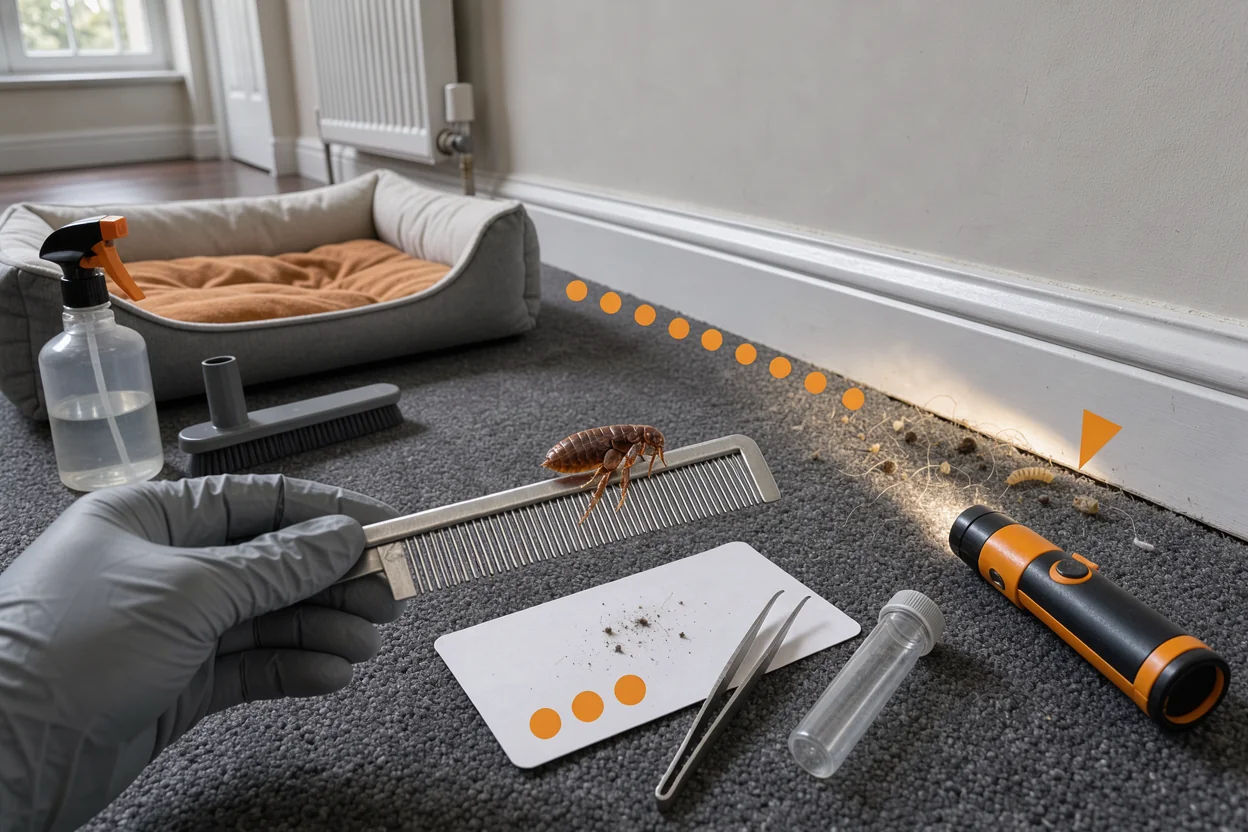
Flea control for homes means coordinating pet care, cleaning and any suitable household treatment. This checklist takes you through pet beds, sitting rooms, bedrooms, kitchens and overlooked corners so you can record evidence and decide what needs attention.
Allow 30–60 minutes for the initial inspection; laundry, cleaning and treatment take longer. Bring a torch, a vacuum with a crevice attachment, sealable bags, a notebook and a flea comb if you have pets.
I’d start wherever an animal rests, then follow the route through the house. A room with no fresh evidence on repeated checks is reassuring, but one clear inspection cannot confirm that every flea stage has gone.
Find the evidence and mark the affected rooms
Confirming what you’ve found helps you focus the work and avoid treating the wrong insect.
Look for insects before relying on bites. Fleas are small, dark insects that can jump; itchy marks alone cannot confirm their presence. If you find a suspected flea, collect it in a secure, transparent container or take a clear photograph. Record the room and exact spot. When identification remains uncertain, keep cleaning manageable and seek identification before applying an insecticide.
Draw a simple room map and mark every animal resting place. Include the sofa arm, a favourite chair, the landing and spaces beneath beds. If several resting spots sit outside the main pet area, include them in your cleaning route. In a rented London flat, distinguish private rooms from shared corridors so the landlord or managing agent receives a precise account of where evidence appeared.
Separate the visible insects from the stages hidden around them. Eggs can fall into resting areas, larvae are the immature feeding stage, and pupae develop inside protective cocoons. Finding adults therefore means checking surrounding fabrics and floor edges too. Mark each affected location for cleaning and follow-up, rather than treating the single patch where you first noticed an insect.
Check pet beds and favourite resting places
An animal’s usual sleeping spots connect veterinary flea care with the work needed around the home.
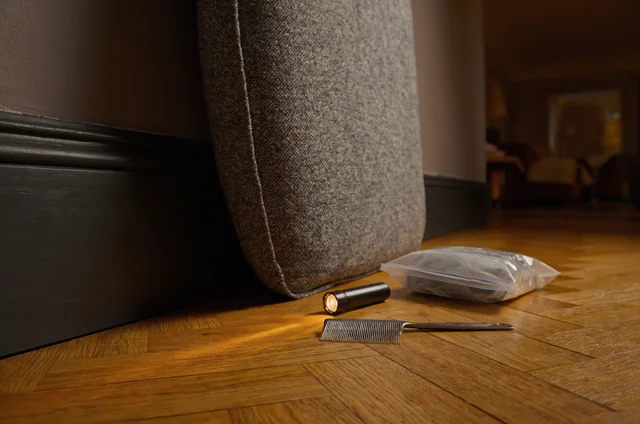
Check your pet with a flea comb if it tolerates handling. Insects or dark particles caught in the comb give you material to show a vet; scratching alone leaves the cause uncertain. Keep collected material secure and record what you found. If the animal seems unwell or has sore skin, make veterinary advice the next step instead of trying several treatments.
Review flea protection for every pet in the household. Check which product each animal receives, whether it suits that species and when the next application is due. If one animal’s protection is missing or uncertain, discuss a coordinated plan with your vet. Never apply a household floor spray to an animal, share products between species or add another treatment without checking compatibility.
Lift pet bedding and inspect the floor underneath. Look along seams, beside the bed and beneath nearby furniture for insects and collected debris. If you find evidence, bag washable bedding where it sits and add that floor area to the vacuuming route. Keep pets away while you work, and avoid moving their unwashed bedding onto a previously clear sofa or bedroom floor.
Work through the sitting room and soft furniture
The sitting room deserves close attention wherever pets settle beside people or sleep between cushions.
Remove loose sofa cushions and inspect seams with a torch. Check the cushion edges, seat platform and gaps beside the arms. If a suspected flea appears, photograph or collect it, then vacuum accessible seams using the appropriate attachment. Follow the furniture care instructions. Leave heavy furniture in place if moving it would be unsafe, and record the inaccessible area for later attention.
Check rugs, carpet edges and the floor beneath favourite chairs. Concentrate on places where an animal lies, rather than giving every surface equal attention. Visible insects or repeated sightings in one patch make that patch a priority for cleaning and monitoring. Vacuum slowly along accessible edges and beneath movable furniture, then record the location so tomorrow’s check covers the same ground.
Inspect throws, cushion covers and blankets before carrying them elsewhere. If a washable item has been used by a pet or lies beside confirmed activity, bag it for laundering. Check the care label before choosing a programme. For delicate upholstery, avoid soaking, steaming or spraying on impulse; identify a suitable cleaning method first, particularly where colourfastness or electrical components could be affected.
Inspect bedrooms, children’s rooms and spare rooms
Bedroom checks should follow actual evidence and animal access, including occasional visits that are easy to overlook.
Look beneath beds and around bedside floor edges. Check stored bags, clothing piles and any blanket a pet uses. Finding evidence beneath one bed means including the surrounding floor and nearby textiles in the cleaning plan. Bites noticed after sleeping do not establish the insect involved, so retain a specimen or photograph before choosing a flea-specific chemical treatment for the room.
Separate washable bedding and soft toys from items needing specialist care. If a pet sleeps on the bed, include the bedding in your laundry assessment even when insects are difficult to spot. Bag items before moving them through the house. Follow each care label, and keep household insecticides off pillows, toys, mattresses and other surfaces unless the product explicitly permits that particular use.
Open spare rooms that pets or previous occupants have used. Check carpet edges, stored blankets and the space beneath occasional furniture. A quiet room with fresh sightings belongs on the same inspection record as the busy rooms. Avoid shifting its contents into another bedroom to make cleaning easier; sort, bag and clean suitable items within the affected room before moving them.
Follow the floors through halls, kitchens and bathrooms
Hard floors and less-used rooms still need checking when they connect affected areas or contain pet bedding.
Inspect hall rugs, stair edges and the landing. Look especially at places where a pet waits, sleeps or watches the front door. If evidence follows that route, include each stop in the vacuuming plan instead of treating only the main living room. Use an attachment that reaches accessible corners safely, and avoid trailing cables or leaving equipment across stairs while other people use them.
Check kitchen floor edges and any pet sleeping corner. Move bowls and food before cleaning nearby floors, then inspect beneath accessible freestanding furniture. If you find suspected fleas, record their location and clean the area appropriately. Keep any household insecticide away from food, utensils and food preparation surfaces unless its label specifically allows the intended application; washing the floor may be sufficient while identification is pending.
Look around bathroom mats, utility cupboards and downstairs toilets. These areas need closer attention when animals rest there or laundry collects on the floor. Positive evidence means adding the relevant mat, textile pile or floor edge to your route. Dry, tidy rooms without animal access can receive a lighter inspection, but check them again if fresh sightings appear outside the original affected area.
Wash textiles and deal with vacuum contents
Laundry and vacuuming need a clear sequence so cleaned items return to prepared areas.
Sort textiles by their care labels before selecting a wash. Where the fabric permits it, a 60°C programme is a practical option for suitable bedding; check our guide to flea bedding wash temperatures before choosing the cycle. If an item cannot tolerate that temperature, obtain suitable cleaning advice. Avoid assuming a brief cool wash has resolved the problem, and keep unprocessed items separate from clean laundry.
Clean the resting area before putting washed bedding back. Vacuum the accessible floor, bed frame or pet-bed base, then follow any applicable treatment instructions. If the floor has already received an insecticide, check the cleaning restrictions before vacuuming or washing it. Keep clean bedding in a clean bag or cupboard until the space is ready, rather than placing it beside the unwashed pile.
Empty the vacuum according to its instructions after cleaning affected areas. If it uses disposable bags, seal the removed bag before placing it in the appropriate household waste container. For a bagless machine, transfer debris carefully into a sealable waste bag and follow the manufacturer’s cleaning guidance. Inspect the attachments afterwards, and store the machine away from clean bedding until you have dealt with its contents.
Check balconies, stored fabrics and shared building edges
The inspection should include nearby spaces that may explain repeated activity or animal access.
Check accessible balconies, enclosed porches and outdoor pet shelters. Look at cushions, bedding and the threshold where an animal enters the home. If you find suspected fleas, include suitable washable items and accessible resting surfaces in the cleaning plan. Keep indoor products within their labelled uses, and avoid spraying an entire garden or balcony simply because activity has appeared in one indoor room.
Inspect stored fabrics at floor level without disturbing unsafe spaces. Blankets in an accessible cupboard deserve attention when animals have used them or evidence appears nearby. Bag affected washable items and check the surrounding floor. Leave loft voids, unstable storage and difficult roof spaces for an appropriate inspection; flea control does not require balancing on furniture or reaching into an unidentified animal nest.
Record signs of another animal source or activity in shared areas. Droppings, nesting material or repeated sightings near a communal threshold need separate assessment. Our household pest prevention guide gives wider context for checking access gaps. If an animal may still occupy a void, arrange identification before sealing it. In a block of flats, give the managing agent the location and photographs rather than treating communal spaces yourself.
Decide whether a household treatment fits the evidence
Any chemical treatment should follow confirmed evidence, the product label and the needs of everyone using the property.
Check that the product is intended for domestic fleas and the proposed surface. Read the full label before opening it, including restrictions concerning children, pets, aquariums and ventilation. If the wording does not cover your intended use, stop and obtain advice. Treating skirting boards means using an appropriate product exactly where permitted; it does not mean coating every visible edge throughout the house.
Write down the application and re-entry instructions. Check who must leave, what needs removing and when people and animals may return. If those arrangements are unclear or impractical, professional assessment is the sensible route. When considering BuzzKill Pest Control or another provider, use pest controller credential checks to assess relevant qualifications and ask for a clear explanation of the proposed treatment and aftercare.
Keep a record of products already used, including veterinary treatments. Photograph packaging and note dates, rooms and surfaces. If you have used several products without a clear plan, avoid adding another while seeking advice. During a BuzzKill Pest Control inspection, this record can help the technician assess previous applications alongside fresh evidence. Keep packaging available so instructions can be checked accurately.
Track fresh flea activity after the first clean
Follow-up checks should show where live insects remain and whether the cleaning and treatment plan needs adjustment.
Recheck the same marked locations and record fresh sightings. Note the room, date and whether you saw a live insect or only old debris. If sightings spread into additional rooms, expand the inspection and review the plan. A useful digital checklist would let you select each room, log live fleas and set reminders based on the treatment instructions, without turning old bite marks into evidence of new activity.
Continue suitable vacuuming and laundry while respecting treatment restrictions. Where no product instructions prevent it, regular vacuuming keeps attention on resting areas and accessible floor edges. If a technician has treated the property, use the written aftercare schedule for those surfaces. Record any area you cannot clean as instructed, such as a heavy sofa base, so it can be addressed during follow-up.
Check the pet-care plan again if fresh activity continues. Confirm that every relevant animal’s treatment remains on schedule and that bedding has returned to cleaned areas. If either part has been missed, correct it with appropriate advice before assuming the household product has failed. Keep using the room record, and follow the product or technician’s review interval rather than choosing an arbitrary date for another application.
Questions that arise while clearing affected rooms
These decisions often come up once the first inspection and laundry sorting are under way.
Can there be fleas in a home without pets?
Yes. Previous occupants’ animals, visiting pets or another animal source may explain their presence. Check the property history and the locations of confirmed sightings before deciding where treatment belongs.
If activity clusters beside a void, roof space or shared boundary, have that area assessed rather than repeatedly spraying the nearest room.
Why might live fleas appear after cleaning?
Developing fleas can remain in protected places, and adults may emerge after the first round of cleaning. A fresh sighting therefore needs to be recorded against the treatment stage and aftercare instructions.
Avoid immediately repeating an application. Keep a specimen where possible and use the agreed follow-up plan to judge whether further treatment is needed.
Does every room need insecticide?
That decision depends on the evidence, animal access and the product or professional treatment plan. Every room can be inspected without automatically receiving a chemical application.
Where a room has no fresh evidence, record it and monitor it. Where confirmed activity continues, review both the room and the animal resting places connected to it.
Match today’s findings to the appropriate response
Use the inspection record to distinguish rooms needing observation from those requiring cleaning or prompt assessment.
Monitor rooms where identification remains uncertain and no live fleas have been confirmed. Keep photographs, revisit the marked locations and avoid treating bites as proof of a particular pest. If repeated checks produce a specimen, arrange identification and update the room map. Leave a clear note of what you found, rather than recording the whole property as affected because one person has itchy skin.
Begin coordinated cleaning when evidence is limited and the work is manageable. Bag suitable textiles, vacuum accessible resting areas and check veterinary flea protection for all relevant pets. If the labels, access or household arrangements make a proposed treatment unsuitable, leave that application out until you have advice. Keep the initial specimen and product record so later decisions have a reliable starting point.
Put widespread confirmed activity or an unexplained recurring source in the prompt professional assessment category. A same-day discussion is sensible when several rooms are affected or safe treatment arrangements are unclear. Signs that an animal is unwell belong with a vet. Keep the room map, photographs, product packaging and pet-treatment dates together so the appropriate professional can assess the evidence.
Need professional help? BuzzKill offers fast, reliable pest control services across London and Essex.