
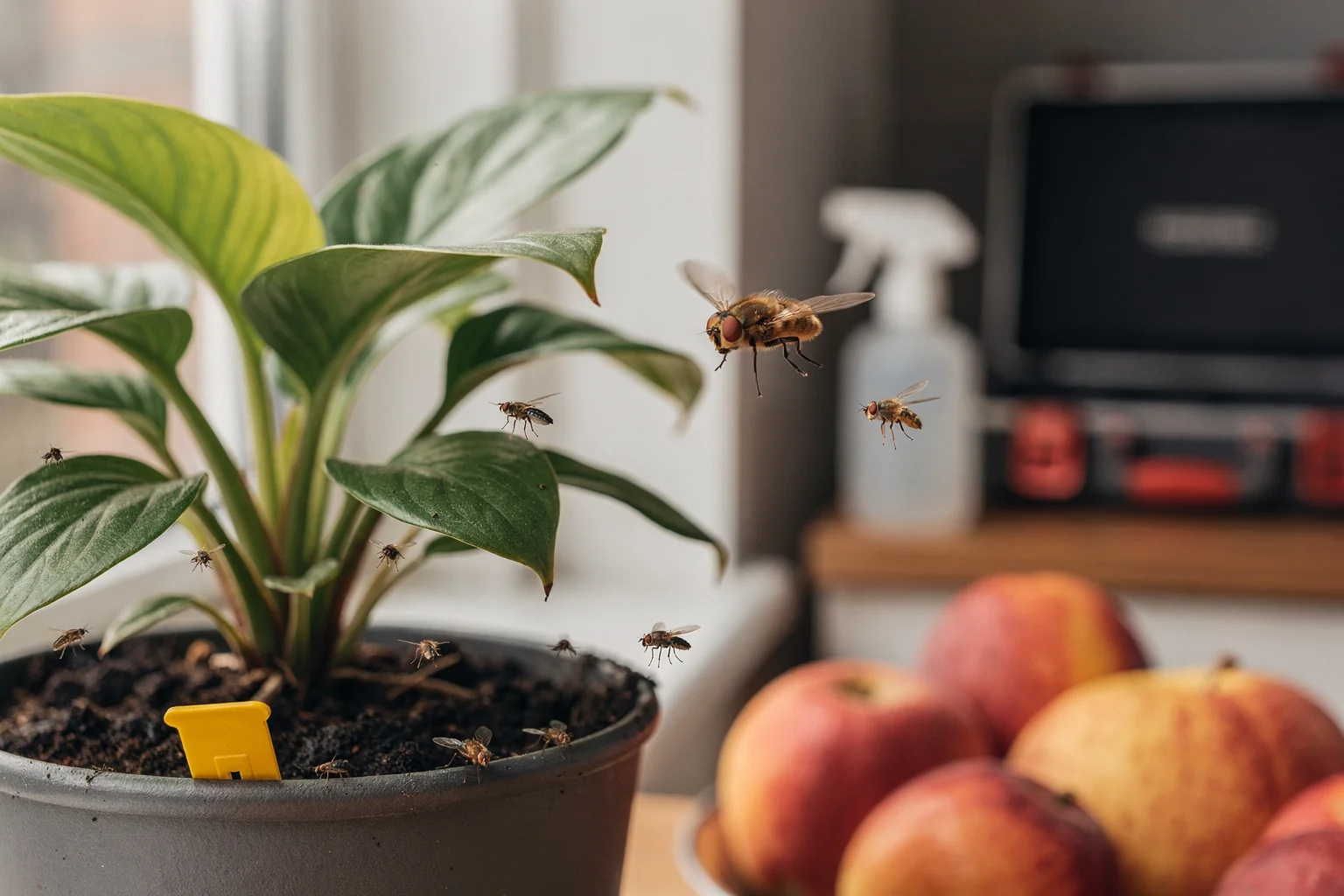
Lina noticed them on a Tuesday evening while watering her peace lily. Tiny dark flies lifted off the compost in a lazy, wobbling cloud before settling back onto the soil. She’d had fruit flies the summer before when a bunch of overripe bananas sat on the counter too long. So she reached for the vinegar trap recipe she’d bookmarked last year. Two days later the trap was still empty and the flies were still there.
That’s the puzzle so many plant lovers face. They look similar at a glance — a small, darting smudge — but fruit flies and fungus gnats are not the same insect, not even close relatives. What works for one can be completely useless for the other, and guessing wrong means weeks of frustration while the real problem quietly multiplies in your potting compost. This guide walks you through the handful of simple clues that settle the question, and then shows you exactly how to act on the answer.
How to Tell the Two Apart in Your Home
When both pests can be roughly 3 mm long and dark enough to blur into the wallpaper, you need a reliable field identification. In practice, three things give them away in seconds: what they look like up close, how they move, and where you find them.
Face and body: the red-eye test
Get close enough to see the eyes and you’ve already won. Fruit flies are usually tan to brown and have large, bright red eyes — the kind that stand out even when the rest of the insect is a blur. The common backyard fruit fly, Drosophila melanogaster, has a compact, rounded body that looks like a tiny house fly. Some dark-eyed fruit flies exist, but indoors the red-eyed variety is far more common and easily recognised.
Fungus gnats (sometimes called sciarid flies in UK garden centres) are a different shape altogether. They are slender insects with long, spindly legs and long antennae. Their body is dark grey or black, and their eyes are so small you might not notice them without a hand lens. As the University of Maine Extension guide points out, fungus gnats are frequently mistaken for fruit flies or drain flies precisely because they are small and dark, but the mosquito‑like profile is the giveaway.
Fruit flies are typically tan to brown with bright red eyes that are easy to see, while fungus gnats look quite different — slender, black or dark grey insects that look like tiny mosquitoes with long, spindly legs and weak, erratic flight.
— Bettertermite, Fungus Gnats vs Fruit Flies
Flight pattern: soar or stagger
One of the easiest field signs doesn’t need a magnifying glass. Fruit flies are strong, capable fliers that hover in loose clouds above fruit bowls, bins, and sinks — they’ll zip off quickly if you wave a hand. Fungus gnats are clumsy in the air. They make short, start‑stop flights, drifting a few centimetres and then dropping back onto the soil. If the swarm seems to stick around a Monstera rather than the kitchen island, you’re almost certainly looking at fungus gnats.
Location: plant pot or fruit bowl
This sounds obvious, but people often miss it because the insects don’t always stay put. Fungus gnats breed in the top layer of moist compost. You’ll see the adults resting on leaves, wandering across the soil surface, or drifting near the window next to the plant. If you see tiny translucent larvae with black heads squirming in the top centimetre of compost when you gently poke it, the case is closed.
Fruit flies want fermentation. They patrol overripe fruit, wine dregs, recycling bins, and drains where food residue collects. A potted plant isn’t their first choice unless the soil itself is rotting with something sugary — which is rare in a typical houseplant.
Where They Come From and Why They’re in Your Home
Understanding breeding sites is what turns temporary relief into lasting control.
Fruit flies are good at hitchhiking. They arrive on the skins of fruit you bring home from the shops, and once a female finds a suitable fermenting surface, she can lay hundreds of eggs. The larvae feed on the yeast and bacteria that break down the fruit, and the whole cycle can complete in a little over a week in a warm kitchen. In a flat in Stratford or a terrace in Waltham Forest, a poorly sealed compost caddy is often the hidden factory.
Fungus gnats have a different backstory and it’s closely tied to how we look after houseplants in modern UK homes. They lay eggs in moist, organically rich growing media. Peat‑based compost — still widely used — stays damp for long periods, and that slow decomposition creates an ideal nursery. When central heating kicks in during autumn and winter, the topsoil warms up enough to accelerate the breeding cycle, and infestations peak just when you thought the flying pest season was over. A Scottish Government‑funded report that examined the shift to peat‑free growing media noted that sciarid flies (the technical name for fungus gnats) can emerge in high numbers from compost that holds extra moisture. If you’ve recently repotted with a water‑retentive mix, that single bag of compost can contain eggs or larvae that develop once it’s indoors.
What the Two Pests Actually Do to Your Plants
Fruit flies are a nuisance, not a plant health threat. The adults don’t bite, don’t damage foliage, and don’t lay eggs in living plant tissue. They’re after decay, and a kitchen fruit bowl is their target.
Fungus gnats are a different story. The adults are harmless — they won’t bite people and they don’t spread disease — but the larvae live in the soil and feed on fungi, decaying organic matter, and, importantly, fine root hairs. A healthy, established Monstera or peace lily can usually shrug it off, but seedlings, cuttings, and delicate herbs can suffer. If you’ve ever set a tray of basil seeds and watched the seedlings collapse at soil level, fungus gnat larvae may have been part of the problem. The damage is slow and easy to miss — slight stunting, yellowing lower leaves — until the root system is compromised enough to make the plant wilt even when the compost is damp.
This is why identifying the pest matters so much. Treating fungus gnat larvae with a fruit‑fly vinegar trap does nothing about the 200‑plus eggs that a female can deposit in the topsoil. You can catch every adult in the room and still have a fresh generation emerging a week later.
Getting Rid of Them: The Right Fix for Each Pest
Once you’ve identified which insect you’re dealing with, the treatment plan falls into place.
For fruit flies: remove the food, clean the drains
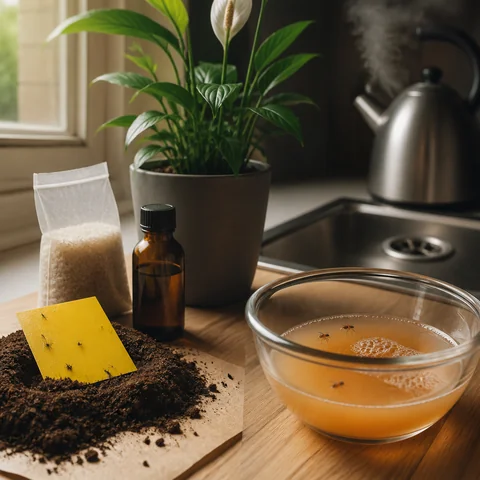
A thorough cleaning campaign solves most fruit fly issues within three or four days. Move all ripe fruit into the fridge. Take out the kitchen bin, wipe down the inside with a mild bleach solution, and seal the next bag tightly. Clean food‑prep surfaces thoroughly with hot soapy water. If flies are hanging around the sink, flush the drain with boiling water followed by a few glugs of white vinegar — the eggs and larvae thrive in the organic film lining the pipe. This practice echoes the advice given in many structural pest management guides, which highlight that fruit fly infestations often originate from within drains. A simple bowl of apple cider vinegar with a drop of washing‑up liquid will catch any adults you missed, but if you don’t remove the breeding sites, the trap is just entertainment.
For fungus gnats: dry out the soil and break the cycle
Fungus gnat larvae need moisture. The single most effective step is to let the top couple of centimetres of compost dry out completely between waterings. Many houseplants — especially succulents, snake plants, and ZZ plants — will be happier anyway. For plants that can’t tolerate drying, switch to bottom‑watering so the surface stays dry while the roots drink from below.
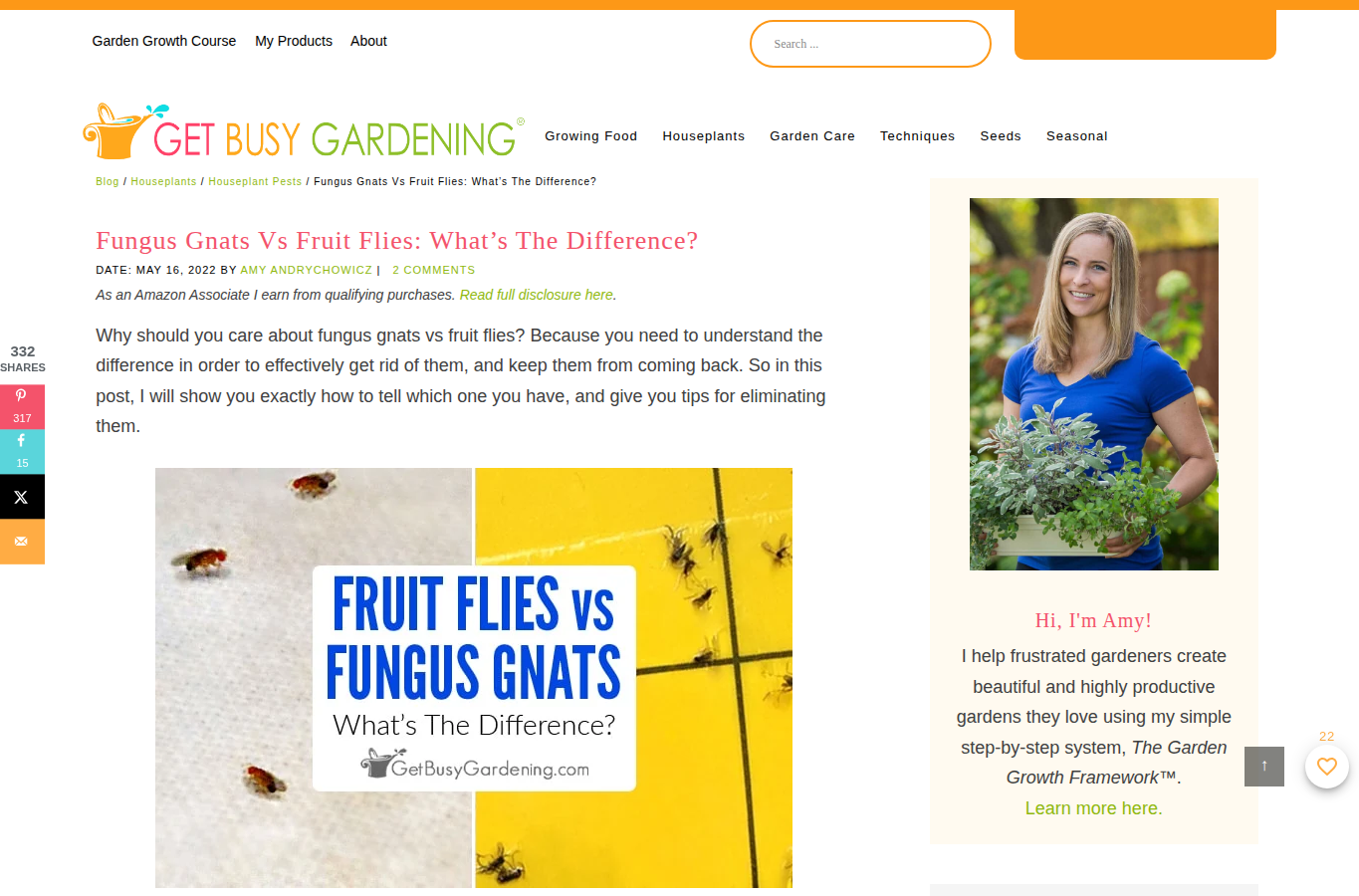
Yellow sticky traps placed horizontally just above the soil catch a huge portion of the flying adults. Combine them with a biological control if the infestation is well established. The nematode Steinernema feltiae, available from most garden centres as a powder you mix in water, penetrates and kills the larvae in the soil. As a physical backup, a hydrogen peroxide drench (one part 3% peroxide to four parts water) can knock back a heavy infestation quickly, but it’s a one‑off reset, not a long‑term strategy. The Get Busy Gardening breakdown underscores that because fruit flies and fungus gnats have completely different feeding habits and lifecycles, you need totally different treatment methods — confusing the two is the most common mistake.
If you want to explore a wider range of DIY fly control products that can be adapted for small‑fly problems, there are sprays and traps designed to interrupt breeding sites without harming plants.
When the Problem Outgrows Your Window Sill
Most home‑based infestations respond to the steps above within two weeks. The pest calendar runs year‑round, but heated rooms in autumn and winter can produce a population explosion that feels unstoppable. If you’ve dried the soil, used nematodes, and still see a constant drift of adults around the houseplants, the source may be more than one pot. In a flat with multiple plants, cross‑contamination is quick. Check the saucers, the outer decorative pots that trap moisture, and any bags of open compost stored indoors.
Fruit fly problems that persist after a deep clean usually point to an overlooked breeding site. The most common hidden culprit in London kitchens is food debris trapped in the pipes under the sink. In a café or restaurant, fruit flies can become a compliance issue. That’s when a professional survey that locates the exact breeding point pays for itself. The same goes for fungus gnats when a plant collection is too large to treat pot by pot, or when a commercial nursery or office atrium is involved. For those heavier situations, professional fly pest control that includes a site‑specific treatment plan will protect plants and premises far faster than repeat DIY cycles.
How Other Guides and Expert Sources Break It Down
A handful of detailed guides exist online, and each one brings a slightly different lens to the same identification puzzle. We’ve read through them so you can see how the advice converges — and where an article might leave out a crucial detail for UK plant owners.
Orkin
Orkin’s pest library draws on decades of commercial pest‑control experience. Their fruit flies vs gnats page keeps things clear for homeowners: colour, eye size, and location are the three tell‑tale differences. What their resource does well is nailing the size comparison — both insects are roughly 3 mm long — which stops people from dismissing “tiny” as an identifying feature. The limitation, typical of many US‑focused sites, is that the recommended products and chemical names may not map directly to what’s sold in a UK garden centre.
GreenyGardener
The GreenyGardener comparison is written in a hands‑on, home‑grower style that matches the tone of someone who has actually battled both pests. Its strength is the insistence that identification comes before any treatment. The guide runs through appearance, flight pattern, and breeding medium, then spends real time on eco‑friendly control methods such as sticky traps and beneficial nematodes. It is a practical companion for a plant enthusiast who wants to avoid synthetic chemicals.
Brooklyn Botanic Garden
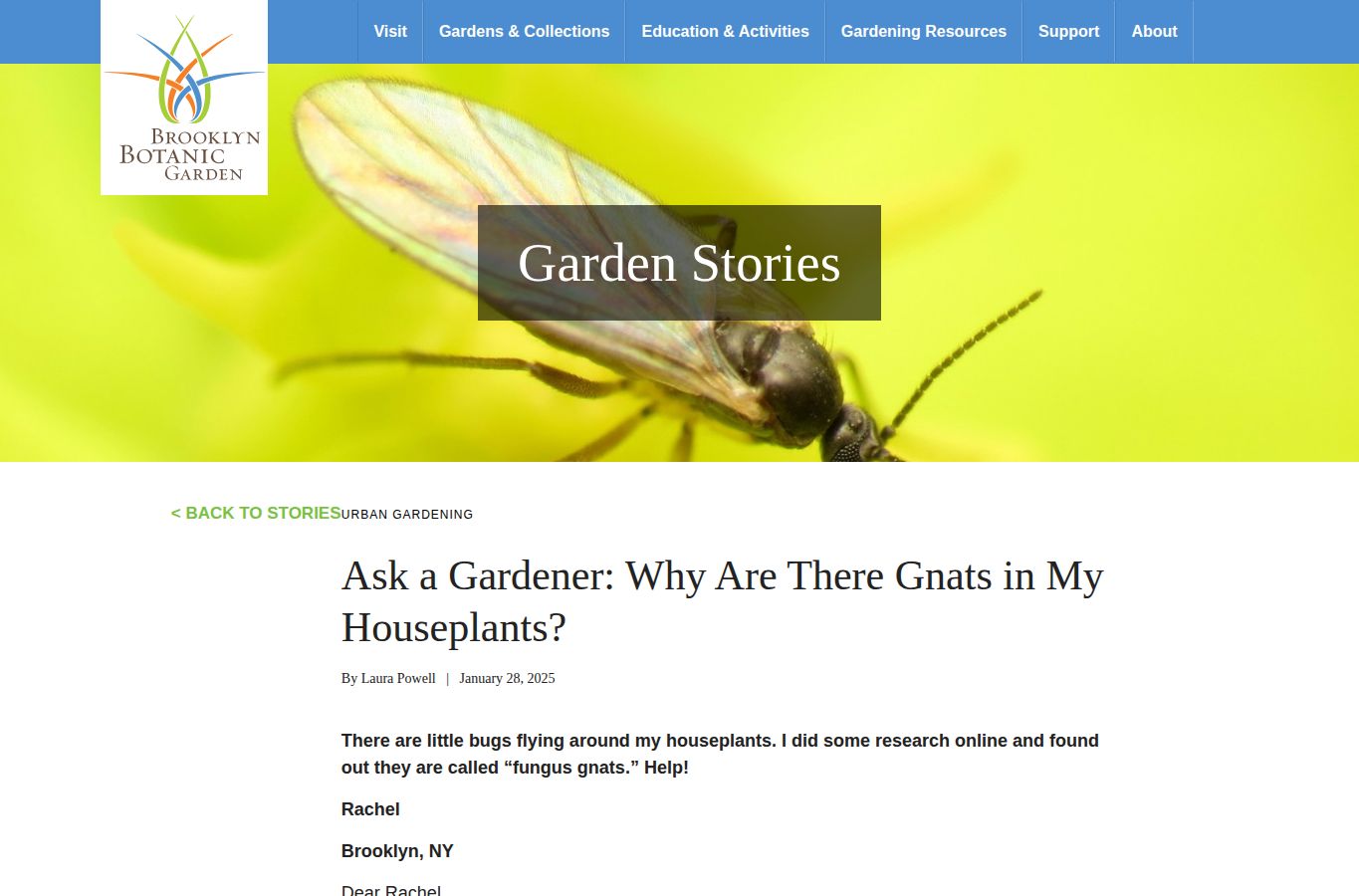
The Brooklyn Botanic Garden article frames fungus gnats as a symptom of overwatering rather than a standalone enemy. This perspective is especially useful: if you fix the moisture, the pest goes away. The author draws a parallel with fruit flies — remove the food source and the adults vanish — and plants the idea that healthy horticultural habits are the best long‑term defence. The advice to inspect for root rot if drying the soil doesn’t work is a step many quick‑fix guides miss.
TERRO
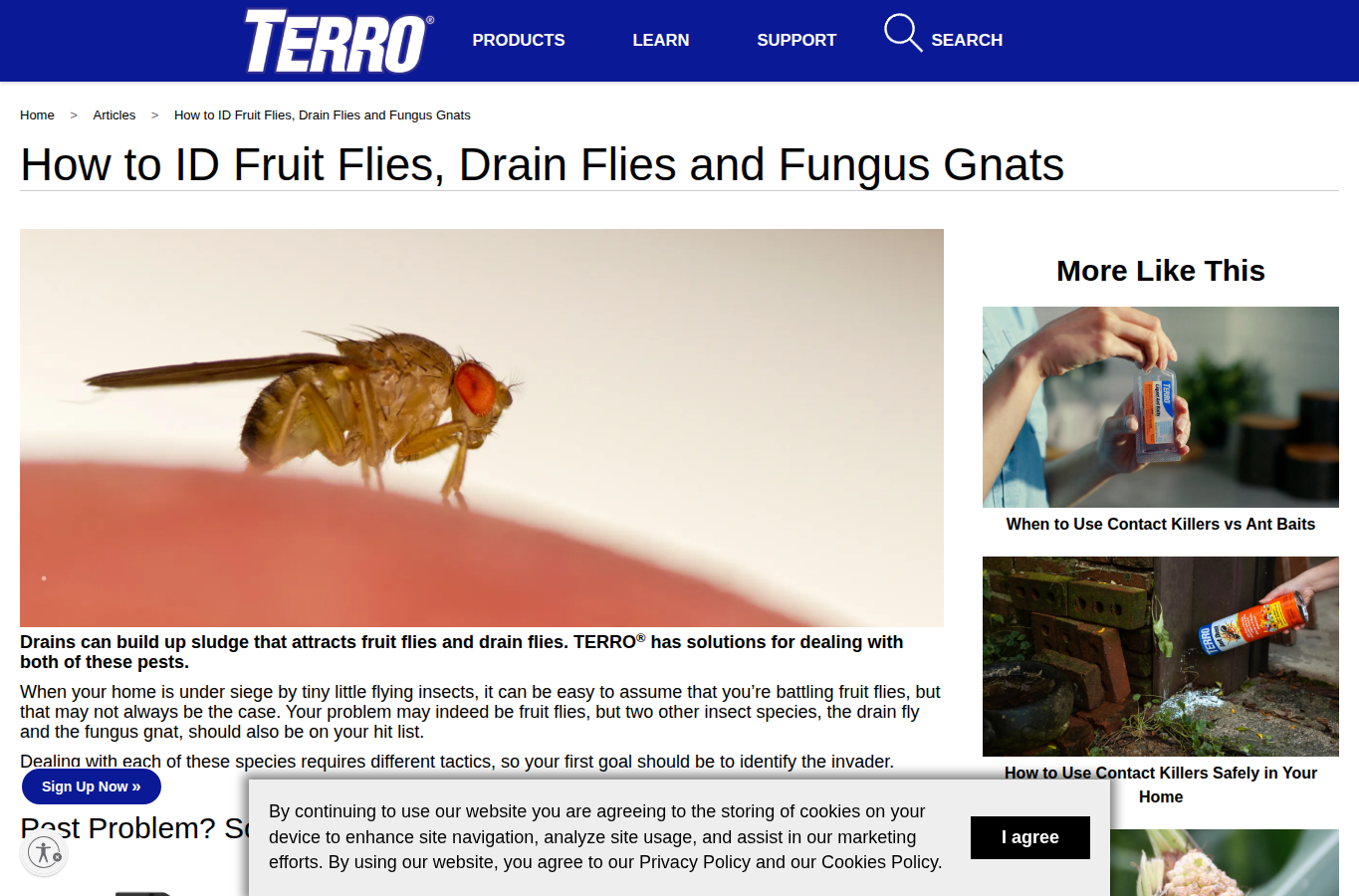
TERRO’s three‑insect identification guide adds drain flies to the mix, which is helpful because many people initially misidentify both fungus gnats and fruit flies as something coming from the bathroom. The guide provides colour photography and a simple size table, and it makes the point that each pest needs a distinct elimination approach. It’s a solid front‑line resource for someone who hasn’t yet narrowed the culprit down to just two suspects.
Seed Sheets
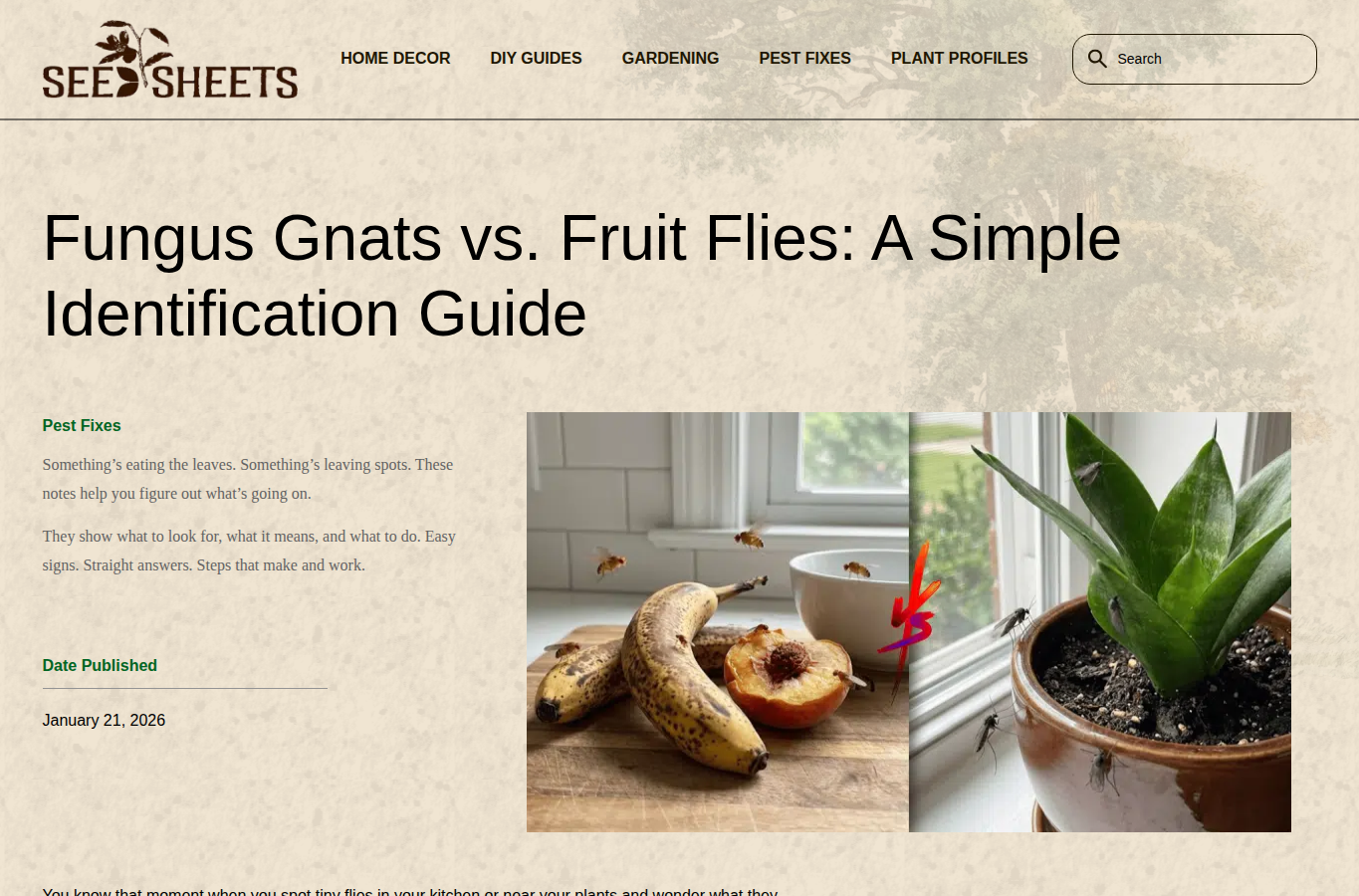
The Seed Sheets comparison is a concise, well‑organised walk‑through published in early 2026. It focuses squarely on the home setting and gives straightforward visual clues: red‑eye vs dark‑eye, plump vs skinny, hovering near fruit vs hovering near soil. If you only have two minutes to decide, this is the guide to open.
If you’ve already lost a week to the wrong trap and the flies are still drifting past your computer screen while you search for answers, the next move is simple: confirm what you’re seeing, fix the water or food source, and give the proven method a full two weeks before you judge it. When that doesn’t do it — or when you spot the same problem in a commercial kitchen, a rented flat with damp issues, or a plant‑filled office — a pair of trained eyes that can trace the infestation back to the exact breeding point is what ends the cycle for good.
Need professional help? BuzzKill offers fast, reliable pest control services across London and Essex.