
If you've just spotted the tell‑tale rust‑coloured marks on the mattress seam and you live in SE13, you're probably already searching for a fix that works fast. You'll quickly discover three main professional routes: heat, chemical, and steam. Each one comes with a different price, different prep, and a different hit‑rate against the bed bugs that have been spreading through London this year. I want to lay those options out side by side so you can pick the one that fits your home, your budget, and your timeline — without wasting money on a method that leaves survivors behind.
Why the method you choose matters right now
Bed bug removal in Lewisham isn't the same job it was five years ago. Insecticide resistance has upended the old reliable spray‑and‑return model. In July 2026, Metro reported that one London borough — they haven't named it — had to tackle 40% more bed bug call‑outs than in the same period last year. Pest controllers described being flooded with cases where the bugs no longer responded to most major insecticides. At the same time, JG Pest Control's internal data shows their heat treatment jobs jumped 36% year on year, making up 46% of their bed bug work, while overall bed bug call‑outs rose 22%. When the spray stops working, the heat and the steam take over.
That shift matters because if you book a chemical‑only treatment today without checking whether the local population has gone resistant, you could pay for two visits and still wake up with fresh bites. The British Pest Control Association's Bed Bug Management and Control code of best practice makes clear that any professional approach must start with a thorough inspection and use integrated methods — chemicals may be part of the plan, but rarely the whole plan.
So the question isn't just "how much will it cost?" It's "which method will actually kill every last egg in my home?"
The three professional bed bug removal methods
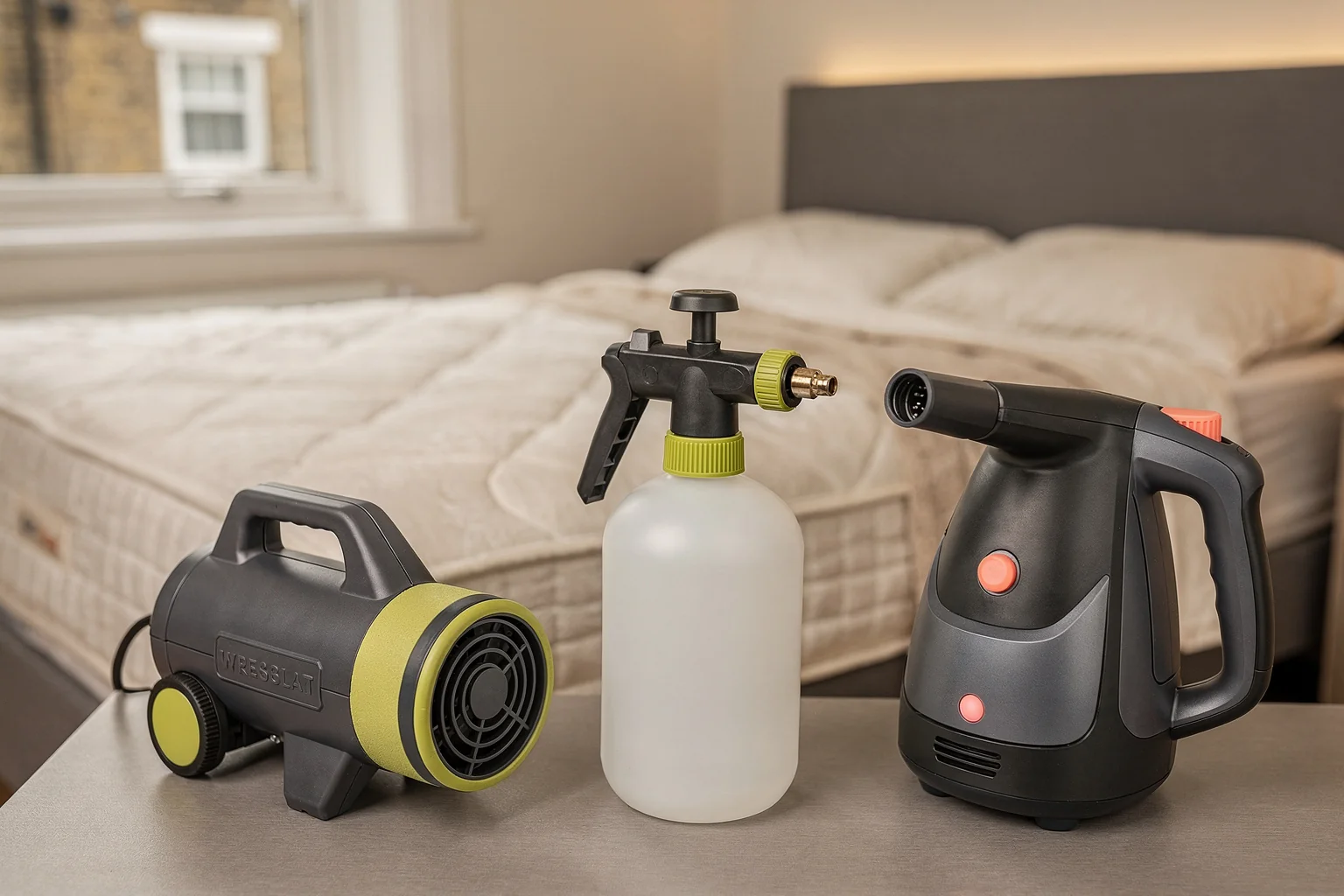
When we turn up to a Lewisham flat or terrace for bed bug removal, we're choosing from three treatment toolboxes. Here's what each one actually means, stripped of the sales talk.
Heat treatment raises the entire room — or the whole property — to at least 50°C and holds it there for several hours. The pests die wherever they're hiding: inside the bed frame, behind the skirting, inside electrical sockets. No insecticide is used. It's a one‑day job, but it requires vacating the property for most of that day, and you'll need to remove anything that melts, ignites, or pressurises.
Chemical treatment applies a liquid residual insecticide to every crack, crevice, mattress seam, and skirting board the technician can reach. It's the classic approach. You usually need at least two applications, spaced a couple of weeks apart, because the spray doesn't always kill eggs. You and your pets must stay out of the treated rooms until the product dries.
Steam treatment uses pressurised steam at well over 100°C, delivered through a narrow nozzle. It kills on contact and can get into fabric folds, drawer joints, and behind headboards. It leaves no chemical residue and kills all life stages instantly. But it has zero staying power — once the steam dissipates, any bug that scuttles in afterwards is unharmed.
These three methods aren't rivals in a simple "best" list. They solve different parts of the same problem. The rest of this article walks through what each one handles well, where each one falls short, and the sort of Lewisham property where you'd reach for it first.
Heat treatment: the whole‑room scorcher
Whole‑room heat is the method that's been grabbing the headlines, and for good reason. Electric or propane‑fuelled heaters and high‑powered fans push the air temperature past 50°C, cooking adult bugs, nymphs, and eggs wherever the heat can reach. A professional team monitors sensors placed around the room to make sure no cold spot dips below the lethal threshold.
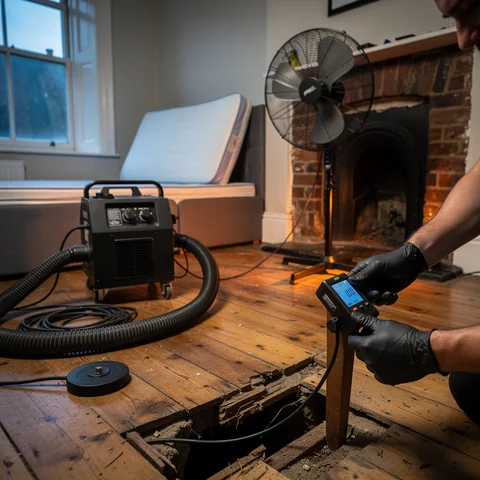
Who it fits. Heat works particularly well in heavily cluttered rooms, multi‑room infestations, and older Lewisham terraces where gaps in floorboards and chimney breasts give bed bugs endless hiding spots. It also suits anyone who wants the job done in one treatment, because heat will clear a home in a single session when executed properly.
Why it works. Heat doesn't care about insecticide resistance. A bed bug that shrugs off a pyrethroid still dies at 50°C. That's why many pest control firms now call it the gold standard. In nearby Greenwich and across east London, we've found that a bed bug removal approach built around heat consistently outperforms insecticide‑only protocols where resistance has taken hold.
What it costs and what it asks of you. Expect to pay £400 to £900 for a whole‑property heat treatment in Lewisham, with the final figure depending on the number of rooms and the access. That's higher than other methods, but you're paying for the certainty of a single visit. Preparation is demanding. You'll need to bag and remove candles, aerosols, fire extinguishers, perfume, medications, and anything else that might explode or melt. Some plastics warp, and wall‑mounted televisions may need to come down. You'll also have to strip beds and take down curtains — exactly the sort of prep the council's pre‑treatment sheet requires for all treatments, but amplified here.
The limit. Heat reaches every cubic metre of air, but it can't always force its way deep inside a thick brick party wall or behind a metal fire surround if the convection pattern is blocked. A thorough technician will supplement with targeted steam or dust in those dead zones.
Verdict. If your infestation is well‑established and you can handle the prep and the cost, heat gives you the highest single‑treatment success rate available in Lewisham today.
Chemical treatment: the targeted residual attack
Despite resistance headlines, chemical bed bug removal hasn't disappeared. Many pest controllers still use liquid insecticides — often newer classes like neonicotinoids or pyrroles — combined with insect growth regulators. A technician walks the room with a low‑pressure sprayer, treating the bed base, the mattress seams (with a product rated for that surface), the skirting boards, the picture rail gaps, and any other crack a bed bug might use.
Who it fits. This route suits smaller, contained infestations where you've caught the problem early — say, a couple of bugs around the bed in a flat that hasn't yet spread to the sofa. It also fits tighter budgets. Lewisham Council offers two‑visit bed bug treatment for £182, or £91 for residents on concessions, as detailed on their pest control page. Private firms in the area typically charge between £150 and £300 for a comparable two‑visit chemical programme.
Why it still earns its place. A modern insecticide applied correctly by a trained eye can wipe out a light infestation. The BPCA code of best practice stresses that chemical control must be targeted, documented, and paired with monitoring — not just a quick squirt and an invoice. When a pro uses the right product at the right concentration, and the local bed bugs don't carry resistance to that specific active ingredient, the treatment works.
The resistance trap. The problem is that nobody can guarantee the bugs in your Lewisham bedroom haven't already developed resistance. The Metro investigation quoted pest controllers who admitted that standard pyrethroids now fail against many London populations. We've written in more detail about the legal use of products like Alpine WSG in London, and the rules are strict precisely because professionals need every tool they can legally deploy to stay ahead of resistance.
What you must do. After a chemical spray, you and your pets must leave the treated rooms until the insecticide is completely dry — the council's preparation sheet states this explicitly. The tech will usually ask you to wait two to four hours. You'll also need to avoid vacuuming treated surfaces for a couple of weeks so the residual barrier stays intact.
Verdict. Chemical treatment is the budget choice and can still clear a mild infestation. But if your bites keep appearing after the second visit, you aren't imagining things — you may be dealing with resistance. At that point, a different method makes more sense.
Steam treatment: the surgical spot‑killer
Steam is rarely the headline act, but I'd argue it's the most underrated tool in the van. A good steam machine delivers dry, pressurised vapour at well above the thermal death point, and the narrow nozzle lets a technician direct it into folds, seams, and the tiny gap between a skirting board and the wall. In the same instant, a bed bug egg and the adult next to it are dead.
Who it fits. Steam is the method you reach for when you need to clean a mattress or a sofa without soaking it in chemical. It's also the go‑to for families who can't relocate a heavily‑medicated relative during a whole‑room heat session and want a targeted non‑chemical approach to visible bugs and eggs. Many professional services — including what we do on our visits — use steam as the finisher after a heat or chemical treatment, chasing the survivors into corners.
The evidence. Steam is mechanical and thermal, not chemical. Resistance can't evolve against 100°C steam. When the tip is held in the right spot for a few seconds, the heat transfers through fabric or into a crack and destroys the waxy coating of the bug's shell. It also desiccates eggs instantly.
Where it doesn't work alone. Steam has no residual effect. If you steam a mattress seam today, a bug that crawls up the bed leg tonight won't be affected. Treating an entire property with steam alone is slow, labour‑intensive, and relies on the technician reaching every single bug — something that's near‑impossible in cracks they can't see. That's why most steaming jobs are add‑ons rather than standalone contracts.
Verdict. Steam is the best finishing tool in bed bug removal. Book it as part of a larger treatment package. As a solo method for an active Lewisham infestation, it's usually not enough.
What you must do before a technician arrives
All three methods share one uncomfortable truth: the success depends heavily on what you do before the treatment starts. The Lewisham Council pre‑treatment preparation sheet lays this out bluntly. Before any treatment, you need to:
- Remove all bed linen from every bed that will be treated.
- Take down curtains and nets.
- Empty wardrobes and drawers in the affected rooms, especially in divan bed bases.
- Clear the floor of stored boxes, bags, and anything else that blocks access.
- Wash all linen, curtains, and clothing at the hottest temperature the fabric can take, or have it dry‑cleaned.
- Vacuum every floor surface thoroughly, then empty the vacuum straight into an outside bin.
If you don't finish that list, the pest control officer can refuse to carry out the treatment. That rule applies whether you booked the council, a national chain, or an independent local firm. For heat treatments, you'll also need to remove candles, aerosols, lighters, and anything that could burst under high temperature. For chemical treatments, you'll need to keep kids and pets out until the product is fully dry — and the technician will tell you exactly how long that takes in your specific home.
What Lewisham bed bug removal costs in 2026
Prices have edged up across south‑east London this year, driven by the increased demand and the shift toward thermal equipment. Here's what you're looking at for a typical two‑bedroom flat or small house in Lewisham, based on the quotes and public data we've reviewed.
- Council chemical treatment: £182 (two visits), concessions £91. Includes the survey and follow‑up.
- Private chemical treatment: £150–£300 depending on the firm and the number of rooms. Some companies include a free re‑treatment within a set window.
- Private heat treatment: £400–£900. The low end covers a single room; the high end covers a three‑bedroom house. Overnight or weekend slots push the figure higher still.
- Steam addition: £40–£120 on top of a chemical or heat contract. A few firms offer steam‑only visits for a single piece of furniture, typically around £80–£150.
TradeCost's 2026 survey of Lewisham bed bug work noted that local prices sit above the UK average, largely because of London wages and the cost of running a van and yard in the capital. Those figures align with what we've seen across Barking, Dagenham, Stratford, and other east London postcodes — pest control costs more here than in the Midlands, and the gap shows no sign of closing.
The upfront cost of heat looks high, but many homeowners end up paying it after a failed chemical round. If you want to avoid the risk of paying twice, it's worth getting a technician to survey the property and give you a method‑specific quote rather than grabbing the lowest number off a directory.
Matching the method to your Lewisham home
No single treatment is the right answer for every flat in Catford or every terrace in Blackheath. The four‑bed Victorian conversion with deep voids and carpeted floors needs a different plan from the modern‑build studio with laminate flooring. Here's how the decision usually breaks down.
Early catch, one room, no travel history. You've found a lone bed bug or a small cluster of bites and you're certain it hasn't spread. A chemical treatment with a follow‑up visit can clear this quickly and cheaply. Add a steam pass of the mattress and bed frame for extra confidence. Expect to pay £180–£250 privately.
Week‑long bites, multiple rooms, kids at home. The infestation has had time to establish. Heat gives you a single‑day reset without pesticide residue on children's bedding. The prep is heavy, but once you've bagged the heat‑sensitive items, the whole job wraps in a morning. At £500–£800 for a two‑bed flat, it's a bigger outlay than chemical — but you're not scheduling a second and third visit.
Landlord with a vacant flat, tenants due in a fortnight. Heat beats everything here. No chemical drying time, no follow‑up appointment to squeeze between tenants. The property is clear in a day, and you can offer proof of treatment to the new occupants. Many east London landlords we work with now default to heat for exactly this reason.
Mattress or sofa that can't be replaced, on a tight budget. A standalone steam treatment of the affected piece can buy you time while you save for a full job. It won't solve the broader room problem, but it kills the bugs hiding inside the furniture and stops you from carrying them to another room. Just be realistic: this is a stopgap, not a cure.
If you're still not sure where your own situation sits, a thirty‑minute home survey with a professional will answer more questions than any online article can. In Lewisham, a same‑day inspection can usually happen within a few hours — and most local firms don't charge a call‑out fee for the visit.
We've helped homeowners across the borough pick between these methods after seeing the actual state of the infestation. When we come across a heavily infested mid‑terrace near Ladywell with fabric‑lined wardrobes and a tenant who can't vacate for long, we might lean heat‑plus‑steam. In a lightly affected Brockley flat where the bed is brand new and the bugs have only just arrived, a careful chemical application often does the job. The right answer doesn't live in a brochure — it lives in the room.
Need professional help? BuzzKill offers fast, reliable pest control services across London and Essex.