
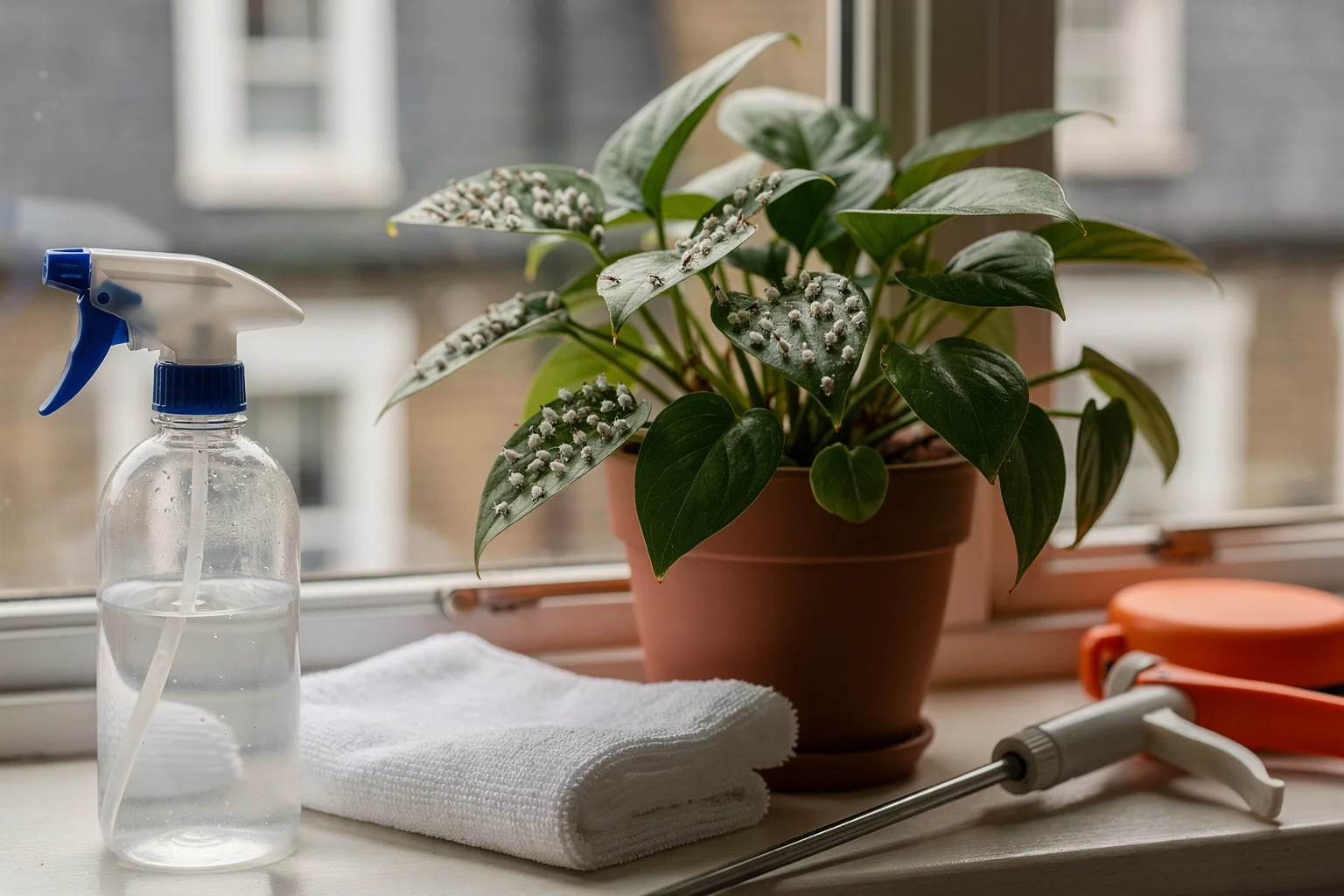
Spotting white bugs on plants can set your heart racing. One day your monstera looks lush, the next it's dusted with what seems like cotton wool or tiny flying specks. Take a breath. Most of these pests are manageable at home if you catch them early and know which creature you're dealing with. This guide walks you through identifying the four most common white plant pests found in British homes and greenhouses, then shows you safe removal methods that protect your plants, your family, and any pets.
What Those White Specks Actually Are
Before you reach for any treatment, you need to know your opponent. The RHS identifies several sap-sucking insects that appear white on UK plants, and each behaves differently. Getting the ID wrong means wasted effort and a sicker plant.
Mealybugs: The Cotton Wool Culprits
Mealybugs are soft-bodied insects covered in a white waxy coating that looks like cotton wool or flour. The RHS notes they cluster in protected spots: leaf axils, stem joints, under loose bark, and sometimes on roots. They move slowly or not at all, so you'll find them huddled together rather than scattered. If you prod one, it leaves a reddish-brown smear.
These pests weaken plants by sucking sap and excrete honeydew — a sticky, sugary film that attracts black sooty moulds. According to Mealybug (Glasshouse): Identification & Control advice from the RHS, glasshouse mealybugs are common on houseplants and greenhouse crops in the UK, especially in warm, humid conditions.
Whiteflies: The Cloud That Rises
Whiteflies are tiny white-winged insects in the family Aleyrodidae. Disturb an affected plant and they fly up in a visible cloud. The Glasshouse Whitefly: Identification and Control guidance from the RHS explains that adults hold their wings roof-like over their bodies, and there are around eight species found in Britain. They feed on a wide range of plants including tomatoes, peppers, fuchsias, and pelargoniums.
Like mealybugs, whiteflies excrete honeydew that leads to sooty mould growth. They're active year-round on indoor plants but can also infest outdoor plants during warm summers.
Woolly Aphids: The Fluffy Stem Clingers
Woolly aphids look like white fluff stuck to stems and branches, particularly on apple and pear trees. Under the wool, you'll find pear-shaped insects feeding in colonies. The DEFRA INVERTEBRATE PESTS guide lists woolly aphid as a key sap-sucking pest that reduces plant vigour and causes distorted growth.
Unlike mealybugs, woolly aphids often have a more elongated, stringy appearance and favour woody plants. They're more common outdoors but can appear on patio trees brought inside for winter.
Spider Mites: The Microscopic Web-Spinners
Spider mites aren't insects — they're arachnids, related to spiders. They're barely visible to the naked eye, but their damage is unmistakable: fine webbing on leaf undersides, plus leaves that turn stippled, bronze, or dry. Two-spotted spider mite is the usual culprit in UK homes, thriving in the dry air of centrally heated rooms.
You might see tiny white or pale dots moving on the webbing. These are the mites themselves. Left alone, they can defoliate a plant within weeks.
First Response: What to Do in the Next 30 Minutes
Speed matters with plant pests. Populations explode fast, especially in warm conditions. Here's your immediate action plan.
Isolate the plant. Move it away from any others. Whiteflies fly, mealybugs crawl slowly, and spider mites drift on air currents. Even a few inches of separation helps.
Check neighbouring plants. Inspect stems, leaf undersides, and new growth on every plant that was nearby. Pests spread before you notice them.
Wash your hands and tools. If you've touched the infested plant, clean under your fingernails and wipe down any pruning shears or plant stakes. Mealybugs and aphids hitch rides easily.
Take photos. Clear shots of the pests and damage help if you later need advice from a garden centre or pest professional. They also let you track whether your treatment is working over the coming days.
Gentle Washing: Your Safest First Strike
For most white plant pests, plain water is your friend. It's chemical-free, safe around children and pets, and surprisingly effective if you're thorough.
The Shower Method
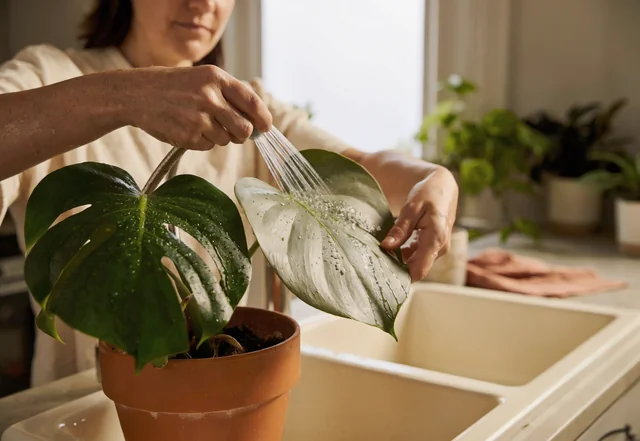
Take small houseplants to the shower or sink. Use lukewarm water — not hot, which scorches leaves, and not cold, which shocks roots. Spray the foliage from multiple angles, paying special attention to leaf undersides and stem joints where pests hide.
Aim for a firm but not blasting pressure. You're trying to dislodge insects and wash away honeydew, not shred the leaves. Let the plant drain completely before returning it to its spot. Repeat every three to four days for two weeks.
The Wipe-Down for Mealybugs
Mealybugs' waxy coating repels water, so showering alone often misses them. After washing, dip a cotton bud or soft cloth in plain water and physically wipe them off. Check every crevice — they squeeze into impossibly tight spaces.
For stubborn clusters, a drop of washing-up liquid in a cup of water helps break the wax. Rinse the plant afterwards so no soap residue builds up on the leaves.
Targeted Treatments That Work
When washing isn't enough, or when the infestation is established, you need something stronger. These three methods are widely recommended by UK gardening authorities and carry lower risk than broad-spectrum insecticides.
Neem Oil: The Botanical disruptor
Neem oil comes from the seeds of the neem tree, Azadirachta indica. It doesn't kill on contact. Instead, it disrupts feeding and breeding, reducing pest populations over several applications. It's effective against mealybugs, whiteflies, aphids, and spider mites.
Buy cold-pressed neem oil from a garden centre or reputable online supplier. Mix according to the label — typically 1-2 teaspoons per litre of water with a few drops of mild liquid soap as an emulsifier. Spray in the evening or when the plant is out of direct sun, as oil and sunlight together can burn leaves.
Cover all surfaces, especially undersides. Repeat every seven days for three to four weeks. Neem oil has a strong, garlicky smell that fades as it dries. It's generally considered safe for edible plants once dried, but wash produce before eating.
Insecticidal Soap: The Contact Killer
Insecticidal soaps are potassium salts of fatty acids. They work on contact, dissolving the outer coating of soft-bodied insects and causing dehydration. They're effective against whiteflies, aphids, and young mealybugs, though the waxy adults may survive.
You can buy ready-to-use sprays or make a weak solution with pure liquid castile soap — not washing-up liquid, which can harm leaves. Test on a small leaf first and wait 24 hours. If there's no browning or spotting, spray the entire plant, ensuring complete coverage.
The key limitation: soap only kills what it touches. It has no residual effect, so you must repeat applications every five to seven days to catch newly hatched pests. Morning or evening application avoids leaf scorch.
Rubbing Alcohol: The Mealybug Spot Treatment
For isolated mealybug clusters, 70% isopropyl alcohol (rubbing alcohol) is highly effective. It dissolves the waxy coating and kills the insect beneath. Dip a cotton bud in alcohol and dab each mealybug directly. Don't spray the whole plant — alcohol can damage tender foliage.
Work methodically. Miss even one female and she'll restart the colony. After treatment, wash the plant with plain water after a few hours to remove residues.
Alcohol evaporates quickly, making it relatively safe around pets if you let it dry before they can investigate. Still, work in a ventilated space and keep the bottle away from children.
When Pests Persist: Escalation Steps
Sometimes home treatments don't fully clear an infestation. This isn't failure — these pests are survivors. Here's how to escalate without resorting to harsh chemicals.
Biological Control for Greenhouses
If you have a greenhouse or conservatory, biological control offers a professional-grade solution without synthetic pesticides. Specialist suppliers provide beneficial insects that prey on pest species. Encarsia formosa wasps parasitise whitefly nymphs. Cryptolaemus montrouzieri beetles, known as mealybug destroyers, target mealybugs. Predatory mites such as Phytoseiulus persimilis hunt spider mites.
This approach requires consistent temperatures — usually above 15°C — and some patience, as the predators need time to establish. It's most practical for dedicated growing spaces rather than mixed living areas, though some suppliers offer small-scale kits for enthusiastic home growers.
Systemic Insecticides: Know the Trade-offs
Systemic insecticides are absorbed by the plant and poison pests as they feed. They're effective against hidden pests that sprays miss, including root mealybugs. However, they contain synthetic chemicals — typically neonicotinoids or similar compounds — that persist in plant tissues for weeks or months.
The RHS generally advises against routine use of systemic insecticides in home settings, particularly on plants grown for food, due to broader environmental concerns and potential impacts on pollinators. If you choose this route, follow label instructions precisely, keep treated plants away from bees and butterflies, and never use on edible crops close to harvest.
Preventing the Next Infestation
Prevention beats cure every time. These habits make your plants far less appealing to white pests.
Inspect new plants obsessively. Quarantine any new addition for two weeks minimum. Check it daily for signs of pests. Garden centres and plant swaps are common transfer points for mealybugs and whiteflies.
Maintain plant health. Stressed plants attract pests. Ensure appropriate light, water, and feeding for each species. Over-fertilising with nitrogen produces soft, sappy growth that aphids and whiteflies love.
Increase humidity for spider mite prevention. These pests thrive in dry air. Group plants together, use humidity trays, or run a small humidifier in winter when central heating dries the atmosphere.
Clean leaves regularly. Dusty foliage is harder to inspect and may harbour pest eggs. A monthly wipe with a damp cloth removes debris and lets you spot problems early.
Prune for airflow. Dense growth creates humid pockets where mealybugs congregate. Thin overcrowded stems to improve circulation.
When to Call a Professional
DIY methods handle most household plant pest problems, but there are clear signals that you need expert help.
The infestation keeps returning after thorough treatment. This suggests a hidden reservoir — perhaps root mealybugs, pests in the potting mix, or eggs in crevices you can't reach.
You manage commercial plants. Restaurants, offices, and rental properties with plant displays have compliance obligations. The incoming Awaab's Law phase 2, confirmed for November 2026, includes pest management within social housing hazard response timeframes, reflecting broader regulatory attention to pest control in managed properties.
The plant is rare, valuable, or sentimental. A professional can offer targeted treatments that preserve delicate specimens.
You're dealing with regulated pests. The tobacco whitefly (Bemisia tabaci) is a quarantine pest in the UK, frequently found on imported ornamentals like poinsettia. Research from the Natural Resources Institute, University of Bristol, and IRIDEON S.L. published in June 2026 highlights new smart trap technology for detecting this species, underscoring its economic significance. If you suspect this pest — adults hold wings tent-like, slightly apart, revealing a yellow body rather than the flat-roofed posture of common glasshouse whitefly — report it through the Plant Health Portal.
For persistent problems across East London and Essex, a qualified technician can assess whether the issue extends beyond individual plants to broader environmental factors. NPTA-registered professionals follow integrated pest management principles, combining biological, cultural, and targeted chemical methods rather than defaulting to blanket spraying.
Questions Plant Owners Often Ask
Can I use vinegar to kill white bugs on plants?
Vinegar is too acidic for most plants and damages leaf tissue. Stick to water, insecticidal soap, or neem oil for safe, effective treatment.
Will these pests spread to my outdoor garden?
Whiteflies and some aphids move between indoor and outdoor plants in warm weather. Mealybugs and spider mites are less likely to survive British winters outside, but they can certainly infest patio plants brought indoors for protection.
How long does treatment take to work?
Neem oil shows reduced pest activity within a week but needs repeated applications. Insecticidal soap kills on contact but requires follow-up sprays. Biological controls take two to three weeks to show clear results. Patience and consistency matter more than any single heroic treatment.
Are these pests harmful to humans or pets?
None of these four pests bite humans or transmit disease to pets. The main concern is plant health and the unappealing appearance of sooty mould on foliage. Some people may experience minor skin irritation from mealybug wax.
Can I save a heavily infested plant?
Often yes, if the roots are healthy. Severely defoliated plants may need hard pruning to remove pest habitat, followed by attentive care. If the root system is compromised — soft, dark, or smelling unpleasant — the plant may not recover.
What's the difference between whiteflies and the tiny flies around my plant pots?
Whiteflies are plant pests that live on leaves. Fungus gnats, which hover around damp compost, are different creatures entirely. They indicate overwatering rather than leaf infestation. Our guide on fungus gnats vs fruit flies explains how to tell them apart and what each signals about your plant care.
Keeping Your Plants Clear for Good
White bugs on plants are a nuisance, not a disaster. The key is matching your treatment to the pest: physical removal and alcohol for mealybugs, thorough washing and insecticidal soap for whiteflies and aphids, humidity and neem oil for spider mites. Repeat treatments diligently, because one application never catches every life stage.
Stay observant. The gardeners who keep plants healthiest are those who notice small changes early — a little webbing here, a sticky leaf there. Caught in the first week, any of these pests is a weekend job. Left for a month, they become a season-long battle.
If you're weighing up whether a pest is a whitefly or an aphid, our article on whiteflies vs aphids offers a quick visual comparison to help you decide your next move. For broader plant pest strategies in the London area, leafhopper control methods provide additional techniques that complement the approaches here.

Need professional help? BuzzKill offers fast, reliable pest control services across London and Essex.