
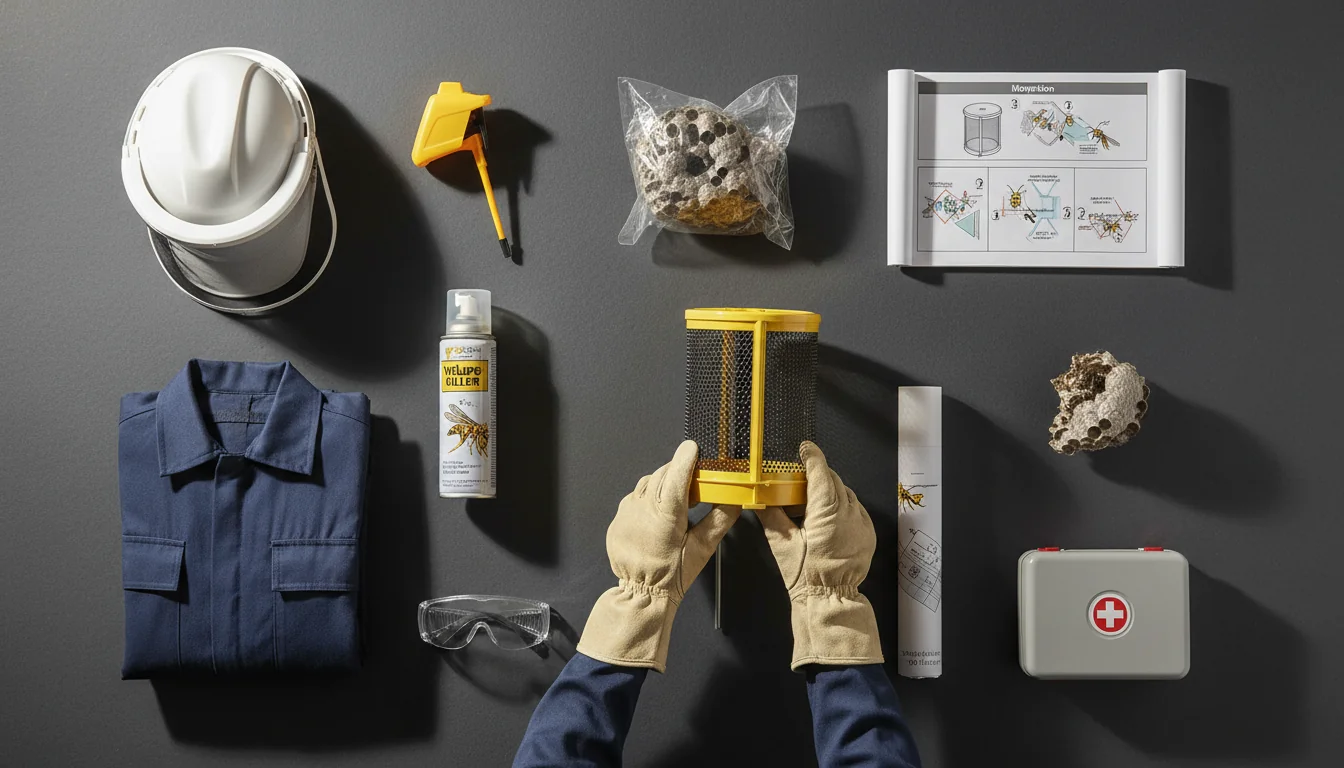
How to Safely Remove Yellow Wasp Nests From Your Home
A ranked guide to the safest, most effective methods for removing yellow wasp nests from UK homes — from DIY options to professional treatments. Yellow wasp nest removal becomes an urgent priority for many homeowners every summer. A single nest wedged under your eaves or packed into a garden wall can hold up to 10,000 workers by late August. We've ranked seven proven removal methods from safest to most specialised, scoring them on safety, effectiveness, cost, and speed. This gives you a clear picture of which approach fits your situation before anyone gets stung. If you're dealing with other stinging insects, you might also find our guide on how to deter bees safely helpful.
Key Takeaways
- Professional pesticide treatment is the safest and most reliable method for active nests larger than a tennis ball.
- DIY foam sprays only work on small, early-season nests — and carry a genuine sting risk if misapplied.
- Never seal a nest entrance without killing the colony first; trapped wasps will find or chew alternative exits into your living space.
- Timing matters: dusk treatments succeed far more often than daytime attempts because the full colony has returned.
- Protective clothing alone won't keep you safe — yellow jackets can sting through standard fabrics and deliver multiple stings per insect.
- Calling a qualified technician with NPTA or BASIS PROMPT accreditation is the fastest route to guaranteed removal.
Quick Comparison
| Rank | Method | Best For | Key Metric | Verdict |
|---|---|---|---|---|
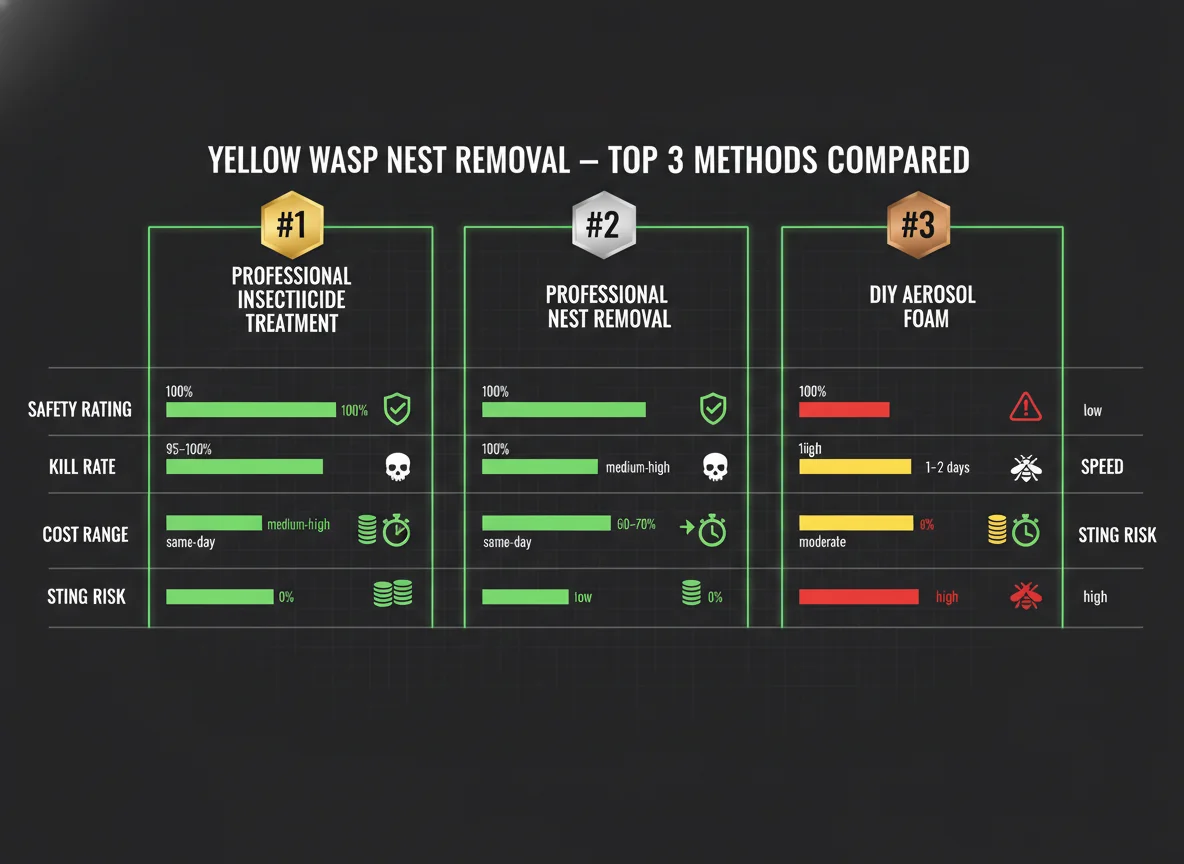
| 1 | Professional insecticide treatment | Active nests of any size | 95–100% single-visit kill rate | Gold standard — safest and fastest |
| 2 | Professional nest removal (physical) | Nests in accessible locations after treatment | Full nest extraction post-kill | Prevents secondary pest problems |
| 3 | DIY aerosol wasp foam | Small nests (< tennis ball), early season | 2–3 m spray range | Budget option with real sting risk |
| 4 | Dust insecticide application | Ground nests and cavity nests | Residual kill over 48 hours | Effective but requires correct product |
| 5 | Wasp traps and decoys | Deterrence and population reduction | Catches foragers, not colony | Supplement only — won't eliminate nest |
| 6 | Natural and homemade deterrents | Prevention before nesting season | Low cost, zero chemicals | Limited evidence for active nests |
| 7 | Smoking and flooding (not recommended) | Almost never appropriate | High injury risk | Dangerous — included as a warning |
1. Professional Insecticide Treatment — Best for Active Nests of Any Size
Professional insecticide treatment earns the top spot because nothing else matches its success rate while keeping you out of harm's way. A trained pest control technician applies a targeted insecticidal dust or liquid directly into the nest entrance, usually with extension lances that keep them well clear of the opening. The colony dies within hours, and residual product picks off returning foragers over the following days.
 The difference between professional treatment and off-the-shelf products comes down to product strength and applicator training. Professional-grade insecticides like bendiocarb and permethrin-based dusts are restricted under UK biocidal products regulations and aren't sold to the public. These formulations deliver a concentrated dose that amateur sprays simply can't replicate. The technician knows exactly how much to apply based on nest size, species, and position, usually achieving a complete colony kill in one visit.
This method handles nearly every scenario: nests in soffits, loft spaces, wall cavities, sheds, and underground burrows. It's especially important when the nest sits in a hard-to-reach spot requiring a ladder or squeezing into a tight space. The Health and Safety Executive advises against amateur work at height for pest control, and a professional brings both the equipment and the liability cover to manage those risks properly.
If you have children, pets, or elderly family members at home, professional treatment is the responsible route. Similar to scheduling safe flea treatments, technicians will advise how long to stay clear of the treated area — usually two to four hours — and schedule the application at dusk when the colony has returned. The main downside is cost, typically £50 to £120 for a single nest depending on location and access. However, compared to the medical costs and distress from multiple wasp stings, the fee is a worthwhile investment.
The difference between professional treatment and off-the-shelf products comes down to product strength and applicator training. Professional-grade insecticides like bendiocarb and permethrin-based dusts are restricted under UK biocidal products regulations and aren't sold to the public. These formulations deliver a concentrated dose that amateur sprays simply can't replicate. The technician knows exactly how much to apply based on nest size, species, and position, usually achieving a complete colony kill in one visit.
This method handles nearly every scenario: nests in soffits, loft spaces, wall cavities, sheds, and underground burrows. It's especially important when the nest sits in a hard-to-reach spot requiring a ladder or squeezing into a tight space. The Health and Safety Executive advises against amateur work at height for pest control, and a professional brings both the equipment and the liability cover to manage those risks properly.
If you have children, pets, or elderly family members at home, professional treatment is the responsible route. Similar to scheduling safe flea treatments, technicians will advise how long to stay clear of the treated area — usually two to four hours — and schedule the application at dusk when the colony has returned. The main downside is cost, typically £50 to £120 for a single nest depending on location and access. However, compared to the medical costs and distress from multiple wasp stings, the fee is a worthwhile investment.
2. Professional Nest Removal (Physical Extraction) — Best for Preventing Secondary Pest Issues
Once the insecticide kills the colony, the physical nest remains. Professional nest removal involves a technician returning after 48 to 72 hours to physically extract the dead structure. This step isn't always necessary, but it's highly recommended when the nest is in plain sight, inside a usable loft, or within a wall cavity where rotting material could draw in carpet beetles, clothes moths, or other scavenging insects. Left alone, a dead wasp nest in a loft breaks down over several months. The papery structure soaks up moisture and eventually crumbles. As it decays, it attracts insects that feed on the protein-rich larvae and pupae still sealed inside the cells. If you've ever wondered why moth problems seem to crop up after summer, secondary colonisation of old wasp nests is a surprisingly common trigger — one that most homeowners miss. The actual removal is straightforward once the colony is dead. The technician suits up as a precaution, detaches the nest, and bags it for disposal. For nests buried inside cavity walls, extraction might not be practical without causing structural damage. In those cases, leaving the treated nest in place is standard industry practice. A good technician will explain the best option for your specific setup. The main drawback is paying for a second visit, which may carry an extra charge. But for nests inside living spaces or areas you access regularly, that investment heads off both the unpleasant sight of a decaying nest and the real risk of attracting new pest species. Landlords managing tenanted properties tend to favour this treatment-plus-removal approach, since leaving a dead nest behind often generates follow-up complaints.
3. DIY Aerosol Wasp Foam — Best for Small, Early-Season Nests
Shop-bought wasp foam sprays are the most accessible option if you catch a nest early — typically between April and mid-June, when it's still roughly golf-ball to tennis-ball sized and home to just the queen and a handful of workers. Products from Rentokil, Zero In, and Raid shoot a thick foam from two to three metres away, coating the nest entrance and killing wasps on contact.
The appeal is obvious: under £10, available at every hardware shop, and you can act immediately without waiting for an appointment. For a genuinely small nest on an accessible surface at ground level — tucked beneath a garden table, say, or clinging to a low fence post — a careful application can do the job. The foam expands to block the entrance and delivers a fast-acting pyrethroid that drops wasps within minutes.
The risks, though, are real enough to keep this method at number three. Wasp foam has limited range and volume, so it often falls short against anything bigger than a tennis ball or any nest recessed inside a cavity where the foam can't reach the core. A partially treated nest leaves you with agitated survivors that turn far more aggressive than an undisturbed colony. The British Pest Control Association recommends professional treatment for any nest that's had more than a few weeks to develop.
If you do go this route, spray at dusk when the colony has settled and activity is at its lowest. Stand to one side of the entrance — not directly in front — and make sure you have a clear path to retreat. Never aim aerosol foam at a nest above head height; the combination of looking upward, handling a pressurised can, and agitated wasps dropping toward you creates a genuinely dangerous situation. If you're unsure about the nest's size or your ability to get away quickly, put the can down and call a professional wasp removal service instead.
4. Dust Insecticide Application — Best for Ground Nests and Cavity Entrances
Insecticidal dust is one of the most effective products you can use on yellow wasp nests buried in ground burrows or tucked inside cavities where sprays and foams can't penetrate far enough. Permethrin or deltamethrin dust is puffed into the nest entrance using a hand bellows or squeeze bottle, and the fine particles hitch a ride throughout the colony — carried on the bodies of the wasps themselves as they move in and out.
Residual action is what gives dust its edge over foam. A foam spray kills on contact but leaves nothing behind. Dust stays active for days, sometimes weeks. Returning foragers walk through the treated entrance, pick up particles on their legs and bodies, and spread the insecticide deep into the nest where it reaches the queen, the larvae, and workers that never venture outside. That chain reaction makes dust particularly effective against large or well-established colonies where a single burst of foam can't reach every individual.
You can find amateur-grade dust products at garden centres, though they carry lower concentrations of active ingredient than the professional versions. If you go this route, apply at dusk, use a long-nozzle applicator to keep your distance from the entrance, and — this part is important — do not seal the hole afterward. Blocking the entrance traps wasps inside and forces them to find or chew alternative exits, potentially straight into your home. Leave the opening clear so every returning wasp walks through the treated zone.
Patience is the trade-off here. Professional liquid treatments kill a colony within hours; dust can take 48 to 72 hours to finish the job. During that window the nest stays active, and wasps may seem more agitated than usual as the insecticide takes hold. Keep children and pets well away from the treated area while you wait. For ground nests in gardens where kids regularly play, that two-to-three day period can feel like a long time — which is why professional treatment often makes more sense in family homes.
5. Wasp Traps and Decoy Nests — Best for Reducing Activity and Deterring New Colonies
Traps and decoy nests belong in the "management" column, not "removal." They won't wipe out an established colony, but they can noticeably reduce wasp traffic around outdoor living areas and discourage new queens from setting up shop near your home. They're included here because homeowners search for them constantly, and they do have a genuine role as part of a broader strategy.
Commercial wasp traps use a sweet liquid bait — sugar water, beer, or a proprietary attractant — inside a container shaped so wasps can get in but struggle to get out. Set one five to ten metres from your seating area and it can catch dozens of foragers a day during peak season. Fewer wasps buzzing your barbecue, fewer panicked guests. But the nest itself carries on producing. A healthy colony turns out hundreds of new workers each week, so trapping alone will never outpace the birth rate.
Decoy nests play on queen wasp territoriality. In spring, a queen scouting for a nest site will generally steer clear of spots where she thinks another colony already lives. Hang a paper or fabric decoy under your eaves in March or early April — before nesting season kicks off — and she may build somewhere else entirely. Research on how well decoys work is limited but encouraging for early-season deterrence, though they're useless once a real nest is already established nearby.
Here's the honest take on both: they're preventive and supplementary. If you already have an active nest, traps will thin the foragers but won't solve the problem. Think of them as perimeter management — useful before and after professional treatment, never a substitute for dealing with the nest directly. Pairing traps with a professional visit gives you the best of both worlds: the colony is eliminated, and stray foragers get caught before they can bother anyone.
6. Natural and Homemade Deterrents — Best for Prevention Before Nesting Season
Peppermint oil sprays, citronella candles, clove-studded oranges, cucumber slices — the internet serves up no shortage of natural wasp deterrents. Being honest about these methods means admitting that while some have roots in insect behaviour science, none of them will remove an active yellow wasp nest. Where they belong is prevention: early spring, before colonies get established.
Peppermint oil turns up in almost every "natural wasp repellent" list, and there is some lab evidence that concentrated menthol compounds put certain wasp species off landing on treated surfaces. A study published in the Journal of Pest Management Science found repellent effects under controlled conditions, though real-world results are patchier. Mixing ten to fifteen drops of peppermint essential oil with water and spraying it on eaves, door frames, and window sills in early spring may make those surfaces less appealing to queens scouting for nest sites.
Citronella and lemongrass oils work along similar lines as area repellents. Lighting a citronella candle during an outdoor meal creates a localised zone that foraging wasps tend to avoid, though the effect fades the moment the flame goes out. These approaches work best layered together — peppermint on structural surfaces, citronella during gatherings — and they complement rather than replace physical or chemical methods.
The hard truth is that no natural deterrent can compete with an established colony's attachment to its nest. Once a queen has started building and laying eggs, no amount of peppermint spray will convince her to move on. If you spot a nest that's progressed beyond the initial papery umbrella stage, natural methods won't help. Use them in early spring as a preventive layer, then switch to professional treatment the moment you see active construction underway.
7. Smoking and Flooding — Not Recommended Under Any Circumstances
This entry exists as a warning, not a recommendation. Online forums and social media regularly suggest smoking out a wasp nest with burning paper or drowning a ground nest with a garden hose. Both approaches are dangerous, ineffective, and can land you in hospital. They're covered here so you understand exactly why to avoid them.
Smoking a wasp nest means lighting a fire underneath it to drive the colony out before you remove the structure. The theory sounds reasonable — smoke disorients insects and triggers an evacuation response. The reality is that you're combining open flame with thousands of agitated stinging insects right next to your home. The London Fire Brigade has attended incidents where homeowners trying to smoke out wasp nests have set fire to sheds, fences, loft insulation, and roof timbers. The nest itself is made of combustible paper, and flames can jump to surrounding structures in seconds.
Flooding targets ground-nesting yellow jackets by forcing a hose into the burrow entrance. The problems stack up fast: water seeps slowly through soil channels, giving the colony plenty of time to mount a defensive response. Hundreds of wasps may pour out of the entrance straight at the person holding the hose. On top of that, flooding rarely reaches the full nest, which can stretch a metre or more underground across multiple chambers. Survivors simply relocate or rebuild.
Both methods share the same fundamental flaw — they agitate the colony without reliably killing it. A disturbed wasp colony is dramatically more dangerous than one left alone. Wasps release alarm pheromones when they feel threatened, calling every available worker into defence mode. A single disturbed ground nest can deliver fifty or more stings within seconds. If you or someone in your household has an undiagnosed venom allergy, that scenario can turn life-threatening fast. The NHS reports that wasp and bee stings cause anaphylaxis in roughly 3 in 100 people, and fatalities occur every year in the UK.
How We Evaluated These Methods
Each method on this list was scored against four weighted criteria: safety (40%), effectiveness (30%), cost (15%), and speed (15%). Safety carries the heaviest weight because yellow wasp nest removal poses genuine medical risk — unlike many household pest situations, a botched wasp treatment can hurt you immediately.
Effectiveness was judged by single-attempt success rate. Professional insecticide treatment achieves 95 to 100 percent colony elimination in one visit, while DIY foams manage roughly 60 to 70 percent on appropriately sized nests and significantly less on established colonies. Traps and deterrents score well for their intended purpose — area management and prevention — but score zero for nest removal because that isn't what they're designed to do.
Cost reflected what you'd actually spend to get a yellow wasp nest off your property in the UK. A professional nest removal runs £50 to £120, covering the protective gear, restricted-use insecticides, and hands-on expertise needed to reach the nest and destroy the colony in one visit. DIY aerosols cost £5 to £10; dust products £8 to £15; traps and decoys £5 to £20. Natural deterrents come in cheapest at under £5. We flagged every case where apparent savings carry hidden medical risk — saving £80 on nest removal means nothing if a failed attempt sends you to A&E with dozens of stings from a colony you only managed to anger.
Speed measured time from first action to a fully dead nest with no remaining wasp activity — the point at which you can safely remove or leave the structure without risk of returning foragers rebuilding the colony. A professional yellow wasp nest treatment delivers same-day results because the insecticide goes directly into the nest, and colony movement stops within hours. DIY foam sprays fast but often demands repeat applications over several days before every wasp inside is dead. Dust formulations need 48 to 72 hours for returning foragers to carry enough active ingredient deep into the brood chambers. Traps thin wasp numbers around your garden but never touch the nest itself, so they score poorly for actual removal. We excluded methods requiring specialist equipment a homeowner wouldn't own, which is why professional-only techniques like thermal nest destruction or vacuum extraction weren't ranked separately.
How to Prepare with BuzzKill Pest Control
When you spot a yellow wasp nest on your property, BuzzKill Pest Control takes the stress out of the entire removal process. As an NPTA-accredited pest control service covering East London and Essex, BuzzKill offers same-day appointments with no call-out charge — so a qualified technician can inspect and treat your nest within hours of your call.
Every BuzzKill technician holds an RSPH Level 2 qualification and carries professional-grade insecticides that aren't available to the public. The process starts with a full site survey to identify the wasp species, assess the nest's location, and work out the safest access route. Treatment is then applied at the optimal time — usually dusk — to make sure the maximum number of wasps are inside the nest. Every treatment comes with a results guarantee: if the nest shows any renewed activity afterward, BuzzKill will return at no extra cost.
Landlords and property managers dealing with wasp nests at tenanted properties get full documentation of the treatment for their records, helping demonstrate compliance with duty-of-care obligations. Commercial clients — restaurants, cafés, hospitality venues — benefit from discreet, rapid service that keeps disruption to a minimum.
Booking your yellow wasp nest removal takes less than a minute. Call 0203 468 1999 or request a callback through the BuzzKill website to schedule a same-day nest inspection and treatment. While you wait for the technician, the team will walk you through immediate safety steps to keep everyone protected: move children and pets well away from the nest, close nearby windows, avoid any entry points the wasps are using, and don't disturb the colony before the technician arrives with the right equipment to destroy it safely.
How to Prepare with BuzzKill Pest Control
When you spot a yellow wasp nest on your property, BuzzKill Pest Control takes the stress out of the entire removal process. As an NPTA-accredited pest control service covering East London and Essex, BuzzKill offers same-day appointments with no call-out charge — so a qualified technician can inspect and treat your nest within hours of your call.
Every BuzzKill technician holds an RSPH Level 2 qualification and carries professional-grade insecticides that aren't available to the public. The process starts with a full site survey to identify the wasp species, assess the nest's location, and work out the safest access route. Treatment is then applied at the optimal time — usually dusk — to make sure the maximum number of wasps are inside the nest. Every treatment comes with a results guarantee: if the nest shows any renewed activity afterward, BuzzKill will return at no extra cost.
Landlords and property managers dealing with wasp nests at tenanted properties get full documentation of the treatment for their records, helping demonstrate compliance with duty-of-care obligations. Commercial clients — restaurants, cafés, hospitality venues — benefit from discreet, rapid service that keeps disruption to a minimum.
Booking a yellow wasp nest removal takes less than a minute. Call 0203 468 1999 or request a callback through the BuzzKill website to schedule your same-day nest inspection and treatment. The team will walk you through immediate safety steps while you wait — keeping children and pets well away from the nest, closing nearby windows, avoiding any entry points wasps are using, and steering clear of anything that might disturb the colony before the technician arrives with the right equipment to destroy it safely.
How to Prepare with BuzzKill Pest Control
When you spot a yellow wasp nest on your property, BuzzKill Pest Control takes the stress out of the entire removal process. As an NPTA-accredited pest control service covering East London and Essex, BuzzKill offers same-day appointments with no call-out charge — so a qualified technician can inspect and treat your nest within hours of your call.
Every BuzzKill technician holds an RSPH Level 2 qualification and carries professional-grade insecticides that aren't available to the public. The process starts with a full site survey to identify the wasp species, assess the nest's location, and work out the safest access route. Treatment is then applied at the optimal time — usually dusk — to make sure the maximum number of wasps are inside the nest. Every treatment comes with a results guarantee: if the nest shows any renewed activity afterward, BuzzKill will return at no extra cost.
Landlords and property managers dealing with wasp nests at tenanted properties get full documentation of the treatment for their records, helping demonstrate compliance with duty-of-care obligations. Commercial clients — restaurants, cafés, hospitality venues — benefit from discreet, rapid service that keeps disruption to a minimum.
Booking a yellow wasp nest removal takes less than a minute. Call 0203 468 1999 or request a callback through the BuzzKill website to book your same-day inspection. The team will walk you through immediate safety steps while you wait — keeping children and pets well away from the nest, avoiding any entry points wasps are using, and steering clear of anything that might disturb the colony before the technician arrives with the right equipment to destroy it safely.
How to Prepare with BuzzKill Pest Control
When you spot a yellow wasp nest on your property, BuzzKill Pest Control takes the stress out of the entire removal process. As an NPTA-accredited pest control service covering East London and Essex, BuzzKill offers same-day appointments with no call-out charge — so a qualified technician can inspect and treat your nest within hours of your call.
Every BuzzKill technician holds an RSPH Level 2 qualification and carries professional-grade insecticides that aren't available to the public. The process starts with a full site survey to identify the wasp species, assess the nest's location, and work out the safest access route. Treatment is then applied at the optimal time — usually dusk — to make sure the maximum number of wasps are inside the nest. Every treatment comes with a results guarantee: if the nest shows any renewed activity afterward, BuzzKill will return at no extra cost.
Landlords and property managers dealing with wasp nests at tenanted properties get full documentation of the treatment for their records, helping demonstrate compliance with duty-of-care obligations. Commercial clients — restaurants, cafés, hospitality venues — benefit from discreet, rapid service that keeps disruption to a minimum.
Getting started takes less than a minute. Call 0203 468 1999 or request a callback through the BuzzKill website to book your same-day inspection. The team will walk you through immediate safety steps while you wait for your appointment — including how to keep children and pets clear of the nest area and which entry points to avoid until the technician arrives.
How to Prepare with BuzzKill Pest Control
When you spot a yellow wasp nest on your property, BuzzKill Pest Control takes the stress out of the entire removal process. As an NPTA-accredited pest control service covering East London and Essex, BuzzKill offers same-day appointments with no call-out charge — so a qualified technician can inspect and treat your nest within hours of your call.
Every BuzzKill technician holds an RSPH Level 2 qualification and carries professional-grade insecticides that aren't available to the public. The process starts with a full site survey to identify the wasp species, assess the nest's location, and work out the safest access route. Treatment is then applied at the optimal time — usually dusk — to make sure the maximum number of wasps are inside the nest. Every treatment comes with a results guarantee: if the nest shows any renewed activity afterward, BuzzKill will return at no extra cost.
Landlords and property managers dealing with wasp nests at tenanted properties get full documentation of the treatment for their records, helping demonstrate compliance with duty-of-care obligations. Commercial clients — restaurants, cafés, hospitality venues — benefit from discreet, rapid service that keeps disruption to a minimum.
Getting started takes less than a minute. Call 0203 468 1999 or request a callback through the BuzzKill website to book your same-day inspection. The team will walk you through immediate safety steps while you wait for your appointment — including how to keep children and pets safe and which areas to stay away from until the technician arrives.
Frequently Asked Questions
How much does it cost to remove a yellow wasp nest in the UK?
Professional yellow wasp nest removal typically costs between £50 and £120, depending on where the nest is and how easy it is to reach. Nests at height, inside cavity walls, or buried in cramped loft spaces tend to sit at the higher end because of the extra equipment and time involved. Most pest control companies, including BuzzKill, charge a single treatment fee with no separate call-out charge. DIY products cost £5 to £15, but the risk of failure and injury makes professional treatment better value for any nest that's moved past the earliest stages.
Is it safe to remove a wasp nest yourself?
You can handle a small, early-season nest yourself if it's smaller than a tennis ball, sits at ground level, and is easy to reach. Beyond that, DIY removal carries serious sting risk. Yellow jackets defend their nest aggressively, and a disturbed colony can deliver dozens of stings in seconds. If you have any allergy to insect venom, aren't sure how big the nest actually is, or would need to climb a ladder, professional removal is the right call. Even confident DIY enthusiasts should only attempt treatment at dusk when the colony is least active.
What time of year are yellow wasp nests most dangerous?
Colonies hit peak size from late July through September, when a single nest can hold 5,000 to 10,000 workers. That's when nests pose the greatest danger and when stinging incidents spike. Early spring nests — April to May — contain only the queen and a handful of workers, making them far less hazardous. Spotting a nest early and acting quickly, whether with a professional wasp removal service or a careful DIY approach on a very small nest, prevents the colony from reaching those dangerous summer numbers.
Will wasps return to the same spot after nest removal?
Wasps don't reuse old nests from previous years. Every spring, new queens build from scratch. But if the conditions that attracted the original nest remain — sheltered eaves, accessible cavities, undisturbed loft spaces — a new queen may well pick a nearby spot the following year. After professional removal, ask your technician about proofing measures like mesh screens over air bricks and soffit gap repairs. Taking preventive steps in early spring, including checking for early signs of wasps returning to favourite spots, cuts the chance of a repeat nest significantly.
What should I do if I get stung while trying to remove a wasp nest?
Get away from the nest immediately and get indoors. Unlike bees, wasps sting multiple times and will chase perceived threats. Once you're safe, wash the sting site with soap and water, press a cold compress against it, and take an antihistamine to bring down the swelling. Watch for signs of anaphylaxis: difficulty breathing, swelling of the face or throat, dizziness, or a rapid heartbeat. If any of those symptoms appear, call 999 straight away. The NHS recommends that anyone who's had a severe reaction to a wasp sting carry an adrenaline auto-injector and wear a medical alert bracelet during wasp season.
Can I just leave a wasp nest alone?
If the nest is somewhere it won't bother anyone — high in a tree at the far end of a large garden, for instance — leaving it alone is perfectly reasonable. Colonies die naturally in late autumn when temperatures drop, and the empty nest won't be reused the following year. But nests near doorways, windows, children's play areas, or outdoor eating spaces present an ongoing sting risk all summer and should be professionally treated. Any nest inside your home's structure — loft, wall cavity, under floorboards — always needs treatment, because the colony will keep growing and wasps may eventually find their way into your living spaces.
Conclusion
Yellow wasp nest removal rewards quick, decisive action. A small nest spotted early in spring can sometimes be dealt with using a carefully applied DIY foam, but any colony that's had time to establish itself deserves professional attention. The methods ranked in this guide follow a clear pattern: professional treatment delivers the highest safety and success rate, while DIY approaches carry rising risk as the nest grows.
The most important decision you'll make is matching your method to the nest's size and location. A golf-ball nest on a garden fence in May is a completely different situation from a football-sized nest inside your soffit in August. When you're unsure, the safer choice is always to call a qualified technician who can assess what you're dealing with, apply professional-grade treatment, and stand behind the result. Your family's safety is worth far more than the price of a single service visit.
If you're dealing with a wasp nest right now, stay well back and keep children and pets clear of the area. Call BuzzKill Pest Control on 0203 468 1999 for a same-day inspection across East London and Essex — no call-out charge, guaranteed results, and the reassurance that the job has been handled safely from start to finish.
Related Blog Posts
- How to Get Rid of Wasps: Safe and Effective Removal Methods — a broader guide covering all UK wasp species and prevention strategies for your home and garden.
- How to Get Rid of Fleas: A Complete UK Treatment Guide — another common warm-weather pest problem, especially in homes with pets.
- Signs of Bed Bugs: How to Spot an Infestation Early — early detection advice that reinforces the same lesson: catching a pest problem early cuts treatment complexity and cost dramatically.
Need professional help? BuzzKill offers fast, reliable pest control services across London and Essex.