
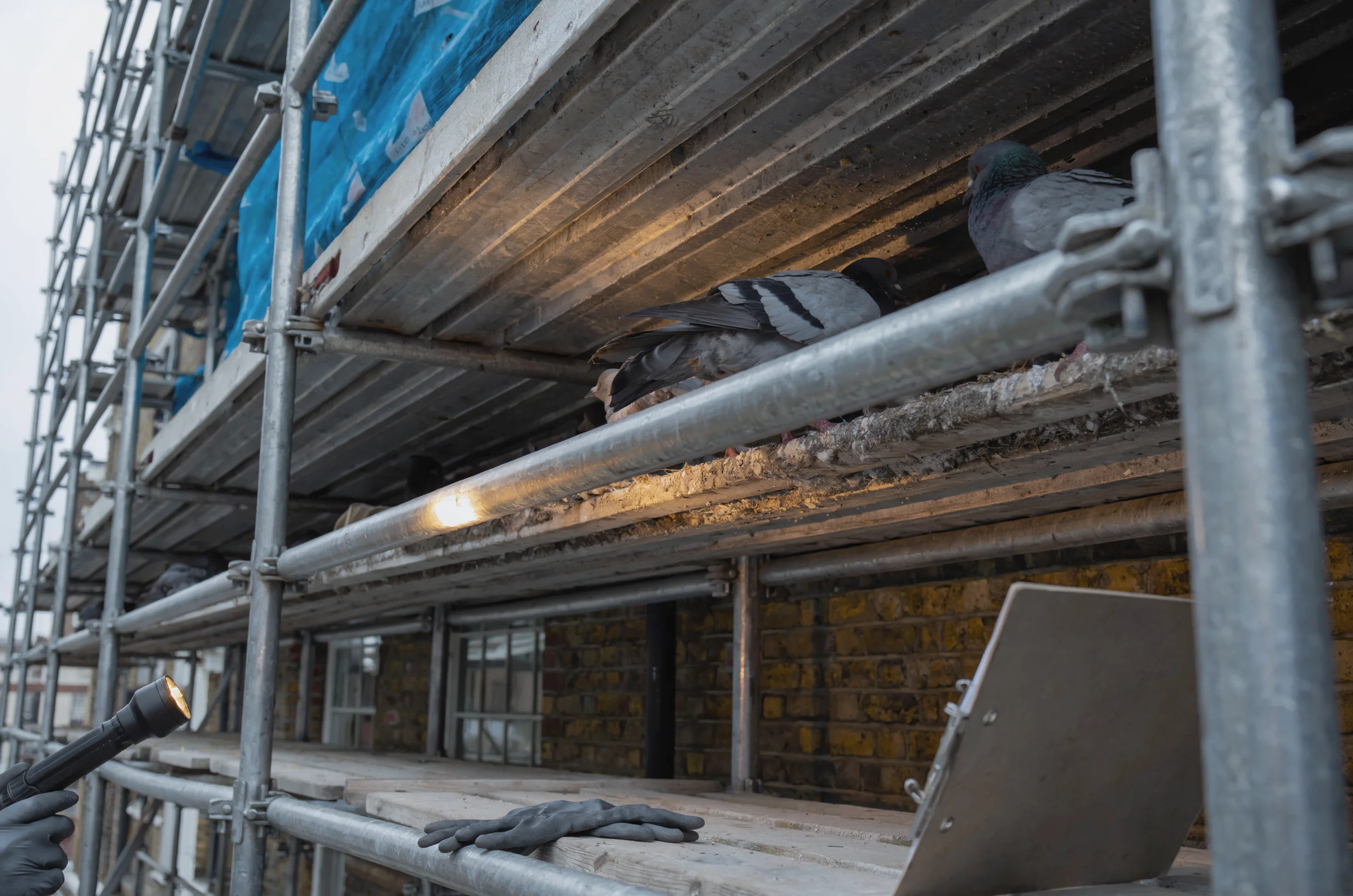
To prevent pigeons roosting on scaffolding during building works, agree the bird checks before erection starts, then repeat them as the scaffold changes. Start with the building’s existing ledges, the proposed sheeting and who will deal with any gaps.
Allow 30–60 minutes for an initial prevention walk, depending on the property and available views. Take a phone, binoculars if useful, a notebook and the scaffold drawing or work schedule.
Work from ground level or an authorised, safe position. Homeowners should leave access onto scaffolding, repairs and attachments to the responsible contractors.
For this checklist, “clear” means no observed bird activity or suspected nesting, no unresolved entry gaps, and agreed barriers checked. Anything you cannot see remains “not checked”.
Agree the bird checks before scaffold erection
Scaffold pigeon prevention needs a named person, an agreed inspection route and a record that survives changes between trades.
1. Name the person who receives bird reports
Check whether everyone knows where to report birds, droppings, loose sheeting or suspected nesting. A clear arrangement names one site contact and explains who arranges assessment or repairs.
For a homeowner, this could be the builder’s site supervisor. On a larger project, record who coordinates the scaffolder, building contractor and bird-control specialist.
If BuzzKill Pest Control is providing bird-control advice, share the proposed scaffold layout and work dates before installation. Ask which areas need checking before they become harder to see.
Put the contact arrangement in the site notes. If responsibility is still unclear, resolve it before the first boarded working level, called a lift, is installed.
2. Photograph the building before anything is covered
Check whether there is a dated record of the wall, window ledges, roof edge and existing bird activity. Useful photographs show both the whole elevation and the position of any finding.
Take them from safe positions before boards, wrap or stored materials obscure the view. Include the neighbouring boundary where it affects the work, without entering another property.
Record birds seen entering a recess, clusters of twigs and existing deposits beneath ledges. Describe what you can see without deciding that every mark proves an occupied nest.
If the record is complete, use it as the starting point for later checks. Mark hidden roof areas separately and assign someone competent to assess them.
3. Agree how each area can be checked safely
Check whether the proposed bird inspection route is accessible without climbing, leaning from windows or moving scaffold components. A suitable route identifies safe viewing positions and areas reserved for authorised workers.
Homeowners can record observations from the ground and pass them to the contractor. Binoculars or a zoomed photograph may help, but neither confirms what is hidden behind boards.
Keep bird checks separate from the contractor’s scaffold safety inspections. A clear bird report says nothing about the structure’s condition or suitability for access.
If a check requires work at height, put it on the contractor’s task list. Leave that location marked as unassessed until the appropriate person reports back.
Walk the wall line and roof edge
The building behind the scaffold needs checking before temporary materials hide ledges, openings or possible nesting places.
4. Look for existing bird use along the planned scaffold line
Check window recesses, sheltered corners, gutter edges and spaces around roof details. Watch for repeated visits to the same spot or birds carrying material into an opening.
If you see that activity, photograph the location and tell the site contact. Leave the birds and material undisturbed while the position is assessed.
An apparently quiet ledge does not settle whether a hidden space is occupied. Avoid treating a brief look from the pavement as clearance for everything above it.
Our bird nest removal guidance provides background for that decision. Where nesting is suspected, arrange an assessment before covering the opening or starting work beside it.
5. Match temporary building openings to the work schedule
Check whether roof repairs, window replacement or façade work will create openings behind the scaffold. A usable plan identifies when each opening appears and who is responsible for securing it.
Look beyond the scaffold’s outer face. A tidy outer wrap can leave an unfinished window opening or roof gap concealed from ground-level view.
Ask the building contractor to specify suitable temporary protection while preserving ventilation, drainage and required access. Avoid improvising covers over vents or other building components.
If the plan is complete, add those opening dates to the bird-check schedule. If an opening will remain unattended overnight, record the agreed protection before that stage begins.
Check the first lift and every added level
Each new scaffold level changes the places you need to inspect and may hide parts of the building checked earlier.
6. Review boarded areas before materials obscure them
Ask the authorised site team to check newly boarded working levels before they fill with materials. A satisfactory report identifies sheltered corners, spaces against the wall and any observed bird activity.
Record the location by elevation and level, such as the rear wall beside the first-floor window. “Pigeons somewhere on the scaffold” gives the repair team too little information.
If birds are repeatedly settling in one area, request an assessment while the layout is still visible. Keep any proposed barrier separate from decisions about board placement and safe working space.
Homeowners should pass on observations without rearranging boards. Any change to the scaffold belongs with the responsible contractor.
7. Inspect gaps around projecting tubes and corners
Check where scaffold tubes pass through sheeting and where the wrap turns around the building. Look at the surrounding gap, particularly where material has been cut or folded.
Include exposed tube ends in the contractor’s inspection notes, but do not assume a small tube opening explains pigeon access. Record the actual route a bird uses whenever you can observe it safely.
A resolved finding has a contractor-approved detail that closes the relevant gap without creating another problem. Avoid inserting rags, foam or other improvised materials.
If the contractor needs to alter the arrangement, keep that location open on the checklist. Recheck the completed repair from the agreed viewing position.
8. Check behind stored materials without moving them yourself
Ask whether stacked boards, wrapped supplies or equipment conceal an area previously visible. A completed check confirms that authorised workers have looked behind or beneath stored items where necessary.
Keep the description precise: the rear corner behind a wrapped pallet, for example. Do not climb over materials to improve the view.
If the area is clear, record when it was checked and whether the storage arrangement will change. If birds or nesting material are found, tell the site contact before anything is moved.
Ask the contractor to maintain an inspection route within the agreed storage and loading arrangements. Mark concealed areas as unchecked until safe access is available.
Follow every edge of the wrap and netting
Check the scaffold covering as a complete boundary, with particular attention to edges, joins and openings used during work.
9. Confirm what each covering is intended to do
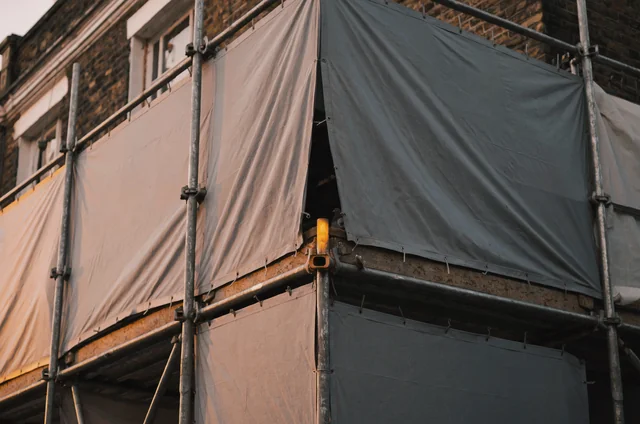
Check whether the site plan distinguishes reinforced scaffold sheeting, debris mesh and any purpose-designed bird-exclusion netting. Ask the contractor which material, if any, forms the agreed bird barrier.
Inspect the top, bottom and wall-side edges from safe positions. Record loose overlaps, unfinished corners and gaps around projecting parts.
A satisfactory answer explains how the covering meets the building and how access will work. Avoid assuming that a fully wrapped appearance means every route has been addressed.
If extra sheeting or netting is proposed, have the scaffold contractor approve the arrangement before installation. Leave fixings, tensioning and structural decisions to the appropriate team.
10. Have bird netting checked as a complete installation
Where bird-exclusion netting is specified, check whether a competent installer has assessed its perimeter, joins and access arrangements. Request confirmation that birds have been checked for before the enclosure is completed.
From an authorised position, look for visible tears, loose edges or sections that have come away. Report their location without pulling or tightening the material.
The bird netting maintenance checklist can help you organise observations, although the installer must assess the scaffold’s particular arrangement. Keep photographs with the repair record.
If BuzzKill Pest Control is involved in the bird-control plan, share changes to the scaffold covering with the attending technician. Ask the responsible contractors to agree any revised installation before work proceeds.
11. Check how delivery and working openings are closed
Check whether each opening has a named user and an agreed closing method. A practical arrangement allows the necessary work and makes responsibility clear afterwards.
Ask about loading points, ladder access, material deliveries and sections opened for façade work. Record any opening routinely left unattended.
The access-planning questions in our open loading bay guidance are useful here, particularly where people need repeated passage. The scaffold team must approve the actual detail.
If birds are seen entering, report the route before anyone closes it. Confirm that the enclosed area has been assessed and that birds will not be shut inside.
Remove food and plan the cleaning
Include the ground beneath the scaffold in the pigeon checks, especially waste storage, eating areas and places where droppings have accumulated.
12. Check the waste route from eating area to collection point
Look for uncovered food waste, open bags and scraps beneath the scaffold. A completed check shows that food waste is contained and the responsible person knows when it will be removed.
Include shared bins, temporary site kitchens and takeaway packaging near the entrance. Ask workers and occupants to report overflowing containers through the same site contact.
If the issue is safely accessible at ground level, arrange routine tidying and secure the bin lids. Keep children and pets away while the area is being sorted.
Where waste comes from outside the site boundary, record the source and raise it with the property manager. Recheck the area after the agreed collection or housekeeping change.
13. Record droppings before choosing a cleaning method
Check whether droppings are isolated marks or an accumulation requiring a planned clean. Photograph the affected surface and tell the site contact if it includes boards, access routes or areas above occupied space.
Avoid starting with dry sweeping, pressure washing or an improvised chemical treatment. Ask the contractor to assess the surface, access, protective equipment and how the work will be contained.
Our article on pigeon droppings health risks gives background for that discussion. Keep the immediate task focused on assessing and managing the affected area.
Where deposits reach brickwork or stone, flag the surface before cleaning begins; the guano and masonry guide covers that separate concern. Record the agreed cleaning method and the bird-entry issue together so both receive attention.
Repeat the checks as the building changes
Use the initial record to guide later scaffold observations, especially after alterations, bad weather and periods without workers on site.
14. Set a daily observation routine and record changes
Agree a brief bird check during the normal site routine. Use safe viewing positions and compare findings with the previous record.
Look for repeated bird visits, new deposits on a previously recorded clear surface, moved sheeting and visible damage to netting. Note the time and exact location rather than relying on memory.
A daily observation is a working routine for this checklist. Ask the contractors whether the site conditions require extra checks, particularly following changes to coverings or access openings.
If something changes, assign the finding to a named person and record when it is checked again. Keep unresolved locations visible in the site notes until the responsible contractor reports the outcome.
15. Plan for weekends, alterations and scaffold removal
Check whether the bird plan covers unattended periods and the sequence of dismantling. A complete plan names who checks before a break and who reviews conditions when work resumes.
Include sections of sheeting opened for repairs and areas exposed as levels come down. Ask for a bird check before an enclosure is changed where occupancy is uncertain.
Before dismantling, review any permanent building openings or proofing still awaiting completion. Record who will finish that work while suitable access remains available.
If the schedule changes, update the bird plan alongside it. Leave the final record with the property owner or manager, including unresolved observations and any agreed follow-up inspection.
Questions that arise on a scaffolded home
These decisions often come up after the first scaffold checks, particularly where residents remain in the building.
Can I hang reflective tape or a model bird myself?
Ask the scaffold contractor before attaching anything to the structure or its covering. Keep your initial effort focused on reporting entry routes, arranging waste removal and checking agreed repairs.
If a deterrent is proposed, ask how its usefulness will be assessed and who will monitor it. Record continued bird visits rather than treating installation as proof that the problem is resolved.
Leave attachments and work above ground level to the authorised team.
Should someone close a gap as soon as a pigeon flies out?
A single bird leaving does not confirm that the enclosed space is empty. Report the exit point and have the area assessed before it is sealed.
Tell the assessor if you have seen repeated visits, nesting material or more birds entering than leaving. Keep photographs or observation times with the report.
If a bird is trapped or tangled, seek prompt specialist assistance. Avoid pulling netting or reaching from an unsafe position to attempt a rescue.
Can we remove a small pile of twigs if there are no visible eggs?
Leave it in place until its status has been assessed. A view from below may not show the whole space, and appearance alone should not decide the next action.
Tell the site contact what was seen, where it sits and whether birds are returning. Ask for current advice appropriate to the finding before removal, exclusion or nearby work proceeds.
If nesting is suspected, pause the affected task while that assessment is arranged.
Use the findings to set today’s action
Finish the scaffold walk by giving every finding an owner, a next action and a date for checking it again.
16. Monitor areas that are visible and currently clear
Continue observation where the agreed check found no birds, suspected nesting or unresolved gaps. Record the date, viewing position and any limits to visibility.
A useful digital version of this checklist would let users select the elevation and lift, attach a photograph, and assign an unresolved finding. It should keep “clear”, “action needed” and “not checked” separate.
Share the record with whoever takes over the next site check. If an area becomes concealed or the covering changes, return it to the inspection list rather than carrying forward an earlier clear result.
Use the next observation to confirm its current condition.
17. Deal with straightforward housekeeping at ground level
Choose a routine housekeeping response where the finding is accessible food waste or an unsecured bin. Arrange removal through the site’s normal waste process and record who will do it.
Keep that task separate from cleaning droppings, moving materials on a lift or repairing scaffold coverings. Those findings need their own assessment and responsible person.
For a homeowner, a useful contribution is to secure household food waste and report site waste to the builder. Avoid entering restricted areas to complete the checklist.
Once the agreed tidying is finished, photograph the area if helpful. Check it again during the next site round.
18. Escalate suspected nesting, trapped birds and unsafe access
Request a same-day professional assessment where birds appear trapped, nesting is suspected or fouling affects a working route. Give the site contact the location, photographs and any observed entry route.
Ask the responsible contractor to manage access to the affected area while the finding is assessed. Keep workers and residents informed about the specific location.
Repeated bird entry after a repair also needs review. Record what changed, which opening remains in use and whether the repair has been checked.
Before the affected work resumes, record the agreed action, the person responsible and any limits that remain. Leave unseen areas marked as unassessed.
Need professional help? BuzzKill offers fast, reliable pest control services across London and Essex.