
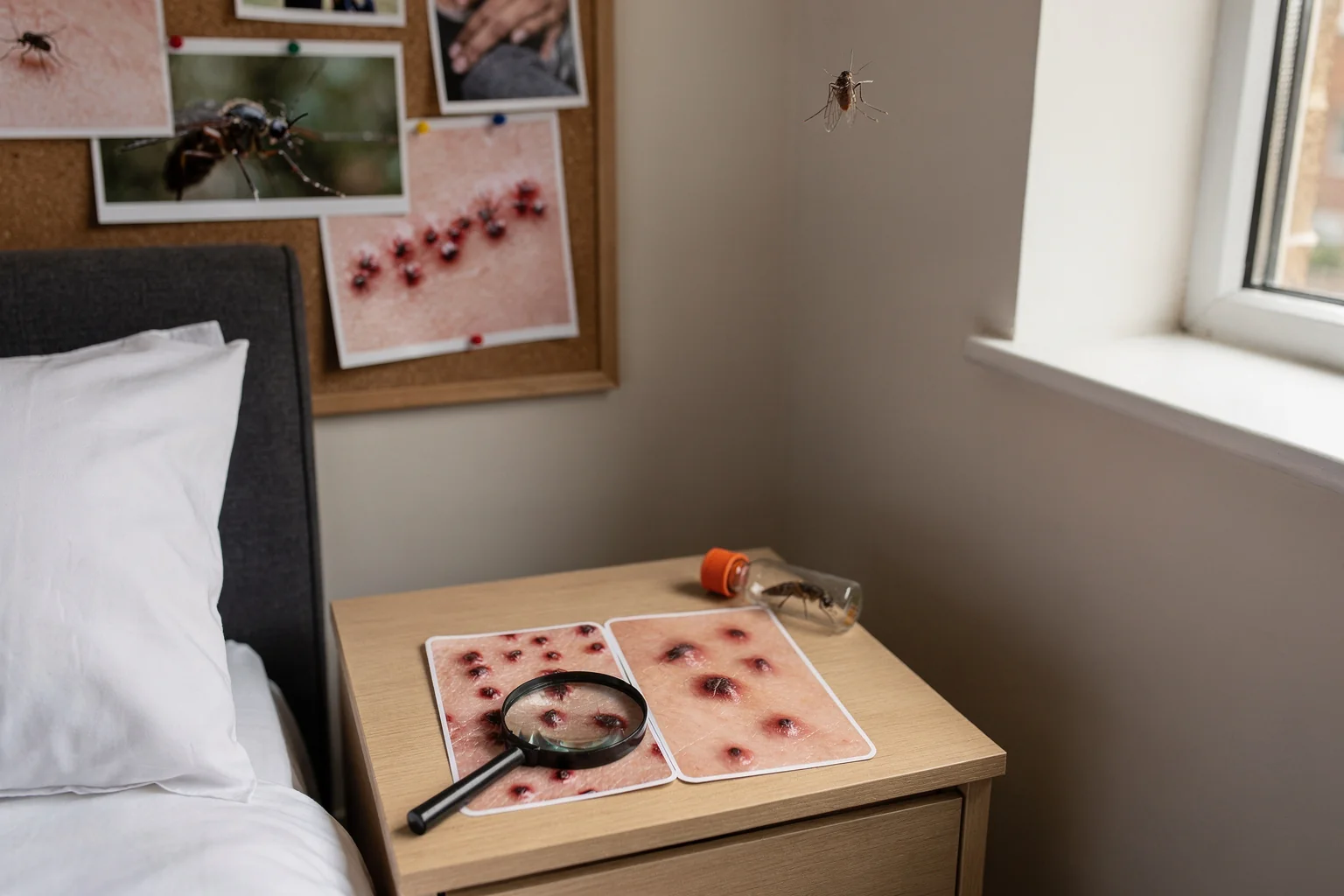
You wake up with three red, raised bumps on your forearm. They itch. You don’t remember sitting outside at dusk, and the bedroom window stayed shut all night. Is it a stray mosquito that found a gap under the door, or something that’s been hiding in the mattress piping? It’s a question that unsettles any London homeowner, not because the marks themselves are dangerous, but because the answer changes what happens next. A mosquito bite usually fades on its own. A bed bug bite means you need to find the source before it spreads further through your home.
The good news is that most people can separate bed bug bites from mosquito bites in about five minutes using five visual and behavioural clues. You won’t need a magnifying glass or medical training. I’ll walk through each clue in the order that’s easiest to check—starting with what the two types of bite actually look like—so you can make a clear call and pick the right next step.
How Bed Bug Bites Appear on the Skin
Bed bugs are small, flat insects, active mainly at night, that feed on human blood. They inject an anaesthetic and an anticoagulant as they bite, so you rarely notice the feeding while it happens. The marks often catch people off guard: you go to bed with clear skin and wake up to a trail of itchy spots. Reactions vary from person to person. Some notice the lumps within hours; for others it takes one to several days, and a fortunate few never react at all.
The typical bite is a reddish, slightly raised bump, sometimes flat, sometimes puffy, often with a darker centre that looks like a tiny puncture. In people who react strongly, individual bites can swell into wheals up to 5 cm across, accompanied by intense itching that makes it hard to leave them alone. When the bugs are numerous, a whole forearm or shoulder may look covered in a generalised rash.
Cutaneous reactions can start out as small macular lesions that develop into distinctive wheals of around 5 cm in diameter, accompanied by intense itching. When bed bugs are numerous, a patient can present with widespread urticaria. — Bed Bugs: Clinical Relevance and Control Options, PMC
The arrangement of the bites gives the strongest clue. A hungry bed bug often probes the skin several times in one session, which produces a line, a zigzag, or a tight triangle of two to four welts. The pattern is so common that people call it the “breakfast, lunch, dinner” sign. When you see three marks spaced a centimetre or two apart along the inner arm, that’s not a random coincidence—it’s characteristic feeding behaviour. Bed bugs are not known to transmit diseases, but scratching the bites raw can let bacteria in, leading to a secondary skin infection. In very rare cases, a person exposed to many bites may develop a systemic allergic reaction or mild anaemia, though these outcomes are exceptional.
The Mosquito Bite: Quick to Itch, Quick to Fade
UK mosquitoes are less talked about than their tropical relatives, but they are active from late spring through early autumn, especially in areas with standing water like garden water butts, blocked gutters, and plant saucers. The common house mosquito (Culex pipiens) is the one most of us encounter. Its bite lands as a single, pale-pink or skin-toned, rounded bump that feels raised and spongy to the touch. You usually feel the itch within minutes—sometimes seconds—because the mosquito’s saliva triggers a rapid histamine release in your skin. The insect doesn’t linger. It lands, feeds for a few seconds, and flies off, so you rarely see multiple bites in a neat row unless you’ve been standing in a cloud of them.
The itch from a mosquito bite peaks on the first day and then eases over the next two or three. The bump itself often shows a tiny central dot where the proboscis entered, but there’s no bleeding or crusting unless you scratch hard. For most people in the UK, a mosquito bite is a brief, local nuisance that heals without a trace. However, as the UK climate warms, the range and active season of some mosquito species is expanding. The London School of Hygiene & Tropical Medicine has noted that climate change is already affecting mosquito habitats and behaviour in the UK, though the insects here do not currently transmit the serious diseases seen in some other parts of the world.
Five Differences to Check in Five Minutes
Line up your evidence: the bitten skin, a photo on your phone, a torch for checking the bedding. Working through these five checks usually gives a firm answer.
The lineup: clusters versus solo marks
Bed bug bites rarely arrive alone. The classic arrangement is three or four welts in a tidy row, a shallow zigzag, or a compact triangle. That’s the feeding trail. Mosquito bites, on the other hand, scatter randomly—one on the calf, one on the ankle, another on the wrist—wherever the insect found exposed skin. If your photo shows a neat line, think bed bug. If the bumps are dotted around with no pattern, mosquito is the safer bet.
A single bite can still be a bed bug: a nymph that fed just once, or a hitchhiker that travelled in on a bag and hasn’t yet established a colony. However, a one-off mark with no other signs is far more likely to be a mosquito, especially if you’ve spent time near open water or parkland.
The itch clock: when the reaction kicks in
Morning-itch versus evening-itch tells you a lot. Mosquito bites ignite quickly—you slap your leg in the garden and a lump is already forming. Bed bug bites announce themselves much later. The anaesthetic the bug injected delays the sensation, and marks often appear one to several days after the bite occurred. If you recall feeling normal when you went to bed and woke up to fresh, itching bumps, consider day-old bed bug bites as a possibility. If you were scratching before you even got inside the house, the culprit was probably a mosquito.
Location: where on your body the bites land
Both insects target exposed skin, but context narrows things down. Bed bugs feed while you sleep, so their bites cluster on arms, shoulders, neck, face, and the backs of hands—the parts that sit outside the duvet or pyjama sleeves. Mosquitoes are less fussy. They go for ankles, feet, calves, and anywhere with thin skin, often striking lower on the body because they fly close to the floor or hover near feet under a garden table.
Ask yourself: were these areas under a layer of bedding? An arm resting on a pillow is a target for bed bugs. An ankle peeking out from the duvet could be either, so combine this clue with the others.
Staying power: how long the marks last
A typical mosquito bump swells, itches for a day or two, then flattens to a pale spot that fades within a week. Bed bug bites are stubborn. The wheal can persist for five to ten days, and the colour changes—often moving from red to a darker, purplish-brown—as the inflammation recedes. People with sensitive skin may see the marks linger for a fortnight or longer, especially on the arms and shoulders. If you’ve been applying bite cream to the same bump since Monday and it’s still noticeable on Thursday, that tilts the scale towards bed bugs.
Room signs: the evidence beyond your skin
This is the fastest way to close the case. Lift the pillow, fold back the top sheet, and shine a torch along the mattress piping. Bed bugs leave a calling card. Look for dark, pepper-like faecal spots on the fabric, pinhead speckles of dried blood on the sheet, translucent shed skins that look like hollow insects, or the bugs themselves—flat, mahogany-brown adults the size and shape of an apple seed. Mosquitoes leave no trace indoors. Even one spot of bed bug excrement next to a seam, paired with bites on your arm, is enough to make a reliable identification. If you’re unsure about what you’ve found, our bed bug identification checklist walks through the appearance of each lifecycle stage side by side.
A Five-Minute Bedroom Inspection You Can Do Right Now
If the skin clues point towards bed bugs, spend the next few minutes checking the three most common harbourage zones. You’ll need a torch and a thin card—an old credit card or loyalty card works well.
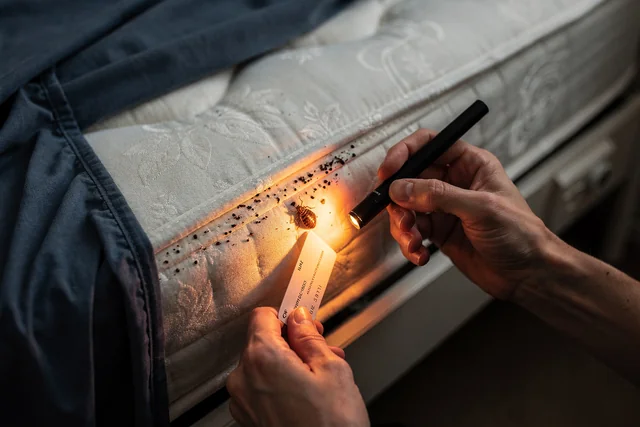
Mattress seams and the head of the bed. Strip the bed linen down to the bare mattress. Run the card along the embroidered piping where the top fabric meets the side panel; the dark faeces often collect in these grooves. Fold back the dust cover on the underside of the box spring or divan base and look inside the frame joints.
Behind the headboard and bedside furniture. Bed bugs retreat into tiny gaps during daylight. Lift the headboard away from the wall if you can and check the timber joints. Shine the torch into the corners of bedside tables, drawers, and any shelving within two metres of the sleeping area. In London flats, where space is tight, also examine the skirting board gap directly behind the bed.
Electrical fittings and wall cracks. A heavy infestation can push bugs into wall sockets, light switches, and the gaps between wallpaper and plaster. Look for black spotting around the edges of socket covers—never open the cover plate unless you’re a competent person, but external staining is a flag.
Document anything you find with your phone camera, especially the position of live bugs or skin casts. Those images help a technician target the treatment and also give you a clear before-and-after record. Early detection keeps the problem contained; spotting the bites and then finding a single adult in the bed frame is much better than discovering a full colony in the curtain track six weeks later. Our guide to early bed bug detection in Tower Hamlets explains why acting on the first sighting makes a measurable difference in flats and terraced homes where pests travel through shared walls.
When the Clues Add Up to Bed Bugs
Sometimes the bites by themselves aren’t conclusive, but a handful of secondary signals confirm the picture. Consistent waking with new marks, bites that trace an unmistakable line, a faint sweet or musty odour in the bedroom, and tiny blood smears on the pillowcase are among the 7 signs of bed bug bites that, combined with the timing and pattern you’ve already checked, mean you’re dealing with more than a stray mosquito.
It’s worth remembering that a bed bug problem doesn’t reflect on how clean you keep your home. The insects arrive on luggage, clothing, or second-hand furniture and can thrive in the neatest of bedrooms. They spread particularly well through blocks of flats and terraced streets, moving between rooms through small gaps in walls and floors. In boroughs like Newham, Tower Hamlets, or Barking and Dagenham, where housing is dense, a minor problem in one flat can escalate quickly if left unaddressed. That’s why identification and action go hand in hand.
From a health perspective, bed bugs are not known to transmit infectious diseases, but the consequences are real enough: lost sleep, constant anxiety, and skin infections from scratching. The CDC notes that intense itching can lead to secondary skin issues and, rarely, allergic reactions. If the marks are widespread, or if you’re already seeing signs of infection around the scratched bumps, a quick GP check is sensible.
Your Next Move, Based on What You Found
If the clues point to mosquito bites: Wash the area with soap and cool water. An over-the-counter antihistamine cream or a cold flannel usually calms the itch within minutes. Avoid scratching—if the urge is strong, cover the bite with a plaster or wear light gloves at night to protect the skin. Check your immediate surroundings for standing water: drain plant pot saucers, clear blocked gutters, and tip out buckets or trays that collect rainwater. In flats, a shared balcony or roof drain can be the source, so a word with the building manager helps. Repair any torn window screens, and consider using a plug-in vapouriser in the bedroom during the warmer months. For most people in the UK, that’s the end of the matter.
If the evidence says bed bugs: The first action is mechanical, not chemical. Strip the bedding and wash everything—sheets, duvet cover, pillowcases—at 60 °C minimum. Tumble dry on a hot setting if the fabric allows. Vacuum the mattress, the bed frame, the skirting boards, and any soft seating nearby, then seal the vacuum bag inside a plastic sack and put it straight into an outside bin. Encase the mattress and box spring in bite-proof covers; this traps any bugs already inside and starves them over time. Avoid using over-the-counter insecticide foggers or sprays—they rarely reach the deep crevices where bed bugs hide and often drive them further into walls or neighbouring rooms, making professional treatment much harder later.
Bed bugs are notoriously difficult to eliminate without professional intervention. Unlike a mosquito, which comes and goes, a bed bug colony nests in your property and grows each week. Nymphs are translucent and no larger than a poppy seed, eggs are glued into joints too fine for a domestic vacuum, and adult bugs can survive for many weeks without feeding. The Australian government health service is blunt about it: “It can be very hard to get rid of bed bugs. If you think that you have a bed bug infestation, call a licensed pest management company for treatment.” That advice holds true for London homes as well.
A trained technician begins with a full survey—identifying not just the obvious bed seam harbourage but also the secondary spots like light fittings, curtain rails, and carpet edges—before designing a treatment plan. Professional options include targeted heat treatments, which raise the room temperature above what bed bugs can survive, and residual insecticides applied exactly where the bugs travel. Many London properties require a follow-up visit two to three weeks later to catch any eggs that have since hatched, because no single treatment guarantees every egg is killed on the first pass.
If you are a landlord, letting agent, or manage a commercial premises, having a professional paper trail also supports your legal duty of care and can prevent disputes with tenants or enforcement officers. The process tends to be less disruptive when you act early, which is why removing bed bugs post-bite benefits from a clear plan and the right equipment rather than a dash through the DIY aisle.
The five-minute check you’ve just worked through is designed to move you from uncertainty to a clear decision. Most mosquito bites heal without consequence. Most bed bug bites are the visible edge of a problem that is completely manageable when tackled properly and quickly. If the clues remain ambiguous—maybe the bites look like bed bug marks but the room inspection turned up nothing, or you live in a multi-unit building where a neighbour’s infestation could be the source—the simplest next step is to book a professional survey. A trained eye can spot eggs, cast skins, and faecal traces that a householder misses, often within fifteen minutes. If the survey comes back clear, you gain peace of mind. If it finds early-stage activity, you’ve caught the issue before it becomes a larger, more costly clean-up.
We cover the whole of East London and Essex with same-day visits that carry no call-out charge, so you can move from suspicion to certainty without waiting days for an answer.
Need professional help? BuzzKill offers fast, reliable pest control services across London and Essex.