
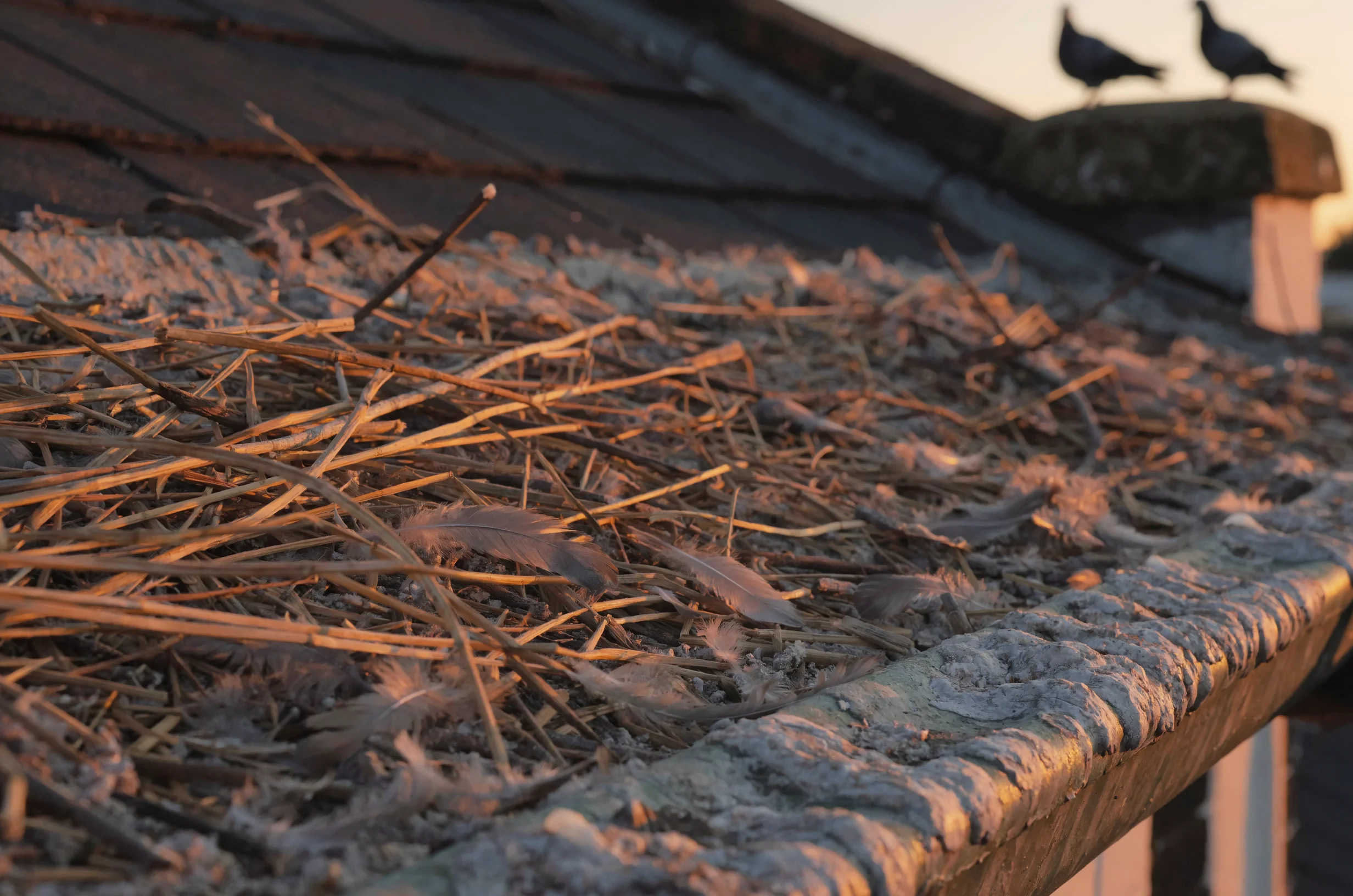
If your neighbour is feeding pigeons, start with a calm conversation, record the effect on your home and take sensible steps to protect your property. Involve your landlord, managing agent or council if the problem continues, or sooner if there’s an immediate safety concern.
Repeatedly cleaning your windowsill or finding food beside your entrance is frustrating. You’ll have a clearer conversation if you identify exactly what needs resolving: scattered food, repeated droppings, an unusable balcony or birds getting into the building.
How should I raise pigeon feeding with my neighbour?
Explain the effect on your property and ask for a specific change to the feeding.
I’d choose a quiet moment, away from the feeding itself. A conversation across a courtyard while birds gather can quickly become an argument. Keep the first approach brief, and avoid guessing why your neighbour puts food out.
Describe something they can recognise. For example, you might explain that pigeons gather above your balcony after food is scattered, and you’re cleaning the same chairs repeatedly. If appropriate, show a photograph of your affected space.
Ask them to stop scattering food at that location. Agreeing a clear change is more useful than asking them to do something about the pigeons. Avoid suggesting they move the feeding beside another home or into a shared entrance.
Your neighbour may believe they’re helping wildlife and may be unaware of the mess elsewhere. Give them room to respond without turning the conversation into a debate about whether pigeons belong in London.
If you agree on a change, suggest checking back after you’ve both had time to see its effect. Keep a private note of the conversation and continue recording fresh mess. If approaching them feels unsafe, use your landlord or managing agent instead.
What should I do if my neighbour becomes confrontational?
End the conversation and move further communication through an appropriate third party.
You don’t need to keep making personal approaches once an exchange becomes hostile. A landlord, housing officer or managing agent may provide a route that avoids another doorstep discussion.
Keep any written message short and factual. Describe the location, the problem and the change you requested. Avoid insults, accusations about motives or threats about fines and legal action.
Don’t post photographs of your neighbour in a residents’ group to put pressure on them. If other residents are affected, ask each person to record their own experience. Separate accounts are clearer than a shared message that repeats unverified claims.
Keep feeding concerns and threatening behaviour distinct in your records. Note what happened, when it happened and whether anyone witnessed it. Save relevant messages without continuing an argument through repeated replies.
If anyone is in immediate danger, seek urgent help. Otherwise, tell the person handling the housing or neighbour complaint that you need communication managed through them.
What evidence should I keep if the feeding continues?
Keep a dated record that connects what you observed with the effect on your home.
You don’t need to watch your neighbour throughout the day. Short, consistent notes are easier to maintain and explain than a large collection of photographs without dates or context.
Useful entries include:
- The date, approximate time and location of feeding you actually saw.
- Where food remained afterwards, including shared paths or entrances.
- Where pigeons gathered on your property.
- Fresh droppings on windows, outdoor furniture or access routes.
- Cleaning you carried out and any receipts.
- Messages or conversations about the problem.
Photograph affected surfaces from somewhere you’re entitled to be. Keep the framing focused on the problem, rather than your neighbour’s private rooms or movements.
Separate observation from suspicion. If you found food but didn’t see who put it there, record that distinction. If several birds arrived after feeding, describe the sequence without claiming every pigeon nearby came from that source.
A simple incident-log tool could help: enter the date, location, effect and a photograph, then export the entries for a landlord or council.
If possible, photograph a surface after cleaning and again when fresh mess appears. That gives the person reviewing your report a clearer picture of recurrence. Record urgent problems immediately rather than waiting to complete a diary.
Can I make my neighbour stop feeding pigeons?
You can request a change and report the consequences, but you shouldn’t assume you can enforce a ban yourself.
The relevant questions include where feeding happens, who manages that space and which property or local rules apply. Feeding in a private garden, a communal courtyard and a public square may need different enquiries.
For a shared courtyard, ask the managing agent whether the building has a policy covering food waste or bird feeding. Request the actual wording before telling your neighbour they’ve broken a rule.
For a pavement or public space, ask your London borough which reporting route applies. Describe leftover food, blocked access or repeated mess, and ask the council to confirm any current restrictions for that location.
If feeding happens entirely within a neighbour’s property, focus your report on the consequences you can document at yours.
Avoid promising that the council will issue a fine or order someone to stop. Without confirmed information about the location and circumstances, you can’t know the outcome. Ask the relevant organisation what evidence it needs and what action it can consider.
What can I do on my own balcony, windows and roof?
Remove food attractants you control and assess the places pigeons are using before arranging physical changes.
Start with accessible areas. Keep household rubbish enclosed, clear spilled pet food and avoid leaving food scraps on outdoor tables. These steps give you control over your own space while the feeding issue is addressed.
Look from a safe position at where the birds land and linger. Is it one window ledge, the space beneath a balcony roof or a sheltered corner behind stored items? Note the exact location rather than treating the whole building as equally affected.
Move loose belongings away from an unused balcony corner if you can do so without disturbing birds or nesting material. Keep doors and access routes clear.
A monthly pigeon nest check can form part of ongoing monitoring, but check again immediately before any proposed work. Don’t rely on an earlier inspection.
Leave roof work, awkward external ledges and high gutters to someone with suitable access equipment. Leaning from a window to fit a deterrent creates another problem.
If you rent or live in a block, get permission before attaching anything to the exterior. Send photographs and proposed locations to the person responsible for authorising the work.
Which deterrents suit a window ledge or balcony?
Choose a deterrent for the specific landing or sheltering space, with safe installation and maintenance built into the plan.
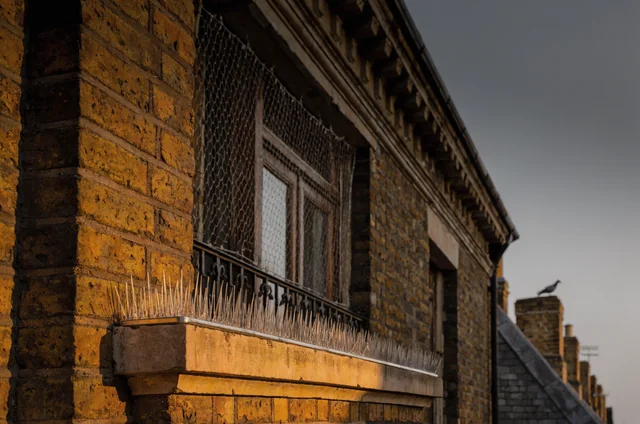
Bird proofing means fitting physical barriers that restrict access to selected parts of a building. The design needs to account for how residents use that space.
For a narrow ledge, ask whether a properly specified spike or wire system suits its width and shape. For a balcony opening, ask whether fitted mesh or netting is appropriate and how doors, windows and maintenance access will remain usable.
For roof gaps, ask how a barrier would be attached and how drainage and ventilation would be kept clear. Don’t stuff openings or stretch loose mesh across them yourself.
BuzzKill Pest Control’s bird-control service is relevant where your own ledges, balcony or roof need assessment. Ask for the proposed treatment area to be identified clearly, along with inspection and maintenance arrangements.
Avoid poison, sticky substances, improvised traps and loose fishing line. Don’t fit anything that could entangle birds or close them inside a space.
Treat reflective objects and plastic decoys as purchases to question rather than a complete plan. Before buying, establish which exact area needs protection and what you’ll do if birds continue using it. For installed netting, request instructions for reporting sagging, damage or a trapped bird.
What if pigeons have already built a nest?
Leave any nest that may be in use undisturbed and have it assessed before cleaning, sealing gaps or installing deterrents.
Nesting material changes the job. An apparently empty corner may still need checking, especially if birds return when you move away. Don’t reach into a sheltered space to look for eggs or chicks.
Observe from a safe distance and record where birds enter. Note whether they carry material or spend time out of sight. Photographs can help a specialist understand the location before arranging access.
Don’t decide a nest is unused from the month alone. Equally, a brief absence of adult birds doesn’t give you enough information to proceed.
Before arranging work, review the bird nest removal precautions. Ask the contractor to explain whether work can proceed, what checks are needed and whether any permission or wildlife authorisation applies.
Avoid removing eggs or chicks, moving an occupied nest or fitting barriers around birds. Don’t block an entrance because you hope the adults have left.
If a nest sits beside a window you need to use, explain that access problem when requesting an assessment. Where birds appear trapped, injured or entangled, seek appropriate professional or wildlife assistance rather than pulling at the barrier yourself.
Can I clean pigeon droppings myself?
Consider DIY cleaning only for a small, accessible patch that you can handle without raising dust or working at height.
First establish whether birds or nesting material are present. Cleaning should stop if it would disturb an occupied space or require you to reach over a balcony edge.
For a small patch on a washable surface, keep children and pets away, wear gloves and lightly dampen the deposit before lifting it with disposable material. Use a cleaning product suitable for that surface and follow its label.
Avoid dry brushing, sanding or using a household vacuum. Keep the work gentle, collect waste securely and wash your hands afterwards. Don’t mix cleaning chemicals.
The distinction between an occasional mark and a heavy accumulation matters when considering pigeon droppings health risks. Don’t use a general article to assess someone’s individual medical risk. Seek clinical advice if you have symptoms or a personal health concern.
Leave extensive deposits, enclosed loft spaces, high ledges and difficult access to a suitable specialist. Tell them about the surface, approximate extent and access before the visit.
On shared stairs or entrances, report the affected area promptly to the building manager. Include a photograph and explain whether people have to walk through it. Don’t create a wet, slippery route while attempting an unplanned clean.
Should my landlord or managing agent deal with this?
Notify the person managing your home or shared building whenever the problem affects rented accommodation, communal areas or the exterior.
Send a short written report with photographs, dates and the precise location. Explain whether you need cleaning, repairs, proofing, a conversation with another resident or a check of building rules.
For a flat, responsibility may need checking across the tenancy agreement, lease and building-management arrangements. Avoid assuming that everything outside your window belongs to the same person.
The guide to leaseholder and freeholder responsibility gives you a starting point for reviewing the relevant documents. Ask for written confirmation of who can authorise work and who will arrange it.
If pigeons use a shared roof or move between balconies, provide that wider picture. A proposal covering one ledge may leave the managing agent with unanswered questions about adjoining areas.
Ask for a named contact, a reference number if available and an expected response date. Keep the acknowledgement with your evidence.
If the report is passed between organisations, ask each one to explain which part it handles. Confirm who will inspect the property before you agree to pay for private work.
When should I contact my London borough council?
Contact your borough when the effects persist, the relevant property manager hasn’t resolved them or a public area needs attention.
You don’t have to complete every earlier step if there’s an urgent access or safety problem. Explain the immediate concern when reporting it.
For continuing problems, give the council a concise account of what is happening and where. Ask which team handles your circumstances. The appropriate route may involve housing, environmental health, street cleansing or another team, depending on the issue.
Include your address, the feeding location, the effects on your property and the steps already taken. Attach a few representative photographs and your dated notes. Keep the longer record available if requested.
Distinguish food left on public land from droppings on a private balcony. If both occur, describe each location clearly so the report can reach the appropriate team.
Ask whether the council needs a particular diary format, whether an inspection is possible and how you should provide further evidence. Request a reference number and retain the response.
Council involvement doesn’t guarantee a particular enforcement outcome or private cleaning service. Ask what action is available in your circumstances. If you receive a reply you don’t understand, request clarification about the evidence assessed and what would justify reviewing the report.
Who pays for cleaning and pigeon proofing?
Confirm responsibility and obtain a written scope before assuming your neighbour, landlord or building manager will cover the cost.
Keep receipts for cleaning materials, contractor visits and completed work. These records show what you spent; they don’t by themselves establish who must reimburse you.
I’d separate an urgent clean from longer-term proofing when requesting estimates. Ask each contractor to identify access arrangements, the area to be cleaned, the proposed barrier and any later inspection requirements.
Use information about pigeon proofing costs to prepare questions, then obtain a quote for your actual property. A ground-floor ledge and an awkward upper-floor balcony need different access planning.
When requesting a quote from BuzzKill Pest Control, ask for cleaning, installation and any future checks to be set out separately. That makes the proposal easier to review with whoever authorises the work.
For a shared building, confirm how expenditure will be approved before instructing someone yourself. Ask whether the proposed fixing points and materials are acceptable.
If the feeding dispute continues, keep the cost discussion factual. Don’t present your neighbour with an unexpected invoice and assume payment has already been agreed.
Why are pigeons still returning after feeding stops?
Continued visits need another look at the remaining food sources, landing places and sheltered spaces.
The original feeding location is only part of the picture. Check for fresh food on neighbouring land, accessible rubbish and birds using a protected corner of the building. Record what you can actually observe.
Compare fresh evidence with your earlier photographs. Is new mess appearing on the same ledge, or have birds moved to an adjoining balcony? That distinction helps explain whether the original problem continues or the affected area has changed.
If proofing has been installed, inspect it from a safe position. Report loose fittings, visible gaps or sagging netting to the installer. Don’t bend, cut or extend the system yourself.
Keep cleaning records separate from sightings. A bird passing overhead is different from repeated use of your window ledge, and old marks can make a recently cleaned area difficult to judge.
Agree with the person managing the problem how further evidence should be submitted. Use the same locations and photographs where possible so changes are easier to assess.
If fresh mess continues after an agreed feeding change or completed work, send the new dates and photographs to the person handling the report. Ask for the feeding location and the property’s proofing to be reviewed together.
Need professional help? BuzzKill offers fast, reliable pest control services across London and Essex.