
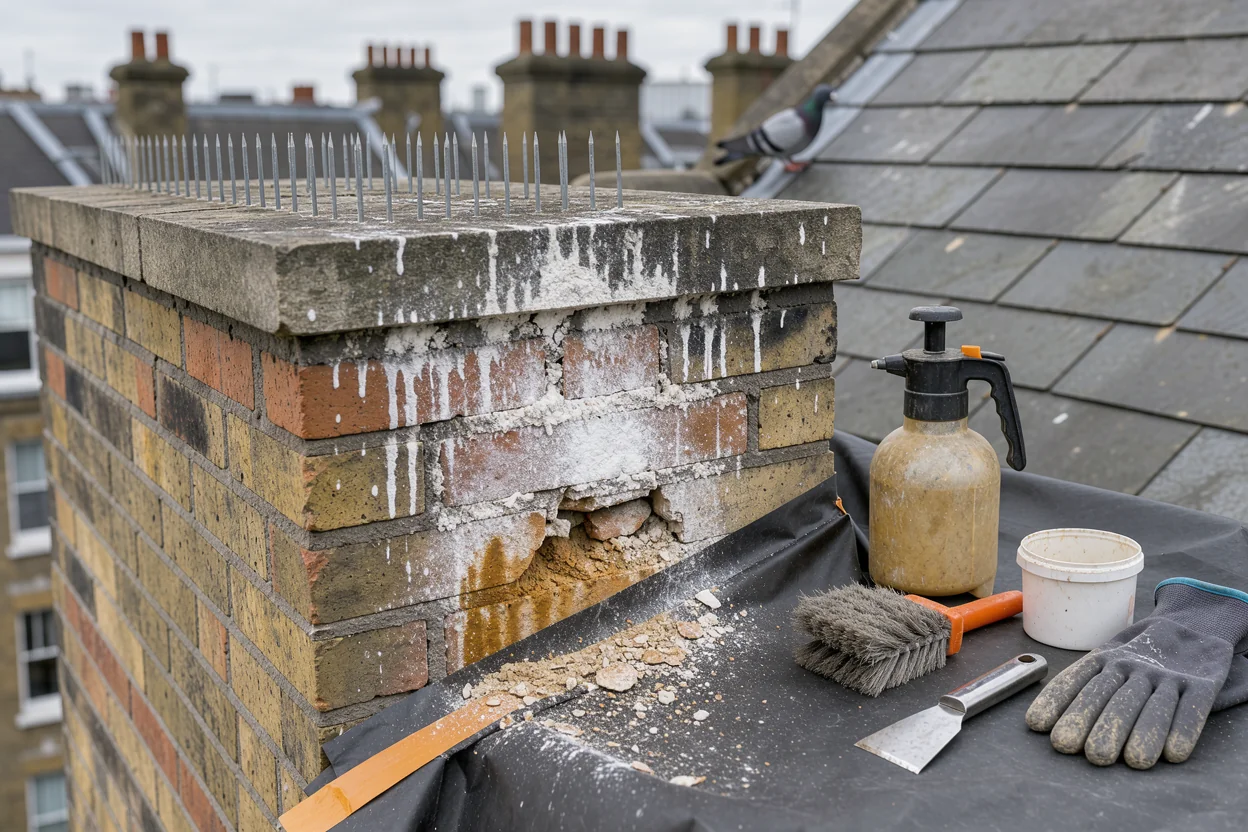
If you’re assessing acidic pigeon guano masonry damage risks on a London property, start by keeping people away from loose deposits and damaged masonry. Leave chemical treatments alone until you know what the wall is made from. Photograph the affected area from a safe position, check for falling fragments, and look for birds returning to the same ledge.
Pigeon guano, another name for accumulated droppings, needs careful removal before you can judge the surface beneath it. There’s no universal neutralising recipe for brick, stone and mortar. A disinfectant doesn’t automatically neutralise acid, and a neutral pH reading doesn’t prove a wall is sound. The useful sequence is inspection, controlled cleaning, assessment and suitable repair.
Use the first 30 minutes to protect people and record the damage
The safest immediate response to pigeon deposits is to prevent disturbance while you establish where the problem starts and ends.
Keep children, pets and visitors away from the affected area. On a shared entrance or commercial frontage, redirect access if deposits or masonry fragments could fall onto the route below. Don’t stand beneath a damaged cornice to take a closer photograph.
From ground level, record:
- Where deposits sit, including window ledges, parapets, gutters and sheltered recesses.
- Whether the surface looks stained, powdery, cracked or visibly loose.
- Where rainwater appears to run through the deposits and down the wall.
- Whether birds repeatedly land above the same patch.
Avoid dry sweeping, wire brushing or using a household vacuum. These methods can spread dust and make an inspection harder. Our guide to pigeon droppings health risks explains why handling deserves a separate assessment from repairing the building.
If you can see nests, eggs, chicks or birds repeatedly entering a cavity, pause cleaning and proofing until the site has been assessed. Don’t close the opening.
Loose stone, bulging brickwork or fragments on the pavement require a building professional’s assessment. Keep the area below clear while you arrange it.
Read the brick, stone and mortar before choosing a wash
The material beneath pigeon deposits determines which cleaning methods are suitable. A treatment that leaves one surface unchanged may damage another.
Identify each part of the affected surface
A London façade may combine brick, stone dressings, painted sections and several generations of mortar repairs. Treat these as separate materials during assessment.
Limestone and marble contain minerals that react with acids. Brickwork also needs care because its surface condition, joints and previous repairs affect how it tolerates cleaning. An intact glazed brick face presents a different problem from a weathered, absorbent brick.
Mortar is the material between masonry units. Lime mortar and cement-rich mortar can behave differently, so don’t assume every joint needs the same treatment.
If you’re unsure what you’re looking at, use existing building records or ask a conservation-aware mason. Avoid scratching the surface or applying acid to identify it.
Trace moisture before blaming every defect on guano
Follow the affected area upwards. Look for an overflowing gutter, failed joint, leaking downpipe or ledge that holds water.
Deposits can contribute to deterioration, but a damaged patch beneath a roost doesn’t establish a single cause. Persistent wetting, earlier repairs and weather exposure may also be involved.
Compare the affected patch with nearby masonry of the same type. Note whether similar flaking or joint loss appears beyond the bird activity.
A close photograph should include some sound surrounding material for comparison. Keep the original image and mark the defect on a copy, so contractors can distinguish existing damage from changes after cleaning.
Use pH checks to answer a specific question
A masonry pH check can help investigate acidity, but it needs a consistent method and a clear purpose. It cannot reveal the full condition of a wall.
Understand what the reading measures
pH describes how acidic or alkaline a water-based sample is. A reading taken through droppings may mainly describe the deposit and the sampling water.
A reading from exposed mortar answers a different question. Lime-based materials are naturally alkaline, so making every part of a wall read neutral is an unsuitable general target.
My advice is to ask what decision the test will change. Is the contractor checking a cleaning residue, investigating an unusual surface condition, or comparing an affected area with similar sound material?
Record the sampling location, surface material, method and moisture conditions. Without that information, two readings may be difficult to compare.
Set the comparison before applying chemicals
Where testing is justified, a competent contractor should specify how samples will be collected and interpreted. Fragile or valuable masonry may need a conservation specialist’s input before sampling.
Useful comparisons might include an affected brick face and a nearby sound brick of the same type. Comparing a brick face with a mortar joint can confuse the assessment because the materials differ.
Don’t drill, scrape or remove historic material simply to obtain a household test-strip reading. A surface check also cannot establish which salts are present below it.
If the concern is continuing deterioration, ask whether moisture assessment or laboratory analysis would provide better evidence. Never use a single pH result to calculate a homemade chemical dose.
Remove deposits through a controlled cleaning sequence
Cleaning pigeon deposits should expose the masonry with as little disturbance to the building and surrounding area as possible.
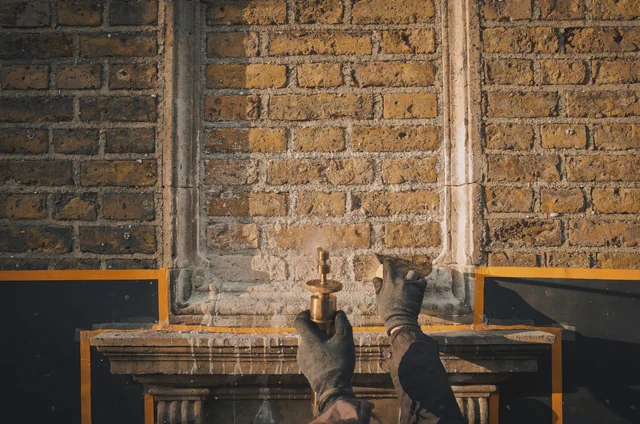
Agree access, protection and a trial patch
Decide who can safely carry out the work before assembling cleaning products. Rooflines, deep accumulations, enclosed spaces and unstable masonry need a professional plan.
That plan should cover access equipment, dust control, protective clothing, any respiratory protection, waste collection and runoff. The person carrying out the work must understand the products and equipment involved.
For example, a property manager using BuzzKill Pest Control for bird control should still identify who is responsible for assessing damaged stonework. Those responsibilities may involve different contractors. Checking pest controller credentials helps establish the bird-management side of the job.
Choose a small, representative trial area before cleaning the whole elevation. Include any fragile surface or previous repair that could respond differently.
Lift deposits without driving water into the wall
For work assessed as suitable to proceed, agree this sequence with the contractor:
- Protect nearby openings, sensitive finishes and the area below. Establish how waste and wash water will be collected.
- Dampen deposits in a controlled way to limit dust, without soaking the wall or creating airborne spray.
- Lift softened material gently with tools suited to the surface. Stop if brick, stone or mortar starts coming away.
- Collect removed material as work progresses. Avoid washing it into gutters, joints or neighbouring property.
- Clean the remaining residue using the approved trial method, then inspect the exposed surface.
A pressure washer is a poor default choice for uncertain masonry. Forceful cleaning can remove weakened material and drive water into defects.
If the trial reveals a soft surface, lifting paint or crumbling joints, stop extending the cleaned area. Photograph the change and have the method reviewed.
Separate disinfection from acid treatment
A biocide is a product intended to control specified organisms. Its disinfecting action does not establish that it neutralises acidity or suits historic masonry.
Use a product only for its labelled purpose and compatible surfaces. Follow its instructions for dilution, application, contact time, rinsing and protection. Don’t combine cleaners or improvise a sequence of chemicals.
Baking soda, vinegar and strong alkaline cleaners are unsuitable universal answers. Adding a chemical can introduce residues or create another reaction before the original problem is understood.
If assessment identifies a need for chemical neutralisation, the specification should name the product, explain its compatibility, and set the application and completion checks. Without that specification, continue with assessment rather than choosing a neutraliser by guesswork.
Inspect the dry surface for salts, staining and spalling
The cleaned masonry needs another inspection after it has dried sufficiently for the chosen assessment method. A wet surface can conceal colour differences and make defects harder to judge.
Distinguish a mark from material loss
A remaining stain doesn’t automatically mean the masonry is still being chemically attacked. Likewise, a clean appearance doesn’t establish that the material beneath is sound.
Look for changes in texture and shape. Are brick faces flaking? Have mortar joints recessed? Does a stone edge appear to be breaking away?
Spalling means pieces of a masonry surface are detaching. Several processes can contribute, including moisture-related deterioration and salt activity. Its appearance alone cannot identify uric salts as the cause.
Avoid picking at flakes to see how deep they go. Record the affected area and let a building professional assess any loose material.
Investigate recurring deposits without guessing their chemistry
Efflorescence is a visible deposit of salts on a masonry surface, often seen as a pale bloom. A white mark may have other explanations, so colour alone is insufficient for identification.
Salt crystallisation beneath a surface can contribute to damage, but establishing the salt type and its role may require testing.
If pale deposits return after cleaning, photograph them before further treatment. Note whether they appear after rainfall, during drying or alongside fresh pigeon droppings.
Repeatedly washing the same patch can obscure the pattern. Keep a dated record and ask the assessor whether testing is needed before another cleaning cycle.
Repoint damaged joints only after assessing the cause
Repointing replaces defective mortar near the face of masonry joints. It can repair failed joints, but it doesn’t remove a roost or resolve a leaking gutter.
Look for missing mortar, open joints and material that is visibly breaking away. Don’t assume every stained joint needs cutting out.
Sound historic mortar should generally be retained where possible. Unnecessary removal can damage the edges of adjacent bricks or stone.
Lime mortar may be appropriate for older masonry originally built with lime, but selecting a mix requires more than identifying the building as old. The mason should consider the existing mortar, masonry strength, exposure and repair history.
A hard cement-rich repair can behave differently from the surrounding wall. Covering damaged joints with a thin surface smear also leaves the underlying condition unresolved.
Ask the repair contractor to explain:
- Which joints need repair and which can remain.
- How defective mortar will be removed without damaging masonry edges.
- Why the proposed mortar suits the wall.
- How the repair will be protected while it develops strength.
Repointing cannot restore a brick or stone unit that has lost substantial material. Significant fractures, displacement or deep deterioration need a wider repair assessment.
Complete the moisture investigation before approving the mortar specification.
Keep pigeons away from repaired ledges and roof gaps
Pigeon management belongs in the repair plan because fresh deposits can restart the cleaning problem on the same surface.
Inspect the places birds actually use. A narrow window ledge, sheltered parapet and open roof void may need different approaches. Photograph landing points and access gaps rather than asking for a deterrent across the entire building.
The response should address access, resting places and any accessible food or waste. Any mesh, netting or ledge deterrent needs suitable design, secure installation and ongoing checks.
Don’t attach equipment to loose stone or weakened mortar. Repairs and fixings need coordination so the deterrent doesn’t damage the surface being protected.
Repeated fouling at height or inaccessible nesting areas are useful bird control warning signs when deciding whether a site assessment is needed.
BuzzKill Pest Control’s bird control service can form part of this prevention plan, with masonry repair responsibilities recorded separately. For properties in Newham, the guide to pigeon proofing costs provides a starting point for discussing the scope.
Check proposed barriers against the actual building details, and arrange inspection access for future maintenance.
Questions about neutralisers, stains and damaged mortar
The remaining decisions usually concern whether further cleaning will help or whether the masonry needs specialist investigation.
Can I neutralise pigeon droppings with baking soda?
Don’t use it as a blanket treatment for masonry. A household neutraliser does not account for the surface material, existing salts, previous cleaners or the quantity of residue present.
Start with material identification and controlled deposit removal. If chemical treatment is necessary, ask for a compatible product specification and a trial patch before wider application.
Will a disinfectant stop the masonry deteriorating?
Disinfection does not establish that the cause of masonry deterioration has been resolved. Its purpose is different from repairing joints, managing salts or correcting water entry.
Use the exposed surface assessment to decide what follows cleaning. A wall that continues to shed material needs a building assessment, even if a disinfectant has been applied.
Does white powder prove that uric acid has damaged the wall?
No. White powder cannot establish the chemical responsible or show how far deterioration extends.
Photograph where it appears and record whether it returns after wet weather or drying. If it recurs alongside flaking, a specialist can decide whether sampling would help distinguish possible causes. Avoid repeated chemical treatment based only on colour.
How quickly must I repoint after removing the deposits?
There’s no reliable deadline that applies to every wall. Immediate priorities are safe access, loose material and active water entry.
The repair sequence depends on the condition revealed, the proposed mortar and suitable working conditions. Ask the mason to specify preparation, timing and protection rather than booking repointing solely because cleaning has finished.
Record changes today and after the next rainfall
A short inspection record helps separate fresh pigeon activity from continuing masonry deterioration. It also gives each contractor the same starting information.
Today, save overview photographs and closer images taken from safe positions. Mark the affected elevation, surface materials, visible defects and any suspected water route. Record whether bird activity is current or only old deposits are visible.
Tomorrow, confirm who owns each part of the response: access, deposit removal, bird assessment, masonry inspection and repair. For rented or shared property, make the access arrangements clear before work starts.
Over the next 48 hours, repeat photographs if conditions allow. Check for new droppings, fresh fragments and changes around gutters or downpipes. Keep any cordon in place where falling material remains a concern.
An interactive inspection checklist could record access height, loose masonry, damp and returning deposits, then flag which contractor needs the photographs. It should support a site assessment without attempting to calculate a chemical dose.
After the next rainfall, compare the same locations. If no fresh deposits appear but the wall remains wet or continues flaking, pass that evidence to the masonry assessor. If droppings return, have the bird-management plan reviewed before another cleaning cycle.
Need professional help? BuzzKill offers fast, reliable pest control services across London and Essex.