
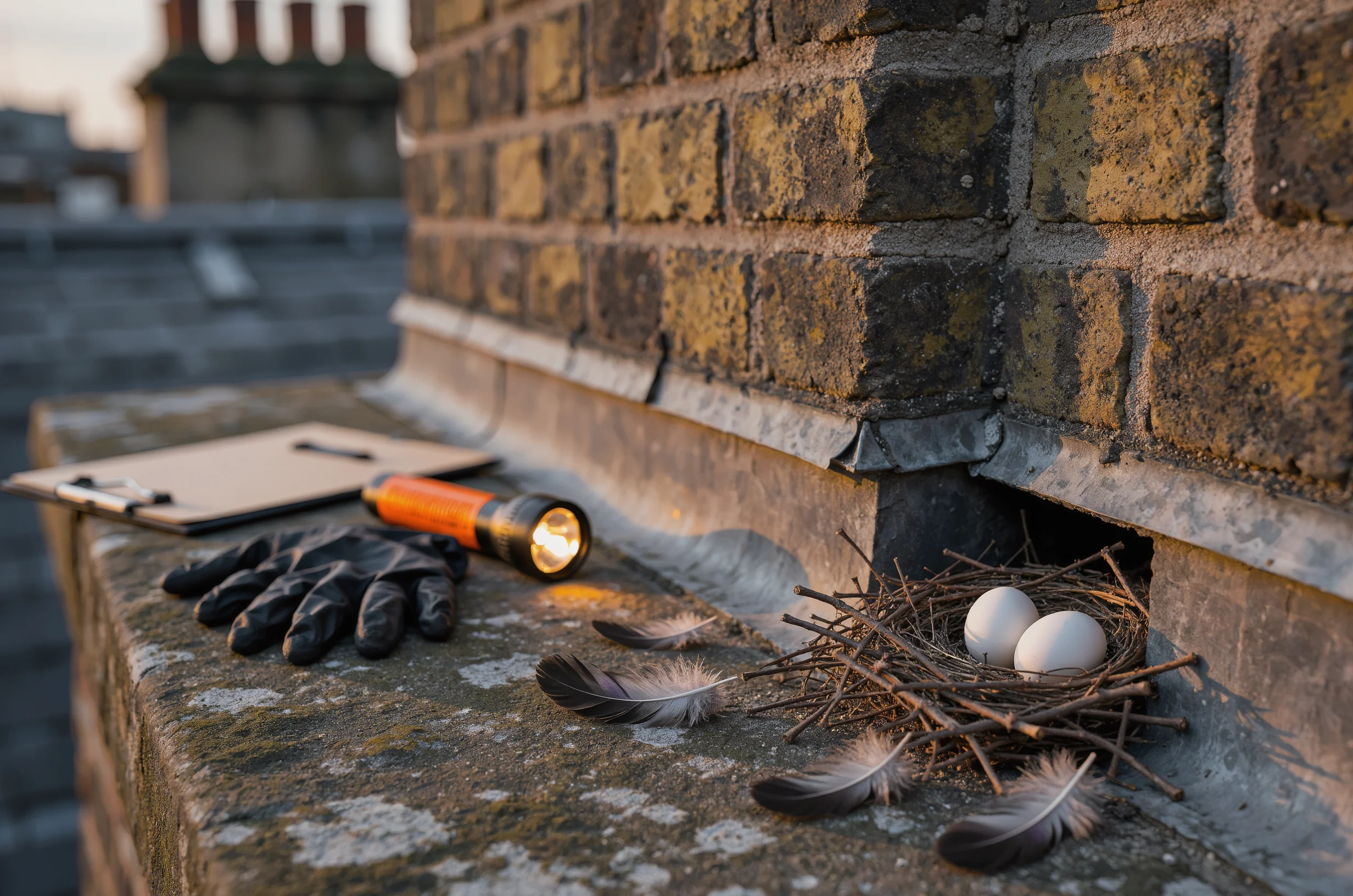
Feral pigeons can breed all year in the UK, with eggs and young possible in every month. Breeding activity generally peaks from spring into autumn, but a sheltered London balcony or roof recess can still need attention in winter.
Allow 30–60 minutes for this monthly visual check of ledges, balconies, gutters, roof edges and accessible shared areas. Your job is to spot changes, record uncertain areas and decide what needs closer assessment.
Why a January nest still needs checking
Year-round breeding means the calendar cannot tell you whether a pigeon nest is occupied. A winter inspection needs the same care around nesting activity as a summer inspection.
The distinction is between pigeons resting on a building and pigeons using a particular spot to breed. A bird perched on a railing gives you a place to watch; repeated trips into the same recess give you a reason to investigate from a distance.
Look for a combination of signs: birds carrying nesting material, an adult sitting low in one position, repeated visits to a sheltered corner, or visible eggs or young. A scattering of feathers or droppings alone does not establish whether breeding is happening.
You also need to distinguish an apparently empty nest from a confirmed opportunity for work. A bird may be away when you look, and the back of a ledge may be hidden from your viewing position.
I’d record those uncertain places separately, because an honest “cannot see” is more useful than an assumed “clear”. Leave the site undisturbed while its status remains uncertain.
This checklist concerns feral pigeons, the familiar town and city pigeons found around buildings. If you cannot identify the bird, photograph it from a distance and avoid choosing a control method until identification is settled.
Allow 30–60 minutes and use safe viewing points
A useful pigeon inspection starts with somewhere safe to stand. Use ground level, an accessible balcony, or an indoor window that gives you a view without leaning out.
Take a phone or camera, binoculars if available, and a notebook or simple property log. A torch can help with an accessible sheltered corner, but do not shine it directly at nesting birds.
Keep children and pets away from areas with droppings, loose nesting material or damaged bird netting. Avoid touching eggs, chicks, nests or birds during the check.
Do not climb onto roofs, balance on furniture, enter roof voids or use a ladder to improve your view. Mark anything beyond safe sight as needing assessment by someone with suitable access arrangements.
Leave dry droppings undisturbed rather than brushing them aside to reveal the surface. Our guide to pigeon droppings health risks explains why cleanup needs separate consideration.
For this routine, “clear” means no nesting activity was visible in the areas you could inspect safely. Record inaccessible areas separately, and allow extra time for large buildings rather than rushing to finish within an hour.
Follow the ledges, balcony and roofline in the same order
Pigeons may use several parts of one building, so follow a repeatable route each month. Start with the places closest to everyday use, then scan higher areas from safe ground.
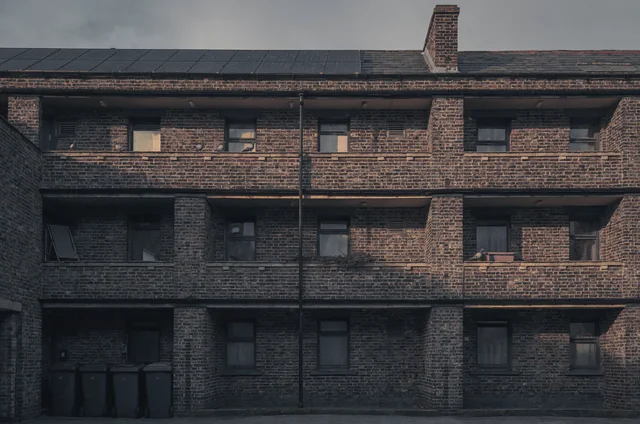
Window ledges and balcony corners
Scan each ledge and window recess for repeated use.
Look along the full ledge, including the sheltered ends beside walls, drainpipes and decorative stonework. Compare the area with your previous photograph if you have one.
A positive finding is a new group of twigs, a bird repeatedly entering the same recess, or an adult settled behind an obstruction. Fresh droppings identify a place worth watching, though they do not prove a nest is present.
Record the exact window and floor so someone else can locate it. If birds appear to be building or occupying a nest, leave the ledge alone and flag it before window cleaning, repairs or proofing.
Check balcony floors, furniture and stored objects without moving suspected nesting cover.
View the spaces beneath chairs, behind planters and beside storage boxes from the open side. Pay particular attention to corners you have not used recently.
A positive finding is a pigeon repeatedly disappearing behind an object, visible nesting material, or an adult remaining tucked into a protected space. Do not pull the object away to confirm what is underneath.
Keep people and pets back from that corner and record what you can see. If the balcony is shared or managed, notify the person responsible before furniture clearance or maintenance begins.
Gutters and roof edges
Look for nesting material around gutters and rainwater outlets.
From safe ground, scan gutter corners, hopper heads and the points where downpipes meet the roofline. Note any overflow or staining visible from below, especially if water problems have appeared since the last check.
A positive finding is material gathered in one place with birds returning to it, or a sheltered gutter section that you cannot see into. Water overflow needs attention even when you cannot establish whether a nest is involved.
Photograph the location and tell the maintenance contractor about the possible bird activity before clearance. The guide to removing a gutter nest covers the checks that should precede any removal decision.
Scan roof edges, chimney areas and sheltered recesses.
Use binoculars to view parapets, the low walls around some roofs, and gaps around rooftop structures. Stay at your viewing point rather than walking backwards while looking upwards.
A positive finding is repeated entry behind a roof edge, material carried into one location, or birds remaining partly concealed there. Record a perched bird separately from activity that suggests nesting.
Describe the position using a fixed landmark, such as the chimney nearest the street or the rear corner above a downpipe. For a BuzzKill Pest Control bird assessment, those details help identify which areas need closer inspection and suitable access.
Solar panels and openings into the building
Watch the edges beneath solar panels from a distance.
Check whether pigeons repeatedly move beneath the same panel edge or carry material underneath it. Include any existing perimeter barrier in your visual scan.
A positive finding is repeated access below the panels, visible nesting material, or an obvious gap in an existing barrier. A quiet moment does not establish that the space beneath the array is empty.
Leave cables, panels and barriers untouched, and record the side where birds enter. Our guide to solar panel pigeon proofing explains options to discuss once nesting status and access have been assessed.
Check visible openings near eaves, vents and service gaps.
Eaves are the edges where a roof extends beyond the wall; look around them from outside. Also scan accessible views of vents and openings around pipes or other services.
A positive finding is a bird entering a gap, material caught around an opening, or sounds that appear to come from inside. Record the observation without assuming that every noise confirms pigeons.
Do not seal the opening, fit mesh or block a vent while activity remains uncertain. Report the location and any related indoor noise to the property manager or bird specialist before repairs are arranged.
Waste areas and existing bird barriers
Check whether everyday conditions need attention.
Look around bins, outdoor eating areas and accessible shared spaces for spilled food or waste that has escaped its container. Keep this part of the route separate from any occupied nest.
A positive finding is food left exposed, a lid that no longer closes, or repeated feeding beside the building. Record which issue can be corrected through ordinary housekeeping and which needs the managing agent’s involvement.
Clear accessible food spills where you can do so without disturbing birds or nesting material, and close suitable bin lids. If a bin or enclosure is damaged, report the repair rather than relying on repeated cleanup.
Inspect existing netting, mesh and other barriers visually.
Look for detached edges, sagging sections, obvious holes or birds passing behind a barrier. Do not pull on netting or reach through it to test the installation.
A positive finding is any entry gap, a bird behind the barrier, or a bird caught in the material. A trapped bird needs prompt specialist attention; avoid attempting a repair around it yourself.
Record the defect with a wide photograph and a closer image taken from the same safe position. Keep people away from loose material and report any trapped bird immediately to an appropriate wildlife rescue service or bird specialist.
Photographs and responsibility
Record what changed and who needs the information.
Finish with a short entry for each location: date, visible evidence, access limitations and the action assigned. Use consistent names such as “rear balcony, second floor” so the next inspection can repeat the route.
A positive finding is a new or worsening sign, including repeated visits to a previously quiet recess or a barrier gap absent from last month’s photograph. Give each finding a named owner and a review date.
Flat residents may need to establish leaseholder pigeon responsibility before authorising work on shared roofs or external walls. Send the evidence to the responsible person and record when you sent it.
An active nest changes the work plan
A pigeon nest that appears occupied, or under construction, is a stop point for DIY removal and exclusion. Keep the area undisturbed while you establish what action is appropriate.
Check the current legal position before moving nesting material, handling eggs or young, or blocking access. The bird species, nest status, reason for the work and proposed method all need consideration.
Keep access open while the position is assessed
Do not fit netting, spikes or mesh around an unresolved nesting site. Any proposal needs to account for birds that may still be using the space.
Tell cleaners, roofers, window installers and other contractors about the finding before their visit. Include the exact location rather than assuming they will notice it during the job.
An adult flying away when someone approaches does not settle whether the nest is finished with. Leave it alone and arrange closer assessment if work depends on knowing its status.
Separate nesting decisions from repair planning
You can still gather photographs, identify who manages the building and request an assessment of repair needs. Keep the proposed work clearly marked as dependent on the nesting check.
Once work can properly proceed, pigeon proofing costs can help frame a discussion about individual ledges or windows. Confirm the intended area, access requirements and maintenance arrangements before accepting a proposal.
Keep the monthly check through winter
A year-round inspection routine needs a reminder in every month. Keep the same route even when the building has been quiet, and bring the check forward if you notice new activity.
In January and February, include sheltered balconies, covered recesses and spaces beneath rooftop structures. Cold weather should not be your reason for marking an unseen nest as empty.
During March, April and May, compare each location closely with its previous photograph as the stronger breeding period develops. Carry out an additional check before planned exterior work.
In June, July and August, continue watching sites where nesting appeared to have finished. Record fresh material or renewed visits as a new finding requiring assessment.
Through September and October, retain the full route rather than shortening it to bins and balconies. Autumn is still within the broader period of stronger breeding activity.
In November and December, keep roof and gutter observations in the log, particularly before maintenance visits. If darkness or poor weather prevents a safe view, record the limitation and choose another suitable time.
A simple interactive checklist could save each property location, its latest photograph and whether review is pending. A “cannot inspect safely” option would help prevent inaccessible spaces being recorded as clear.
What winter nests and returning birds mean
The monthly pigeon check will sometimes leave you with an uncertain finding. These answers help decide what to record and what needs closer assessment.
Does year-round breeding mean every pigeon pair breeds continuously?
No. The year-round answer means feral pigeons can breed in any month; it does not describe an uninterrupted cycle for every pair.
For your property, inspect the actual location and behaviour. Record a sitting bird, repeated visits or nesting material without trying to infer how many breeding attempts a pair has made.
Can I clear a nest because no bird is sitting on it?
A single empty-looking visit is insufficient. Your view may miss part of the nest, and a bird’s absence does not establish that the site has stopped being used.
Do not touch or dismantle it to investigate. If removal or building work depends on its status, arrange an assessment before proceeding.
Does one pigeon on the railing mean there is a nest nearby?
No. Perching is a reason to watch the area, but it does not confirm nesting.
Record where the bird goes, particularly repeated entry behind an object or into a recess. Keep an isolated perch sighting separate from evidence of nest building or occupation.
Can I wait until next month if I find activity today?
That depends on the finding. An isolated perch sighting can go into the monitoring log, while suspected nesting beside planned works needs attention before the work starts.
A trapped bird, unsafe barrier or nest affecting an essential access route needs prompt assessment. Keep people back from the affected area while suitable help is arranged.
Choose an action from the evidence you found
Your pigeon check should end with a recorded action for every positive finding. Use the evidence and access conditions to decide who acts and how soon.
Monitor an isolated perch sighting
Record the location and repeat the observation if a bird has simply rested on an otherwise clear railing or ledge. Bring the review forward if repeated visits, nesting material or concealed entry appear.
Keep the photograph for comparison with next month’s check. Leave uncertain areas marked as unresolved.
Correct accessible food and waste problems
Close bin lids and clear ordinary food spills where this can be done safely, away from birds and nests. Report damaged waste containers and shared-area problems to the person who manages them.
Record the correction so the next check can establish whether the problem has returned. Keep any nesting finding as a separate action.
Arrange prompt assessment for nesting or access problems
Seek same-day advice for a trapped bird, damaged netting around birds, or activity that conflicts with urgent building work. Suspected nests in high or concealed places also need an assessment that accounts for safe access.
An inspection brief for BuzzKill Pest Control should include photographs, the exact location, observed activity and any planned contractor visit. State clearly whether birds, eggs or young are visible, or whether the area cannot be seen safely.
Need professional help? BuzzKill offers fast, reliable pest control services across London and Essex.