
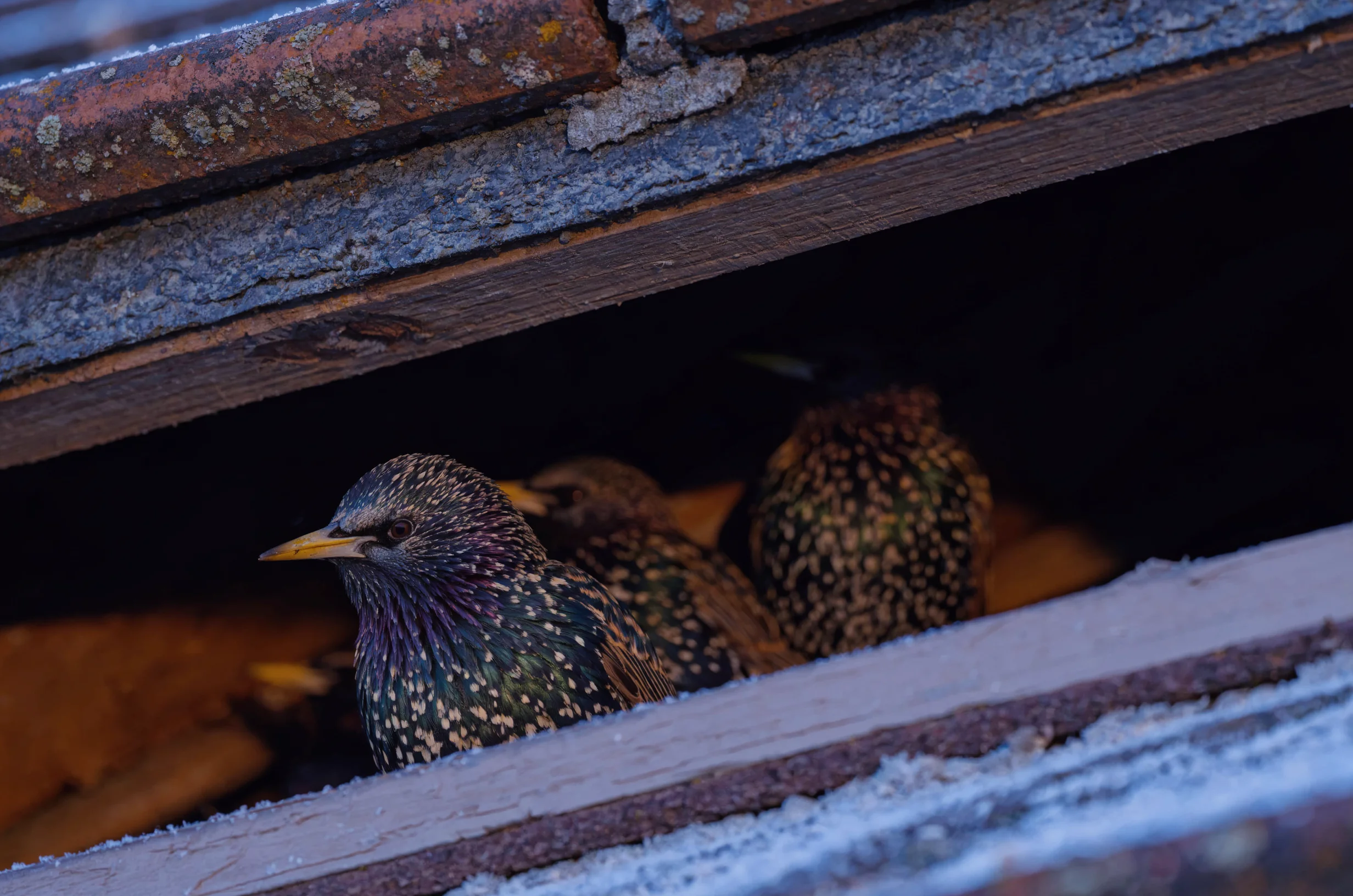
If you suspect starlings roosting in your roof space this winter, leave the entry gap open and watch from ground level. Your first useful job is to record where birds enter and leave. Blocking a hole before checking the space behind it could trap a bird or cut off access to an active nest.
You can start that check within the next half-hour. Photograph the roofline, note when the noise occurs and keep away from loose tiles or damaged soffits. Winter can provide an opportunity to plan repairs before spring nesting activity, but the date alone never establishes that a roof cavity is empty or ready to close.
Spend the first half-hour watching the roofline
Roof-space proofing starts with finding the opening the birds actually use. Noise above a bedroom can help you choose where to watch, but it cannot identify the entrance by itself.
Watch from somewhere the birds can settle
Stand far enough away to see the eaves without lingering directly beneath the suspected opening. Binoculars or your phone’s zoom can help. Stay on the ground.
Follow this short sequence:
- Look along the edge of the roof, including corners and joins beside extensions.
- Watch for a bird disappearing into a gap rather than simply landing on a gutter.
- Photograph the opening with enough surrounding roof visible to locate it again.
- Record the time, direction of travel and approximate number of birds seen.
If nothing happens during that first check, leave the opening alone. Arrange another observation near dusk or around dawn. Arrivals towards evening and departures in the morning can suggest overnight use, although that pattern does not rule out nesting.
Make the record useful for an inspection
Write down whether the noise is fluttering, calling, scratching or movement along the ceiling. Note which room it is above and whether it happens at similar times.
A short recording may help explain the complaint. Avoid tapping the ceiling or playing bird calls to provoke a response.
If you rent, send the landlord or managing agent the photographs and a description of the activity. Ask who will arrange the roof inspection before anyone starts filling gaps.
Separate a winter roost from an active nest
Starlings using a roof for shelter need a different assessment from birds building or using a nest. The proofing decision depends on what is happening inside the cavity.
Look for behaviour as well as feathers
Starlings have a compact shape, a relatively short tail and dark plumage that can look speckled in winter. A distant silhouette or a feather on the ground is weak identification evidence.
Watch what the birds carry. Repeated trips with grass, twigs or other material are a reason to pause. Birds carrying food into a cavity, persistent calls from inside, eggs or young also mean the situation needs assessment before work proceeds.
An old-looking bundle of material does not establish that a nest is inactive. Leave it in place while its status is checked.
If the birds are large gulls occupying an exposed roof, the separate guidance on gulls nesting on roofs is more relevant. This walkthrough concerns access into an enclosed roof space.
Treat March as a planning reminder
The aim of completing suitable repairs before spring is sensible. Treat March as a reminder to arrange checks early, rather than a date that makes every earlier job acceptable.
Do not remove eggs, interfere with a nest being built or block access to a nest in use. If any of those signs appear, stop the proposed exclusion and seek appropriate advice. The bird nest removal guidance explains the issues to consider before moving nesting material.
Where the nesting status remains uncertain, keep the entrance available and ask for an assessment. A quiet spell, cold weather or an empty-looking entrance cannot establish what is happening deeper inside.
If you find possible signs of bats, pause the roof work and obtain specialist bat advice before changing the opening.
Trace the gap from the eaves to the loft
Finding the starling entrance means checking how the outside opening connects with the roof space. The visible hole may lead into a narrow space behind the roof edge that you cannot see from the loft hatch.
Follow the outside edge systematically
Start at one corner and work along the roofline. Look for:
- Broken or missing sections of soffit, the underside of the projecting roof edge.
- Gaps beside the fascia, the board along the front of the eaves.
- Spaces beneath the lowest row of tiles.
- Slipped, cracked or missing tiles.
- Open joins where an extension meets the original building.
- Damaged vent covers or gaps around pipework.
Record defects separately from confirmed bird entrances. A gap can need repair even when you have not seen a bird use it.
On a London terrace, include the boundary with the adjoining roof. An accessible opening may be beyond your own gutter. Photograph it from somewhere you are allowed to stand, then discuss access and responsibility with the relevant owner.
Look for displaced materials after recent roofing, gutter or cable work. Give the contractor the date of any work you know about.
Keep the inside inspection within safe access
Only inspect from a secure position. Stay at the hatch unless the loft has a safe boarded access route. Never step on plasterboard or reach across an unsupported area to investigate noise.
With a torch, look for daylight at the eaves, feathers, droppings and disturbed insulation. Photograph what you can see without moving material.
A clear central loft does not establish that the narrow spaces beside the eaves are empty. Mark any area that cannot be inspected as unresolved.
When arranging a bird-control assessment with BuzzKill Pest Control, provide the outside photographs alongside your notes about the rooms below. This helps describe the suspected entrance without requiring you to reach it.
Keep this inspection focused on the roof. Wider homeowner pest prevention tips can help organise other repairs, but each occupied opening needs its own assessment before sealing.
Match the repair to the roof opening
Starling proofing needs to suit the opening and the roof’s construction. Choose the repair after checking occupancy, access, ventilation and the condition of the surrounding material.
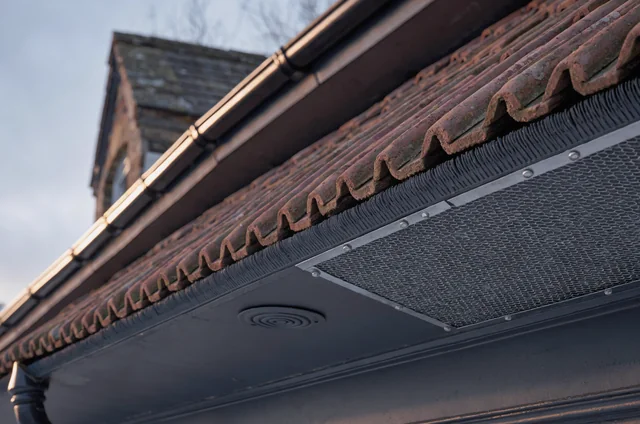
Use mesh where the opening needs a fixed barrier
Purpose-made metal mesh may suit some openings, provided it can be secured to sound material. The installer should select an aperture and fixing arrangement appropriate to excluding starlings at that location.
Avoid pushing loose mesh into a hole. Its edges need secure attachment, and the completed barrier must leave no accessible route around it.
Fine fabric, loose netting and improvised packing are poor substitutes for a properly fitted barrier. Ask how the finished installation will avoid sharp projections, loose loops and spaces where birds could become caught.
Ventilation openings need particular care. A cover must maintain the airflow required by that roof.
Fit eaves combs to the tile profile
An eaves comb is a strip with upright fingers fitted beneath the lower edge of suitable roof tiles. Those fingers occupy openings created by the tile shape.
It needs to match the roof detail and be fitted continuously, including corners and joins. A short length over the most obvious entrance may leave another opening nearby.
If tiles need lifting, or the supporting material is damaged, the work belongs with someone competent to carry out the roofing repair. Do not pull at the lowest tile from a ladder to see whether a comb will fit.
Repair soffits and damaged roof coverings
A broken soffit needs a sound repair. Fixing a guard over rotten or loose material can leave the barrier dependent on a failing surface.
Ask the installer to identify which parts need replacement and which openings need a suitable guard. Preserve any designed ventilation.
A chimney is a separate roofing detail. The guide to chimney mesh proofing costs provides background on chimney-specific work, but its methods and costs should not be treated as a specification for starling access at the eaves.
Keep expanding foam out of the initial response. It cannot answer whether birds remain inside, whether ventilation is needed or whether the roof itself needs repair.
Close access only after the cavity is confirmed empty
The difficult part of starling proofing is establishing that closure is safe. Seeing birds leave gives you useful evidence, but it does not account for every bird or every connected cavity.
Agree what must be checked before work
The assessment should establish which species is present, whether there is nesting activity and whether the affected space can be inspected adequately.
Ask how hidden areas will be checked. If the answer is simply that birds usually leave during the day, the uncertainty remains.
Homeowners can usually contribute observations and photographs. Work at roof height, lifting tiles, investigating inaccessible cavities and deciding how to exclude birds need suitable skills and access equipment.
A ladder that reaches the gutter does not provide a safe working platform for repairing it. Avoid roof work during frost, wet conditions or strong winds.
A useful interactive roof-gap checklist could record the opening, nesting evidence and available access. Any uncertain answer should flag the job for assessment rather than recommend immediate sealing.
Follow the agreed inspection and fitting sequence
Once suitable access and an inspection plan are in place, the work should follow a clear order:
- Recheck the opening and connected spaces immediately before the proposed closure.
- Confirm that birds, active nests and other wildlife concerns have been addressed appropriately.
- Complete the necessary roof repair and fit the specified proofing.
- Inspect the full barrier, including corners, joins and ventilation.
- Photograph the finished work and arrange the follow-up check.
Do not drive birds out with smoke, sprays, loud noise or bright lights. Avoid fitting a homemade one-way flap or moving nests to another part of the loft.
If BuzzKill Pest Control and a separate roofer are involved, ask them to agree who confirms occupancy and who authorises closure. The person fixing the final panel needs that information before fitting it.
Where the cavity cannot be checked adequately, leave the closure unresolved. Ask for a revised inspection plan that explains how the concealed space will be assessed.
Clear droppings without spreading dust through the house
A roof used by starlings may need cleaning after access has been managed. Keep waste clearance separate from the decision to close the entrance.
Start by judging the amount and location of the material from a safe position. A few marks near an opening present a different task from widespread deposits across insulation or stored belongings.
Avoid dry sweeping, brushing droppings into the air or using an ordinary household vacuum. Keep children and pets away from the work area, and avoid carrying dusty boxes through living rooms.
The pigeon droppings safety guide provides background on bird-waste concerns. The clearance method still needs to suit the actual conditions in your roof.
Where deposits are extensive, access is awkward or insulation is heavily affected, arrange a specialist assessment. Ask whether material needs removal, what protective equipment is required and how waste will leave the property.
Do not assume that spraying a cleaning product over droppings completes the job. Material may remain beneath the surface or between layers of insulation.
Photograph the condition before clearance, then record what was removed and what remains. If wiring, roof timbers or stored possessions appear damaged, include those observations in the repair record rather than covering them with fresh insulation.
Check the roof that evening and over the next 48 hours
Fresh proofing needs a follow-up observation because returning starlings may reveal an overlooked opening. Use the same ground-level viewpoint as your first check.
Watch the repaired area near dusk where possible. Birds may approach a familiar entrance, so record whether they fly away, remain outside or disappear into another gap.
Listen indoors as well. Persistent fluttering or distressed calling from behind a newly closed opening needs prompt attention from the installer. Do not wait for the noise to fade.
During the next 48 hours, check from the ground for loose material, movement at joins and renewed access nearby. Compare photographs rather than climbing up to touch the fitting.
If birds enter elsewhere, report the exact opening. Adding another patch without checking the connected space can repeat the original problem.
Keep the first observation notes and the completion photographs together. For a tenanted property, share them with the person responsible for maintaining the roof so a later complaint can be compared with the original evidence.
If you are having the roof repaired in stages, identify any unfinished openings clearly in the handover. Ask who will inspect those sections before the remaining work proceeds. Repeat the ground-level check after further roofing work or visible storm damage.
Questions about winter starlings in the loft
Winter roof activity can leave a few practical uncertainties even after you have found a likely entrance. Use the evidence to decide which action is appropriate.
Can I seal the gap while the birds are outside feeding?
Only after an adequate check establishes that closure is appropriate. A bird seen leaving does not account for birds deeper inside, nesting activity or another connected cavity.
If you cannot inspect those spaces safely, keep the entrance open and arrange an assessment. Avoid treating a quiet daytime loft as confirmation that it is empty.
Will the starlings leave when winter ends?
You cannot use that assumption to schedule a closure. Continue recording whether the opening is used and whether birds carry material inside.
Even if activity appears to stop, have the space checked before fitting a barrier. Keep the roof repair on hold if you discover nest-building, eggs, young or an unresolved wildlife concern.
Does every roof noise mean birds are present?
No. Noise alone is insufficient to identify what is moving above the ceiling. You need supporting evidence, such as a bird entering the roof, visible feathers or observations inside an accessible area.
If repeated watches show no birds, keep a note of the timing and location of the sounds. Ask for an inspection that considers other causes before buying bird-proofing materials.
Can I put up a nest box instead?
A nest box would be a separate habitat project. It cannot establish that the existing cavity is empty, move an active nest safely or replace repairs to damaged roofing.
If you want to provide a box, seek advice on its design and position. Keep that plan separate from the assessment of the occupied roof opening, and leave existing access undisturbed until its status is clear.
What if an old nest is blocking the repair?
Leave it in place until someone competent has checked its status and the proposed work. Its dry appearance or the absence of visible birds during one visit is insufficient evidence.
Give the assessor photographs taken without moving the material. Ask for a clear decision on when the repair can proceed and what must be checked again immediately beforehand.
Need professional help? BuzzKill offers fast, reliable pest control services across London and Essex.