
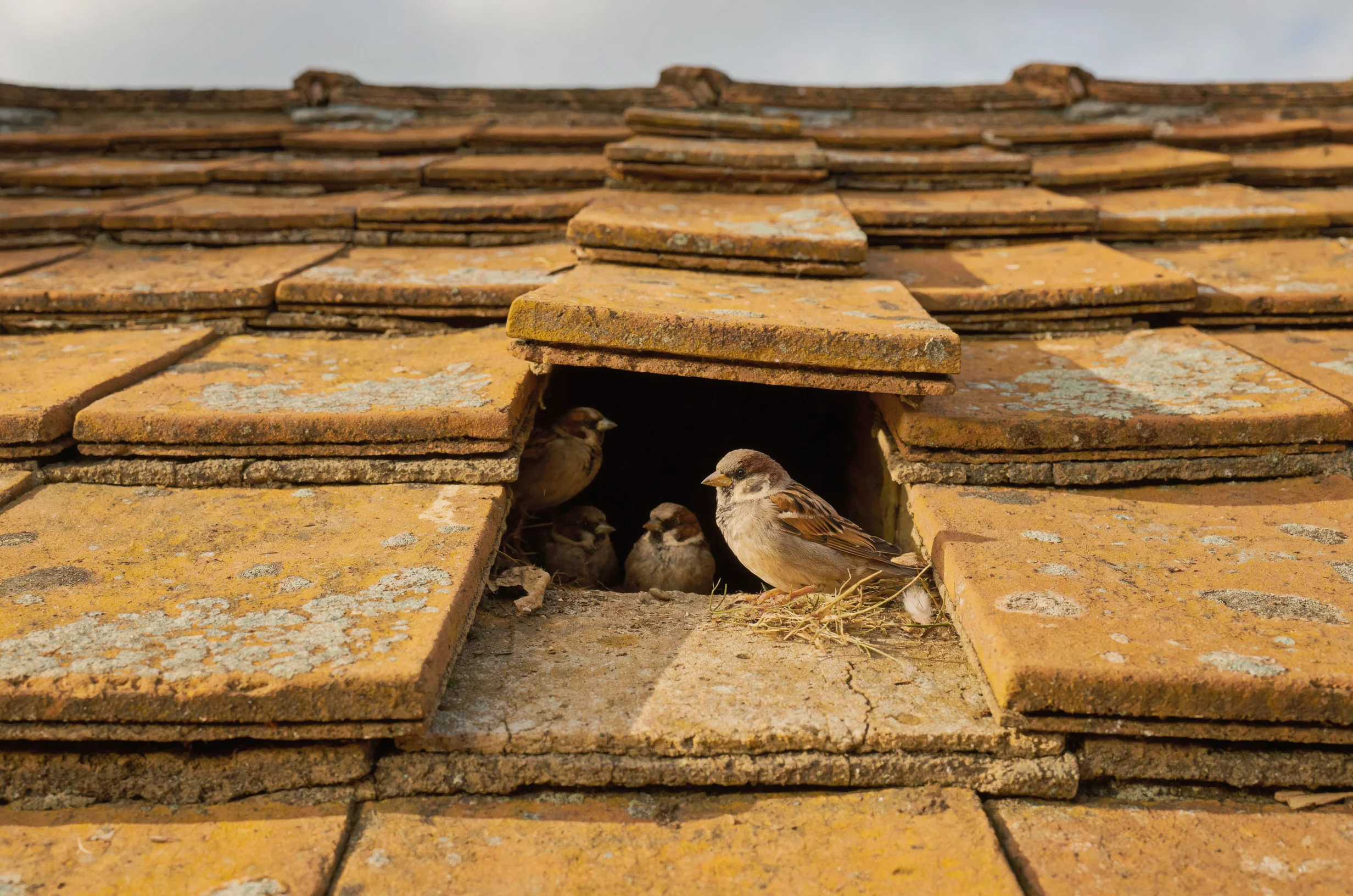
If you’re comparing “sparrows nesting under roof tiles options”, start with whether the nest is being built or used. For a London home with an active nest, the usual lawful response is to leave it and keep the entrance open. Removal and prevention belong later, once checks establish that nesting has finished.
Chirping above a bedroom or birds disappearing behind the gutter can be unsettling, especially if you’re arranging roof repairs. However, the right response depends on the nest’s status and the condition of the roof.
I’d judge the realistic options by three things: whether they protect an active nest, whether they address the actual roof opening, and whether they prevent a repeat problem. That puts waiting, carefully timed clearance, suitable barriers, roof repairs and alternative nesting spaces on the list. Sprays, improvised plugs and attempts to drive birds from an occupied cavity don’t meet those tests.
The nest’s status decides what is lawful
A sparrow nest beneath roof tiles has legal protection while it is being built or used. For London properties, the relevant framework is the Wildlife and Countryside Act 1981.
Protection begins before eggs appear
England’s wild bird protection rules prohibit intentionally taking, damaging or destroying a wild bird’s nest while it is in use or being built. Wild birds and their eggs also have protection.
An unfinished nest therefore needs care. You cannot assume loose grass beneath a tile is available for clearance because no eggs are visible.
The practical response is to avoid interfering with the cavity until its status is clear. Pulling material through the entrance, lifting the covering tile or fitting a barrier can affect what is hidden behind it.
Our guide to removing a bird nest gives further context for that initial decision.
Red-listed status supports a careful choice
The RSPB lists the house sparrow as a species of UK conservation concern, with Red conservation status. Red-listed status describes conservation concern; the legal protection of an active nest comes from wildlife law.
That distinction matters when choosing between retaining a suitable nest site and excluding birds from the entire roof.
First establish the species. Small birds entering an opening beside the gutter are a useful observation, but noise alone cannot identify them. Photographs taken from the ground may help an adviser distinguish sparrows from other roof-using birds.
Record the entry point and what the birds carry into it. Leave the opening untouched while identification or nest status remains uncertain.
Leave an active nest and protect its access
Leaving an occupied sparrow nest is the first choice when the roof is sound and the immediate concern is noise or activity.
The RSPB’s advice on roof nests says to allow chicks to leave before removing a nest or blocking its entrance. It also advises contacting the relevant conservation authority if construction affecting the nest cannot wait.
For a homeowner, this means keeping the birds’ route open. Tell anyone working on gutters, fascias or scaffolding exactly where adults enter. Avoid positioning materials or temporary coverings across that route.
Observe from a position that lets the adults approach normally. Note visits with nesting material or food, rather than repeatedly approaching the entrance to look inside.
A simple digital nest log could store dated observations and photographs, with a reminder to arrange a fresh assessment before work. It should record uncertainty rather than declare a nest safe to remove.
Waiting has an honest limit: it does not repair slipped tiles, damaged guttering or a leak. Those need a separate assessment of what can safely happen around the nest.
For chirping without evidence of a building defect, I’d leave the nest and postpone work affecting that roof section. If water enters or a loose component threatens to fall, arrange a professional assessment of the specific hazard.
Remove old material only after nesting has finished
Clearing a disused sparrow nest can make sense where old material obstructs necessary maintenance or needs removing before a suitable repair.
It is a separate decision from whether the opening should remain available for future nesting.
Confirm the whole nesting attempt has ended
A quiet afternoon does not establish that a nest is unused. Neither does seeing one young bird leave.
House sparrows can raise several broods, meaning successive groups of chicks, during a breeding season. The Natural History Museum describes this in its house sparrow nesting account. A gap between broods can therefore complicate the timing of work.
Treat autumn or winter as a possible planning window, rather than automatic permission. The actual nest status still needs checking.
Where the cavity cannot be assessed confidently from a safe position, a competent professional should establish what further inspection is appropriate. Tell them about all recent activity, including anything seen after the original appointment was booked.
The work plan should allow for postponement if birds resume nest building or another occupied nest is found nearby.
Pair clearance with a reason for doing it
Removing old material alone leaves the original access route available. If your aim is to prevent another nest in that cavity, clearance needs to sit within a repair or exclusion plan.
Ask what will happen to the opening afterwards. A quotation should distinguish clearing material, repairing roof defects and installing a barrier.
If tiny moving specks also appear indoors, arrange identification before choosing treatment. Bites alone cannot establish their cause. Our guidance on bird mites indoors covers a separate issue that may need attention.
For a confirmed disused nest obstructing maintenance, targeted clearance can be reasonable. Specify which material needs removing and which roof components must remain undamaged.
Match the barrier to the gap under the tiles
A barrier can prevent future sparrow access only if it fits the opening and the roof construction. It must be considered after the wildlife checks, with no birds trapped inside.
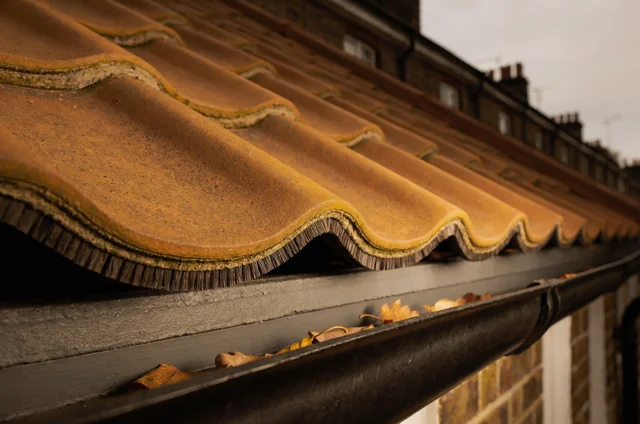
The useful distinction is between a regular gap beneath profiled tiles, an irregular opening, and damaged roofing.
| Option | Opening it may suit | What needs checking |
|---|---|---|
| Eaves comb | Repeating gaps beneath suitable profiled tiles | Tile compatibility, continuous fit and ventilation |
| Secure rigid mesh | An irregular opening requiring a shaped barrier | Aperture, fixings, edges and airflow |
| Roof repair | Access associated with a slipped tile or damaged component | Repair detail, weather protection and nearby openings |
An eaves comb suits compatible tile profiles
An eaves comb is a strip with flexible teeth that follow the underside of suitable roof tiles. The eaves are the lower roof edge, usually above the gutter.
Marley’s roofing installation guidance describes comb fillers as a way to prevent bird entry beneath profiled tiles. Its installation details also account for the roof’s ventilation components.
That earns the comb a place where birds use repeating gaps along a compatible tiled edge. It addresses the route into the roof.
Its limit is fit. A comb cannot compensate for every missing tile, damaged board or opening beside a roof junction. Ask the installer to identify where the strip starts and ends, and how adjoining openings will be assessed.
For suitable profiled tiles with regular eaves gaps, a correctly specified comb is a practical prevention option after nesting has finished.
Mesh needs a roof-specific installation
Secure rigid mesh may suit an awkward opening where a standard component cannot follow the shape.
Ask the installer to specify the aperture, meaning the size of each opening, and explain how the mesh will be fixed. The proposed detail should preserve required airflow and avoid loose edges or pockets where wildlife could become caught.
Mesh needs particular care around an occupied or uncertain cavity. Covering the visible opening before checking the space behind it risks shutting birds inside or separating adults from young.
Our article on roof space proofing considers another bird using roof cavities. The species and nesting circumstances still need assessing at your property.
Choose mesh where a competent installer can explain its fit, attachment and inspection arrangements.
Repair a defective roof component first
If birds enter beside a slipped tile or damaged fascia, ask a roofer to assess that defect. The fascia is the board along the roof edge behind the gutter.
A barrier quotation should explain how any underlying roof damage will be addressed. Ask for photographs that distinguish the access gap from damaged materials and required ventilation openings.
On an older London property, check ownership and permissions before authorising work to shared roof details. For a listed property, discuss listed building consent with the local authority before agreeing alterations.
Where a defect needs repair, have the roofer specify the repair and any additional bird exclusion as separate parts of the job.
Give sparrows a separate place to nest
A suitable nest box is worth considering when future nesting beneath the tiles would conflict with necessary roof maintenance.
It provides another nesting opportunity. It does not establish that birds will move, and installing one does not permit interference with an active nest.
Choose a position before choosing a box
The RSPB’s sparrow nest box guidance recommends a position under the eaves or high on a wall. It advises at least three metres above ground, facing north or east, away from direct sunlight and busy doorways or paths.
Those requirements can narrow the choices on a London terrace. A shaded rear wall may deserve consideration before a sunny frontage above the entrance.
Check the position from ground level and consider how the box will be fixed and maintained. Permission from the building owner is needed before installation.
A sparrow terrace is a box containing separate nesting compartments. Whether you choose that format or individual boxes, follow suitable species guidance and the manufacturer’s installation instructions.
Keep the box separate from an occupied cavity
The limit of this option is acceptance: you cannot promise that sparrows will use a new box or choose it immediately.
Plan it as provision for future nesting. Don’t place it across the existing entrance or attempt to transfer an occupied nest into it.
A box also needs a sensible long-term position. Consider future painting, gutter maintenance and access before fixing it beneath an eave that contractors regularly need to reach.
For a homeowner who wants a repaired roof while retaining space for sparrows, a suitable external box is a worthwhile companion to lawful proofing. Mark its proposed position on the roof-work plan before installation.
Bring in the right professional for roof problems
Professional help becomes more useful when the sparrow cavity is inaccessible, roof repairs are urgent, or several openings need assessing together.
The strongest reason to pay for an assessment is uncertainty about the birds, the building or safe access.
Match the person to the problem
A roofer can assess tiles, weather protection and ventilation. A bird-control specialist can assess proposed exclusion work and the risks around occupied cavities. A suitably qualified ecologist may be needed for protected-species questions.
Some jobs require those roles to work together. Ask who will identify the birds, assess nest activity and decide whether installation can proceed.
BuzzKill Pest Control includes bird control among its services and is one local option to consider at this stage. The same questions about competence, inspection and the proposed roof detail apply whichever company you choose.
Request a written scope covering:
- The observed entry points and any areas that remain unassessed.
- The roof defects or maintenance problems requiring attention.
- The proposed materials and how ventilation will be retained.
- The circumstances that would stop or postpone work.
- The access equipment and any follow-up inspection.
Compare quotations against that scope. A price for closing one visible gap may cover a different job from inspecting and repairing a longer roof edge.
Suspected bats change the assessment
Sparrow activity does not establish that birds are the only wildlife using the roof.
Government guidance on bat protection and licences explains that bats and their breeding or resting places are protected. Blocking access to a bat shelter can be an offence.
If bats are known or suspected, pause the proposed sealing work and seek specialist advice. An apparently empty space does not settle the question of whether it is a protected roost.
For an urgent leak, ask the roofer and wildlife adviser to identify measures that address the hazard while protecting the occupied area. Do not treat urgency as automatic permission to remove or obstruct a nest.
Keep scare devices out of the nesting cavity
Scare devices are a poor choice for a homeowner whose immediate problem is an occupied space beneath roof tiles.
Reflective objects, sound devices and predator models leave the physical entrance unchanged. Their usefulness at your particular roof is also uncertain. The supplied property information cannot establish that they would prevent birds returning.
Spikes likewise need assessing against the actual access route. A product placed on a nearby ledge does not necessarily prevent entry through a gap beneath a tile.
I’d put assessment and a suitable later repair ahead of buying deterrents for the roofline.
Avoid pushing wire, foam or other loose material into an opening to see whether birds stop using it. That prevents you from knowing what has been enclosed behind the plug.
Spraying household pest products into the cavity is also outside the options recommended here. The task is to establish nest status and address a building opening.
Where birds continue visiting, record the exact route. If you cannot establish whether nesting has ended, leave the entrance open and arrange an assessment before fitting anything across it.
Questions that change your roof-work plan
The remaining decisions usually concern timing, moving nests and whether exclusion is necessary at all. These answers apply to London homes, where the relevant wildlife authority is Natural England.
Can I move the nest a short distance?
Treat moving an active nest as something requiring specialist advice about its lawfulness and consequences.
A nearby nest box does not remove the protection attached to the occupied nest. Nor does keeping the original material establish that a transfer would be safe.
For an ordinary noise complaint, leave the nest in place. Where building work cannot wait, seek advice before anyone handles the nest or changes its entrance.
Does a quiet roof mean the birds have finished?
No. Quietness is one observation, and it may leave the nest’s status uncertain.
Tell the assessor when activity was last seen and whether adults carried material or food. Include observations from other household members, tenants or neighbours who can see the relevant roof edge.
If an appointment was booked weeks earlier, provide an update before installation. A previous assessment cannot account for activity that happened afterwards.
Which option fits my roof?
For an active nest beneath sound tiles, choose waiting with the entrance protected. Keep a dated record and postpone work that would affect the cavity.
For a confirmed disused nest obstructing maintenance, consider targeted clearance. Decide separately whether the opening needs a suitable comb, mesh or repair to prevent future access.
For a leak, damaged roof edge or uncertain wildlife activity, choose a professional assessment before selecting a barrier. Give the assessor photographs and explain the building problem you need resolved.
The most overlooked alternative is retaining a suitable nesting space. If the roof is sound and nesting causes no material conflict, continued access may be a reasonable choice. A separate box deserves consideration where future use of the roof cavity would interfere with necessary maintenance.
Ask the roofer to distinguish the nesting entrance, ventilation openings and actual defects on the proposed work plan.
Need professional help? BuzzKill offers fast, reliable pest control services across London and Essex.