
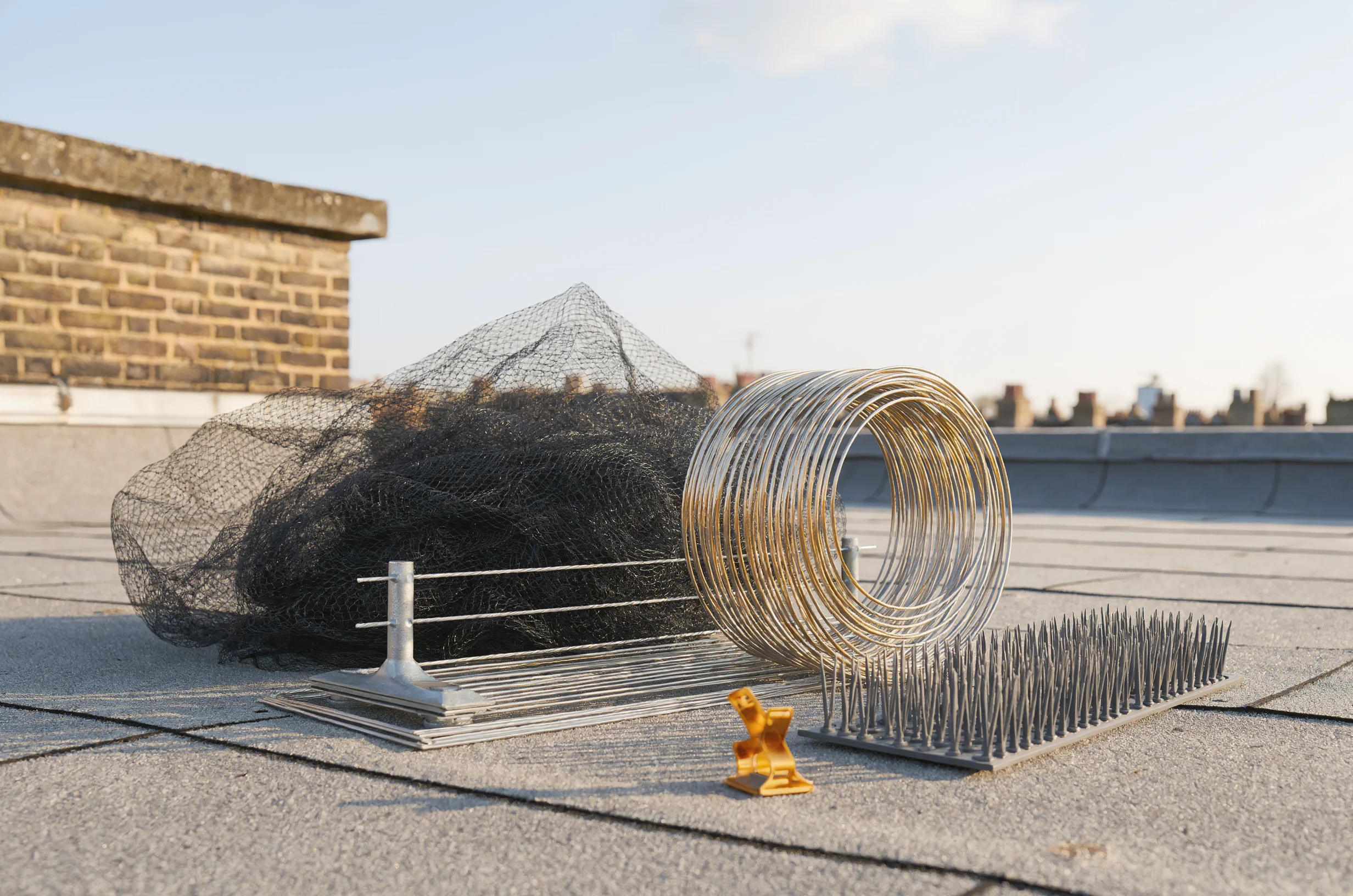
Gull proofing flat roofs before spring means choosing protection for the space birds actually use. A narrow roof edge, an open extension roof and a commercial roof crowded with equipment need different approaches. Start by checking for nesting activity, then compare systems against the roof’s layout and maintenance needs.
I’d shortlist netting for an open area that needs exclusion, post-and-wire for suitable edges, and spikes for specific landing points. Gels and visual deterrents deserve more cautious consideration because their suitability depends heavily on the product and situation.
The selection below considers coverage, roof compatibility, access and upkeep. There’s no independent product-testing evidence here to support a universal winner or a guaranteed lifespan. Each option earns its place by addressing a different roof problem, with questions to resolve before installation.
Check where gulls land before choosing a deterrent
A useful roof survey should establish whether gulls use the open surface, the edges or sheltered spaces beside equipment. That distinction shapes the shortlist more than the building’s size.
Separate occasional visits from suspected nesting
Watch from a safe position and record where birds settle. Photographs taken from an accessible window can help an installer understand the pattern without anyone climbing onto the roof.
Look for repeated use of the same corner, birds carrying material, or prolonged sitting in one place. These are reasons to seek an assessment. They don’t establish the status of a nest by themselves.
If you suspect nesting, pause cleaning and proofing work. Don’t move a nest, block access or fit a barrier around birds. The guidance on seagulls nesting on roofs addresses the situation where prevention may already have become an active-nesting problem.
Ask the specialist to check the proposed work against current wildlife requirements for England. A winter booking or an apparently quiet roof doesn’t establish that every planned action is appropriate.
Map the roof’s usable spaces
Mark the low walls around the roof edge, known as parapets, alongside drains, rooflights, vents and air-conditioning units. Include spaces that maintenance workers need to reach.
Record the roof covering too. A membrane is the waterproof layer over the roof structure. Its material and condition affect which attachment methods an installer can propose.
A small extension with one regularly used edge may need a local measure. A broad roof with several landing areas needs a wider assessment. Ask the surveyor to mark both the protected area and any space birds could still reach.
Match netting, wire and spikes to the space
Physical barriers belong on the shortlist because their intended coverage can be drawn onto a roof plan. The practical question is whether that coverage matches the birds’ activity without obstructing the building’s use.
| Method | Space to assess | Maintenance issue | Main limitation |
|---|---|---|---|
| Netting | An open area requiring exclusion | Inspection and access through or around the system | Gaps, damaged sections and unsuitable supports |
| Post-and-wire | Defined edges or narrow landing surfaces | Wire tension and secure supports | Unprotected roof space beyond the wires |
| Spikes | Specific ledges and landing points | Debris removal and secure attachment | Coverage limited to the fitted surface |
| Deterrent gels | Small locations supported by product instructions | Inspection, cleaning and possible renewal | Product-specific suitability and uncertain wider coverage |
| Visual devices | A monitored trial in a limited area | Checking condition, placement and bird response | No physical exclusion of the roof |
Netting for an open roof area
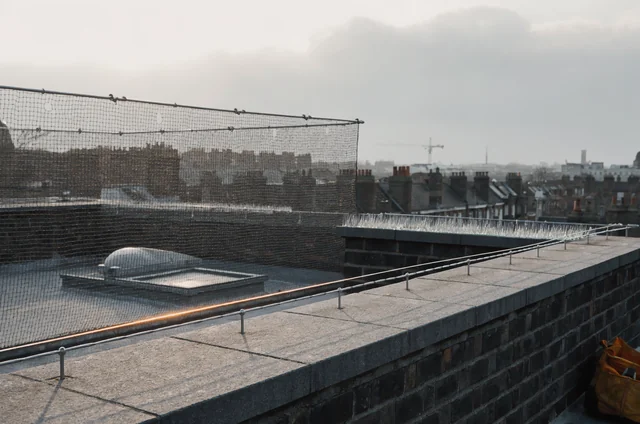
Netting is worth assessing when the job is to keep birds out of a defined roof space. Its inclusion rests on that physical separation: the design should show how birds are prevented from entering the protected area.
This may suit a commercial roof or a domestic roof with several usable landing spots. However, the design needs more than a net stretched between convenient corners.
Ask how the edges will close, how the net will pass around equipment, and how the supports will attach. The proposal should specify a mesh appropriate to the identified birds and explain how the system avoids trapping wildlife.
Maintenance access deserves equal attention. A roof with drains, vents or equipment still needs inspection and repair. Ask for planned access openings and an explanation of who will close them after each visit.
Durability depends on the chosen material, supports, exposure and upkeep. Request product information and an inspection schedule rather than accepting an unsupported lifespan. The bird netting maintenance checklist provides a useful starting point for organising checks across a larger building.
I’d shortlist netting where exclusion of an open area is necessary and the roof can support a suitable installation. Reject a proposal that leaves access arrangements or edge gaps unexplained.
Post-and-wire for defined roof edges
Post-and-wire uses wires held between upright supports to make a landing surface less accessible. Some systems include sprung components; ask the installer to explain the proposed design in plain terms.
It belongs on the shortlist when the survey identifies a narrow edge as the main place birds use. That gives the installation a specific task and makes its coverage easier to assess.
The limitation is the space beyond the wires. A neat line along a parapet doesn’t establish protection for an open roof behind it. Ask whether birds could land elsewhere and reach the same preferred corner.
Supports, wire position and tension need a specification suited to the location. Avoid choosing solely from a photograph of a similar building. The installer should explain why the arrangement fits the birds present and how it will be checked.
I’d consider wire for a clearly defined landing surface where the surrounding roof has also been assessed. If the proposal relies on protecting one edge while overlooking several others, request a revised plan.
Spikes for individual landing points
Spikes occupy a fitted surface to discourage birds from settling there. They are a local option for ledges and particular roof details.
Their place in this roundup is straightforward: some roofs have a small number of identifiable landing points. A targeted installation may address those points without covering the whole roof.
Coverage is also their main limit. Spikes along one section leave nearby surfaces available. Ask the installer to show the full width and length of the intended protection, including corners and interruptions.
The attachment method matters. Screws, brackets and adhesives each need checking against the surface beneath them. Request details of cleaning, preparation and eventual removal, especially where the installation touches waterproofing.
Ask how debris will be cleared without damaging the system or roof. A surface that cannot be inspected easily needs that maintenance problem resolved before fitting.
I’d shortlist spikes for specific landing points supported by the survey. I wouldn’t treat a short strip beside an otherwise open roof as evidence that the whole area is protected.
Give gels and visual deterrents a narrower role
Gels and visual devices need a different buying decision because the product name alone tells you little about suitable coverage or expected results. Ask for information about the exact item being proposed.
Gels need product-specific evidence
“Bird gel” can describe different products with different intended mechanisms and application instructions. Ask what the product is designed to do and whether its documented use includes the gulls and surfaces involved.
A gel may deserve consideration for a small, awkward location where another attachment method is difficult. That is a reason to investigate it, rather than proof that it will solve the problem.
Check compatibility with the roof covering, application requirements, inspection intervals and removal instructions. Ask about precautions around other wildlife and anyone who maintains the roof.
The evidence supplied for this article does not establish a reliable lifespan or success rate for gels on London flat roofs. Treat claims about either as something the seller must substantiate for the specific product.
I’d consider a gel only after its suitability and maintenance demands are clear. If the explanation stops at “it keeps birds away”, request the product documentation before agreeing.
Visual devices need a monitored trial
Reflective devices, moving objects and bird-shaped scarers attempt to influence where birds settle. They leave the roof physically accessible.
That distinction matters when the aim is to exclude gulls from a particular space. A device may be simple to position, but ease of installation doesn’t demonstrate reliable protection.
If you consider one, define what would count as success. Record whether birds return to the same locations, move elsewhere on the roof or continue approaching sheltered areas. Agree when to review the result and what would trigger another approach.
Check that the device can be secured without obstructing drains, roof access or neighbouring property. Follow its installation instructions.
I’d reserve visual devices for a monitored situation where uncertain results are acceptable. For repeated use of an important roof area, ask for an assessment of physical exclusion as well.
Protect the waterproofing and keep the roof accessible
A deterrent needs to fit the roof as well as the bird problem. An installation that obstructs repairs or leaves attachment details unresolved is an incomplete proposal.
Get the attachment method checked
Ask the installer to identify the roof covering before specifying fixings. If the material is uncertain, involve the roofer or check the building records.
Clarify whether the design uses penetrations through the waterproof layer, attachments to another structure, or weighted bases. Each approach needs checking for the particular building. “No drilling” alone doesn’t answer questions about weight, movement or compatibility.
Existing leaks, damaged edges and loose roof components should be assessed before proofing conceals or restricts access to them. Where a roof guarantee applies, ask the responsible roofing contractor to review the proposed attachments.
A proposal from BuzzKill Pest Control or another installer should identify the system, its attachment points and the areas requiring a roofer’s approval. Keep those details with the property’s maintenance records.
Plan access around equipment and shared ownership
Drains, vents, rooflights and air-conditioning units need usable access after installation. Ask where workers will stand, which sections can open and who will restore the protection afterwards.
Solar equipment adds another boundary to assess. Roof-wide exclusion and solar panel bird proofing address different spaces, so the survey should show which is relevant.
For a shared building, establish who can authorise work and maintain the installation. Guidance on leaseholder bird proofing responsibility can help frame questions for the managing agent; the property’s documents still need checking.
Put responsibility for future access and repairs in writing before accepting the installation date.
Use winter to organise repairs, cleaning and follow-up
Winter is a useful planning window for a pre-spring project, but the roof’s condition and bird activity must determine what can proceed. Leave time between the survey and installation to resolve problems.
Put the work in a workable order
Arrange the activity assessment first. Then establish safe access, roof repairs, cleaning requirements and the proposed proofing design. Cleaning should proceed only after nesting and other constraints have been assessed.
Where droppings have accumulated, ask how the contractor will manage the task and protect people nearby. Avoid treating a commercial roof cleanup as routine sweeping. Guidance on commercial roof guano cleanup can help you prepare questions about the work.
Repair and installation dates should allow for suitable weather and product application requirements. A rushed deadline can leave those details unresolved.
A useful online roof selector would ask about bird activity, roof covering, landing areas and maintenance access. Its result should be a shortlist of survey questions, with suspected nesting directed to assessment.
Agree what happens after fitting
Request photographs of completed coverage and access points. Ask the installer to show you what damage or movement would require attention.
Agree who checks the system, how concerns are reported and when a return inspection is due. Keep that schedule with other roof maintenance.
Also explain the system to contractors who may visit later. An opening left unsecured after servicing equipment changes the protection shown on the original plan.
If a bird becomes trapped, or nesting activity appears within a protected area, arrange prompt specialist attention. Don’t attempt an unsafe roof access or pull apart the system yourself.
Questions London property owners ask about spring proofing
The remaining questions usually concern timing, DIY fitting and what a quotation should contain. Resolve these before selecting a product.
Is February always early enough?
Treat February as a planning date, rather than permission to proceed. What matters is the activity on that roof when the work is proposed.
Arrange an assessment if birds repeatedly occupy one spot or appear to carry nesting material. Don’t assume that the absence of visible eggs means the area is ready for cleaning or exclusion.
Ask the contractor to explain how activity will be checked again before work starts.
Can I fit a deterrent myself on an extension?
A small roof can still present difficult access, uncertain waterproofing and wildlife concerns. Being able to reach an edge from a ladder doesn’t establish a suitable working position.
Ground-level observation, photographs from safe locations and reviewing property documents are useful preparations. Leave roof access, attachment design and suspected nesting assessment to people equipped for those tasks.
Check who will maintain any installation before buying the materials.
What should a gull-proofing quotation include?
Without roof dimensions, access details and a system design, a reliable price comparison isn’t possible. A material-only figure leaves much of the job undefined.
Request the area covered, product specification, attachment method, access arrangements, preparation work and maintenance terms. Ask what is excluded and what would change the price.
Separate any product warranty from the installer’s workmanship terms. If return visits are included, have their scope and timing recorded in the quotation.
Will proofing one roof move the problem elsewhere?
Ask the surveyor to consider adjacent ledges, adjoining roof sections and nearby food or waste. Protecting one surface may leave another available.
A shared building may need a coordinated plan with its managing agent or neighbouring occupiers. Have the proposed coverage marked on photographs so everyone can see its boundaries.
Choose for the roof you have and the access it needs
For a small domestic extension with one repeatedly used edge, I’d first assess whether a local wire or spike installation covers the activity. The installer should explain why the remaining surface can stay open. Where birds use several parts of the roof, request an assessment of wider exclusion.
For an open commercial roof, netting deserves a place on the shortlist when access, supports and complete coverage can be designed properly. A roof crowded with equipment needs a more detailed plan. Specify access to each maintained item and how the protection will be restored after servicing.
On a roof awaiting repair, coordinate the proofing design with the roofing work. The waterproofing specification and future access arrangements should be settled before attachment points are agreed. If nesting is suspected, pause the installation decision until that activity has been assessed.
The most overlooked alternative is removing an avoidable attraction. Where accessible bins or food waste are present, improving storage and collection arrangements is worth considering alongside roof protection. It won’t replace a barrier where exclusion is necessary, but it addresses something a roof product cannot fix. Include those observations in the survey, then choose the installation whose coverage and upkeep match the building.
Need professional help? BuzzKill offers fast, reliable pest control services across London and Essex.