
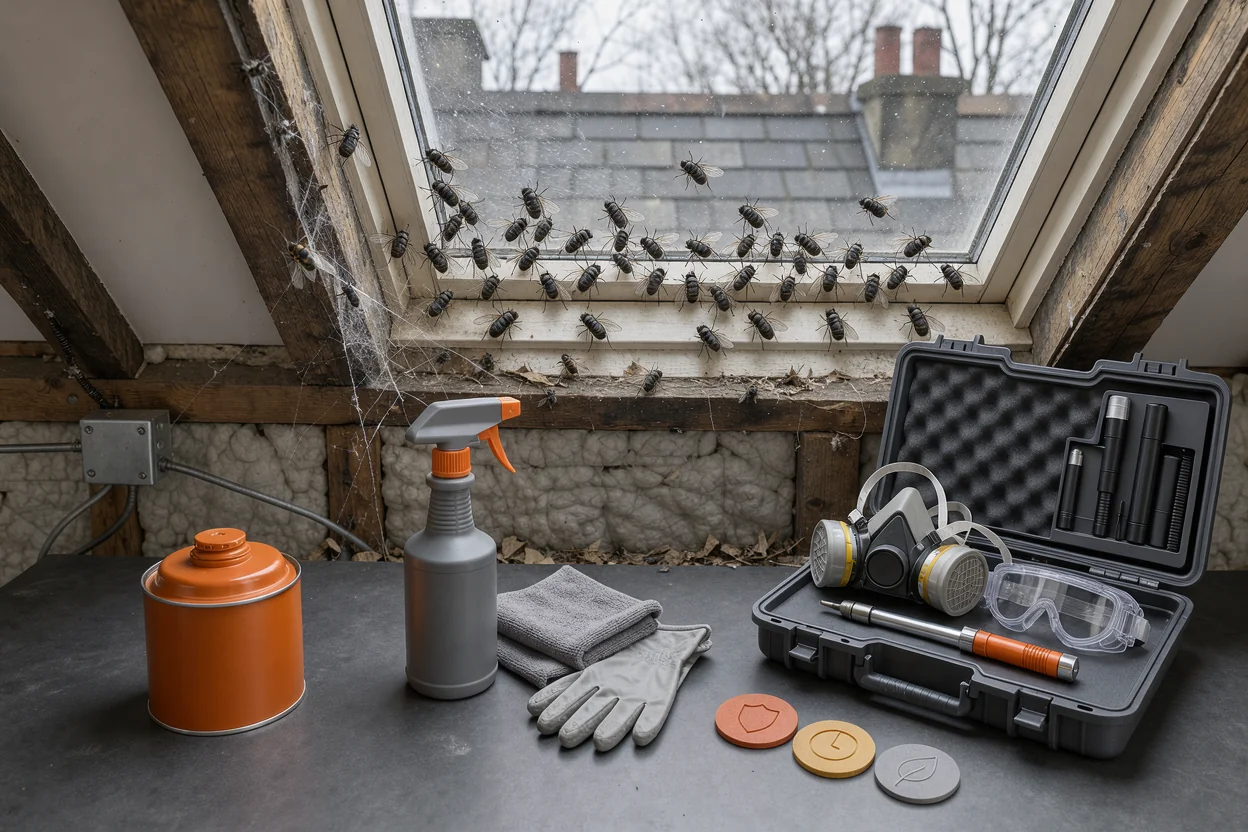
If you’ve found cluster flies in loft after winter, start with where they’re gathering and what you can safely reach. A small group beside a loft window calls for a different response from flies appearing throughout the roof space.
I’d judge the options by coverage, household safety and whether the aim is clearing today’s flies or reducing next autumn’s entry. Vacuuming, smoke generators, professional cold fogging, residual sprays and UV traps each suit different circumstances.
This roundup compares those jobs rather than naming one universal winner. It also includes proofing, because killing flies inside a loft doesn’t close the gaps they entered through. Improvised chemical mixtures and repeated spraying without identification don’t earn a place.
Check the spring activity before treating the roof void
Flies becoming active in a loft during warmer weather can fit the pattern of adults emerging from winter shelter. The timing is useful evidence, but it doesn’t confirm the species.
Establish where the flies are appearing
Check accessible windows, the loft hatch and rooms immediately below. Note whether you find sluggish groups, scattered dead flies or active insects heading towards daylight.
Photograph a fly clearly, or retain a specimen in a closed container for identification. A distant photograph of several dark insects rarely gives enough detail for a confident treatment decision.
Also note whether the problem changes with warmer weather. A dated record of the location and activity is more useful than repeatedly describing the loft as full of flies.
Cluster flies sheltering through winter don’t automatically indicate poor housekeeping. There’s no reason to start throwing away stored belongings solely because adults have gathered nearby.
Separate identification from safe access
A seasonal gathering needs a different investigation from flies associated with an animal carcass or another source. An unusual smell, visibly different insects or activity concentrated around one concealed area deserves closer assessment before treatment.
Inspect only from secure boarding or another suitable platform. Don’t step onto ceiling plasterboard or stretch across unboarded insulation to reach a group.
If access is unsafe, leave the inspection to someone equipped for the space. Signs of bats, roosting activity or an occupied bird nest also change the plan: pause chemical treatment and seek appropriate wildlife advice.
Vacuuming is the first choice for reachable flies
For a small, accessible gathering, I’d start with physical removal. Vacuuming removes the flies you collect without adding an insecticide to the loft.
This option earns its place because the result is visible. You can see which window ledge, boarded area or hatch surround has been cleared. That gives you a useful starting point for checking whether more flies appear.
Use an extension attachment from a stable position rather than moving deeper into an unsafe roof space. Keep the nozzle away from loose insulation, wiring and materials you cannot identify.
Follow the vacuum manufacturer’s instructions when emptying it. Contain the collected insects and debris, then dispose of them promptly. Don’t assume every fly has died inside the machine.
Vacuuming has an obvious limit: it reaches only the flies you can access. It won’t clear groups concealed behind lining, beneath inaccessible edges or inside other parts of the building.
It also needs care after chemical treatment. Follow the treatment instructions before cleaning surfaces or collecting material that may carry insecticide residue.
For a manageable group, the practical choice is removal followed by observation. Record where the flies were and check the same places during subsequent warm spells. If fresh gatherings repeatedly replace those you remove, investigate the wider roof void rather than treating each appearance as an isolated event.
Smoke generators need a loft that matches the label
An insecticidal smoke generator releases insecticide through smoke into a space. Some products contain permethrin, but formulations and permitted uses vary.
I’d consider this category only when the exact product instructions match the intended use and the loft can meet every preparation requirement.
Check suitability before buying the product
A domestic smoke generator may appeal when flies are spread beyond the reach of a vacuum. Its practical value depends on the smoke reaching the insects within a suitable treatment space.
Read the full label before purchase. Check the target insect, permitted location, space calculation, preparation instructions and restrictions. A product photograph showing a loft doesn’t answer those questions.
Roof spaces can contain combustible materials, stored possessions and openings into other areas. A generator also introduces an ignition or heat consideration. If the required clearances or conditions cannot be achieved, choose another approach.
Don’t improvise the number of units, combine products or substitute advice from a different product’s instructions.
Understand what smoke leaves unresolved
Smoke treatment cannot be assumed to reach every concealed group. Divided roof voids, stored items and enclosed spaces can interrupt coverage.
It also leaves dead insects to collect where accessible. Killing exposed flies doesn’t remove their bodies or repair the roofline.
People and pets must stay outside the treatment area as directed. Follow the exact instructions for exclusion, ventilation and re-entry; there is no single waiting time suitable for every formulation.
For a clearly suitable space, a labelled smoke treatment may be an option for exposed flies. If you cannot establish the loft’s layout, manage communication with occupied rooms or satisfy the fire precautions, I’d choose a professional assessment instead.
Cold fogging needs a professional plan for the whole loft
Professional cold fogging disperses an insecticide as a fine mist. ULV means ultra-low volume and describes an application method using very small droplets.
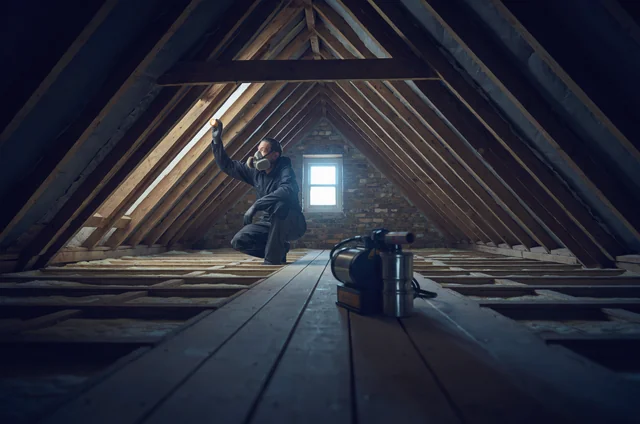
It may be considered when activity is widespread and individual removal is impractical. The equipment alone, however, doesn’t establish that fogging is the right treatment.
Ask what the mist is expected to reach
A useful proposal starts with identification and a roof-space assessment. The technician should explain where flies are gathering, which areas are accessible and why the proposed application suits that layout.
Fine droplets still need to reach the insects. Enclosed sections, dense storage and concealed groups can limit contact. A technician should describe those limits rather than promise that mist reaches everywhere.
Ask whether the quote covers the whole relevant void, preparation, accessible dead-fly removal and any follow-up assessment. Those details make competing proposals easier to compare.
When choosing someone for the work, checking pest controller credentials helps you assess their training and trade registration alongside the proposed treatment.
Compare the plan, household arrangements and follow-up
Professional treatment still requires preparation. Explain whether children, pets, aquariums, stored food or regularly occupied rooms are close to the loft.
Request clear instructions covering access restrictions, ventilation, re-entry and cleaning. These should relate to the actual product and application, rather than a general reassurance about fogging.
BuzzKill Pest Control is one local option for London households considering professional help. The useful comparison is the inspection, treatment scope and explanation of limitations.
I’d favour an assessment where flies are widespread, identification is uncertain or the building makes DIY treatment difficult. Ask how fresh activity after treatment will be investigated before agreeing to the work.
Residual sprays depend on where the flies land
A residual insecticide leaves a deposit on a treated surface. Its intended effect depends on insects contacting that deposit under the conditions described on the product label.
That makes it a different choice from treating flies already moving through the air.
Use surface treatment where contact is plausible
This category belongs in the comparison because flies may gather or travel across particular accessible surfaces. A suitable treatment can target those locations when the product permits it.
The decision starts with evidence: where are the flies resting, and will they actually cross the proposed treatment area?
A random coating around the loft is a poor substitute for answering that question. Spraying insulation, stored belongings or unrelated surfaces can create unnecessary exposure without establishing useful contact.
Any product must match the intended insect, surface and setting. Keep people and pets away as directed, and follow the label’s instructions for preparation, application and cleaning.
Separate residual activity from permanent protection
A surface deposit has practical limits. Its performance depends on the formulation, surface, application and subsequent conditions.
Without those details, a claim that one spring application will protect the loft through autumn would be guesswork. A residual spray also doesn’t close an entry gap.
For a recurring problem, ask a technician to explain why surface treatment is appropriate and how its timing relates to the flies’ activity.
I’d reserve this approach for a defined target area and a clear contact opportunity. If nobody can explain where the flies will encounter the deposit, reassess the treatment choice.
UV traps help with active flies and ongoing monitoring
A UV fly trap uses ultraviolet light to attract insects towards a capture or killing mechanism. It can be useful where flies are active and able to reach the unit.
Its place in this roundup is mainly as a way to catch moving flies and observe activity over time. It won’t draw every resting insect from every hidden part of a roof.
A glueboard model holds insects on an adhesive board, which can make the catch easier to inspect. Other designs use an electric grid. Check the unit’s intended environment, maintenance requirements and installation instructions before choosing.
Lofts bring practical restrictions. Access for servicing may be awkward, electrical supplies may be unsuitable and surrounding light can affect placement. Don’t run a loose extension lead across an unsafe access route to make a trap fit.
An empty trap doesn’t prove the building is clear. Flies may be inactive, elsewhere in the void or unable to reach it.
I’d consider a suitable trap when repeated active flies need monitoring and the unit can be installed and maintained safely. Keep a dated record of catches alongside sightings. If flies remain concentrated in one unreachable area, investigate that location rather than buying additional traps.
Proofing matters before the next autumn entry
For repeat seasonal visits, clearing the current flies and repairing entry routes are separate jobs. Proofing means reducing suitable gaps while keeping the building’s ventilation and other necessary openings working.
It deserves a place beside the treatment methods because an insecticide application doesn’t repair a damaged roof detail.
Inspect the roofline without blocking ventilation
Check accessible window surrounds, damaged joints and visible gaps around the roof space. Roof coverings, eaves and ventilation details may need assessment by a roofer or another suitable contractor.
Don’t fill every opening you find. Some form part of the roof’s ventilation, and blocking them can create a different building problem.
Where screening or repairs are suitable, choose an approach compatible with the ventilation system and the surrounding materials. Wider home pest proofing can help organise checks around other accessible entry points.
The sensible window for planning repairs is before another autumn entry period, with the timing adjusted for any wildlife using the roof.
Give the loft hatch its own check
Flies appearing upstairs may be moving from the roof void through gaps around the hatch or nearby service openings.
A closer inspection can establish whether that route needs attention. Repairing a damaged hatch seal may help separate the loft from living rooms, although it won’t stop flies entering the roof itself.
Check that the hatch closes properly and that any proposed repair preserves its intended operation. Don’t seal around hot equipment or alter electrical fittings as part of a DIY fly-control job.
For a tenant, dated photographs and a clear description of the affected rooms help the landlord arrange the appropriate pest inspection and building repairs. Ask for both parts of the problem to be assessed.
Questions to settle before choosing another treatment
The best response to spring loft activity depends on what remains after the first inspection or removal. These questions help separate a manageable gathering from a problem that needs a wider plan.
Why are flies appearing again after treatment?
Fresh sightings can mean previously concealed flies have become active, part of the void was missed or the original identification needs checking. The pattern matters more than a single sighting.
Compare new activity with your original notes. Are flies appearing in the same place, across a wider area or only during warm weather?
Don’t automatically repeat an insecticide application. Check its instructions and any agreed follow-up arrangements first. For recurring cluster fly problems, review the entry routes and the timing of repairs alongside treatment coverage.
Does spring activity mean the flies are breeding in the loft?
Overwintering cluster flies shelter indoors as adults. A spring gathering alone doesn’t establish that flies are breeding among stored belongings or insulation.
That distinction matters when choosing a treatment. Discarding storage boxes or broadly spraying their contents won’t necessarily address adults sheltered elsewhere in the roof.
If you find larvae, a strong localised smell or another sign that doesn’t fit the seasonal pattern, have the insects identified. The discovery may point towards a different fly problem and a different source investigation.
Which method fits the problem I can actually see?
For a small group on an accessible ledge, I’d choose vacuuming and observation first. It gives a clear result without treating the whole void.
For widespread activity, difficult access or uncertainty about the species, a professional inspection is the better starting point. Fogging or another application should follow the findings.
Smoke generators need a suitable space and complete compliance with their instructions. Residual sprays need a defined surface where contact is likely. UV traps suit active flies that can reach a safely installed unit.
A simple online treatment selector could help organise these choices. It could ask about access, fly locations, occupied rooms and wildlife signs, then suggest removal, monitoring or professional assessment.
What should I try before paying for another chemical treatment?
Ask what has changed since the previous attempt. More product won’t repair an entry gap, improve an unsafe access route or confirm which insect is present.
The easily overlooked alternative is a building repair, especially when flies repeatedly move through a poorly fitting loft hatch. Remove reachable insects, confirm the route and arrange an appropriate repair.
If the roof void itself receives repeat seasonal gatherings, plan roofline inspection and suitable proofing before autumn. Keep the spring treatment record so the next person assessing the loft can see where flies appeared and what was already done.

Need professional help? BuzzKill offers fast, reliable pest control services across London and Essex.