
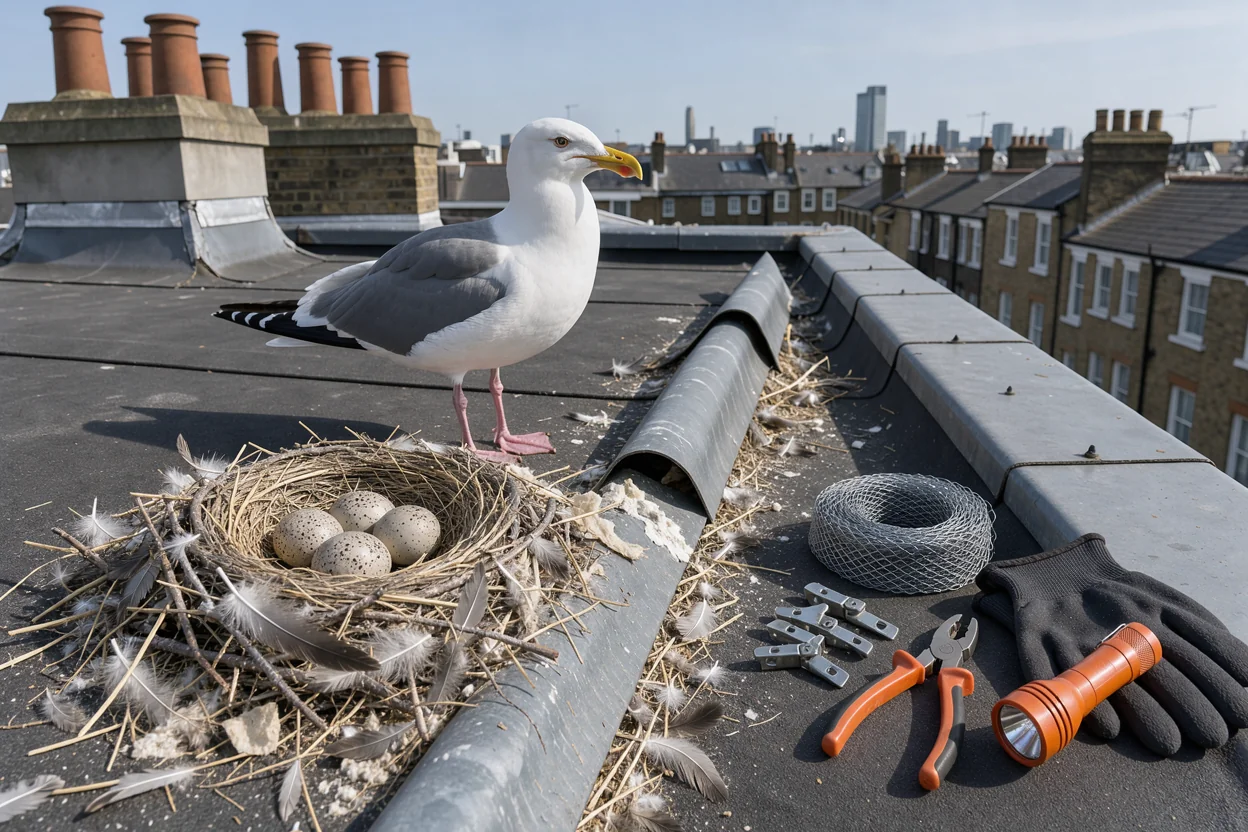
If you're worried about seagull nesting season roof risks, start by keeping people away from the area below the suspected nest. Leave the nest alone and inspect from ground level. Your first job is to establish whether there is an immediate problem with access, falling material or water entering the building.
We recommend separating the situation into three jobs: protect people today, assess any roof defect, and plan prevention once nesting has finished. A noisy roof needs a different response from a leaking ceiling. The steps below will help you record useful evidence without climbing up or interfering with the birds.
Make the area below the nest safe today
An occupied gull nest changes how you use the space beneath it, particularly around doorways, roof terraces and narrow side passages.
During the next 30 minutes:
- Move children and pets away from the area directly below the suspected nest.
- Use another entrance if birds repeatedly swoop near your usual route.
- Pause gutter cleaning, roof maintenance and any work that would bring someone close to the nest.
- Take a photograph from a safe position and note any visible leak, loose material or blocked access.
Keep your distance rather than testing how close you can get. Ask anyone working at the property to stop approaching the nesting area until the situation has been assessed.
The RSPB explains that gulls may swoop to defend nests or chicks. Its advice for protective gulls includes using an umbrella when entering or leaving a property. Keep your view of steps, traffic and other people clear.
For falling tiles, a visibly unstable chimney or water reaching electrical fittings, keep everyone away from the affected area and arrange urgent professional assessment. Tell the contractor about the birds before they arrive.
If you rent, notify the landlord or managing agent today. Send the photograph, describe the affected entrance or room, and explain whether anyone can safely avoid the area.
Check the roof from the ground, then follow the water
Gulls on a roof are a reason to look carefully, but their presence alone does not establish that a nest or roof damage exists.
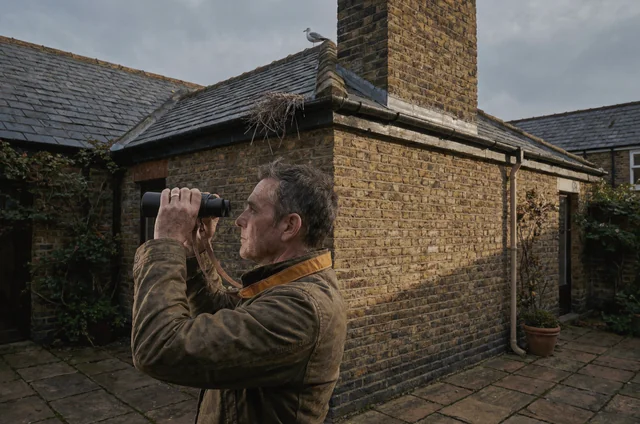
Record activity around one roof feature
Use binoculars or your phone's zoom from a safe place. Check the chimney base, roof corners, ledges and flat-roof edges without leaning out of windows.
Record what you can actually see:
- Birds repeatedly carrying material to the same spot.
- An adult settled low in one location.
- Another bird returning to that location.
- Visible chicks or a clearly formed nest.
- Loose material near a gutter outlet.
Describe these observations plainly. “A bird carried grass behind the rear chimney twice” is more useful than “the whole roof is infested”.
If you can only see birds standing on the ridge, record that too. You have evidence of roof use, but the nesting status remains uncertain. Avoid climbing up to settle the question.
Check drainage and the rooms below
From the ground, look for gutter overflow, water staining beneath joints and debris hanging over an outlet. During ordinary rainfall, note where water spills. Stay indoors during dangerous weather.
Inside, inspect the ceiling and upper wall beneath the affected roof area. Photograph any fresh staining and note whether it appeared after rain. Keep older marks separate in your notes.
A nest near a gutter does not prove that it caused a leak. Broken fittings, accumulated leaves or an existing roof defect may need attention. Ask the roofer to identify the cause before agreeing to a repair.
Where safe loft access already exists, you can note visible daylight or water from the usual access position. Do not crawl towards the eaves, move insulation or open a suspected wildlife entry point.
If you cannot confirm a nest
Repeat the distant observation later today and tomorrow from the same position. Keep routine roof work paused while its effect on the suspected nesting area remains unclear.
If observations remain inconclusive over the next 48 hours, arrange an assessment rather than treating the lack of a clear view as permission to proceed.
Let nesting activity set the timetable
For a roof with suspected gull nesting, the working timetable should follow the birds' actual use of the site.
Plan ahead of the next breeding attempt
The RSPCA's gull deterrent guidance recommends preparing during winter to reduce opportunities for gulls to settle during the breeding season. That gives property owners a reason to organise inspections and suitable prevention ahead of time.
Winter is a planning window, not automatic clearance to start work. The particular roof still needs checking before anything is removed, covered or blocked.
If nesting is already under way, ask for two separate schedules: one for managing today's property problem, and another for prevention after the nesting area is available.
Keep that distinction in emails and quotations. It helps prevent a routine maintenance booking from becoming an unplanned attempt to remove birds.
Avoid guessing when the roof will be clear
You cannot calculate a reliable finish date from the day you first notice gulls. You may have discovered the site during nest building, while an adult is incubating eggs, or after chicks have appeared. Incubation means keeping eggs warm so they can develop.
An empty-looking nest during one observation does not establish that nesting has finished. Your view may be incomplete.
Likewise, reduced noise is not a clearance check. Ask whoever assesses the site to explain what evidence will allow deferred work to begin.
If scaffolding is booked, tell the contractor about the suspected nest now. Agree how the roof will be checked close to the working date, and what happens if birds are still using it.
Keep roof repairs within the wildlife rules
A gull nest can complicate repairs, so establish the legal position before anyone moves nesting material or blocks the birds' access.
Leave active nests, eggs and birds alone
For roof work in England in 2026, Natural England's wild bird protection guidance states that wild birds, their eggs and nests have legal protection. Intentionally taking, damaging or destroying a nest while it is in use or being built is an offence. Intentionally taking or destroying eggs is also prohibited.
An unfinished nest therefore needs care too. Do not assume that the absence of visible eggs makes removal acceptable.
Leave nest handling, proposed exclusion and any potentially harmful action for a properly assessed plan. Do not oil eggs, move chicks, cover the nest or try to drive the birds away yourself.
Ownership of the roof does not settle whether a particular action is lawful. Where a licence or other legal provision is proposed, ask the adviser to explain exactly what applies before work starts.
Define the repair separately from nest removal
Tell the roofer precisely what is happening: water entering a bedroom, overflow above a doorway, or loose material beside a chimney. Ask whether the defect can be assessed or managed without affecting the nest.
A request to stop water entering the building should describe that defect. Avoid approving a vague instruction to “clear everything off the roof”.
If BuzzKill Pest Control and a roofing contractor are both involved, give them the same annotated photographs. Both need to understand the nest location, access route and proposed work area.
Ask for the agreed limits in writing. These should identify which work can proceed, which work must wait, and who will check conditions before access.
If a contractor discovers eggs, chicks or unexpected nesting activity, the instruction should be to stop the affected work and reassess. Do not leave that decision to someone encountering the birds for the first time on a ladder.
Deal with droppings without spreading them
Droppings beneath a gull nest need a cleaning plan that considers access, the amount present and nearby nesting activity.
Separate a small surface clean from roof clearance
For a small patch on an accessible outdoor surface, first make sure you can work without approaching the nest or passing beneath loose roofing material. Keep children and pets away while cleaning.
Wear suitable gloves, avoid splashing and use a gentle damp method rather than scraping dry material into the air. Follow the cleaning product's label and check that it suits the surface. Wash your hands afterwards.
The Health and Safety Executive's bird droppings cleaning guidance advises controlling dust by wetting the work area and avoiding high-pressure washers, which can put droplets into the air.
Do not treat that advice as a reason to hose down an occupied roof. Keep water, cleaning products and equipment away from the nest.
Leave substantial deposits for an assessed clean
Roof deposits, thick dry accumulations, enclosed spaces and difficult access need professional assessment. A basic dust mask does not establish that the work is safe.
Ask how the cleaner will control dust and splashes, protect neighbouring surfaces and collect waste. The plan should also explain how they will avoid affecting nesting birds.
Our guide to pigeon droppings health risks covers related hygiene concerns. It cannot establish the exposure risk from a particular gull site.
Where droppings affect a shared entrance, arrange temporary access management as well as cleaning. Tell residents which route to use and keep the affected surface out of use until the work is complete.
Fit prevention to the roof after nesting has finished
Gull prevention should address the roof areas identified during the assessment, with installation timed around confirmed nesting status.
Start with a roof drawing or annotated photograph
Bird proofing means physical measures intended to prevent birds using a particular space. Before choosing equipment, identify the actual problem area.
Mark the chimney base, sheltered ledge, flat-roof corner or other location on a photograph. Include nearby gutters, roof outlets and maintenance access points.
In a proofing proposal from BuzzKill Pest Control, look for a clear description of the area to be protected. Ask how the proposed installation will fit that roof and how future maintenance will work.
Possible systems include purpose-designed netting, wires or other physical barriers. Their suitability depends on the structure, target bird and installation details. Ask the contractor to explain the choice rather than selecting a product from a photograph.
A narrow perch and a broad flat roof need separate consideration. Request a plan for each affected surface.
Keep drainage, equipment and bird welfare in the design
Any installation needs to allow appropriate access for gutter cleaning, roof repairs and equipment servicing. Ask how the contractor will avoid obstructing outlets or creating difficult-to-reach debris traps.
The proposal should explain how birds will be kept from becoming trapped and how the system will be inspected afterwards.
Where solar panels are involved, our guide to pigeon proofing solar panels covers that particular roof space. Ask separately whether the suggested approach suits the gull activity recorded at your property.
Before installation, confirm who is responsible for checking the roof is available for work. Keep the assessment and completion photographs with your property records.
Reduce avoidable food access
Alongside roof planning, check the property at ground level. Keep bin lids closed, report broken communal bins and clear accessible food waste.
Avoid leaving pet food outside or feeding gulls near the building. For shared properties, agree who will deal with overflowing bins and food left beside them.
Record damaged deterrents or newly accessible roof spaces during routine maintenance. Pass those photographs to the installer before attempting an adjustment.
Make a bird-control visit useful
A visit concerning nesting gulls is more productive when the assessor can distinguish the bird activity from the building defect.
Prepare one clear property record
Gather the roof photographs, dates of observations, leak notes and any details of planned maintenance. Include the location of entrances, roof hatches and shared access routes.
Describe what needs deciding. You may need confirmation of nesting activity, advice on an occupied roof, a cleaning assessment or a proposal for later prevention.
If there is a leak, state which room is affected and whether water appears only during rain. If access is the concern, explain who uses the route and whether an alternative exists.
A simple interactive roof checklist could organise nest-location photographs, leak reports and access restrictions into one record for the property team.
Our article on signs needing professional bird control gives additional context for deciding when observation alone is insufficient.
Ask for a defined scope
A useful assessment should explain the visible evidence, what remains uncertain and the limits of the proposed work. Ask who will handle roofing defects and who will assess bird-related work.
Request separate descriptions for assessment, cleaning, repairs and prevention. That makes it easier to understand which tasks can happen now and which depend on a later check.
Avoid accepting immediate removal as the default outcome of a visit. The assessor needs to establish what is present and what action is appropriate.
Before anyone leaves, agree who will monitor the property and what change requires another assessment. Keep those instructions with the photographs so residents, contractors and the managing agent receive the same information.
Questions about gulls, chicks and urgent roof work
Gulls on a roof often raise practical questions once the immediate access and maintenance issues are under control.
Can I remove a nest that looks empty?
Do not rely on appearance alone. A single distant observation cannot establish whether the nest is still in use.
Keep the area untouched until its status has been assessed. If eggs or birds remain, explain that clearly before agreeing to any work. Ask the adviser what checks are needed and what the proposed action allows.
What should I do if a chick is on the ground?
Keep pets and people away and observe from a distance. The RSPB's guidance on young gulls explains that young gulls may be on the ground before they can fly, while their parents continue caring for them.
For a visibly injured chick, a suspected fall before normal development, or immediate danger, seek advice from a wildlife rescue. Do not attempt to return it to the roof yourself.
Does a leak mean the nest can be removed immediately?
A leak needs prompt assessment. It does not establish that moving the nest is the appropriate repair.
Send the roofer photographs of the interior damage and explain where the birds are located. Ask for an assessment of the defect and a working plan that accounts for the nesting area. Keep people away from unstable ceilings or electrical hazards.
What if the gulls are nesting on a neighbour's roof?
Record where the problem occurs on your property and speak to the owner or managing agent responsible for the roof.
You may need coordinated arrangements for access, waste storage or scaffolding. Share photographs without entering neighbouring land or approaching the nest. Agree who will communicate the assessment and any restrictions to the contractors.
Need professional help? BuzzKill offers fast, reliable pest control services across London and Essex.