
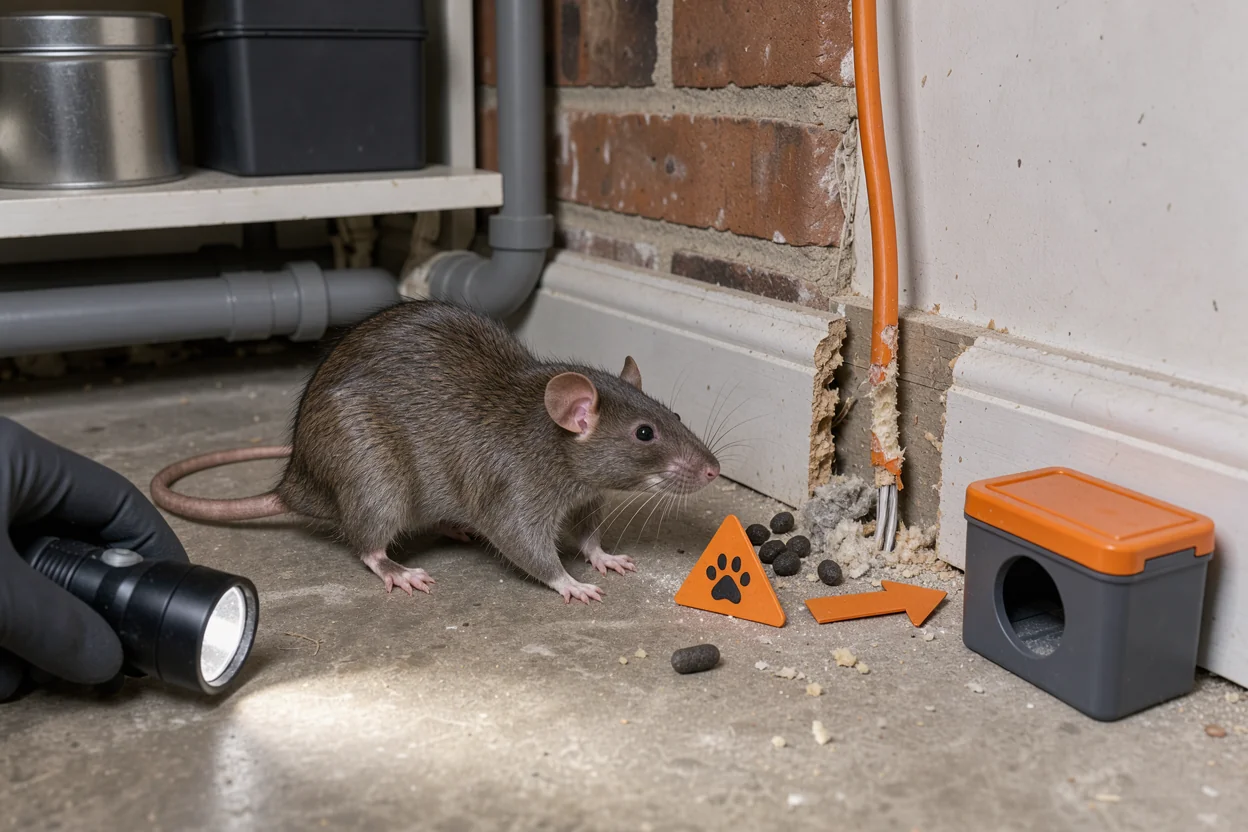
Warmer conditions, accessible food and shelter help explain concerns about a rodent infestation rise in England, although the evidence cannot tell us exactly how many rats live nationwide. If you’ve found signs at home, protect food and check where activity is happening first. Understanding the wider trend helps, but your response should depend on evidence around your property.
Are rat infestations actually increasing across England?
The evidence supports concern about rising rat activity, but reported infestations do not provide a complete count of England’s rats.
The Independent’s August 2025 coverage of UK infestations described more than half a million reports. That figure concerns reported infestations across the UK. It should not be read as an England-only population estimate or a count of individual animals.
Several different measures appear in news coverage: sightings, complaints, confirmed activity and pest-control visits. Each answers a different question. One property can generate repeated reports, while another household may deal with signs privately and never appear in council figures.
Comparisons also need consistent dates and coverage. A busy period for one company does not establish that every English town experienced the same increase. Reports can change alongside awareness, service availability and the number of properties monitored.
I’d judge the risk to a particular home through repeated sightings, fresh droppings, damage and evidence of entry. A national headline cannot establish whether rats are nesting beneath your kitchen.
Keep a dated record of signs at your property. If neighbours are reporting activity too, note whether it involves the same bin store, drain or shared boundary.
Why does warmer weather favour rat activity?
Warmer conditions can make cities more favourable for rats, although food and shelter still shape what happens locally.
A January 2025 paper in Science Advances linked increasing city rat numbers with climate warming, urbanisation and human population. Its study of city rat populations supports treating climate and city growth as connected pressures rather than looking for one explanation.
Milder conditions can leave longer periods suitable for activity and breeding. In a sheltered urban setting, rats may also have access to food throughout the year. Those advantages matter most where waste, water and protected nesting spaces are available together.
A warm spell does not automatically mean an infestation has started in your street. Weather describes the wider conditions; evidence at the building tells you whether rodents have reached it.
Nor does colder weather guarantee that an existing problem will disappear. A building with accessible food and protected spaces needs attention regardless of the season.
For homeowners, the useful response is to review conditions around the property instead of waiting for a weather change. Look behind outdoor storage, around waste containers and near visible service openings. Record damaged bin lids, food spills and gaps that need inspection.
How do rubbish and food waste encourage rats?
Accessible food gives rats a reason to return to an area and makes control harder while that supply remains available.
A tied rubbish bag can still be accessible if it sits outside a secure container. Other possible food sources include spilled bird seed, pet food left outdoors, fallen fruit and food residues around bins.
The amount does not have to look substantial to a householder. A repeated supply in the same sheltered spot can matter more than one large spill that is removed promptly.
This is especially relevant around shared bin stores. One household may manage its waste carefully while an overflowing communal container keeps attracting activity nearby. Check whether lids close properly and whether bags are regularly left beside the bins.
At home, store food securely, clear spills and keep pet food put away between feeds where practical. Outdoors, review bird feeding and other feeding practices if rat signs are appearing nearby.
For restaurants and other food premises, include the waste area in routine inspections. Check around containers, underneath storage and along the route between the kitchen and collection point.
If activity continues after accessible food has been removed, investigate shelter and entry routes. Keep records of recurring waste problems so the person responsible for the area can arrange repairs or collection changes.
Can heavy rain and damaged drains bring rats indoors?
Heavy rain can displace rats towards drier shelter, while drainage defects may provide a separate route into a building.
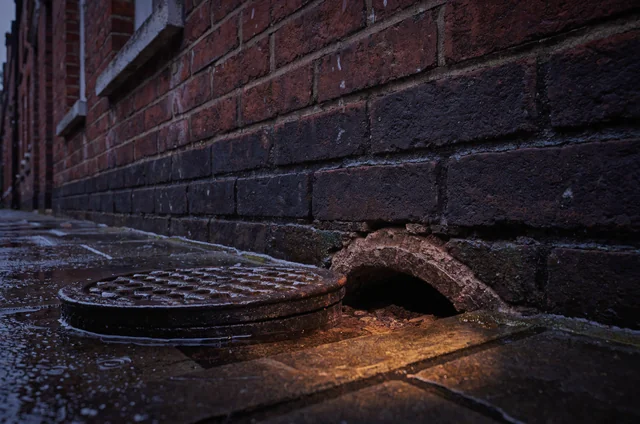
These are related possibilities, but they require different checks. Water entering a burrow can move activity elsewhere. A damaged drain connection or opening beneath a property may allow access even during dry weather.
Finding rats after rainfall does not prove they entered through a toilet or sewer pipe. They may have used an external gap, an opening around services or a route from an adjoining building.
Useful details include the timing of new noises, where droppings appeared and whether signs recur near the same ground-floor wall. Drain smells, leaks or known defects should also be reported, although they do not establish the entry route alone.
Our guide to rat drain entry points explains why tracing access matters before choosing a repair. A drainage investigation may be appropriate when the property evidence points underground.
Avoid lifting heavy inspection covers or entering confined drainage spaces yourself. An accessible photograph of a visible defect is more useful than an unsafe attempt to investigate.
If indoor activity repeatedly returns despite treatment and repairs to visible openings, ask whether concealed drainage connections need assessment. Give the inspector the dates of rainfall, sightings and previous work.
Why might a clean London home still get rats?
A clean home can experience rat activity because entry routes, shelter and nearby food sources extend beyond the household’s control.
London properties can share walls, service routes, courtyards and waste areas. An opening elsewhere in a building may matter as much as a gap visible inside one flat.
For example, a well-kept kitchen could sit above a damaged drain connection or beside a shared bin store. That is a possible scenario, not evidence that either route exists in your home.
Cleaning helps reduce accessible food. Building inspection answers a different question: how rodents could reach protected spaces. Both deserve attention when signs keep returning.
The wider research connects rat pressures with urbanisation, but it does not justify ranking every London borough or assuming that one neighbourhood has the same problem as another.
Look at the nearest relevant conditions instead. Is waste accumulating? Has building work exposed an opening? Are neighbours reporting similar signs? Is a rear service area difficult to inspect?
In a flat, make the building manager aware of activity outside your own rooms. A problem involving communal space may need coordinated access and repairs. Photograph the location and record which part of the building it belongs to.
Does seeing one rat mean there is an infestation?
One sighting establishes that a rat was present, but it cannot tell you how many animals are nearby or whether they live inside.
A rat passing through a garden is different evidence from repeated sightings beneath the same shed. Indoor sightings deserve prompt attention because they establish that an animal has reached the building’s occupied space.
Look for a pattern rather than trying to estimate numbers from a brief glimpse. Useful signs include repeated activity along the same boundary, droppings in sheltered places, gnawing damage and openings associated with movement.
Identification also matters. Rats and mice need different assessments, and dropping size alone can be misleading without context. A photograph showing scale and location helps more than a close-up with no surroundings.
Scratching sounds are another clue, but noise alone cannot identify the animal. Birds, squirrels and building noises can complicate an assumption about rodents in a loft.
Record where and when you saw the animal, which direction it moved and any nearby signs. Do not chase it or move heavy appliances simply to obtain a better view.
A daytime sighting does not provide a reliable headcount either. Describe the sighting accurately rather than treating it as proof of a large colony. Repeated indoor evidence is a stronger reason for an inspection than speculation about numbers.
What should I do first if I find rat droppings indoors?
Protect food, keep people and pets away from the affected area, and record the evidence before arranging an assessment.
Finding droppings in a cupboard can be unsettling, especially if you have already spent time cleaning or checking the room. Start with manageable actions that reduce exposure and preserve useful information.
- Keep children and pets away from the affected cupboard or room.
- Put unaffected food into secure containers and isolate anything showing damage or rodent contact.
- Photograph the signs without handling them.
- Record the room, position and date.
- Tell other occupants where activity has been found so they do not disturb it accidentally.
Avoid dry sweeping or vacuuming suspected droppings during the initial investigation. Ask for safe cleaning advice, particularly where signs are extensive or involve food preparation areas.
Check accessible surroundings without dismantling units or reaching into hidden spaces. Look for damaged packaging, openings around pipework and signs beneath nearby appliances.
If BuzzKill Pest Control is inspecting your home, explain whether children or pets use the area and whether you have already placed traps or bait. That information belongs in the assessment.
Where signs appear in a shared kitchen, school or workplace, inform the person responsible for the premises. Give them the location, photographs and any evidence of food or packaging damage. Report electrical damage promptly and keep the affected appliance out of use until assessed.
Can shop-bought traps or bait solve a rat problem?
A trap or bait may address some activity, but choosing a product does not establish the entry route or remove the conditions sustaining it.
The first question is whether you have identified the animal and where it is moving. A product placed away from an active route may tell you little about the wider problem.
Access also matters. Rodents reaching a kitchen through a concealed building route require an assessment of that route. Repeatedly replacing products while overlooking the opening can leave the underlying issue unresolved.
Rodenticides are poisons used to control rodents. Follow the product label and restrictions, and keep them inaccessible to children, pets and other animals. Avoid loose bait or improvised placement.
If a trap can be reached by a child, pet or wildlife, its location needs reconsideration. Treatment should fit how the household uses the space.
For a household using BuzzKill Pest Control’s rodent service, existing traps and bait should be included in the treatment history. Keep packaging or photographs so the technician can identify what was used.
When selecting help, our guide to pest controller credentials explains what to check. Ask who will inspect the property, how treatment will be monitored and how children, pets and food areas will be protected.
Does failed rat treatment mean the poison no longer works?
Failed treatment has several possible explanations, so it does not by itself establish resistance.
Resistance means a rodent population is less susceptible to a particular poison. It is a question about the animals and the product, rather than a label for every treatment that has disappointed a homeowner.
Other possibilities need investigation. The animal may have been misidentified, bait may have been inaccessible, another food source may remain available, or further animals may be entering through an unrepaired route.
Seeing bait disappear also does not establish that the infestation has ended. A treatment needs monitoring against activity in the property, with clear records of what changed.
Avoid responding by using larger amounts or combining products. Keep the product details, placement dates and observations for whoever reassesses the problem.
The useful question is what evidence explains the failure. Ask whether access, food sources and placement have been reviewed before accepting a claim about resistant rats.
Recurring activity after an apparently successful visit also needs a fresh assessment. Provide the previous treatment dates and identify whether signs returned in the same room or somewhere new. Let the evidence guide changes to the treatment plan.
Who should deal with rats in a rented flat or shared building?
Tell the landlord or managing agent promptly, because inspection and repairs may involve parts of the property a tenant cannot access.
Responsibility depends on the circumstances, including the route of entry, building defects, shared areas and the tenancy arrangements. A general article cannot settle an individual dispute from the fact that a rat has appeared.
Send a written report with dates, photographs and affected rooms. Describe known gaps, drainage problems or damage without claiming a cause that has not been established.
For a flat, include signs in communal corridors, cupboards or bin stores. The managing agent may need to coordinate an inspection across shared space or arrange access to concealed services.
Neighbours’ reports can help show the extent of activity. Keep each observation attached to its location so the inspection does not treat every sighting as evidence from your own flat.
A restaurant, school or other managed premises needs a named person to coordinate the response. Inspection findings, treatment records and repairs should remain accessible to that person.
If you need advice about a disputed repair obligation, seek guidance relevant to your tenancy and local circumstances. Meanwhile, continue protecting food and keeping affected areas away from children and pets. Retain copies of reports, responses and appointments, and ask who is responsible for each proposed repair.
What should a rat inspection and follow-up cover?
An inspection should establish the likely animal, the affected areas and plausible access routes, then connect those findings to treatment and repairs.
That means considering more than the spot where you first noticed droppings. Depending on the evidence, accessible kitchens, storage areas, external boundaries, waste spaces and shared building routes may all need attention.
Ask the technician to distinguish confirmed findings from possibilities. An observed opening associated with activity carries different weight from a drain fault that has yet to be investigated.
A useful plan explains what will happen, where treatment is placed, what occupants must avoid and who will carry out repairs. It should also identify any areas that could not be inspected.
Follow-up should review changes in activity. Fresh signs after a visit need recording, including their location and date. A quiet evening alone cannot establish that the problem has ended.
There is no single treatment duration that fits every building. Concealed access, shared spaces and delays to repairs can affect progress. Agree how the outcome will be checked rather than relying on a promised number of days.
Before a visit, organise your photographs and previous treatment details. Make accessible areas available without moving unsafe items. Ask how to report new signs between appointments and what evidence will support closing the treatment record.
How can I stop rats returning after treatment?
Reduce accessible food, repair confirmed access routes and keep checking the places where activity was previously found.
Proofing means closing or securing routes through which pests can enter. The repair needs to suit the opening and the building. A visible hole beside a pipe may require a different solution from a drainage defect.
Get advice on the timing of repairs where animals may still be inside. Blocking an opening without understanding the route can complicate the work.
Check waste containers, food storage and outdoor feeding regularly. In a shared building, confirm who maintains communal bins and who can authorise structural repairs. A recommendation without an owner can remain unfinished.
Our guide to home pest proofing methods gives room-specific context for checking potential access. Use the inspection findings to prioritise repairs instead of sealing gaps at random.
An interactive property checklist could record the room, date, sign spotted and repair status, so residents and managers work from the same record.
Keep previous photographs and treatment notes after activity stops. They provide a useful comparison if signs return and help distinguish an old mark from newly observed damage.
If fresh droppings, repeated sightings or new damage appear, record the location and date. Give that evidence to the person coordinating the inspection and repairs, including any change since the last visit.

Need professional help? BuzzKill offers fast, reliable pest control services across London and Essex.