
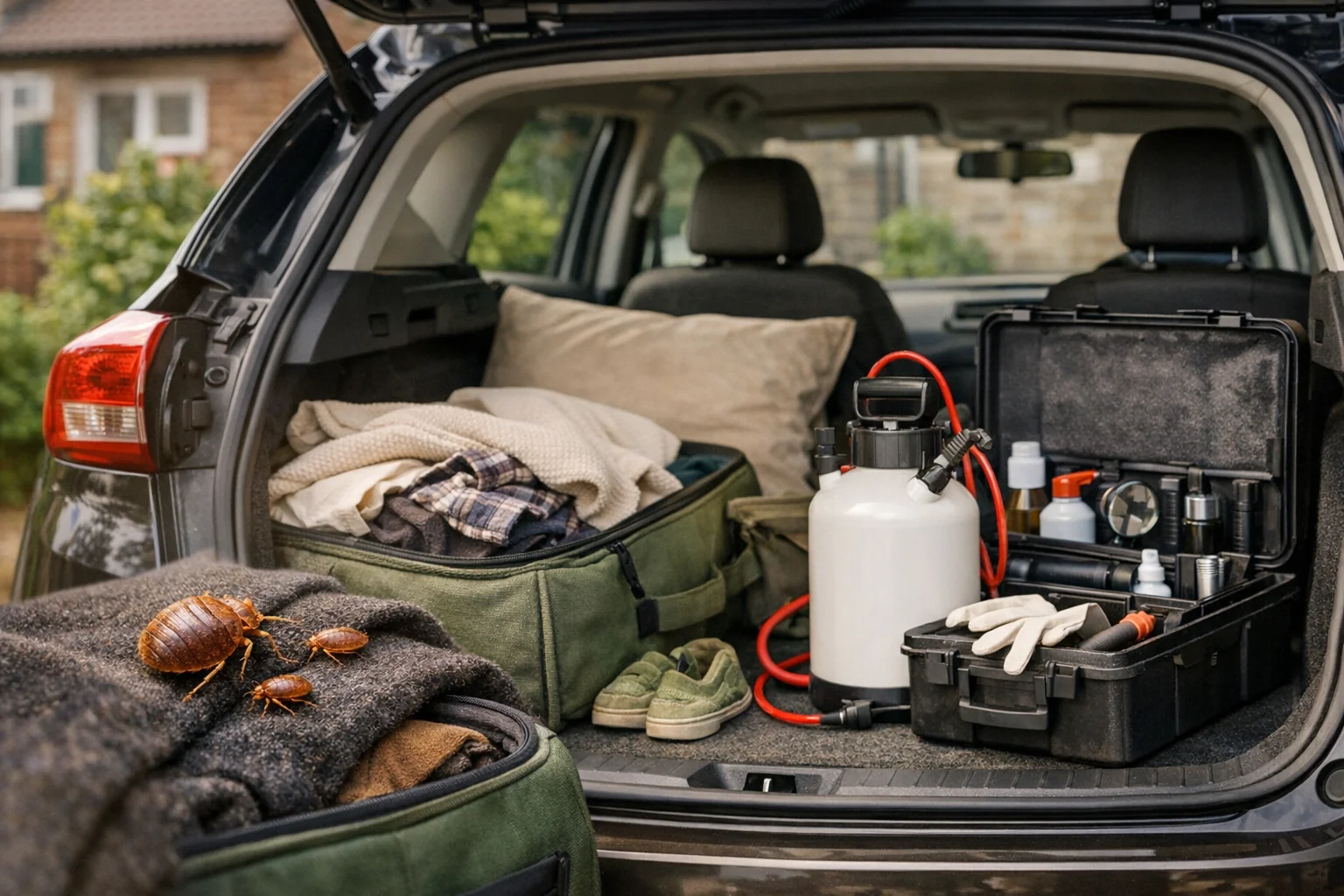
Most people assume the danger ends at their front door. They check hotel mattresses, inspect second-hand furniture, and wash travel clothes on a hot cycle — yet they climb into their car without a second thought. That is the false choice: treating your home while ignoring the vehicle that carried the problem there. Bed bugs do not think in property boundaries. They move on fabric, in seams, and inside the clutter we transport. Your car boot, back seat, or footwell can serve as a staging post between an infested source and your clean bedroom.
The hidden third option is treating both environments as one connected system. A car is not a permanent home for these insects, but it is a highly effective bridge. Understanding when that bridge is active, and when it has already delivered its cargo, changes everything about how you respond.
What You're Really Dealing With: Car Versus Home
A car presents a different problem to a bedroom. The vehicle is smaller, colder at night, and lacks the stable carbon dioxide plume that sleeping humans produce. Bed bugs can survive there — adult specimens may live months without feeding — but they do not thrive. They hide, they wait, and they travel. The real risk is not a self-sustaining vehicle colony. It is the transfer: from car seat to coat, from boot lining to suitcase, from child car seat to cot.
Your property type matters. A flat in Hackney with underground parking and shared lift access creates more transfer opportunities than a detached house in Enfield with a driveway and direct garden entrance. The number of people using the vehicle matters too. A family car shuttling between school runs, gym visits, and weekend trips offers more chances for bugs to find a human host than a single-commuter vehicle. Urgency spikes when you spot the signs after a known exposure — a hotel stay, a friend's house with an active problem, or public transport during a reported outbreak.
Safety risk is low in direct terms. Bed bugs do not transmit disease. The stress, sleep loss, and skin reactions are the real harm. Recurrence risk is where the car becomes dangerous. Treat your bedroom thoroughly while leaving bugs in the vehicle, and you will reintroduce them within days or weeks. Disruption tolerance varies: some households can manage a weekend of stripping and vacuuming; others need immediate resolution because of young children, eczema sufferers, or home-based businesses.
Option One: DIY Car Treatment and Vigilant Home Monitoring
This path suits the early-stage discovery. You have found one or two insects, or suspicious dark spots on upholstery, and you have no confirmed home infestation yet. The criteria are strict: limited evidence in the vehicle, no bites or signs at home, and a willingness to inspect daily for two to three weeks.
Start by removing everything fabric from the car. Wash seat covers, floor mats, and any blankets at 60°C minimum. Vacuum every seam, crevice, and storage pocket thoroughly, then dispose of the vacuum bag or empty the cylinder into a sealed outdoor bin. Steam cleaning works where the material tolerates it — the heat kills all life stages — but many car interiors combine materials that shrink or discolour. Test an inconspicuous area first. Diatomaceous earth or silica gel desiccant powders can be applied to footwells and under seats, though these are slow-acting and require dry conditions to work.
The limitation is reach. Modern vehicle construction hides voids you cannot access without stripping panels. A bug behind the dashboard, inside a seat frame, or within the headliner lining survives most home efforts. The time window is also unforgiving. If you have already carried bags, coats, or shopping from car to house, the infestation may have advanced beyond the vehicle before you noticed.
Cost is low in cash terms — perhaps £30 to £80 in supplies — but high in labour and attention. The risk consequence is a false sense of security. You believe you have solved the problem while bugs establish themselves in your mattress, skirting boards, or wardrobe. For households in Tower Hamlets or Lewisham with busy schedules and limited time for repeated inspection, this option often fails through inattention rather than method.
Option Two: Professional Vehicle and Home Treatment Together
This is the route when evidence exceeds casual suspicion. You have found multiple bugs, cast skins, or faecal spotting in both car and home. Someone in the household is showing bite patterns. Or you simply cannot afford the uncertainty of a failed DIY attempt.
Professional heat treatment for vehicles is the gold standard where available. Specialist units raise the entire cabin to temperatures that kill all life stages without chemical residue. This requires the right equipment and training — not every pest control provider offers it, and attempting improvised heat methods (parking in full sun, using household heaters) rarely achieves the sustained temperatures needed. Chemical treatment is the alternative, using approved insecticides applied to harbourage areas with proper ventilation periods afterward.
The home requires parallel assessment. A technician inspects bedrooms, living areas, and entry points using tools and training that reveal harbourage invisible to the untrained eye. Treatment may involve heat, targeted insecticide, or a combination depending on the property construction, occupancy, and infestation extent. Follow-up visits are standard for bed bug work — these insects are resilient, and eggs hatch on a staggered cycle.
Cost is higher: several hundred pounds for combined vehicle and home treatment in most London areas. The value is certainty and time. A same-day inspection, like those available through London bed bug removal services, establishes the full scope within hours rather than the weeks of uncertainty that DIY monitoring creates. For Camden residents in period conversions with complex room layouts, or Greenwich households with multiple occupied bedrooms, professional treatment often proves more economical than repeated failed home attempts.
Option Three: Home Treatment Alone (When the Car Is Clear)
This option applies to a narrower set of circumstances than most people assume. You need confidence that the vehicle was never truly infested — perhaps you spotted a single bug that hitchhiked on a coat but never established harbourage — or that the car has already been cleared through separate action.
The signs that the car is clear include: no live insects found after two weeks of active monitoring, no new faecal spotting, no cast skins, and no bites occurring after car use. Sticky monitoring traps placed under seats and in footwells can help confirm this, though they are not definitive.
If the home shows active infestation while the car tests clear, focus resources on the property. Professional bed bug extermination addresses the bedroom, adjacent rooms, and potential spread points. The risk is misjudging the car status. Many homeowners declare the vehicle clear based on a cursory look, then wonder why home infestations persist or recur. Bed bugs are cryptic. Absence of evidence is not evidence of absence in a cluttered footwell or heavily upholstered interior.
Spotting the Evidence: What to Look For in Each Space
Car evidence differs from home evidence. In a vehicle, you are looking at concentrated harbourage in a small volume. Check the seams of all seats, especially where backrest meets base. Inspect seat belt webbing and retractor housings. Look under floor mats, inside door pockets, and within any storage compartments. The boot is particularly important if you transport luggage, shopping bags, or sports equipment there. Bed bugs move toward darkness and pressure — the folded corners of a boot liner, the gap around a spare wheel, or the crevices in a folded rear seat are prime locations.
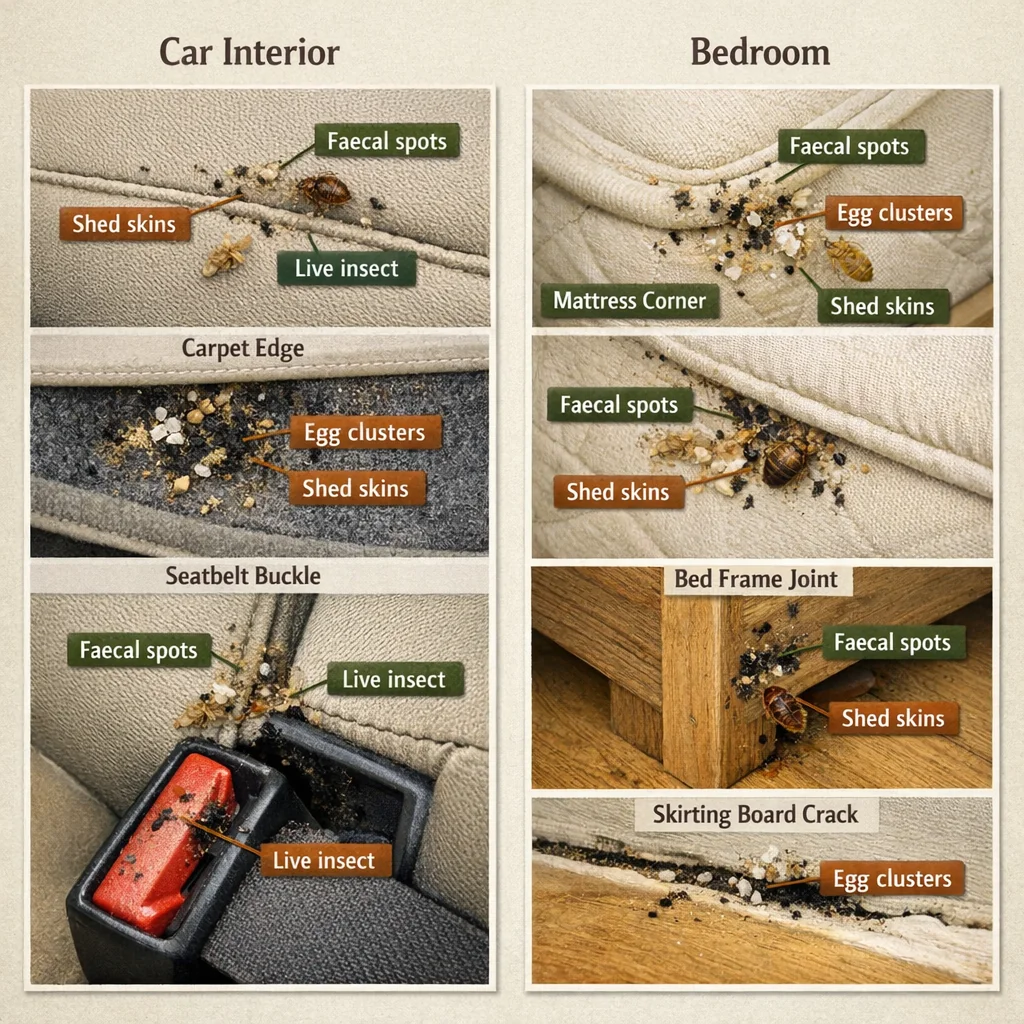
Home evidence follows known patterns. Mattress seams and tags, headboard joints, bedside furniture, and skirting board cracks near the bed are primary. But bed bugs spread. In heavier infestations they occupy wardrobes, sofas, electrical outlets, and picture frames. The bed bug warning signs page details the full inspection routine — apply it methodically, not just to the obvious sleeping area.
A brief scenario: last autumn, a family in Islington returned from a half-term break in Paris. They found two bugs in their daughter's car seat, killed them, and assumed the problem was solved. Three weeks later, the child was waking with bites. Inspection revealed established harbourage in the parental bedroom, with secondary evidence in the hallway where the suitcase had been stored. The car had been the vector, but the delay in full inspection allowed the home infestation to establish. Early professional assessment would have caught this at the vehicle stage.
When Time Pressure Overrides Your Preferred Approach
Certain situations force immediate professional involvement regardless of personal preference. You are a landlord with a tenant reporting bites — the Housing Act 2004 obligations and reputational risk demand rapid resolution. You operate a licensed vehicle — taxi or private hire — where Taxi And Private Hire Vehicle standards and passenger safety create regulatory pressure. You have a household member with severe skin reactions, anxiety, or compromised health. Or you simply cannot identify the source with confidence — the bugs may have arrived via car, public transport, workplace, or visitor, and you need systematic tracing.
In these cases, the cost of delay exceeds the cost of professional service. Same-day inspection availability matters. A technician visiting your property in Barking and Dagenham or Haringey within hours, rather than booking an appointment days out, stops the spread before it amplifies. The bed bug removal service structure includes this rapid response as standard for active infestations.
The Realistic Timeline: From Discovery to Clearance
Understanding time frames prevents false expectations. A single bed bug in a car, caught early, might be resolved through thorough cleaning and two weeks of monitoring. But that assumes no transfer to the home has occurred. Once eggs are laid — each female produces hundreds in her lifetime — the timeline extends. Eggs hatch in 6 to 10 days at typical indoor temperatures. Nymphs require blood meals to progress through five instars to adulthood. The whole cycle from egg to reproductive adult takes roughly 5 to 8 weeks under favourable conditions.
This means a car infestation discovered today could be feeding home populations in a fortnight, with those home populations becoming self-sustaining a month later. DIY approaches that span weeks of uncertainty allow this progression. Professional treatment compresses the timeline: inspection to treatment plan within 24 hours, initial treatment clearing active adults and nymphs, follow-up targeting hatched eggs before they mature.
For Hackney bed bug specialists or Greenwich bed bug treatment providers, the local knowledge of building types and common infestation pathways speeds this process. Victorian terraces with shared walls, converted flats with multiple occupancy, and new-builds with lightweight internal doors each present different spread risks. A technician who works these streets regularly applies that context to inspection and treatment planning.
Provider Profiles
Healthline
Healthline provides medically reviewed health information, including guidance on bed bug survival in vehicles. Their content notes that while car infestations are uncommon, bed bugs can survive up to a year without feeding once established, and they typically enter vehicles via clothing, furniture, or bags rather than crawling from sleeping areas independently.
ThermoPest

ThermoPest is a UK pest control provider with content addressing vehicle bed bug risks. They emphasise that cars are not ideal habitats but can serve as transfer points, particularly after travel or exposure to infested environments, with bugs clinging to belongings and seeking harbourage in vehicle interiors.
BC Pest Control

BC Pest Control publishes detailed treatment guides, including a 2026 car bed bug elimination guide focusing on systematic inspection and aggressive treatment strategies. They highlight the reproductive risk: a single female can lay 200 to 250 eggs in her lifetime, making early intervention critical.
HowToPestControl

HowToPestControl offers UK-focused guidance on safe vehicle upholstery treatment, noting the tension between effective pest elimination and protecting car interior materials from harsh chemicals or extreme heat damage.
Doctor Sniffs
Doctor Sniffs provides practical advice for specific scenarios like discovering bed bugs after giving someone a ride, emphasising that bed bugs do not transmit disease but require prompt action to prevent psychological stress and infestation spread.
Environmental Literacy Council

The Environmental Literacy Council explains bed bug transfer mechanics, clarifying that bed bugs are opportunistic hitchhikers on belongings rather than living directly on people, with cars serving as temporary resting spots during transit between habitats.
North Star Pest Control
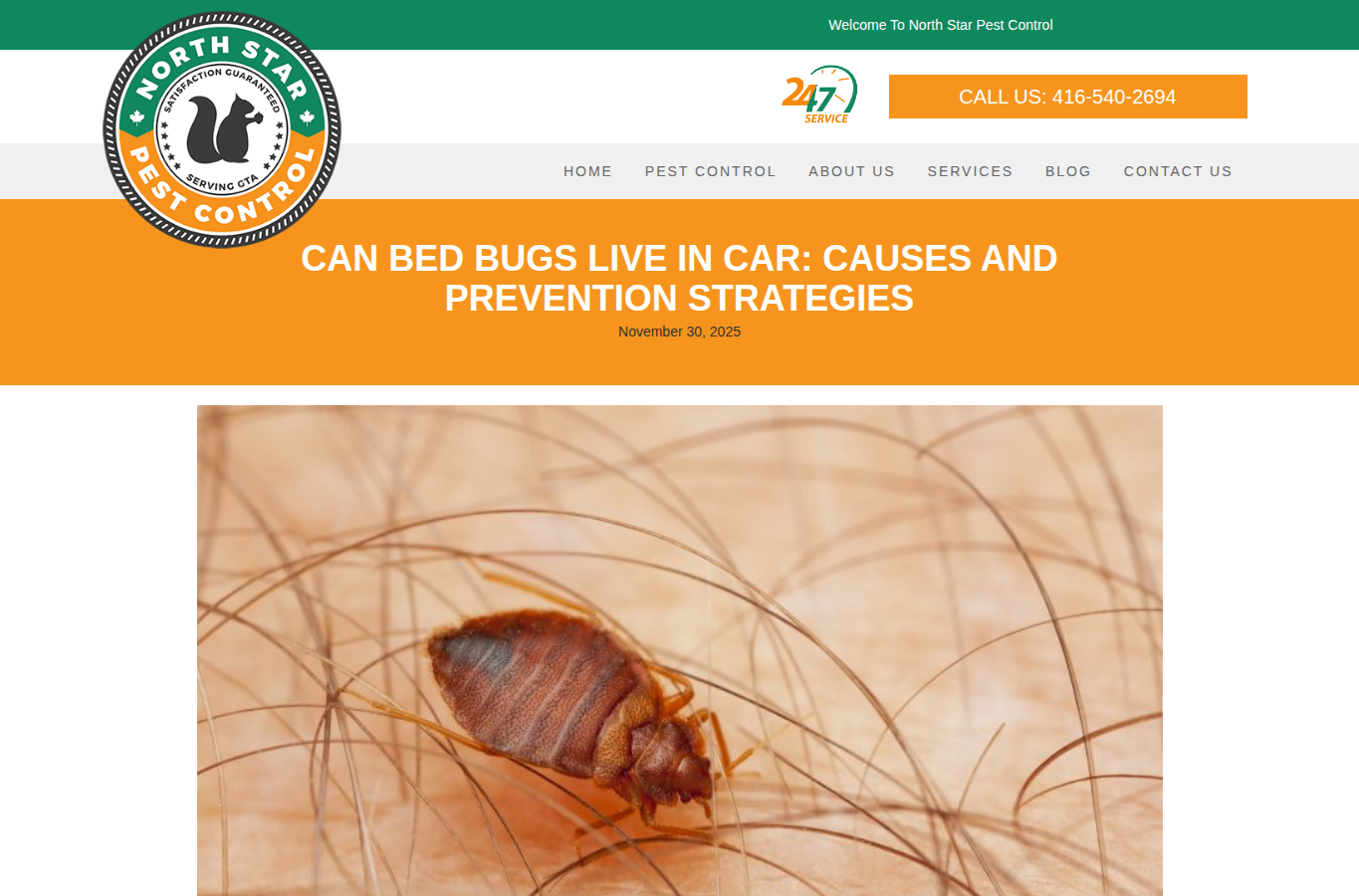
North Star Pest Control, a Canadian provider, confirms that bed bugs can establish in vehicles through luggage, clothing, and personal items, exploiting the warmth and concealment opportunities in seats, carpets, and upholstery.
Making the Call: Evidence, Urgency, and Property Risk
Choose DIY car treatment when you have limited evidence, no home signs, and the capacity for sustained inspection. Choose professional combined treatment when evidence is multiple or unclear, when home signs exist, or when you cannot risk the time and uncertainty of self-management. Choose home-only treatment only when you have genuine confidence the vehicle is clear — and verify that confidence with active monitoring, not assumption.
The deciding factor is usually the connection between spaces. Your car and your home are not separate domains. They are linked by the people, belongings, and routines that move between them. Treating one while ignoring the other is the error that converts a containable vehicle transfer into a full home infestation. For households across East London and Essex, from Bromley bed bug removal to Enfield bed bug exterminators, the same principle applies: assess both environments, match the response to the evidence, and act before the reproductive cycle establishes.
Need professional help? BuzzKill offers fast, reliable pest control services across London and Essex.