
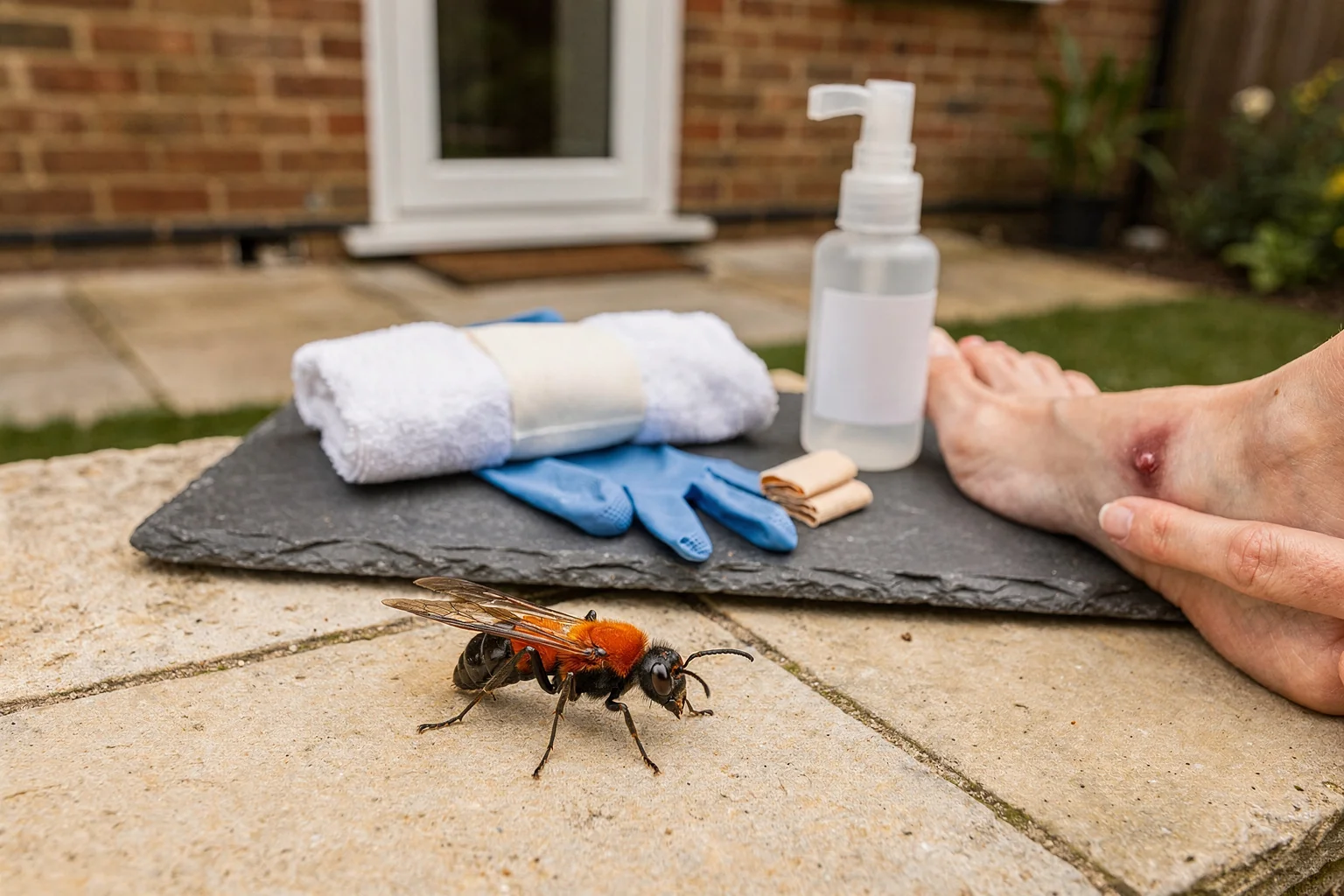
You’re walking barefoot across a sandy patch of lawn when a bright red, fuzzy insect darts out. You feel a sudden, searing jab in your ankle. If that insect was a cow killer ant, you’re in for several minutes of intense pain. But you don’t need to panic. The sting may be famously painful, but it’s rarely dangerous, and there are steps you can take right now to feel better. I’ll walk you through proper cow killer ant sting treatment — from the first 30 seconds of washing the sting site to the signs that mean you need urgent medical help.
A wasp in ant’s clothing: what you need to know about the cow killer ant
Despite the name, a cow killer ant isn’t an ant at all. It’s a wingless wasp, also called a velvet ant. The females are the ones you’ll notice — covered in dense, velvety hair, usually bright red or orange with a black band across the abdomen. They look like a large, furry ant, but if you look closely you’ll see straight antennae and a less pinched waist than true ants. Males have two pairs of dark wings and cannot sting. It’s only the wingless females that pack the punch. As the Velvet Ants fact sheet from the University of Kentucky explains, these solitary wasps differ from ants in having only a slight constriction between the thorax and abdomen and straight rather than elbowed antennae.
These velvet ants belong to the family Mutillidae, and the species most people mean when they say “cow killer ant” is Dasymutilla occidentalis. They’re common in the southern and eastern United States, especially in sandy soils, open fields, and along woodland edges. You won’t find them roaming a London garden — they’re a North American insect. But that doesn’t mean a UK resident never encounters one. Travellers, expats, and holidaymakers often stumble across them in Florida, Texas, or the Carolinas and end up searching for help online.
The name “cow killer” comes from an old wives’ tale that the sting is powerful enough to kill a cow. That’s pure myth. The venom isn’t particularly toxic to large mammals, and the sting certainly won’t kill a human. What it will do is hurt — a lot. Females use a long, needle-like stinger hidden at the tip of the abdomen, and they’ll deploy it if you handle them, step on them, or trap them against your skin. Otherwise they’re not aggressive and prefer to run away. You’ll typically see them from July through September, which is when females are most active searching for ground-nesting bee burrows to lay their eggs.
While this guide focuses on a North American insect, if you’re dealing with a stinging or biting insect at home in London, it helps to know what you’re looking at. Our UK ant identification guide can help you spot common species around your property and tell the difference between nuisance ants and more problematic pests.
Why the sting hurts so much
Entomologist Justin Schmidt, who created the famous sting pain index, described the velvet ant’s sting as “instantaneous” and “like an electric shock.” Some victims say it feels like hot oil splattering on the skin, a deep muscle burn, or having a red-hot needle driven in. Schmidt gave it a rating of 3 out of 4 on his pain scale — comparable to the sting of a paper wasp, but with a shorter duration. It’s famously unpleasant, but as the PestWorld velvet ant profile confirms, the venom is not very toxic and severe systemic reactions are rare.
The pain comes from small proteins in the venom that act directly on pain-sensing nerve cells. The venom is chemically built to deter predators, not to kill prey. That’s why the sensation is so intense compared to the minor tissue damage around the sting site. The pain typically peaks within five to ten minutes, then slowly fades over an hour or so, though a dull ache or tenderness can linger for the rest of the day. Some people describe the lingering sensation as a deep bruise that radiates a few centimetres from the sting.
How you experience the pain can depend on where you were stung, your own pain threshold, and even the amount of venom injected. A sting on the sole of the foot or the palm of the hand tends to throb more because of the density of nerve endings. Stings on the forearm or calf are often slightly less intense, though still memorable. For most people, a cow killer ant sting is just a temporary, memorable encounter — not a medical crisis.
The first 10 minutes: immediate care for a cow killer ant sting
The most effective cow killer ant sting treatment starts the moment you realise you’ve been stung. Follow these steps in order, and you’ll often see the worst of the pain ease within half an hour.
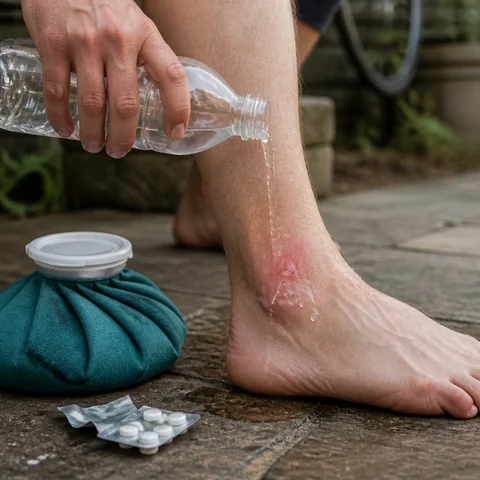
1. Move away and stay calm. Walk to a safe spot so you don’t step on another velvet ant. The females are solitary, so multiple stings are unlikely, but check the area quickly. Keeping calm also slows your heart rate, which can reduce how fast the venom spreads into your circulation.
2. Wash the sting site. Use cool water and plain soap. This removes any surface venom residue and reduces the risk of a secondary bacterial infection. Don’t scrub hard; just rinse and gently pat dry with a clean cloth. Avoid perfumed soaps, which can sting on broken skin.
3. Apply a cold compress. Wrap a few ice cubes in a damp flannel or use a bag of frozen peas over a tea towel. Hold it against the sting for ten to fifteen minutes, then remove it for at least ten minutes before reapplying. Never put ice directly on bare skin — it can cause cold burns and make matters worse. Cold therapy constricts blood vessels, numbs nerve endings, and slows the spread of venom. A reusable gel pack from the freezer works just as well, if you have one handy.
4. Elevate the affected limb. If the sting is on an arm or leg, propping it up on a cushion helps reduce swelling. Gravity keeps the extra fluid from pooling around the sting. Even a few inches of elevation makes a noticeable difference.
5. Take an oral antihistamine. A standard dose of cetirizine or loratadine (both available over the counter in the UK) calms the histamine-driven itching and swelling. If you’re travelling in the US, diphenhydramine (Benadryl) is another option, though it often causes drowsiness. Always follow the packet instructions, and check with a pharmacist before giving antihistamines to young children.
6. Consider a pain reliever. Paracetamol or ibuprofen can take the edge off the throbbing sensation. A typical adult dose is 500 mg to 1000 mg of paracetamol every four to six hours as needed, or 200 mg to 400 mg of ibuprofen every six to eight hours, taken with food. Ibuprofen has the added benefit of being an anti-inflammatory, but don’t take it if you have a history of stomach ulcers or aspirin sensitivity without checking with a pharmacist. Avoid ibuprofen during pregnancy and speak to a GP about safer alternatives.
7. Check for a stinger. Unlike honeybees, velvet ants usually don’t leave a stinger behind, but occasionally a small black tip breaks off inside the skin. If you see a tiny dark speck at the centre of the sting, scrape it sideways with a rigid object — a bank card or the edge of a fingernail — rather than using tweezers. Pinching it can squeeze more venom into the wound.
Mrs D, a retired teacher from Canning Town, phoned us a couple of summers ago after returning from a holiday in Florida. She’d brushed her hand against a “big red ant” while gardening at the rental villa and spent the next twenty minutes in real pain. She’d already washed the sting and put an ice pack on it before she called. By the time we spoke, the worst was over. Knowing she’d done the right things eased her mind, especially after she’d been told the insect’s dramatic nickname.
For more general guidance on managing insect stings, including how to recognise an allergic reaction, our wasp sting first aid page covers the same principles and applies to many common UK stings.
Over-the-counter remedies that soothe the sting
Once you’ve followed the initial first aid, a few topical products can calm the lingering itch and tenderness over the next day or two.
- Hydrocortisone cream 1% — available from most chemists without prescription — helps reduce inflammation and redness. Apply a thin layer to the sting area two to three times a day, but don’t use it on broken skin or for more than a few consecutive days without a doctor’s advice.
- Calamine lotion — the classic pink stuff can dry out weeping stings and relieve itching. It’s messy but effective, especially if the sting site has been scratched and the skin is wet. A UK high-street version like Boots Calamine Lotion works just as well as the branded one.
- Antihistamine creams — these are sometimes marketed for insect bites, but be cautious. Oral antihistamines are generally safer and less likely to cause local skin reactions. If you do use a cream, do a patch test first and stop if the skin gets angrier.
- Aloe vera gel — if you have a plant or a pure gel, the cooling sensation can offer temporary relief. It won’t treat the venom, but it can soothe hot, irritated skin. Keep a small tube in your travel first-aid kit.
Avoid applying toothpaste, vinegar, baking soda pastes, or meat tenderiser to the sting. These household “remedies” can irritate the skin and introduce bacteria without doing anything for the venom. If the skin is already raw, they can cause chemical burns that delay healing.
Mistakes that make the sting worse (and what to do instead)
When the pain is intense, it’s easy to do something that backfires. Here are the common missteps I see, and what helps instead.
- Scratching the sting — it’s almost impossible not to, but scratching breaks the skin and invites infection. If the itch is driving you mad, go back to the cold compress and take an antihistamine. Keeping the fingernails short and covering the sting with a light adhesive bandage also helps.
- Applying heat — hot water, heat packs, or a hair dryer won’t “break down” the venom and will likely worsen the swelling and pain. Stick with cool, not hot.
- Cutting or squeezing the sting site — never try to cut the skin to “release” venom. You’ll cause tissue damage and increase the infection risk. Squeezing can push venom deeper. A few years ago, a friend of mine who was stung on the thumb while hiking in South Carolina used a pocket knife to make a tiny slit, thinking it would ease the pressure. It didn’t; it just turned a simple sting into a wound that needed antibiotics.
- Using suction devices — snake-bite kits or oral suction don’t work on insect venom, which spreads into the tissue within seconds. You’ll irritate the skin and accomplish nothing.
- Applying a tourniquet — a tight band above the sting won’t stop venom that’s already diffusing and can restrict blood flow, potentially causing nerve damage. It’s never a good idea for insect stings.
- Drinking alcohol to numb the pain — alcohol dilates blood vessels and can make swelling worse. It also clouds your judgement, which isn’t helpful if you need to monitor for an allergic reaction.
- Ignoring it entirely — while most stings heal on their own, walking away without washing the site leaves any surface venom residue in place and raises the chance of a local skin infection. A quick wash takes seconds and makes a difference.
When to see a doctor: allergic reactions and red flags
Any insect sting can trigger an allergic reaction, even in someone who has been stung before without problems. The signs don’t always appear straight away, but they usually start within the first hour — sometimes within minutes. Get emergency medical help right away — dial 999 in the UK or 911 in the US — if you notice any of these:
- tightness in the chest or difficulty breathing
- swelling of the lips, tongue, face, or throat
- a widespread rash or hives far from the sting site
- feeling dizzy, faint, or unusually confused
- a rapid heartbeat that won’t calm down
- nausea, vomiting, or diarrhoea
- a sudden drop in blood pressure (pale, clammy skin)
Anaphylaxis can progress quickly and, in a small number of cases, symptoms can return several hours after they seem to have resolved. This is called biphasic anaphylaxis, and it’s one reason why anyone treated for a severe reaction should be observed in hospital for a period even if they feel better.
If you carry an adrenaline auto-injector (like an EpiPen) for known insect venom allergies, use it according to your allergy action plan and then call for an ambulance. Don’t wait to see if symptoms improve on their own. While you wait for the ambulance, try to lie down with your legs raised if you feel faint, and remove any tight clothing or jewellery near the sting so it doesn’t constrict swelling.
Less urgent but still worth a GP visit: if the sting site becomes increasingly red, hot, swollen, and tender after 24 to 48 hours, you might have a bacterial infection. A spreading area of redness that feels warm to the touch and is accompanied by a fever is a telltale sign of cellulitis. A doctor can assess whether you need antibiotics. Likewise, if the pain isn’t easing after a day or two, or you have any nagging worry — perhaps a deeper, throbbing ache that keeps you awake — get it checked. It’s always better to have a professional look at it.
How to avoid a cow killer ant sting while travelling
For UK residents who travel to the United States, especially the southern and southeastern states, a few field habits can keep you sting-free. Cow killer ants are most active during the warmest months, from late June through September, and they prefer open, sunny ground with loose soil. You’ll encounter them in back gardens, along hiking trails, in campgrounds, and even on golf courses.
- Wear closed shoes in sandy areas, dry fields, and wooded edges. Velvet ants scurry along the ground, and bare ankles are easy targets. Sturdy sandals with a closed toe aren’t enough — choose trainers or walking shoes.
- Check outdoor seating and garden furniture before you sit down or lean against it. Females sometimes crawl onto low surfaces in search of ground-nesting bee burrows.
- Watch where you place your hands when gardening or clearing undergrowth. These wasps hide under leaf litter and loose soil. Wearing gardening gloves adds a layer of protection.
- Don’t handle any “furry ant” you don’t recognise. Even dead specimens can deliver a reflexive sting for a short time, so use a leaf or stick if you need to move one. If you find a velvet ant and want it out of your way, trapping it under a cup and sliding a piece of card underneath is safer than trying to pick it up.
- Teach children to look but not touch brightly coloured insects. The velvet ant’s vivid red and black is a warning signal that works in nature; it pays to respect it.
If you do come across a cow killer ant, there’s no need to kill it. It’s a beneficial insect in its own way — parasitising the larvae of other wasps and bees. Simply give it space and let it wander off. Tell the children it’s nature’s way of keeping other insect populations in check.
Most cow killer ant stings settle within a day or two with the simple steps we’ve covered. The pain is real, but with a cold compress, an antihistamine, and a little patience, you’ll be back on your feet. If something doesn’t feel right — if the swelling spreads, your breathing changes, or the pain feels deeper than it should — don’t second-guess yourself. Seek medical help. And if you ever need advice about insect stings or pest concerns closer to home, we’re just a phone call away.
Need professional help? BuzzKill offers fast, reliable pest control services across London and Essex.