
Over 50 ant species are found in the UK, but only a handful regularly cause problems in homes and businesses. Identifying the species is important because treatment methods differ — particularly for Pharaoh ants, which require specialist handling.
This guide covers the five ant species most commonly encountered by pest controllers in London and Essex, with key identification features, nesting habits, and the specific risks each one poses.
Published:
Black Garden Ant (Lasius niger)
The most common ant species in UK homes and the one most people picture when they think of an ant problem.
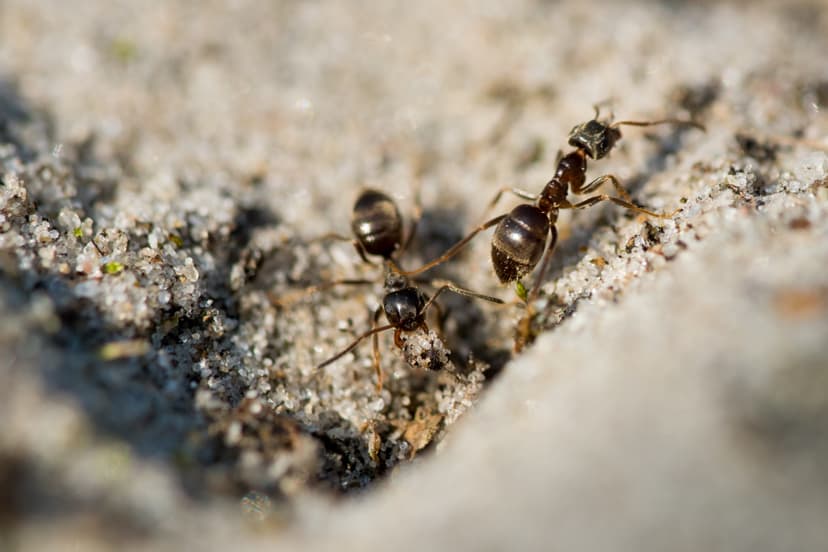
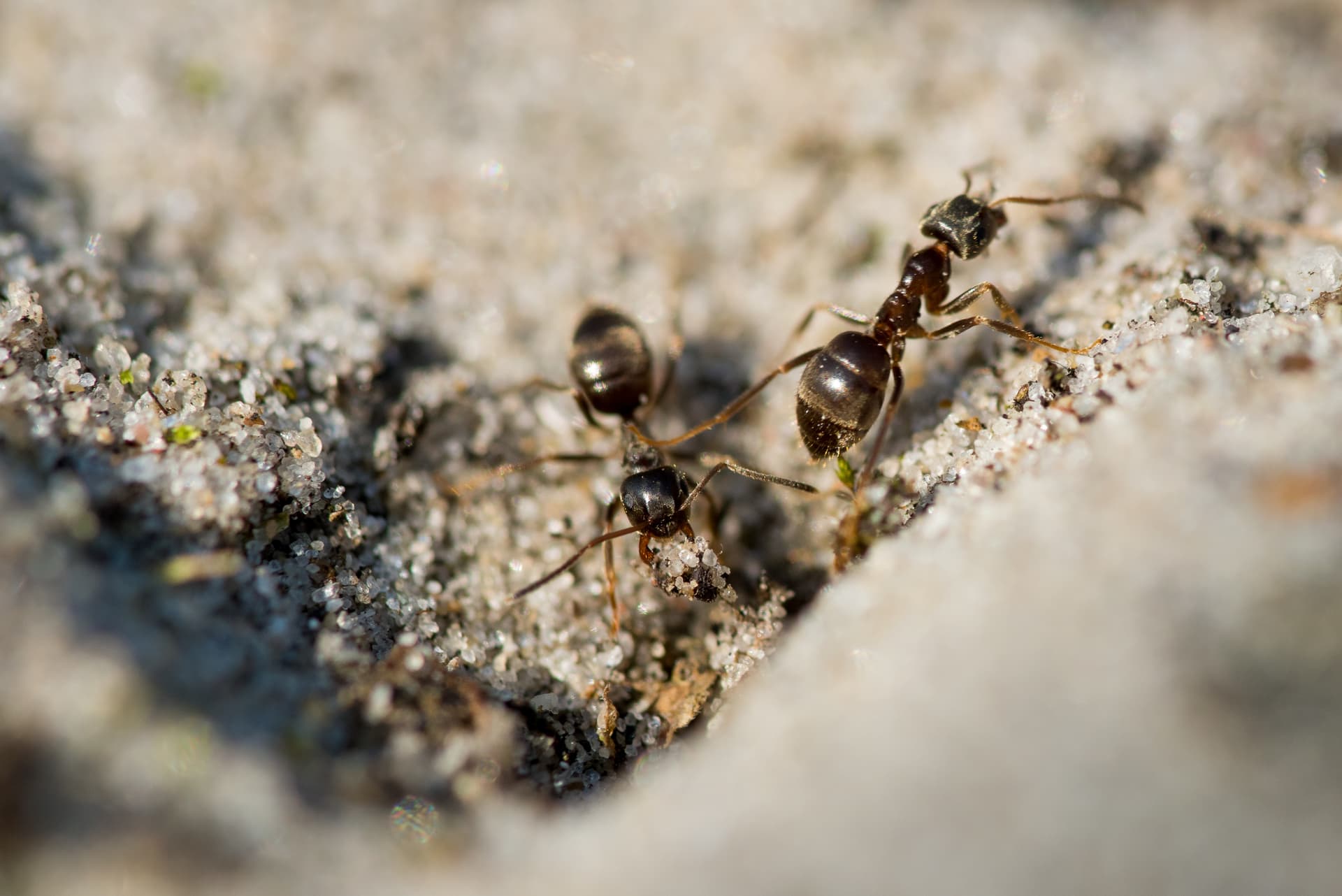
Identification: 3 to 5mm long. Dark brown to black. Single waist segment. Workers are all the same size. Queens are larger (9mm) and have wings during mating flights.
Nesting: Outdoors in soil — under paving slabs, along foundations, in garden borders, and in cracks in driveways. Rarely nests inside buildings but forages indoors for sweet foods. Nest entrances are marked by small mounds of fine excavated soil.
Colony size: Typically 5,000 to 15,000 workers with a single queen. Colonies can persist for several years.
Risks: Food contamination from ants walking across kitchen surfaces after travelling through soil and drains. Structural nuisance from excavating soil beneath paving. Flying ant swarms in summer.
Treatment: Responds well to gel baits and residual spray treatments. Colony elimination typically takes 2 to 4 weeks.
Pharaoh Ant (Monomorium pharaonis)
A tropical species that thrives in heated buildings. The most difficult ant to treat and classified as a public health pest.
Identification: Very small — only 2mm long. Yellow-brown to light brown body with a darker abdomen. Difficult to see without close inspection. Workers are uniform in size.
Nesting: Always indoors in the UK — they cannot survive outdoors in British winters. Nests in wall cavities, behind tiles, in pipe ducts, under floors, and near heating systems. Colonies are often spread across multiple satellite nests within the same building.
Colony size: Can exceed 100,000 workers with multiple queens. This is what makes them so difficult to eradicate — killing one nest does not eliminate the colony.
Risks: Serious health risk. Pharaoh ants are attracted to wounds, IV drips, and sterile supplies in hospitals. They carry Salmonella, Staphylococcus, and Clostridium. In food premises, they contaminate stored products and preparation surfaces.
Treatment: Must only be treated with gel bait — never sprays or powders. Spraying causes colony budding, where the colony splits into multiple new colonies, each with their own queen. This can turn a single infestation into a building-wide problem. Professional treatment only.
Ghost Ant (Tapinoma melanocephalum)
An increasingly common indoor ant in London, particularly in modern, well-heated buildings.
Identification: Very small — 1.3 to 1.5mm. Dark brown head and thorax with a pale, almost translucent abdomen and legs. Very difficult to spot against light surfaces. When crushed, they emit a coconut-like smell.
Nesting: Indoors in warm, humid areas — kitchens, bathrooms, and airing cupboards. Nests in wall voids, behind splashbacks, inside potted plants, and in gaps around pipework. Can also nest outdoors in southern England during warm months.
Colony size: Moderate — typically several thousand workers with multiple queens. Like Pharaoh ants, they can bud into satellite colonies.
Risks: Food contamination. Their tiny size allows them to access sealed food containers through gaps invisible to the naked eye. Less of a health hazard than Pharaoh ants but still a significant nuisance.
Treatment: Gel bait is the preferred method. Sprays should be avoided as ghost ants can also bud. Treatment is similar to Pharaoh ants but generally resolves faster due to smaller colony sizes.
Red Ant (Myrmica rubra)
A native UK species found in gardens throughout the country. More aggressive than black garden ants.
Identification: 4 to 6mm long. Reddish-brown body. Two distinct waist segments (compared to one in black garden ants). Has a visible sting at the tip of the abdomen.
Nesting: Outdoors in soil, under stones, in rockeries, and in garden borders. Prefers damp, undisturbed areas. Does not typically nest indoors but may forage inside during dry spells.
Colony size: 5,000 to 10,000 workers, often with multiple queens per colony.
Risks: Red ants can sting. The sting causes a sharp, burning sensation similar to a nettle sting. Multiple stings can occur if a nest is disturbed — stepping on a nest in bare feet is a common scenario. Allergic reactions are rare but possible.
Treatment: Outdoor nest treatment with insecticidal powder or liquid drench applied directly to the nest. Gel baits are less effective as red ants are less inclined to forage indoors.
Need professional help with ant control? BuzzKill Pest Control offers fast, effective treatment with no call-out charge.
Carpenter Ant (Camponotus spp.)
Less common in the UK than in North America but occasionally found in older properties with damp timber.
Identification: Large — 6 to 12mm, making them the biggest ant species likely to be found in UK buildings. Black or dark brown. Single waist segment. Often confused with large black garden ant queens.
Nesting: Inside damp or decaying wood — not in soil. They do not eat wood (unlike termites) but excavate galleries to create nesting space. Found in window frames, door frames, roof timbers, and any structural wood with moisture damage.
Colony size: Smaller than other species — typically 3,000 to 5,000 workers. Colonies develop slowly over several years.
Risks: Structural damage to timber. Because they excavate nesting galleries inside wood, they can weaken structural timbers, window frames, and fascia boards over time. The presence of carpenter ants usually indicates an underlying damp or rot problem that also needs addressing.
Treatment: Locate and treat the nest directly with insecticidal dust. The underlying damp or timber decay must also be resolved to prevent reinfestation. Professional survey recommended.
Which Ant Do I Have?
Quick identification checklist:
3–5mm, dark brown/black, outdoor nest with soil mounds — Black garden ant. Most common. Responds to standard treatment.
2mm, yellow-brown, indoor nest in heated building, year-round activity — Pharaoh ant. Do not spray. Professional gel bait only.
1.5mm, dark head with pale translucent body, indoor nest — Ghost ant. Similar treatment to Pharaoh ants. Avoid sprays.
4–6mm, reddish-brown, outdoor nest, stings when disturbed — Red ant. Outdoor nest treatment with powder or drench.
6–12mm, black, nesting in damp wood, sawdust-like debris — Carpenter ant. Treat nest directly and address underlying damp.
If you are unsure, a professional pest controller can identify the species during the survey. This is particularly important if you suspect Pharaoh or ghost ants, as incorrect treatment will make the problem worse. Visit our Ant Control page for help.
Frequently Asked Questions
Are there termites in the UK?
No. Termites are not established in the UK. If you see large ants near wood damage, they are most likely carpenter ants — which excavate wood for nesting but do not eat it.
Are Pharaoh ants common in London?
Yes. Pharaoh ants are well established in London, particularly in hospitals, hotels, apartment blocks, and any centrally heated building. They are one of the most difficult ant species to eradicate.
Can different ant species live in the same property?
Yes. It is possible to have black garden ants foraging from outside while Pharaoh or ghost ants nest inside the building. Each species requires different treatment, so professional identification is important.
Do all ants bite or sting?
Black garden ants, Pharaoh ants, and ghost ants do not sting and rarely bite. Red ants (Myrmica rubra) have a sting that causes a sharp burning sensation. Carpenter ants can bite but rarely do.
Professional Ant Control Service
Learn more about our ant control service, pricing, treatment methods, and customer reviews.
View Ant Control Service