
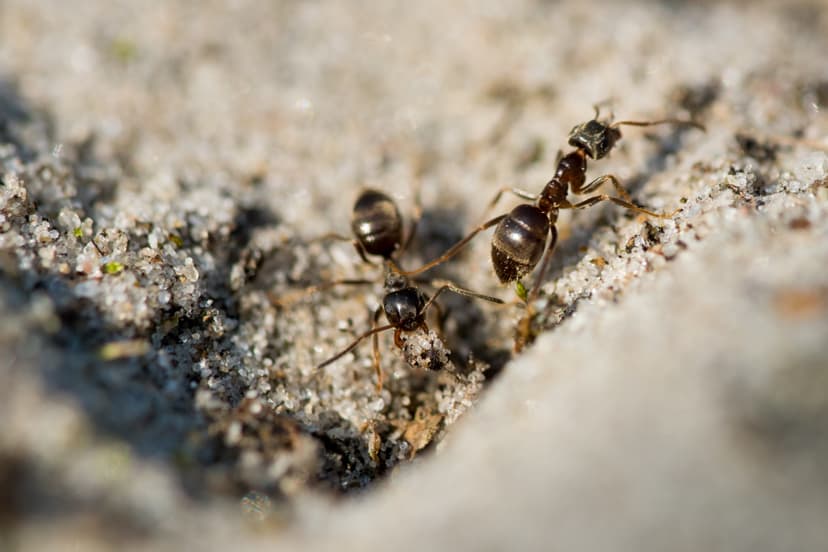
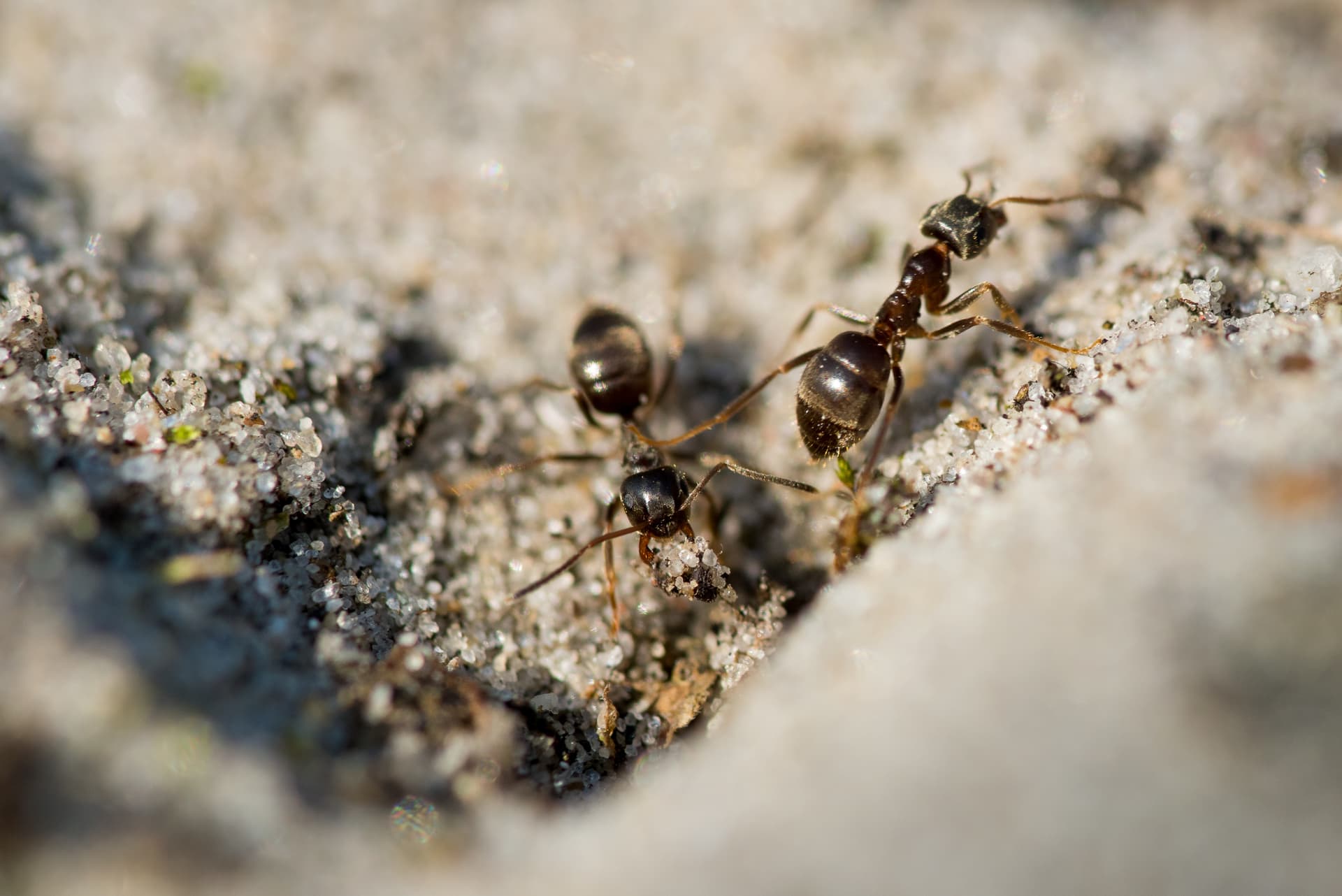
Ants are social insects that live in colonies of thousands. By the time you see a line of ants crossing your kitchen floor, the nest is already well established — often hidden in wall cavities, under paving, or in your garden soil.
This guide covers the key signs that ants are present in your property so you can identify the problem early and take action before the colony grows.
Published:
Ant Trails — The Most Obvious Sign
A visible line of ants moving in a steady stream between two points is the clearest sign of an infestation. Ants lay pheromone trails — invisible chemical signals — that guide other workers from the nest to a food source. These trails are persistent and will reappear even after you wipe them away, because the pheromone scent remains.
Trails are most commonly seen along skirting boards, kitchen worktops, window frames, and door thresholds. They often lead to sweet or sticky food sources — sugar bowls, honey jars, fruit bowls, and pet food. Follow the trail in both directions to identify where they are entering your home and roughly where the nest is located.
Live Ants in the Kitchen or Bathroom
Seeing individual ants — even just a few — in your kitchen or bathroom usually means scouts are searching for food and water. If they find a source, they return to the nest and recruit hundreds more via pheromone trails.
Key places to check:
Kitchen worktops and splashbacks — especially near the hob, toaster, and kettle where crumbs and sugar residue accumulate.
Inside cupboards and drawers — particularly where cereals, sugar, biscuits, and honey are stored.
Under the fridge and oven — food debris collects in these hard-to-reach spots and is a magnet for scouts.
Around the bin — sticky residue on bin lids and the floor around the bin draws ants in.
Pet food bowls — bowls left down between feeds are one of the most common attractants.
Bathroom sinks and windowsills — ants need water as well as food. Damp areas around sinks, baths, and leaking taps attract foragers.
Small Piles of Soil or Dirt
Ants excavate soil and fine debris as they build and expand their nests. You may notice small mounds of earth appearing in specific locations:
These piles indicate a nest entrance. Black garden ants typically nest in soil under paving slabs, along wall foundations, in cracks in brickwork, and in garden borders. Indoors, fine powdery debris near skirting boards or around pipe entry points can indicate ants nesting inside a wall cavity.
Flying Ants
A sudden swarm of winged ants — usually on a warm, humid day between June and September — is a strong sign of a mature colony nearby. Flying ants are reproductive males and new queens emerging to mate and establish new colonies.
If flying ants appear inside your home, the nest is likely very close — often within the building structure itself. A single flying ant event outdoors is normal in summer, but repeated appearances indoors suggests an established colony in the walls, floor, or foundation. For a full guide, see our flying ants article.
Need professional help with ant control? BuzzKill Pest Control offers fast, effective treatment with no call-out charge.
Rustling Sounds in Walls
In large or long-established infestations — particularly with Pharaoh ants or carpenter ants — you may hear a faint rustling or crackling sound inside walls, especially at night when the house is quiet. This is the sound of thousands of ants moving within the cavity.
This sign is less common with black garden ants but should be taken seriously if heard. It indicates the colony has grown significantly and is nesting within the building structure.
Damage to Food Packaging
Ants can chew through thin cardboard, paper, and plastic film to access food. Check cereal boxes, biscuit packets, sugar bags, and pet food bags for small holes or scattered crumbs that indicate ants have been feeding.
Unlike mice or rats, ants do not leave droppings or gnaw marks on hard surfaces. The damage is subtle — you may only notice it when you find ants inside the packaging itself.
When to Call a Professional
If you see regular ant trails, repeated appearances despite cleaning, or flying ants emerging indoors, the colony is established and DIY sprays are unlikely to solve the problem. Professional treatment targets the queen inside the nest — the only way to permanently eliminate the colony.
For pricing and booking, visit our Ant Control page or call 0203 468 1999.
Frequently Asked Questions
Why do I suddenly have ants in my house?
Ants are most active from March to October. Scout ants search for food, and once they find a source in your home they lay a pheromone trail that recruits hundreds of workers from the nest. A food spill, open sugar, or pet food bowl is usually the trigger.
Does seeing one ant mean I have an infestation?
One ant is a scout. It does not necessarily mean infestation, but it means the colony is searching your property. If the scout finds food, many more will follow within hours. Clean up food sources immediately.
Where do ants nest inside a house?
Black garden ants typically nest outdoors but forage inside. Pharaoh ants and ghost ants nest indoors — in wall cavities, behind tiles, under floors, and around heating pipes. If you see ants year-round (not just summer), the nest is likely inside the building.
Are ants more active at certain times of year?
Yes. Ant activity peaks from late spring through summer (April to September). Flying ant swarms occur in July and August. However, Pharaoh ants remain active year-round in heated buildings.
Professional Ant Control Service
Learn more about our ant control service, pricing, treatment methods, and customer reviews.
View Ant Control Service