
Squirrels and rats are both rodents, and the damage they cause in lofts and buildings can look very similar — gnawed cables, shredded insulation, and droppings. However, the two pests behave very differently, require different treatment approaches, and have different legal statuses. Correctly identifying which pest you have is essential before any action is taken.
This guide compares squirrels and rats across seven key areas — food sources, appearance, daily activity, droppings, nesting, damage, and cleanup — so you can confidently identify which pest is in your property and take the right action.
Published:
Sources of Food — Squirrels vs Rats
Squirrels are primarily herbivorous. Their natural diet consists of nuts (acorns, hazelnuts, walnuts), seeds, tree bark, fungi, berries, and plant buds. In urban gardens, they readily raid bird feeders, dig up bulbs, and strip bark from ornamental trees. Squirrels cache (bury) food for later retrieval — a behaviour that rats do not exhibit.
Rats are true omnivores and will eat almost anything. Their diet includes grains, seeds, fruit, vegetables, meat, slugs, snails, insects, and — critically — food waste and rubbish. Rats are far more likely than squirrels to be attracted by kitchen waste, compost bins, bin bags, pet food, and takeaway litter. This is why rats are more commonly found at ground level near food sources, while squirrels are more often found in trees and lofts.
This dietary difference is important for treatment. Removing bird feeders and securing garden food sources primarily affects squirrels. Securing bins, removing pet food, and managing compost primarily targets rats. If you are unsure which pest you have, the food evidence can help — scattered nutshells and cached seeds indicate squirrels; gnawed food packaging and rubbish indicate rats.
Appearance — Squirrels vs Rats
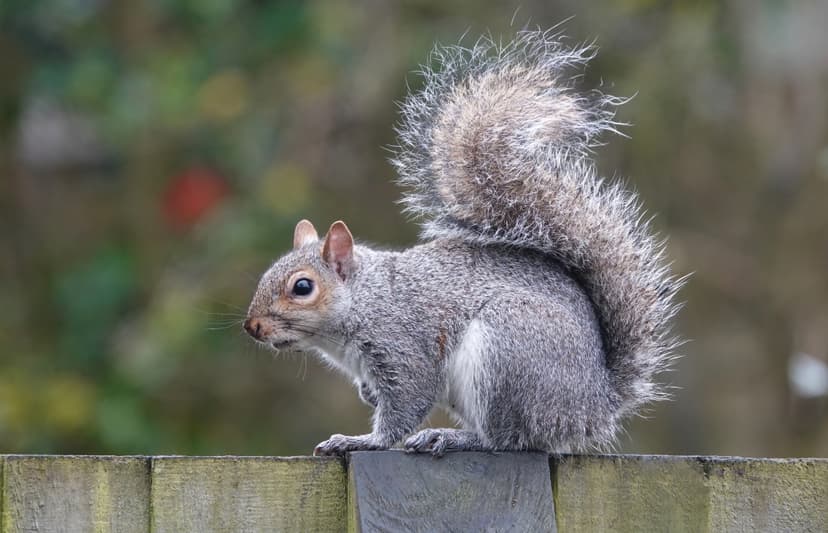
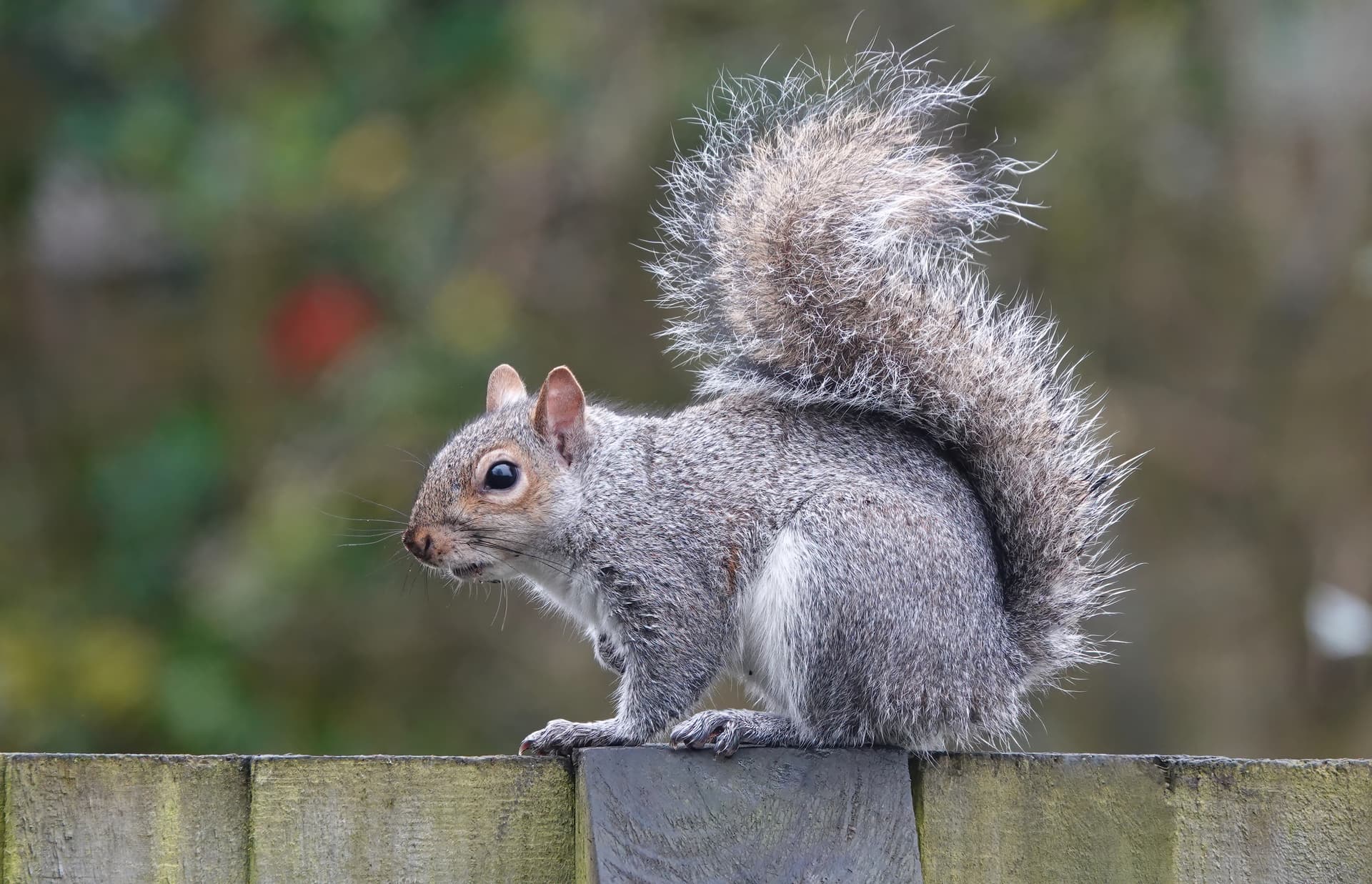
The most obvious visual difference is the tail. Squirrels have a large, thick, bushy tail that is typically as long as their body. Rats have a scaly, thin, hairless tail that appears naked and is usually shorter than their body length.
Grey squirrels are larger than brown rats. An adult grey squirrel measures 24 to 26cm in body length and weighs 400 to 600 grams. An adult brown rat measures 20 to 25cm in body length and weighs 200 to 500 grams. Squirrels have a more compact, upright build, while rats have a longer, lower body shape.
Other differences include ear shape (squirrels have small, rounded ears; rats have larger, thinner, more prominent ears), fur texture (squirrel fur is softer and fluffier; rat fur is coarser and oilier), and colouring (grey squirrels are silver-grey with a white belly; brown rats are brown-grey with a lighter underside and greasy appearance). Squirrels move with a distinctive bounding gait, while rats scurry low to the ground.
Daily Activity — Squirrels vs Rats
This is often the most useful clue when you hear noises in your loft but have not seen the animal. Squirrels are diurnal — they are active during daylight hours, particularly early morning and late afternoon. If you hear loud scratching, thumping, and scrabbling in your loft during the day, squirrels are the most likely culprit.
Rats are primarily nocturnal — they are most active from dusk to dawn. Scratching, scurrying, and grinding sounds at night strongly indicate rats or mice. However, in heavily infested properties, rats may also be active during the day when competition forces them to forage outside their normal hours.
Squirrels are also noisier than rats. They are heavier, more energetic, and their movements in a loft produce louder thumping and running sounds. Rat sounds tend to be quieter scratching and the distinctive bruxing (tooth-grinding) sound. If the noises in your loft sound like something heavy running and jumping, it is more likely squirrels; if the sounds are lighter scratching and gnawing, it is more likely rats.
Droppings — Squirrels vs Rats
Both squirrel and rat droppings are dark brown to black with blunt ends, which makes them easy to confuse. However, there are reliable differences in size, shape, and content.
Squirrel droppings are up to 12mm long and tend to be more oblong and barrel-shaped. They are lighter brown when fresh and may contain visible fragments of undigested seeds and nuts. Squirrel droppings are most commonly found in loft spaces, particularly near nesting areas, and scattered along joists.
Rat droppings are 10 to 20mm long, more cylindrical and uniform in shape, with a smooth, dark surface. They do not typically contain visible food fragments. Rat droppings are found along established runs — near skirting boards, behind kitchen appliances, in cupboards, and in any sheltered route between the nest and food sources.
Mouse droppings are much smaller than both — only 3 to 8mm long with pointed ends — and should not be confused with either squirrel or rat droppings. If the droppings you find are very small with pointed ends, you have mice rather than squirrels or rats.
Need professional help with squirrel pest control? BuzzKill Pest Control offers fast, effective treatment with no call-out charge.
Nests — Squirrels vs Rats
Squirrels build dreys — large, visible nests made from a clumped collection of twigs, leaves, bark, moss, and shredded insulation. Inside a loft, a squirrel nest is typically a bulky ball of shredded loft insulation, fabric, and plant material, often built in the corner of the loft or tucked against the eaves. Squirrel nests are messy, conspicuous, and surrounded by debris.
Rat nests are more compact and hidden. Rats use shredded cloth, cardboard, insulation, paper, and plant material to build smaller, less structured nests in concealed locations — inside wall cavities, under floorboards, behind stored goods, and in the voids around pipe runs. Norway rats (the most common UK species) also dig burrow systems underground, with entrance holes 6 to 9cm in diameter.
If you find a large, obvious nest made of shredded insulation and plant material in the open loft space, it is almost certainly a squirrel drey. If you find smaller, hidden nests of chewed fabric and cardboard in wall cavities or behind units, it is more likely rats.
Damage — Squirrels vs Rats
Both squirrels and rats gnaw constantly because their incisor teeth grow continuously throughout their lives. Both will chew through electrical cables, water pipes, and structural timbers, creating fire and flood risks. However, the pattern and location of damage differs.
Squirrel damage is primarily in the loft and roof area. Squirrels shred large areas of loft insulation to build dreys, gnaw through heavy timbers, strip lead flashing, and can chew through roof tiles and fascia boards to create or enlarge entry points. Their gnaw marks tend to be larger and rougher than rat marks. Squirrels can also cause significant external damage — stripping bark from trees, digging holes in lawns to cache food, and raiding bird feeders.
Rat damage is more widespread throughout the building. Rats gnaw through plastic pipes, electrical cables, skirting boards, door frames, and stored goods at all levels — from the sub-floor to the loft. Their gnaw marks are typically 3 to 4mm wide with visible tooth grooves. Rats also cause contamination damage — their urine, droppings, and greasy smear marks contaminate kitchens, food storage areas, and any surface they travel across. Rats carry diseases including Leptospirosis (Weil's disease), Salmonella, and Hantavirus, making their contamination a serious health risk.
How to Clean Squirrel and Rat Droppings Safely
Both squirrel and rat droppings can carry harmful bacteria and parasites. Never sweep or vacuum droppings dry — this can aerosolise pathogens and make them easier to inhale. Always wear rubber gloves and, in enclosed spaces like lofts, a dust mask rated at least FFP2.
First, ventilate the area by opening windows or the loft hatch for at least 30 minutes before starting. Spray the droppings and surrounding area with a disinfectant solution — either a commercial disinfectant or a bleach solution of one part household bleach to ten parts water. Allow the solution to soak for at least 5 minutes before handling.
Use a scoop, dustpan, or damp paper towels to collect the droppings and place them in a sealed plastic bag. Wipe down all affected surfaces with the disinfectant solution and allow them to dry completely. Double-bag the waste and dispose of it in your household rubbish bin — do not compost it.
After cleanup, remove your gloves, seal them in the waste bag, and wash your hands thoroughly with soap and warm water. If you have been cleaning in a loft space with heavy contamination, wash any clothing worn during the cleanup separately on a hot cycle. For extensive contamination, consider hiring a professional cleaning service with experience in biohazard cleanup.
Frequently Asked Questions
How can I tell if the noises in my loft are squirrels or rats?
Timing is the best clue. Squirrels are active during the day — especially early morning and late afternoon. Rats are active at night. Squirrels also produce louder, heavier thumping sounds, while rats make lighter scratching and gnawing noises.
Are squirrel droppings dangerous?
Yes. Squirrel droppings can carry Salmonella, Leptospirosis, and other bacteria. Always wear gloves and a mask when cleaning, spray with disinfectant before handling, and never sweep or vacuum droppings dry.
Can squirrels and rats live in the same loft?
It is uncommon. Squirrels are larger and more aggressive, and their daytime activity pattern conflicts with the nocturnal habits of rats. In most cases, a loft will be occupied by one or the other, not both simultaneously.
Do squirrels carry the same diseases as rats?
Squirrels can transmit Salmonella and Leptospirosis through their droppings and urine, similar to rats. They can also carry tularemia and ringworm. However, rats are generally considered a more serious health risk due to the volume of droppings and urine they produce and the diseases they spread, particularly Weil's disease.
Is the treatment the same for squirrels and rats?
No. Squirrels are removed by trapping, and entry points must be sealed by a loft or roofing professional. Rats are typically treated with professional-grade rodenticide in tamper-resistant bait stations, combined with proofing and sometimes CCTV drain surveys. The approaches are quite different.
Professional Squirrel Pest Control Service
Learn more about our squirrel pest control service, pricing, treatment methods, and customer reviews.
View Squirrel Pest Control Service