
Wasp nests can appear on or inside your property from late spring through to autumn. Catching one early — when it is small and the colony is still developing — makes treatment far simpler, safer, and cheaper than dealing with a mature nest containing thousands of wasps.
This guide covers how to spot a wasp nest, where to look, how large they can grow, how to prevent them, and how to tell the difference between wasps and bees — because the treatment approach is very different.
Published:
How to Identify a Wasp Nest
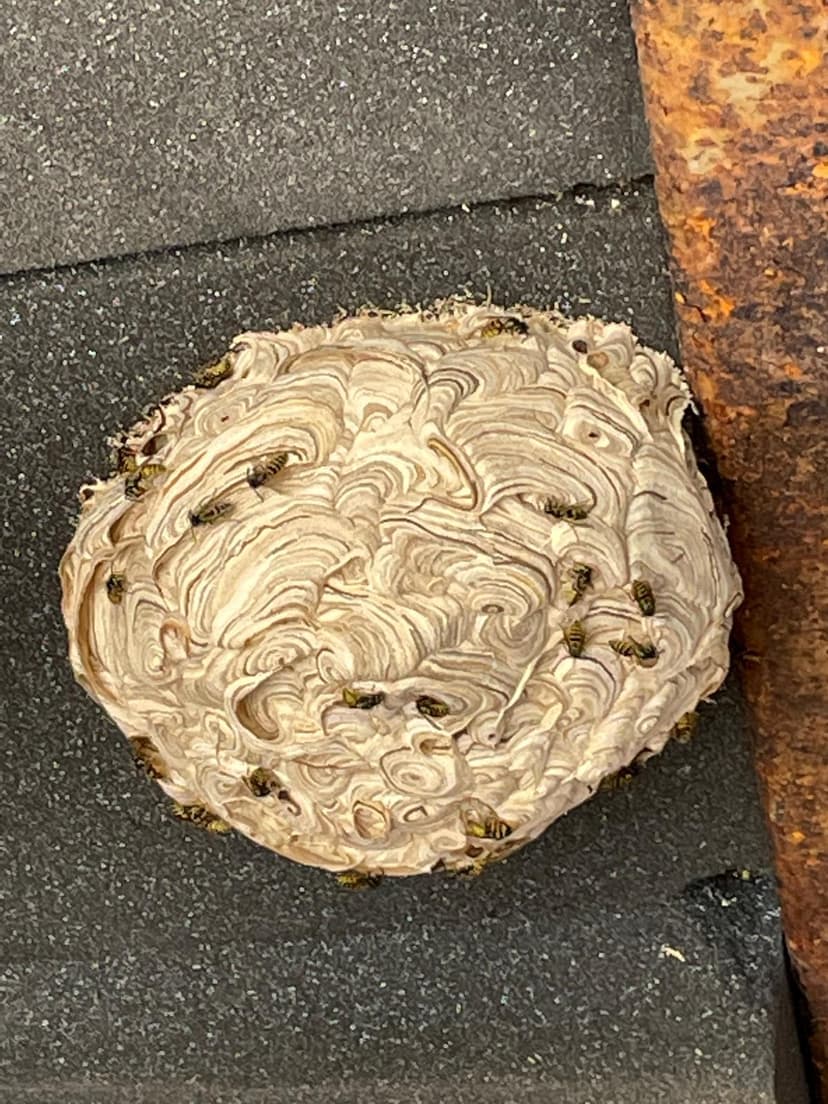
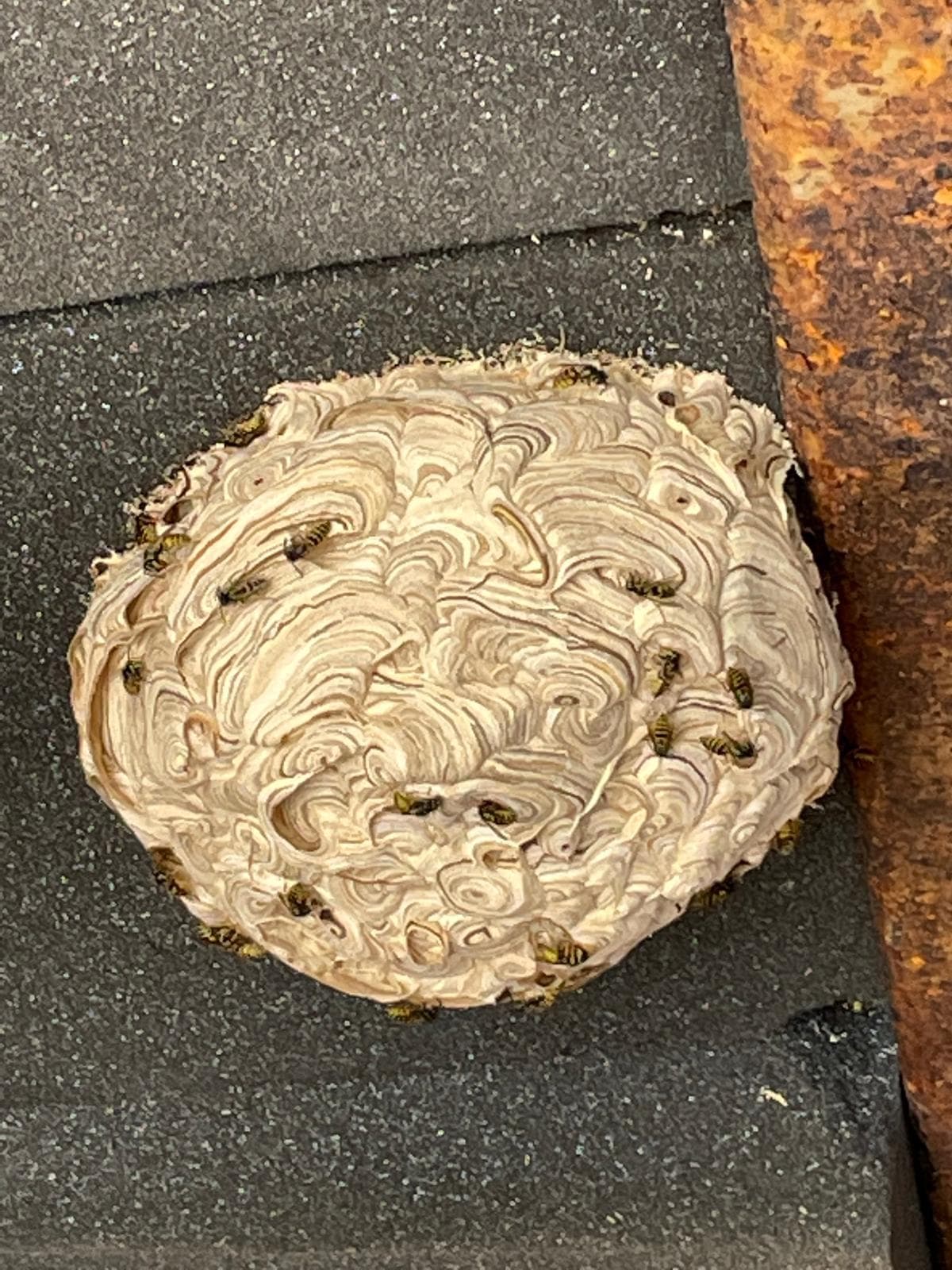
Wasp nests are made from chewed wood pulp mixed with saliva, which dries into a lightweight, papery material. They have a distinctive appearance that is easy to recognise once you know what to look for.
Key identification features:
Common Wasp vs German Wasp Nests — The two species most likely to nest on your property are the Common wasp (Vespula vulgaris) and the German wasp (Vespula germanica). Both are social wasps that build large colonies, but their nests look slightly different:
Common wasp nests are brownish or cream-coloured with a distinctive swirled pattern on the outer shell. German wasp nests are grey in colour with a smoother, more uniform appearance. Both species are equally aggressive when defending their nest, and both require the same treatment approach.
Where to Look for Wasp Nests
Wasps choose sheltered, undisturbed locations with easy flight access. The most common nest sites are:
Loft spaces and roof voids — the most common location for large nests. Wasps enter through gaps in soffits, fascia boards, and broken roof tiles.
Wall cavities — wasps enter through air bricks, cracks in mortar, and gaps around windows or pipes. You may hear buzzing inside the wall.
Under eaves and soffits — sheltered overhangs provide ideal nest sites, often visible as a grey papery mass.
Sheds and outbuildings — undisturbed garden sheds, garages, and summer houses are common nest sites.
Underground — wasps often nest in old rodent burrows, holes in banks, and under tree roots. Ground nests are particularly dangerous as they are easy to disturb accidentally.
Bushes and hedges — dense vegetation can conceal nests that grow to significant size before being noticed.
Behind fascia boards and cladding — any gap behind external boarding provides a sheltered cavity for nest building.
How Big Can a Wasp Nest Get?
Wasp nests start very small and grow throughout the summer as the colony expands:
April to May — The queen builds a starter nest alone, roughly the size of a golf ball. It contains 10 to 20 cells and the first batch of worker eggs.
June to July — Workers take over nest construction. The nest grows to the size of a tennis ball, then a grapefruit. The colony now has several hundred workers.
August to September — At peak size, a mature nest can be as large as a football or even a beach ball — up to 30cm or more across. The colony can contain 10,000 to 15,000 wasps. At this stage the nest is a serious hazard.
Nests in enclosed spaces like wall cavities and loft voids can grow even larger because the surrounding structure supports them. Nests in lofts occasionally exceed 60cm and can stain or even break through plasterboard ceilings.
Signs You Have a Nest Nearby
You may not see the nest itself — especially if it is in a wall cavity or underground. These signs indicate a nest is close:
A steady stream of wasps — flying to and from a single point on your property, such as a hole in the wall, a gap under the eaves, or a spot in the ground.
Large numbers of wasps — seeing more than a few occasional wasps in one area consistently suggests a nest within 50 to 100 metres.
Wasps entering your home repeatedly — if wasps keep appearing indoors through the same spot, they may be nesting in the wall cavity or loft directly above.
Buzzing sounds — a constant, low buzzing from a wall, ceiling, or loft space indicates a nest behind the surface.
Increased activity in warm weather — wasp activity peaks on warm days. If you notice a sudden surge in wasp numbers around your property on hot days, a nest is likely nearby.
Need professional help with wasp removal? BuzzKill Pest Control offers fast, effective treatment with no call-out charge.
How to Prevent a Wasp Nest
There are steps you can take which can help prevent wasps building a nest in your property or garden:
Regular maintenance — ensure all cracks and potential entry points are sealed, particularly around soffits, fascia boards, and roofline.
Fly screens — on doors and windows prevent wasps entering your property.
Secure bins — make sure external rubbish bins have securely fitted lids, so worker wasps cannot feed on food scraps.
Wasp traps — also known as wasp pots, can be placed in your garden and purchased from a local DIY store or online. You can make one yourself using an empty bottle with water and sugar solution.
However, the best course of wasp nest removal is by using a professional pest control treatment to effectively eliminate the nest.
Difference Between Wasps and Bees
Wasps and bees are often confused, but they require very different treatment approaches. The two most common pest species in the UK are the Common wasp (Vespula vulgaris) and German wasp (Vespula germanica) — both build papery nests and can be aggressive when disturbed.
Wasps are smooth-bodied with bright yellow and black stripes and a narrow, pinched waist. Bees are rounder, hairier, and have softer brown and gold colouring. Wasps can sting repeatedly, while honeybees lose their stinger after one sting.
Bees are vital pollinators and should be left alone wherever possible. If you find a bee colony on your property, contact a local beekeeper first — most swarms can be safely relocated. BuzzKill only treats bee nests as a last resort after a beekeeper has been consulted.
Wasp nests, on the other hand, should always be treated professionally if they pose a risk. Visit our Wasp Removal page for details.
Wasp Key Facts and What to Do If You Find a Nest
Key Facts — The Common or Social Wasp (Vespula vulgaris) and the German wasp (Vespula germanica) are the wasps you are most likely to see in your home or business. Other wasp species are also considered pests but are far less common.
Wasps have much less hair on their bodies than bees. Wasps have a tighter waist between the thorax and abdomen than bees. Wasps are sometimes mistaken for hornets as they are similar in appearance, but wasps are smaller in size.
Wasps have distinctive yellow and black markings on their bodies. They have three main body parts: the head, thorax and the abdomen. Worker wasps vary in size from 12–17mm. Only female wasps sting and can do so repeatedly.
What to Do If You Find a Nest — Do not approach, disturb, or attempt to remove the nest yourself. Do not block the entrance hole — this traps wasps inside and makes them more aggressive without killing the colony. Keep children and pets away from the area and close nearby windows.
For professional same-day treatment, visit our Wasp Removal page or call 0203 468 1999.
Frequently Asked Questions
How do I know if it is a wasp nest or a bee nest?
Wasp nests are made of papery wood pulp — grey or brown with a smooth or swirled surface. Bee nests (hives) are made of wax and have a visible honeycomb structure. Wasps are smooth-bodied with bright yellow and black markings. Bees are fuzzier and rounder with more muted colouring.
Can a wasp nest damage my house?
Yes. Large nests in lofts or wall cavities can stain ceilings, and in some cases wasps chew through plasterboard to expand the nest. Nests also block ventilation and can cause damp issues in enclosed spaces.
Do wasps reuse old nests?
No. A wasp nest is only used for one season. The colony dies in autumn and new queens build completely new nests the following spring. Old nests can be left in place or removed — they will not be reused.
How quickly does a wasp nest grow?
A nest grows from golf ball size in April to potentially football size or larger by August. Growth accelerates in July and August as the colony reaches peak production of workers.
Should I remove a wasp nest in winter?
You can safely remove an old nest in winter as it will be empty — all wasps die in autumn except hibernating queens, who leave the nest. However, removal is not necessary as the nest will not be reused.
Professional Wasp Removal Service
Learn more about our wasp removal service, pricing, treatment methods, and customer reviews.
View Wasp Removal Service