
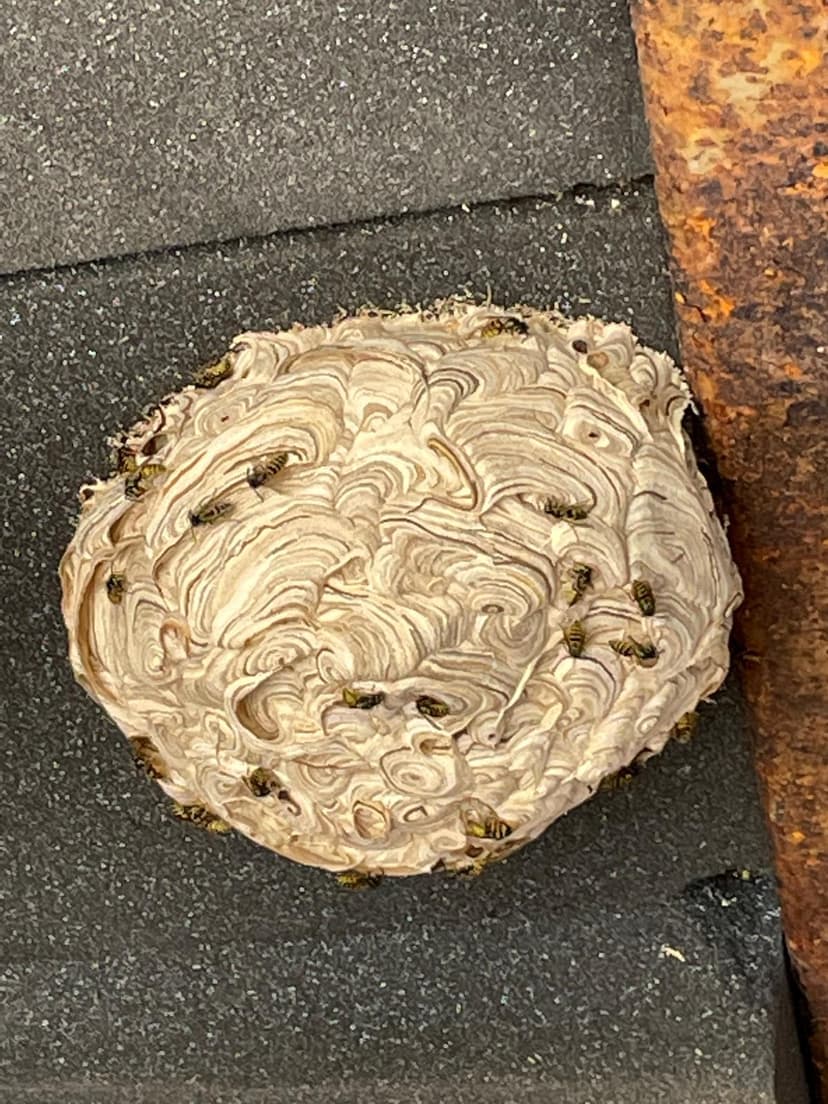
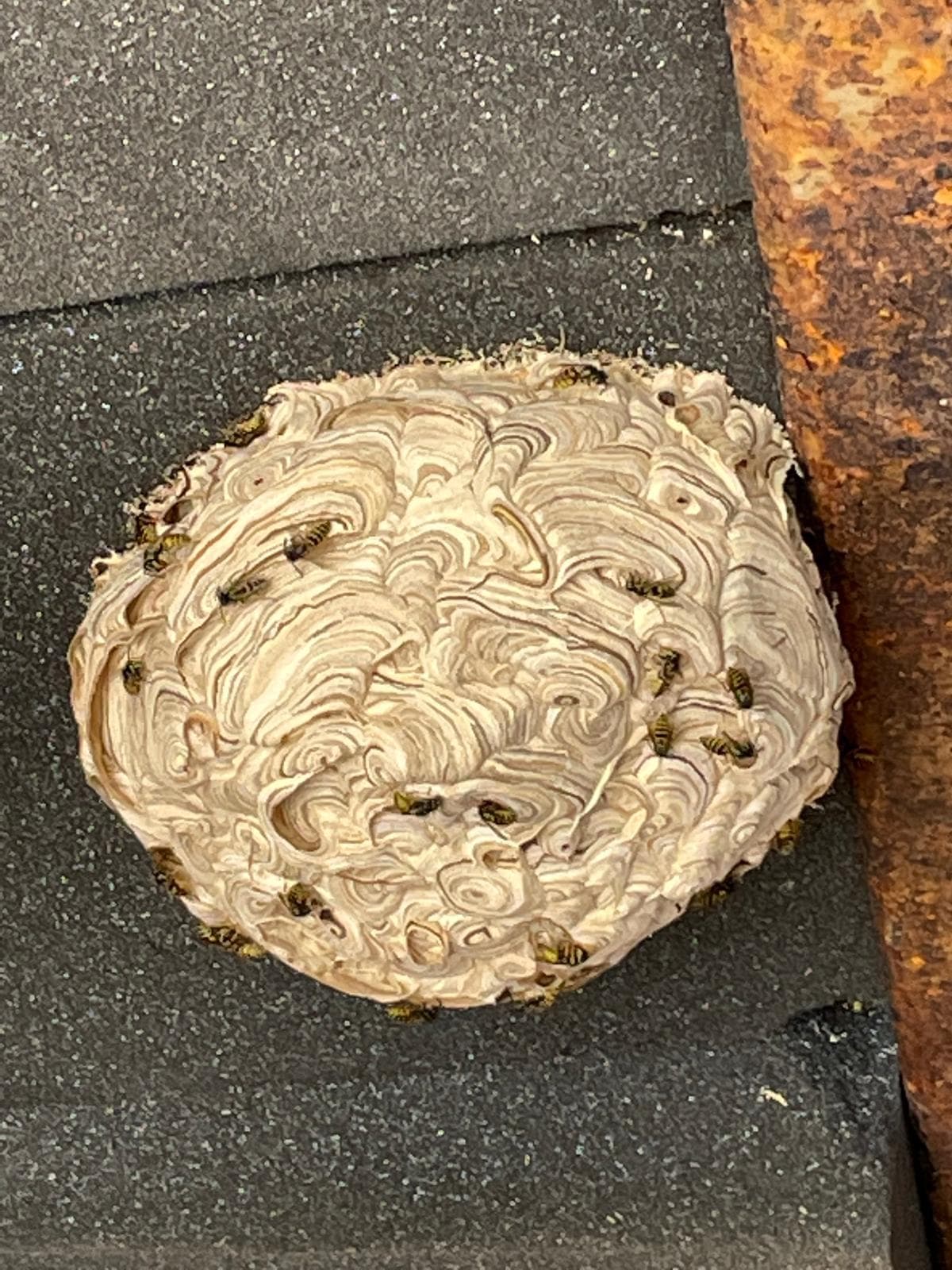
Professional wasp nest treatment is the safest and most effective way to eliminate a wasp colony. The process is quick — typically 15 to 30 minutes — and the entire colony is usually dead within 2 to 4 hours.
This guide explains exactly what happens during a professional wasp nest treatment, what to expect afterwards, and why DIY removal is dangerous.
Published:
Why Professional Treatment Is Essential
A wasp nest at peak population contains 10,000 to 15,000 wasps, all of which will aggressively defend the colony. Attempting removal without professional equipment and protective clothing is extremely dangerous.
Stinging risk — disturbing a nest triggers a mass defence response. Wasps release an alarm pheromone that signals other workers to attack. Multiple stings can cause severe allergic reactions, and in rare cases, anaphylaxis.
DIY sprays are not enough — shop-bought wasp killer aerosols may kill wasps on the surface but cannot penetrate deep enough to destroy the queen and the entire colony. The surviving wasps become more agitated and aggressive.
Nest access — many nests are in hard-to-reach locations such as loft voids, wall cavities, and high eaves. Reaching these safely requires specialist equipment and protective clothing.
Legal and safety considerations — landlords and business owners have a duty of care. A wasp nest near a public area, entrance, or workplace must be dealt with promptly by a qualified professional.
How Professional Treatment Works
Our technicians use biodegradable insecticides that are highly toxic to wasps but safe for mammals once dry. The treatment follows a consistent process:
Step 1 — Survey and identification — the technician locates the nest, identifies the species, and assesses the safest treatment approach based on the nest location.
Step 2 — Application of insecticide — professional-grade insecticidal dust or liquid is injected directly into the nest entrance using specialist equipment. The product coats the interior of the nest and the wasps inside.
Step 3 — Colony collapse — returning forager wasps pick up the insecticide as they enter and spread it further through the colony. The queen and all workers are killed, typically within 2 to 4 hours.
Step 4 — Residual barrier — a residual treatment is applied around the nest entrance to catch any remaining foragers returning over the following 24 hours.
Treatment Methods by Nest Location
The treatment approach is adapted to where the nest is located:
Loft and roof void — insecticidal dust is applied directly to the nest from inside the loft, or injected through the entry point from outside.
Wall cavity — dust is injected through the entry hole in the external wall. The powder spreads through the cavity and coats the nest.
Underground — dust or liquid is applied directly into the burrow entrance. The surrounding soil is treated to create a residual barrier.
High-level nests — nests under eaves, on chimneys, or at roofline level are treated using extending lances that reach up to 10 metres without scaffolding.
Sheds and outbuildings — direct treatment to the nest, often with liquid spray for visible and accessible nests.
What Happens After Treatment
Knowing what to expect after treatment prevents unnecessary concern:
Increased activity (first 1–2 hours) — you may see more wasps than usual immediately after treatment. This is normal — returning foragers are agitated and confused. They will die within hours.
Stragglers (up to 24 hours) — a few wasps that were away from the nest during treatment may return. The residual barrier around the entrance will kill them on contact.
Dead wasps — you may find large numbers of dead wasps on the ground below the nest entrance or inside the property near the nest location. This is a sign the treatment is working.
Nest left in place — in most cases the nest is left in place after treatment. It poses no risk once the colony is dead and will dry out naturally over time.
Need professional help with wasp removal? BuzzKill Pest Control offers fast, effective treatment with no call-out charge.
Physical Nest Removal
Physical removal of the nest structure is not always necessary or recommended:
When removal is not needed — a dead nest in a loft, wall cavity, or underground is harmless. It will not be reused by wasps next year and will break down naturally. Leaving it avoids unnecessary structural disturbance.
When removal is recommended — if the nest is in a visible location (under eaves, inside a room), on a structure that needs maintenance, or if it is large enough to cause staining or structural concern.
Timing — removal should only be carried out once the colony is confirmed dead, typically 48 hours after treatment. Never attempt to remove a nest that has not been treated.
Structural nests — nests inside wall cavities may require a builder to open up the wall for removal. This is only necessary if the nest is causing damp, staining, or structural issues.
Why You Should Never Block the Entrance
Blocking the entrance to a wasp nest is the most common and most dangerous DIY mistake. It does not kill the colony — it traps thousands of aggressive wasps inside who will:
Find alternative exits — wasps will chew through plasterboard, squeeze through gaps around light fittings, or emerge through ventilation grilles into your living space.
Become extremely aggressive — trapped wasps are highly agitated and will attack anything nearby when they find an exit.
Make professional treatment harder — the technician can no longer use the blocked entrance to inject insecticide, making the treatment more complex and potentially more expensive.
If you have blocked a nest entrance, unblock it immediately and call a professional.
When to Call Us
Call as soon as you notice wasp activity concentrated around a single entry point on your property. Early-season nests (May to June) are smaller, easier to treat, and cheaper to deal with. Do not wait for the nest to become a problem — it will only get bigger.
BuzzKill provides same-day wasp nest treatment from £85. Visit our Wasp Removal page or call 0203 468 1999.
Frequently Asked Questions
How long does wasp nest treatment take?
The treatment itself takes 15 to 30 minutes. The colony is typically dead within 2 to 4 hours. You may see occasional stragglers for up to 24 hours.
Do I need to leave the house during treatment?
No. You should stay indoors with windows and doors closed near the nest during treatment. The insecticide is applied directly to the nest and does not require evacuation.
Can you remove a wasp nest from inside a wall?
We treat the nest through the entrance hole in the wall. Physical removal from inside a wall is not usually necessary — the colony dies and the nest material decomposes naturally. If removal is required for structural reasons, this is best done by a builder after the colony is confirmed dead.
Is the treatment safe for pets?
Yes. The insecticides used are safe for mammals once dry. Keep pets away from the nest area during treatment and for 2 to 4 hours afterwards. The residual treatment around the nest entrance is not harmful to dogs or cats in the quantities applied.
What if the nest is very high up?
We carry extending lances that can reach nests at height — under eaves, on chimneys, and at roofline level — without the need for scaffolding in most cases. Very high or difficult-access nests may require specialist equipment and a higher treatment fee.
Professional Wasp Removal Service
Learn more about our wasp removal service, pricing, treatment methods, and customer reviews.
View Wasp Removal Service