
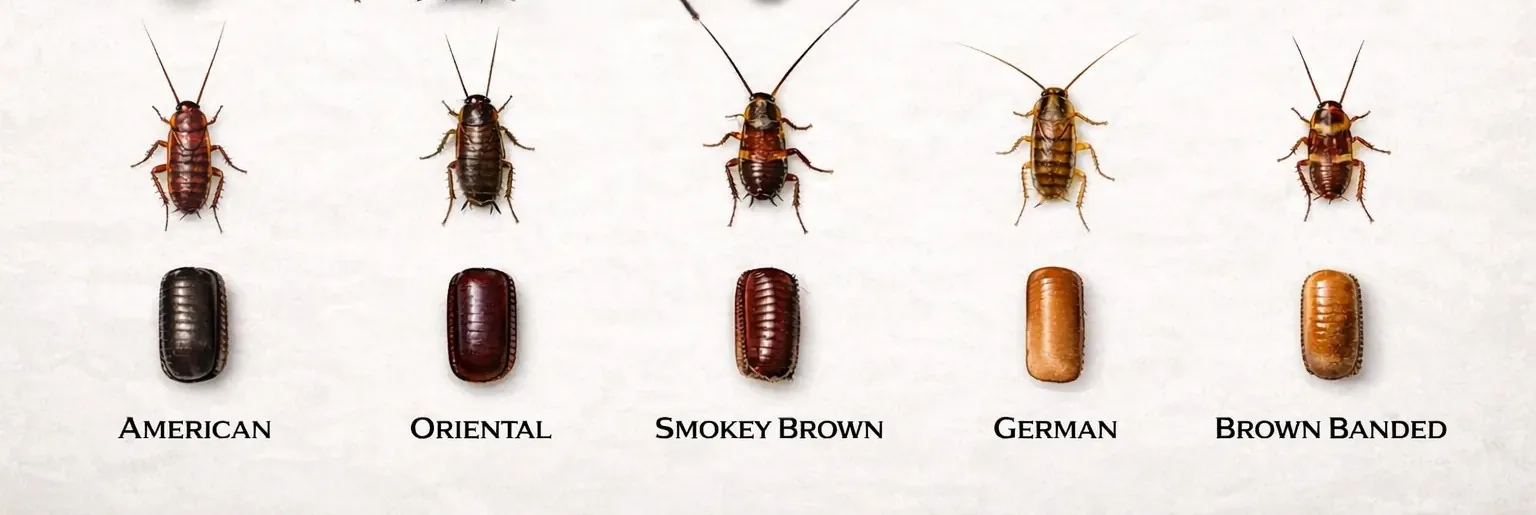
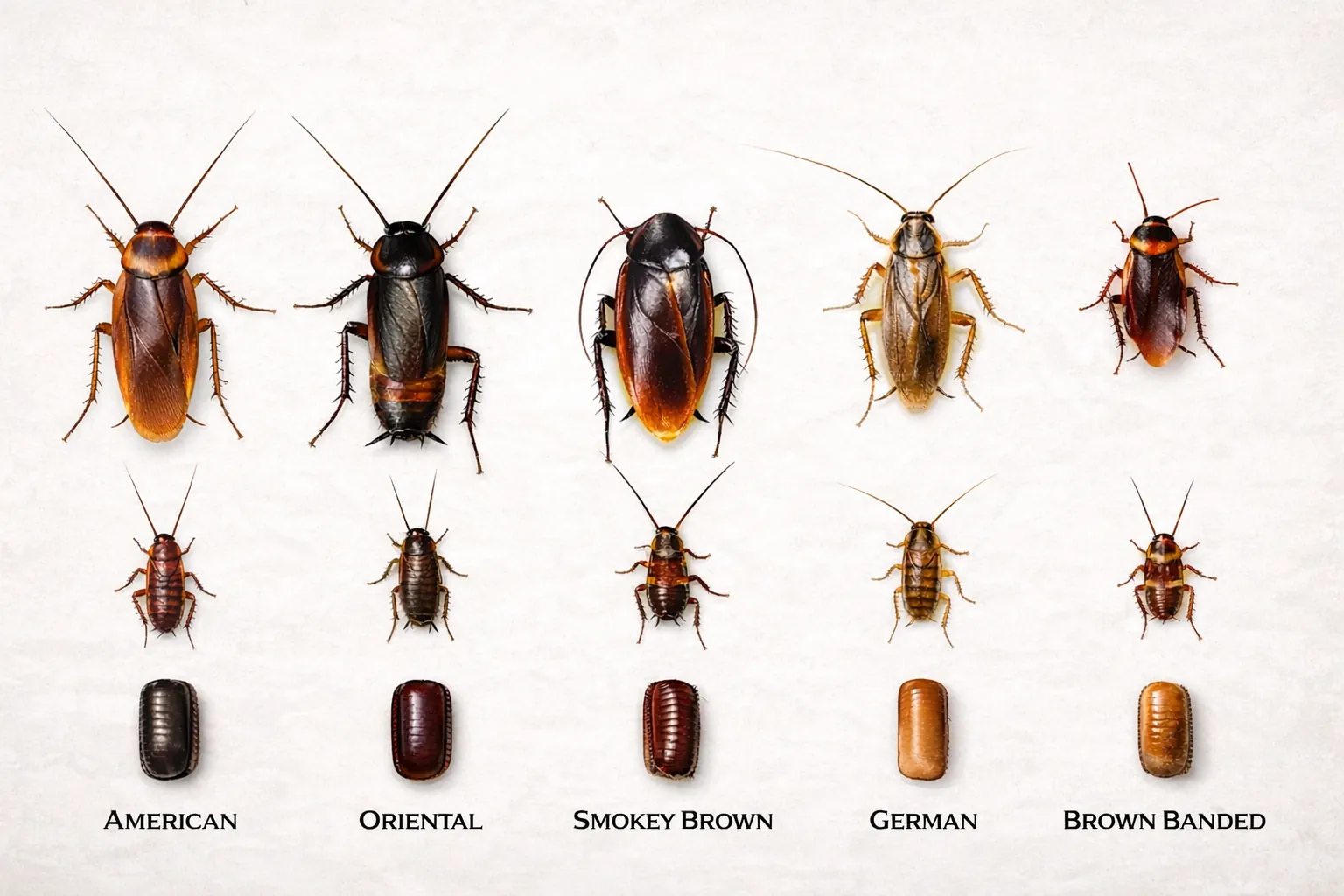
The UK is home to several cockroach species, but the vast majority of domestic infestations involve just two: the German cockroach and the Oriental cockroach. Correctly identifying which species you are dealing with is essential because their behaviour, habitat preferences, and treatment strategies differ significantly.
This guide covers the key species found in UK homes and businesses, how to tell them apart, where each species hides, and why identification matters when choosing the right treatment approach.
Published:
German Cockroach (Blattella germanica)
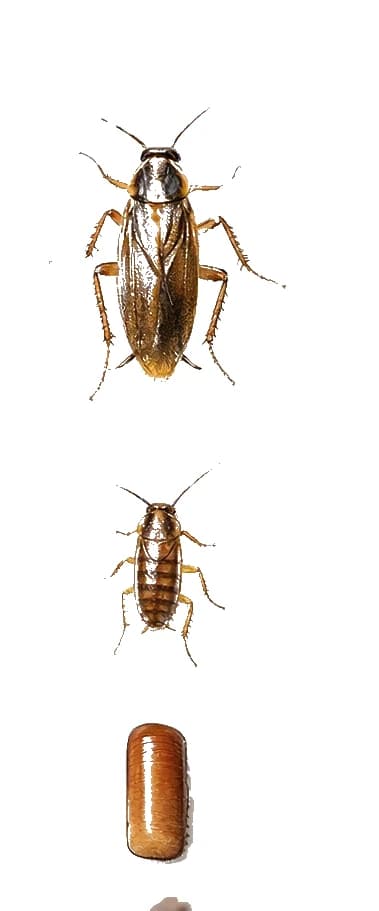
The German cockroach is the most common cockroach pest in UK homes and commercial kitchens. Adults are light brown with two dark parallel stripes running lengthwise on the pronotum (the shield-like plate behind the head). They measure 12 to 15mm in length.
German cockroaches are almost exclusively indoor insects. They thrive in warm, humid environments and are most commonly found in kitchens — behind fridges, inside oven housings, around dishwashers, in microwave vents, and within cupboard door hinges. They rarely survive outdoors in the UK climate.
This species breeds faster than any other cockroach pest. A single female produces 4 to 8 egg cases (oothecae) in her lifetime, each containing up to 40 eggs. Under ideal conditions, the lifecycle from egg to reproducing adult takes just 6 to 8 weeks, meaning populations can explode within months.
German cockroaches are almost always introduced into a property via infested goods — cardboard packaging, second-hand appliances, deliveries, and luggage. In flats, they spread between units through shared pipework, wall voids, and service risers.
Oriental Cockroach (Blatta orientalis)
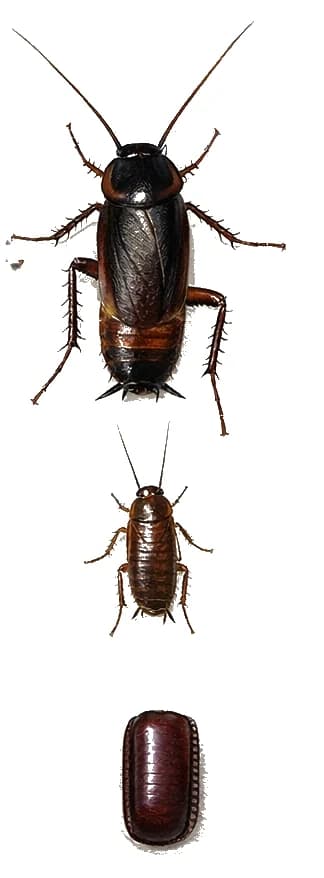
The Oriental cockroach is the second most common species in the UK. Adults are dark brown to black, glossy, and measure 20 to 25mm. Males have short wings covering about two-thirds of the abdomen, while females have vestigial wing pads. Neither sex can fly.
Unlike German cockroaches, Orientals tolerate cooler temperatures and are commonly found in basements, cellars, drain runs, boiler rooms, and around external pipework. They frequently enter buildings through drain covers, air bricks, and gaps around pipes at ground level.
Oriental cockroaches are slower-breeding than German cockroaches. Females produce around 8 egg cases in their lifetime, each containing about 16 eggs. The lifecycle takes 6 to 12 months depending on temperature, making them easier to control once the harbourage is identified.
This species is strongly associated with damp conditions and is sometimes called the 'water bug.' If you find dark, glossy cockroaches near drains, in basements, or around external waste pipes, they are almost certainly Oriental cockroaches.
Brown-Banded Cockroach (Supella longipalpa)
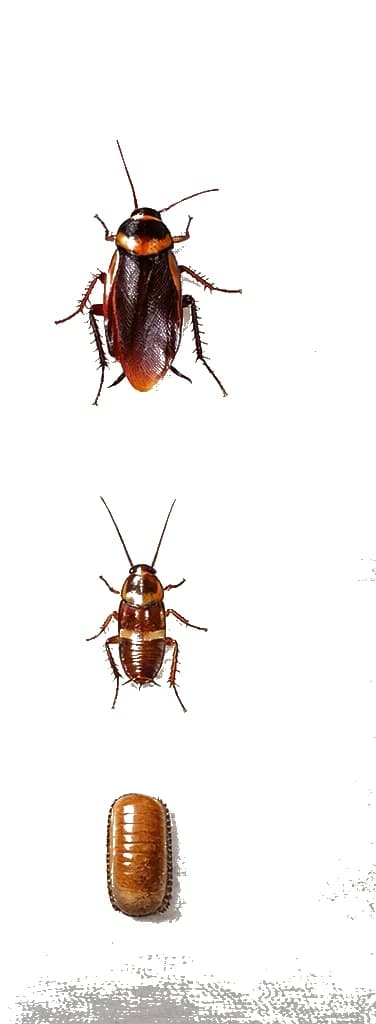
The brown-banded cockroach is less common in the UK but does occur, particularly in centrally heated buildings. Adults are small (10 to 14mm), light brown, with two distinctive lighter bands running across the wings and abdomen.
Unlike German cockroaches, brown-banded cockroaches are not restricted to kitchens and bathrooms. They prefer drier, warmer locations and can be found in bedrooms, living rooms, behind picture frames, inside electrical equipment, and within furniture.
This species glues its egg cases to the undersides of furniture, shelves, and inside cupboards — unlike German cockroaches which carry them. Treatment must account for these dispersed egg cases, which may be found throughout the property rather than concentrated in kitchen areas.
Need professional help with cockroach control? BuzzKill Pest Control offers fast, effective treatment with no call-out charge.
Why Species Identification Matters for Treatment
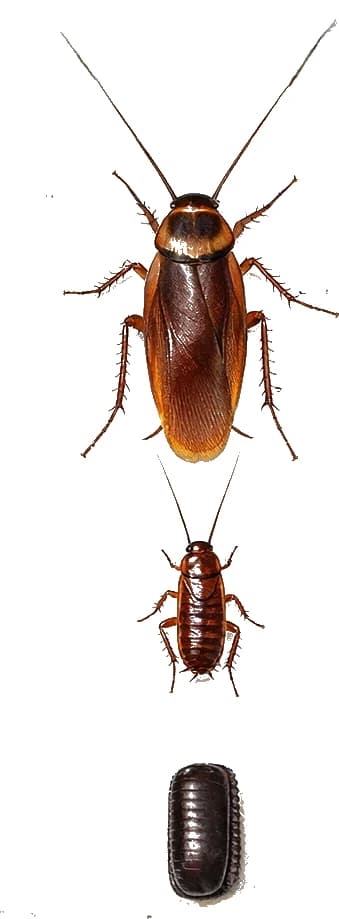
Treatment strategies differ significantly between species. German cockroach infestations require intensive gel bait application in kitchen and bathroom harbourage points, with follow-up visits to target newly hatched nymphs. Oriental cockroach control often focuses on drainage systems, damp-proofing, and sealing external entry points.
Misidentifying the species can lead to treatment being applied in the wrong locations. A German cockroach infestation treated with perimeter sprays around external entry points will fail because the cockroaches are living inside kitchen appliances, not entering from outside.
If you are unsure which species you have, a professional pest controller can identify them during the inspection and tailor the treatment accordingly. For step-by-step removal advice, see our guide to getting rid of cockroaches. To learn the early warning signs, read our signs of cockroaches guide.
Frequently Asked Questions
Can cockroaches survive cold weather outdoors?
German cockroaches cannot survive UK winters outdoors and are entirely dependent on heated buildings. Oriental cockroaches are hardier and can tolerate cooler temperatures, which is why they are sometimes found in drains, basements, and outbuildings.
Are cockroaches in the UK the same as tropical cockroaches?
No. The species found in UK homes — German and Oriental cockroaches — are much smaller than tropical species like the American cockroach. They rely on heated buildings to survive UK temperatures and cannot live outdoors year-round.
Are cockroaches found outdoors in the UK?
Oriental cockroaches are commonly found around external drains, pipework, and in gardens. German cockroaches are almost exclusively indoor pests in the UK and do not survive outdoors. Brown-banded cockroaches are also indoor-only.
How do cockroaches get into my home?
German cockroaches are almost always brought in via infested packaging, second-hand appliances, or deliveries. Oriental cockroaches enter through drains, air bricks, and gaps around external pipework. In flats, both species can spread between units via shared wall voids and service risers.
Professional Cockroach Control Service
Learn more about our cockroach control service, pricing, treatment methods, and customer reviews.
View Cockroach Control Service