
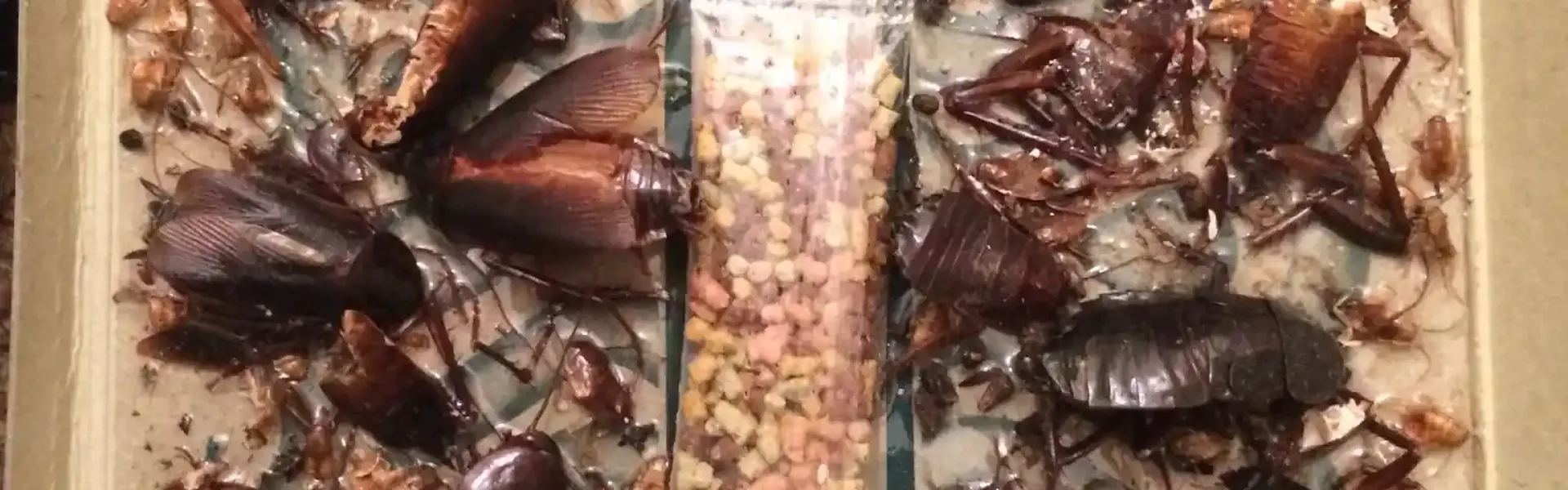
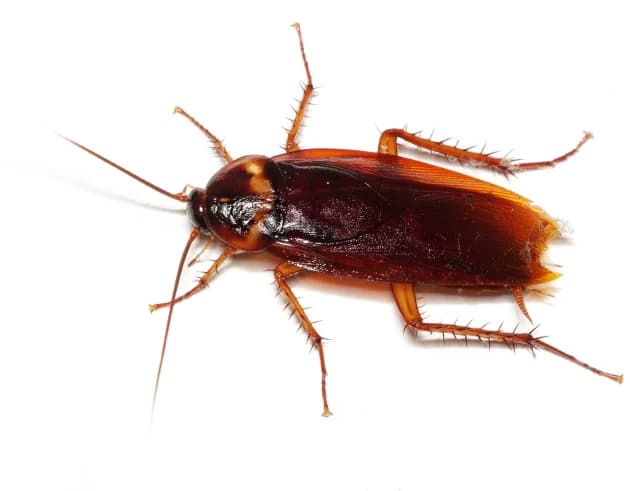
Cockroaches are nocturnal and spend up to 75% of their time hidden in cracks and crevices. By the time you spot one scurrying across your kitchen floor, the infestation is often already well established. Knowing the early warning signs allows you to act before the population explodes.
This guide explains the most reliable indicators that cockroaches are present in your home or business, exactly where to look for them, and what to do if you find evidence.
Published:
Cockroach Droppings
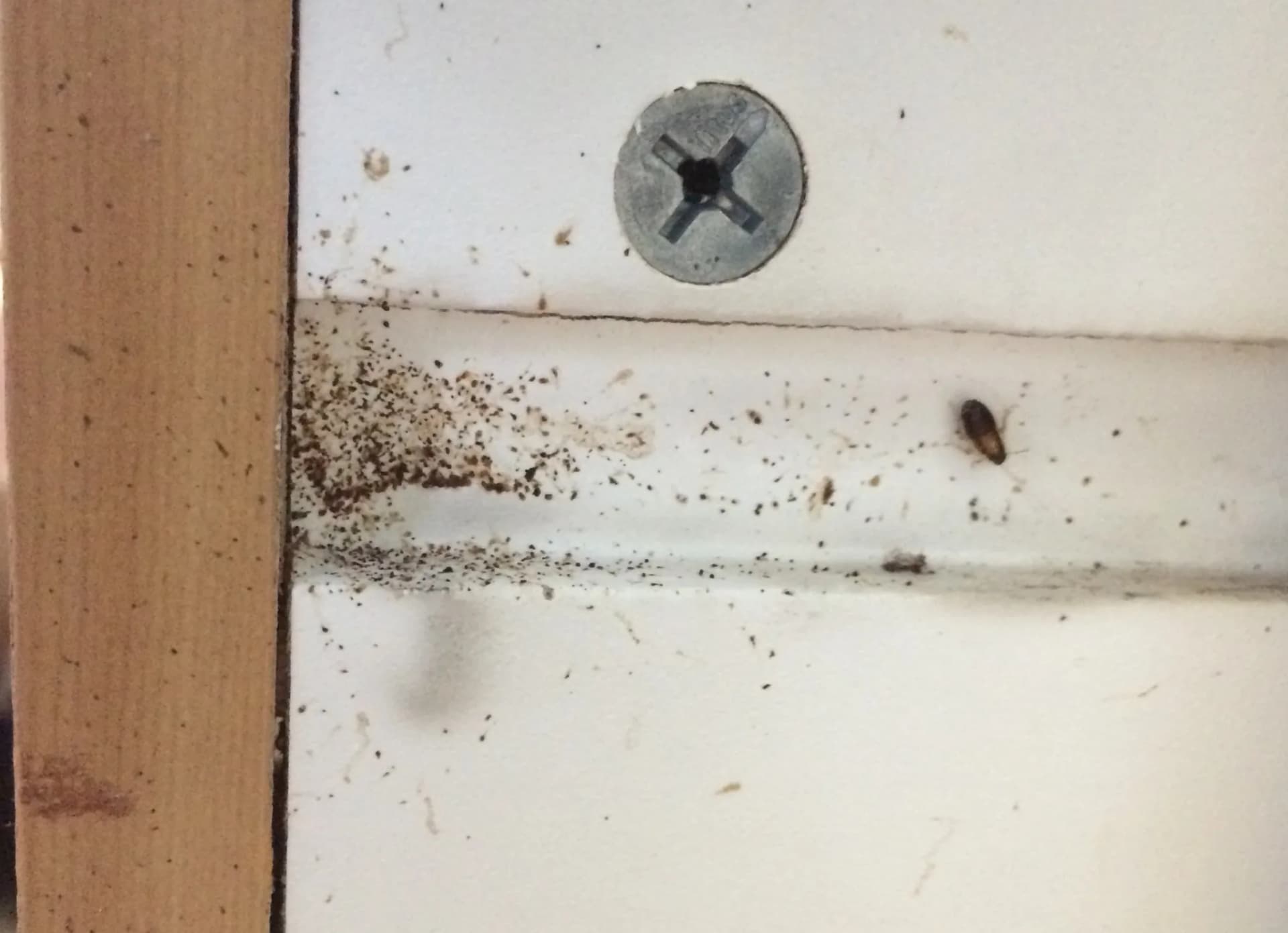
Cockroach droppings are one of the most reliable signs of an infestation. German cockroach droppings appear as small, dark, pepper-like specks or smears, often found along skirting boards, inside cupboards, on worktops near walls, and behind appliances.
Oriental cockroach droppings are slightly larger and cylindrical, resembling small grains of black rice. They are commonly found in basements, near drain covers, and around pipework.
The concentration of droppings indicates how close you are to a harbourage point. Dense clusters of droppings mean cockroaches are nesting very close by. Check behind the fridge, under the oven, inside cupboard door hinges, and along the gap between worktops and walls.
Cockroach Egg Cases — What Do They Look Like?
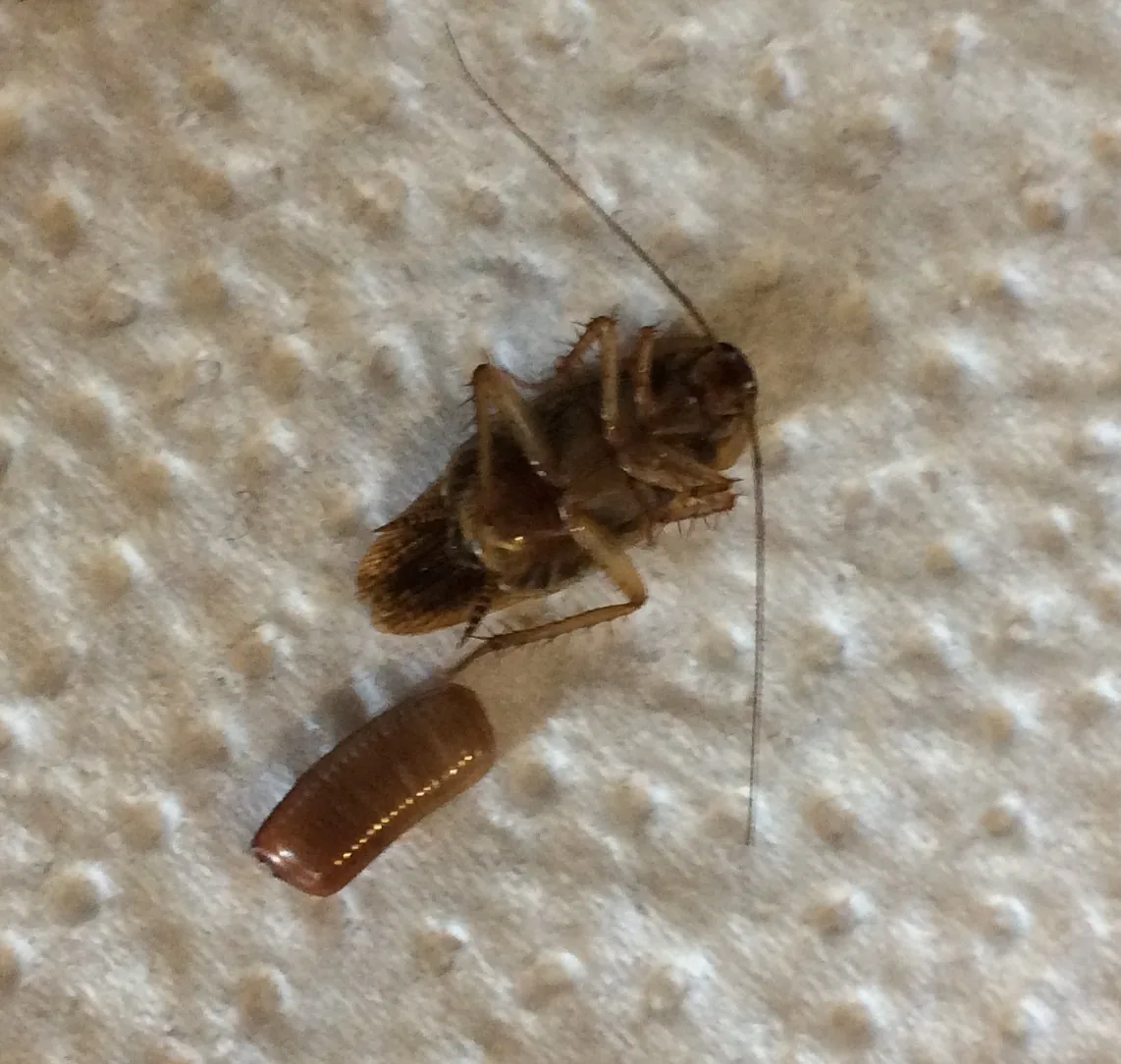
Cockroach egg cases are small, dark brown, purse-shaped capsules approximately 8mm long. Each German cockroach ootheca contains up to 40 eggs. Females carry the case until shortly before the eggs hatch, then deposit it in a hidden, warm location.
Finding egg cases — whether full, partially hatched, or empty — confirms an active breeding population. Look for them inside cupboards, behind appliances, in the gaps between shelving and walls, and underneath kitchen drawers.
Empty egg cases indicate that cockroaches have already hatched in that location. If you find multiple empty cases, the infestation has been present for some time and nymphs are actively growing in your property.
Musty or Oily Smell
Cockroach infestations produce a distinctive musty, oily odour that becomes stronger as the population grows. This smell comes from pheromones in their droppings and body secretions, which they use to communicate with other cockroaches and mark harbourage sites.
The smell is most noticeable in enclosed spaces where cockroaches congregate — inside cupboards under sinks, behind fridges, and in utility cupboards. If you notice an unpleasant, lingering smell in your kitchen that cleaning does not resolve, cockroaches should be considered.
In severe infestations, the smell can permeate an entire room. It also taints food and food packaging stored near harbourage points, which is one reason cockroaches pose such a serious food safety risk in commercial kitchens.
Shed Skins
Cockroaches moult several times as they grow from nymph to adult. German cockroaches moult 5 to 7 times, leaving behind translucent, light brown shed skins at each stage. Finding these skins confirms that cockroaches are not just passing through — they are breeding and developing in your property.
Shed skins accumulate in harbourage points alongside droppings and egg cases. They are commonly found behind appliances, inside cupboard hinges, underneath kitchen plinths, and in the gap between fitted units and walls.
Cockroach shed skins and droppings are a significant allergen source. Studies have shown that cockroach allergens are a leading trigger for childhood asthma in urban environments. Removing shed skins and droppings during treatment is important for health as well as pest control.
Need professional help with cockroach control? BuzzKill Pest Control offers fast, effective treatment with no call-out charge.
Smear Marks and Brown Streaks
Cockroaches produce dark, irregular smear marks where they are most active. These marks are caused by cockroaches dragging their bodies through moisture and their own droppings as they travel between harbourage points and food sources.
Smear marks typically appear along the tops of skirting boards, on wall edges near the floor, along the inside edges of cupboards, and around pipe penetrations. They are especially visible on light-coloured walls and surfaces.
In kitchens, check along the gap between the worktop and the wall, around the edges of the cooker, and along the base of fitted units. Heavy smear marking in a concentrated area is a strong indicator that a harbourage is very close by.
Where to Inspect for Cockroaches
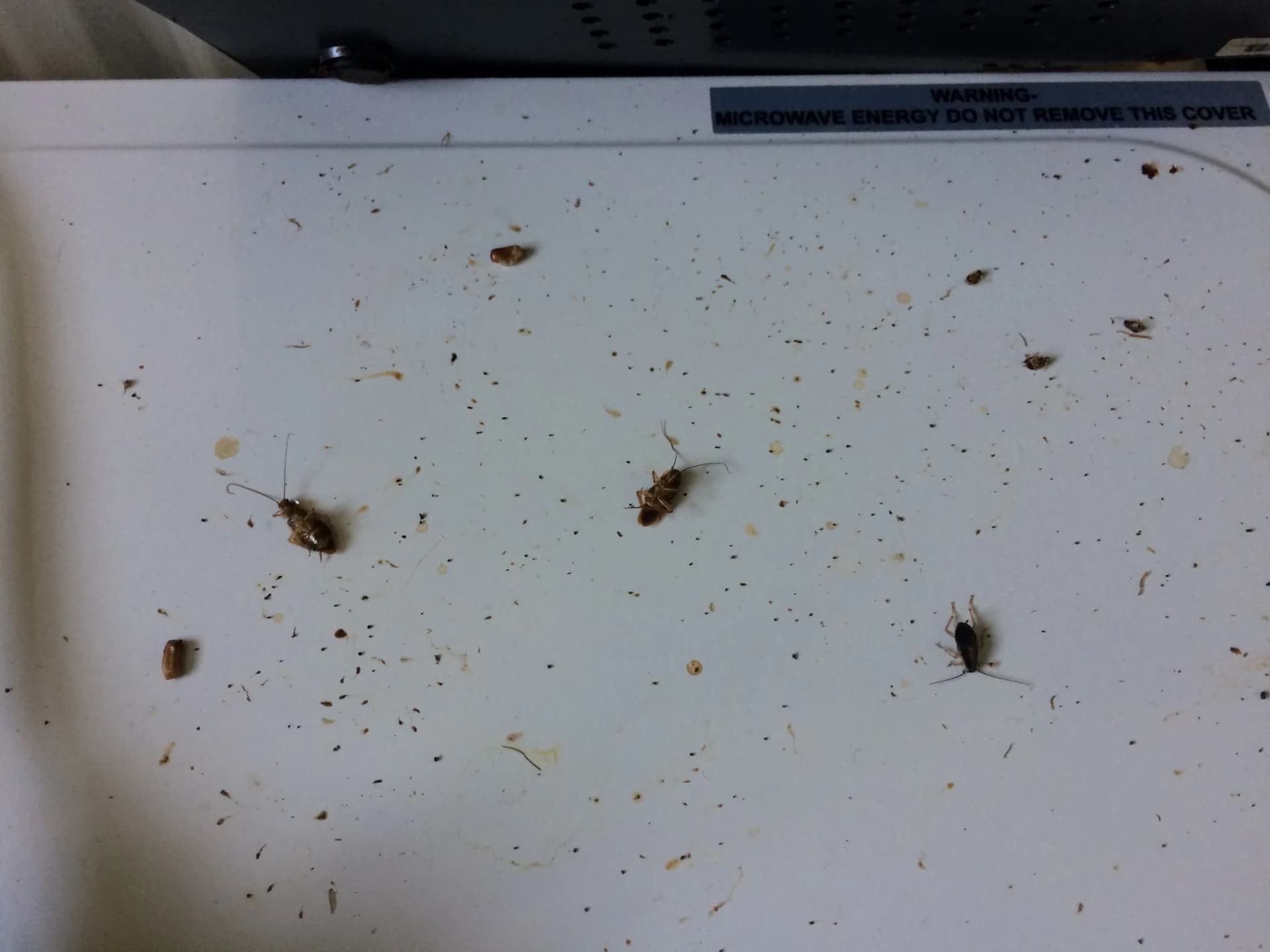
Start in the kitchen. Pull the fridge and oven away from the wall and inspect the back panels, motor housing, and the floor underneath. Check inside cupboard door hinges, along the gap between worktops and walls, under the sink around pipework, and behind the kickboards (plinths) of fitted units.
In bathrooms, check behind the toilet cistern, around pipe penetrations under the basin, inside the vanity unit, and along the bath panel. Cockroaches need water as much as food, making bathrooms a secondary but important harbourage.
In flats, inspect around shared pipework risers, inside meter cupboards, behind boilers, and around any penetrations in party walls. German cockroaches spread through buildings via these routes, so checking shared infrastructure is essential.
If your inspection confirms cockroaches, read our guide to getting rid of cockroaches for DIY and professional options. Understanding the cockroach species in the UK will help you identify which type you are dealing with and tailor your approach.
Frequently Asked Questions
Can you see cockroaches during the day?
Daytime sightings are a red flag. Cockroaches strongly prefer darkness, so seeing one in daylight suggests the hidden population has grown large enough to force individuals into the open. If you spot cockroaches during the day, treat it as urgent and seek professional help immediately.
What do cockroach droppings look like?
German cockroach droppings look like small, dark, pepper-like specks or smears. Oriental cockroach droppings are slightly larger, dark brown to black, and cylindrical. Both are commonly found along skirting boards, inside cupboards, and behind kitchen appliances.
Do cockroaches smell?
Yes. Cockroach infestations produce a distinctive musty, oily odour from pheromones in their droppings and body secretions. The smell becomes stronger as the population grows and is most noticeable in enclosed spaces near harbourage points.
Can cockroaches live in clean houses?
Yes. Cockroaches need surprisingly little food — microscopic grease residues behind an oven or crumbs trapped in a toaster are enough. A spotless kitchen reduces the risk but does not eliminate it, especially if cockroaches are entering from a neighbouring property or were introduced via second-hand goods.
Professional Cockroach Control Service
Learn more about our cockroach control service, pricing, treatment methods, and customer reviews.
View Cockroach Control Service