


Killing or trapping the mice inside your home solves the immediate problem, but unless you stop new mice from getting in, the infestation will return. Proofing and exclusion — physically preventing mice from entering — is the only genuinely long-term solution to a mouse problem.
This guide covers every effective deterrent and proofing method, explains which popular products actually work, and provides a room-by-room checklist so you can mouse-proof your property systematically.
Published:
Why Proofing Is the Only Long-Term Solution
Mice can squeeze through any gap their skull can fit through — approximately 6mm, or the width of a pencil. A typical UK home has dozens of potential entry points: around pipes, cables, vents, doors, and where extensions meet the original building. If these gaps are not sealed, mice will continue entering regardless of how many you trap inside.
Proofing is what professional pest controllers recommend after every treatment. Trapping and baiting clear the current population; proofing stops the next one. Without proofing, you are simply managing a recurring problem rather than solving it.
The good news is that most proofing work is straightforward and inexpensive. A few hours of inspection and sealing can permanently end a mouse problem that traps alone would never resolve.
Identifying Entry Points
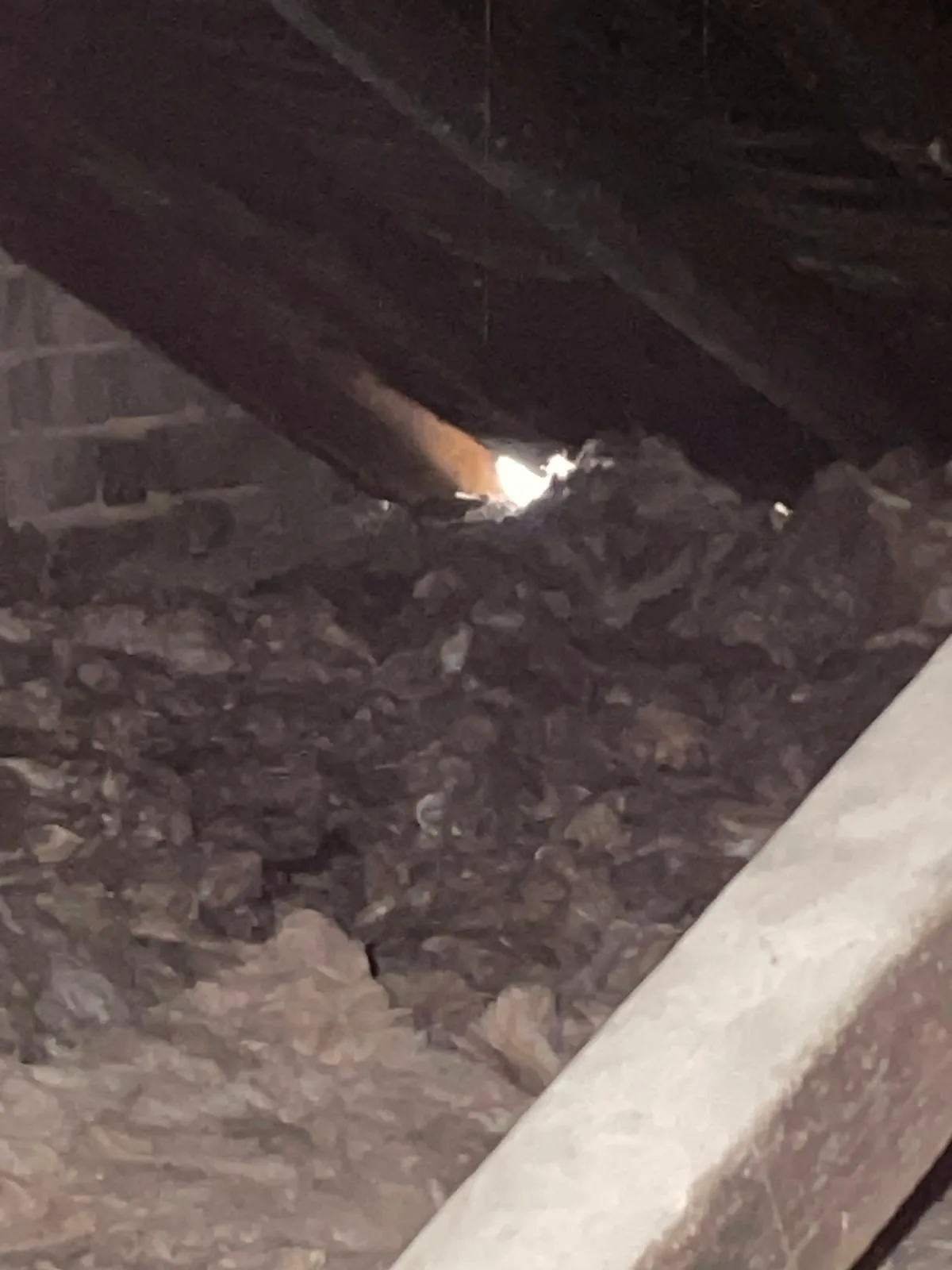
Start your inspection outside. Walk the full perimeter of your property and look for gaps around pipe penetrations (gas, water, waste, and overflow pipes), where cables enter the building, around air bricks and vents, at the base of external doors, where extensions or conservatories meet the main wall, and around the edges of garage doors.
Inside, check under the kitchen sink where waste pipes exit through the wall, around radiator pipe penetrations through floors, behind the bath panel where soil pipes pass through, in the airing cupboard around hot water cylinder pipes, and in the loft around any pipe or cable penetrations through the roof space.
Look for evidence that mice are using a particular gap — dark grease marks, droppings nearby, or gnaw marks on the edges of the hole. These confirmed entry points should be your top priority for sealing.
Effective Proofing Materials
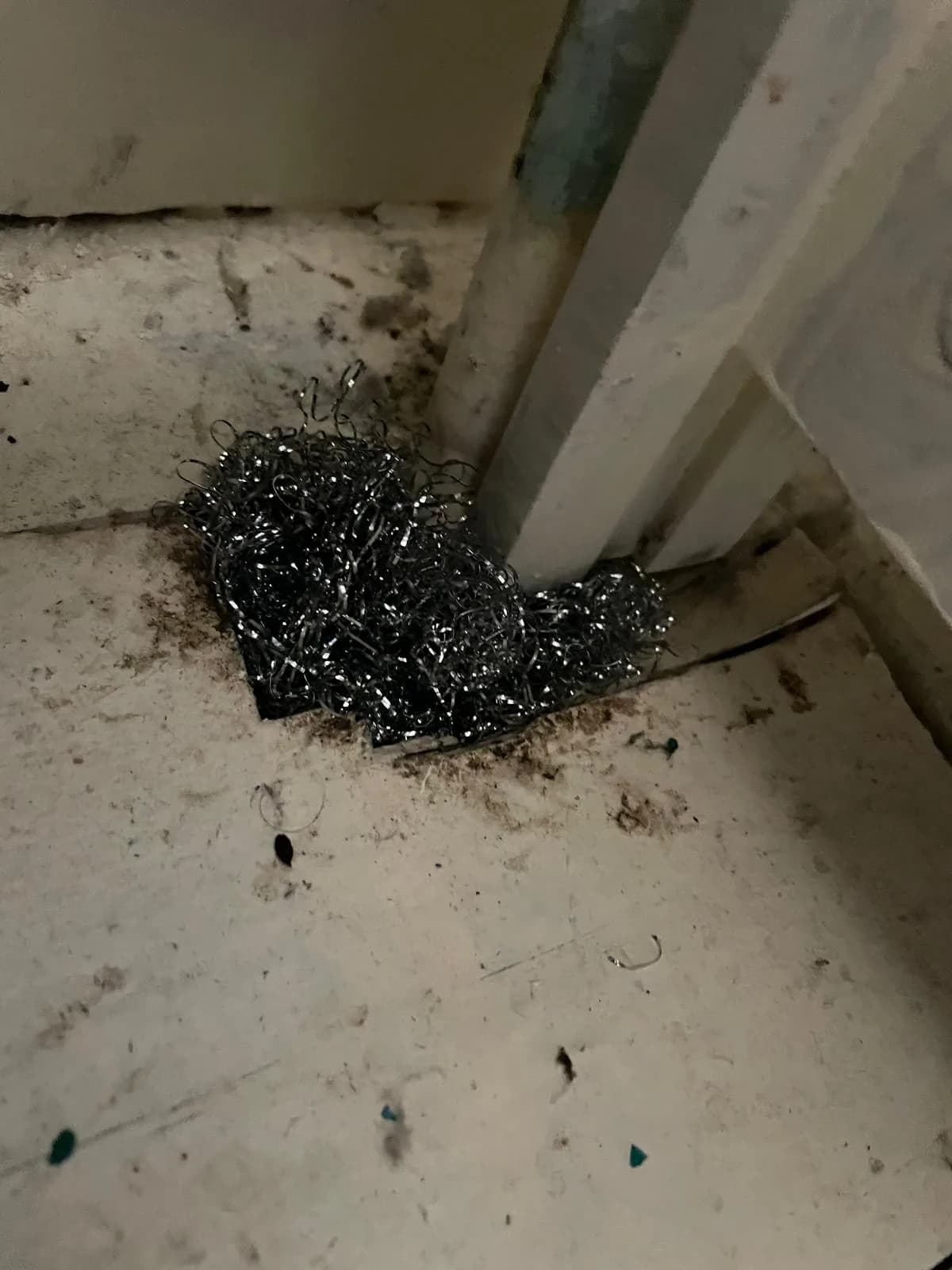
Steel wool is the most effective and inexpensive proofing material for small gaps. Mice cannot chew through it. Pack steel wool tightly into the gap, then seal over with caulk, expanding foam, or cement to hold it in place and prevent it rusting away.
For larger gaps, use galvanised wire mesh (6mm gauge or smaller) cut to size and fixed with screws or masonry nails. This is ideal for covering air bricks, ventilation grilles, and larger holes around pipe clusters.
Bristle strip draught excluders fitted to the base of external doors close the gap between the door and threshold that mice commonly use. Choose metal-backed bristle strips rather than rubber — mice can chew through rubber seals. For garage doors, consider fitting a rubber threshold seal combined with bristle strips on the sides.
Room-by-Room Proofing Checklist
Kitchen: Seal around waste pipe under sink, gaps around gas supply pipe behind cooker, holes where dishwasher and washing machine hoses pass through units, and any gaps between fitted units and walls. Check the kickboard for holes — remove it and inspect behind.
Bathroom: Seal around soil pipe boxing, gaps around radiator pipes through the floor, and around any pipework entering from cavity walls. Check behind the bath panel for gaps around waste and overflow pipes.
Loft: Seal around any pipe, cable, or vent penetrations through the roof space. Check where the roof meets the wall plate — gaps here are common in older properties. Ensure the loft hatch closes flush.
Exterior: Seal all identified pipe and cable penetrations with steel wool and cement. Fit mesh over air bricks if mice are entering through them (ensure the mesh still allows airflow). Check the gap under the front and back doors, and around any meter boxes or external utility connections.
Need professional help with mice control? BuzzKill Pest Control offers fast, effective treatment with no call-out charge.
Deterrents That Do Not Work
Ultrasonic plug-in devices are widely sold as mouse deterrents, but independent research consistently shows they are ineffective. Mice may initially avoid the sound but habituate within days. Trading Standards and pest control professional bodies advise against relying on them.
Peppermint oil is a popular home remedy, but there is no scientific evidence that it repels mice in real-world conditions. The concentration needed to have any effect would be overwhelmingly strong for humans too. Mice may temporarily avoid a freshly applied area but will simply find an alternative route.
Mothballs (naphthalene) are toxic to humans and pets, and their effectiveness against mice is minimal. They should never be used as a mouse deterrent, particularly in enclosed spaces where the fumes concentrate. Cat litter and predator urine products also show no reliable deterrent effect in controlled studies.
Professional Proofing Services
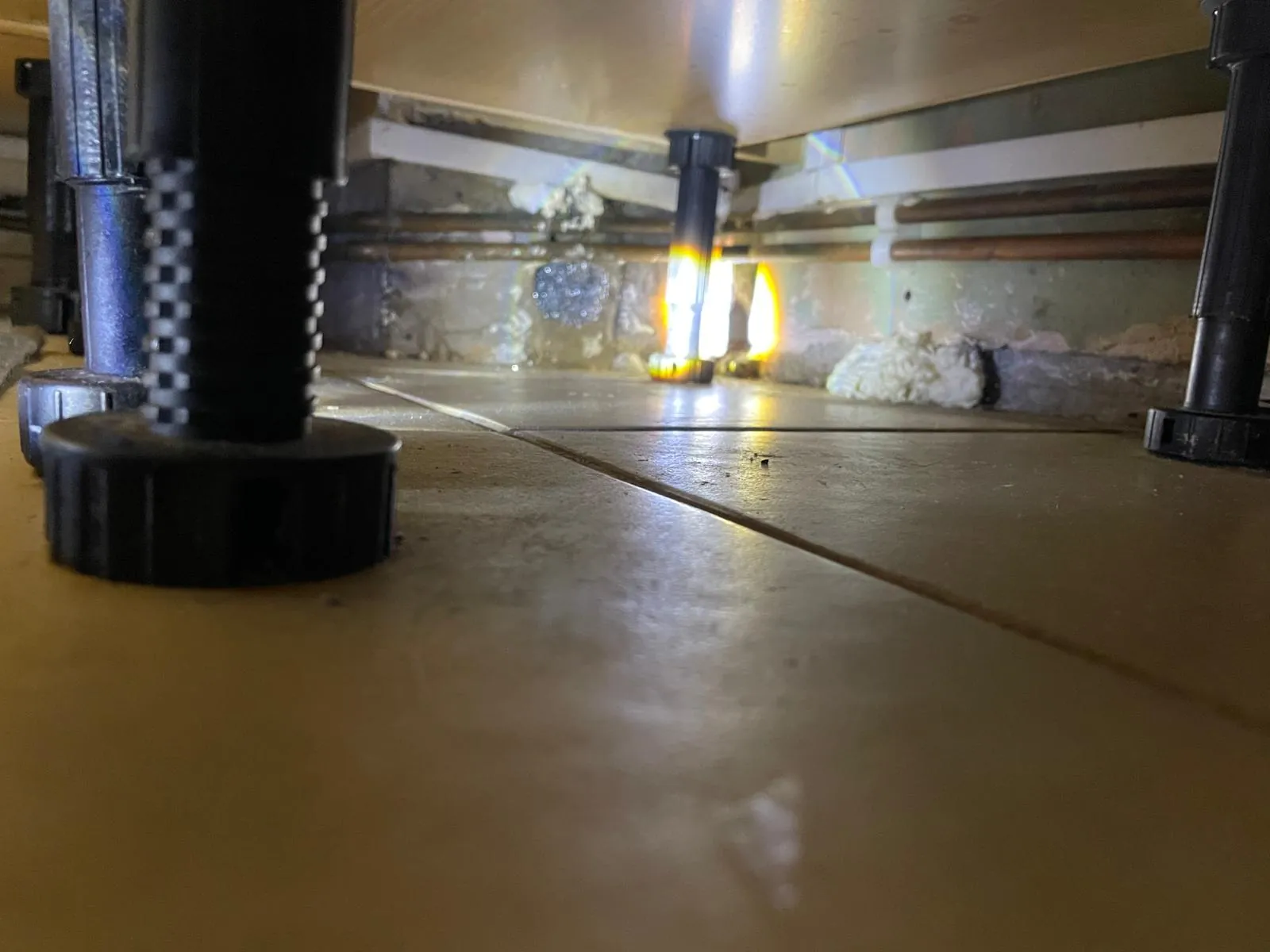
If you are unsure about identifying or sealing entry points, a professional pest controller can conduct a full proofing survey of your property. This typically involves inspecting every potential entry point, grading them by risk, and either carrying out the proofing work or providing a detailed specification.
Professional proofing is particularly valuable for older properties with multiple extension points, terraced and semi-detached houses where mice travel between properties through shared walls, and properties with complex pipework layouts.
At BuzzKill, proofing recommendations are included with every mice treatment. For properties with significant proofing needs, we offer dedicated proofing visits where our technicians seal all identified entry points using professional-grade materials. Visit our mice treatment page for more details.
Frequently Asked Questions
What is the most effective mouse deterrent?
Physical proofing — sealing entry points with steel wool, wire mesh, and cement — is the only proven long-term deterrent. No spray, plug-in device, or home remedy provides reliable, lasting protection against mice.
Does peppermint oil really keep mice away?
No. Despite its popularity online, there is no scientific evidence that peppermint oil repels mice in real-world conditions. Mice quickly find alternative routes around treated areas. Physical exclusion is far more effective.
Can mice chew through expanding foam?
Yes, easily. Expanding foam alone is not a mouse-proof seal. Always pack steel wool into the gap first, then apply foam or caulk over the top to hold it in place. The steel wool is what actually stops the mice.
How small a gap can a mouse fit through?
Mice can squeeze through any gap their skull fits through — approximately 6mm, or roughly the width of a pencil. This means even very small gaps around pipes and cables need sealing.
Will getting a cat solve my mouse problem?
A cat may catch some mice, but it is not a reliable pest control method. Mice quickly learn to avoid areas where the cat patrols and continue living inside wall cavities, loft spaces, and other areas the cat cannot reach. Proofing remains essential.
Professional Mice Control Service
Learn more about our mice control service, pricing, treatment methods, and customer reviews.
View Mice Control Service