
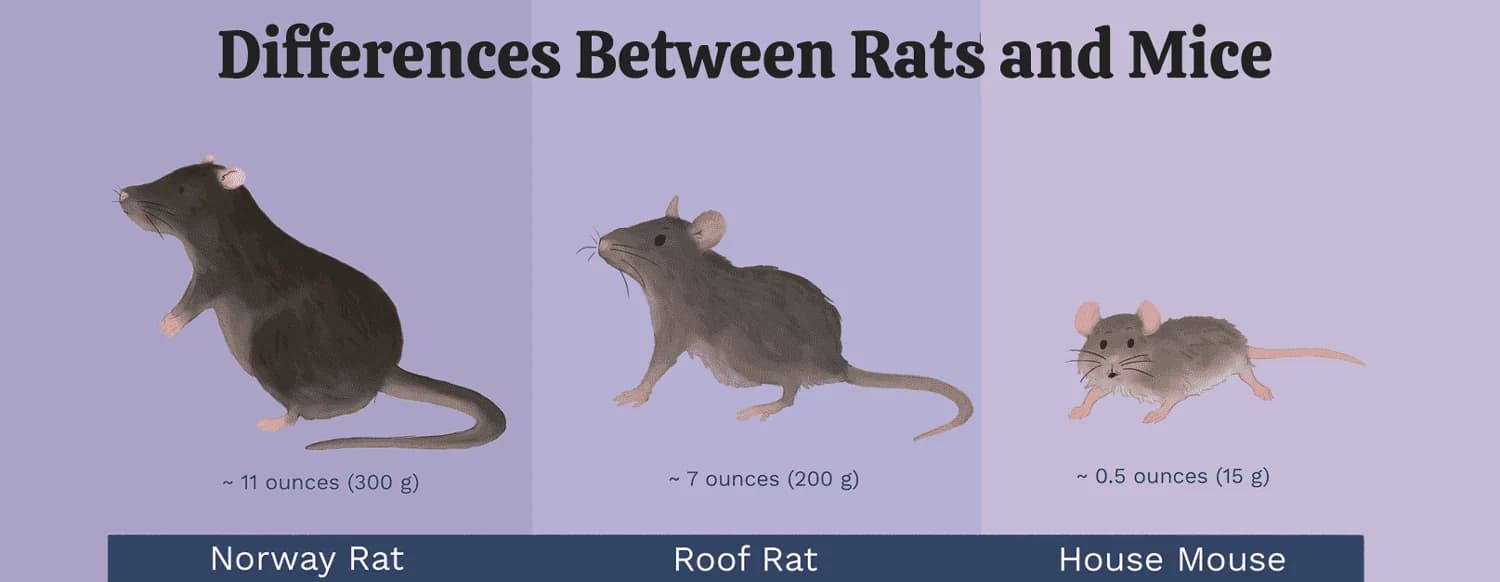
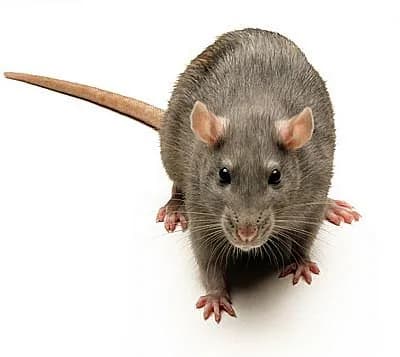
The brown rat is responsible for the vast majority of rat infestations in UK homes and businesses. However, knowing how to distinguish it from the less common black rat — and from the protected water vole, which is sometimes mistaken for a rat — is important for choosing the right control approach and staying on the right side of the law.
This guide covers the key identification features, habitat preferences, and behavioural differences of each species.
Published:
Brown Rat (Rattus norvegicus)
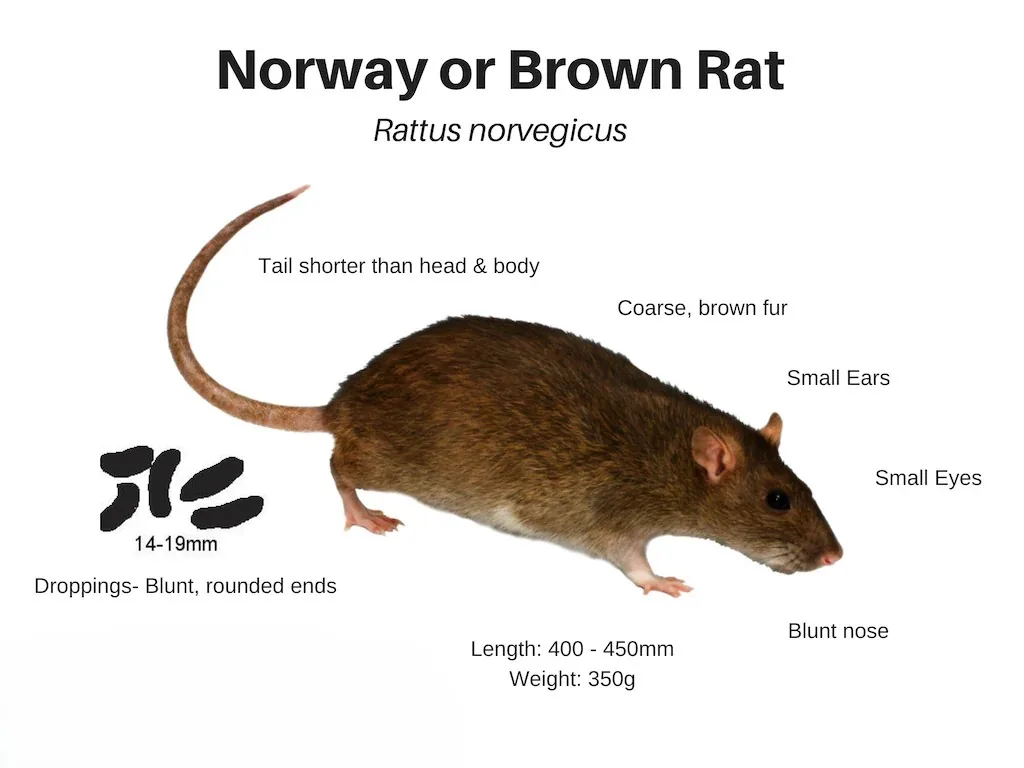
The brown rat — also called the common rat, Norway rat, or sewer rat — is the dominant rat species in the UK and the one you are almost certainly dealing with. Adults are 20 to 27cm body length plus a 17 to 23cm tail, and weigh 200 to 500 grams. They have brown-grey fur on top, a lighter grey underside, small ears relative to their head, a blunt snout, and a thick, scaly tail that is shorter than their body.
Brown rats are burrowers. They dig extensive tunnel systems with multiple entrances, typically found along foundations, under sheds, beside walls, and in embankments. They are excellent swimmers and commonly inhabit sewer systems, which is why drainage defects are such a frequent cause of rat infestations in urban properties.
A female brown rat can produce up to 5 litters per year with 7 to 12 pups each, reaching sexual maturity at around 3 months. Their lifespan is typically 12 to 18 months, but their rapid breeding means a small colony can grow into a serious infestation within a few months.
Black Rat (Rattus rattus)
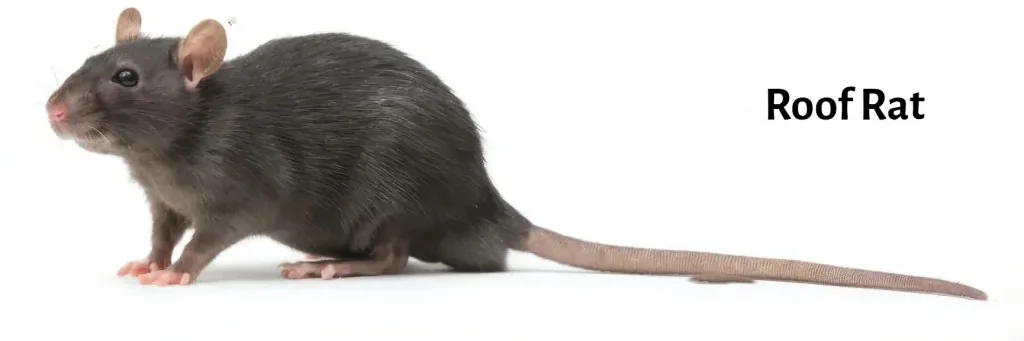
The black rat — also known as the ship rat or roof rat — was once the dominant rat species in the UK but has been largely displaced by the brown rat. Today, black rats are rare in mainland Britain and found mainly in a few port areas and offshore islands.
Black rats are smaller and more slender than brown rats, with a body length of 16 to 22cm, large ears, a pointed snout, and a long, thin tail that is longer than their body. Their fur is typically dark brown to black, though some individuals are lighter. They are agile climbers and prefer to nest above ground level — in roof spaces, wall cavities, and trees — unlike brown rats which prefer ground-level burrows.
If you encounter a rat in mainland UK, it is almost certainly a brown rat. Black rat identification matters mainly in port areas or if you live near a known black rat population. Treatment approaches are similar, but the harbourage locations differ — focus on upper levels for black rats rather than ground-level burrows.
Water Vole — Not a Rat (Protected Species)
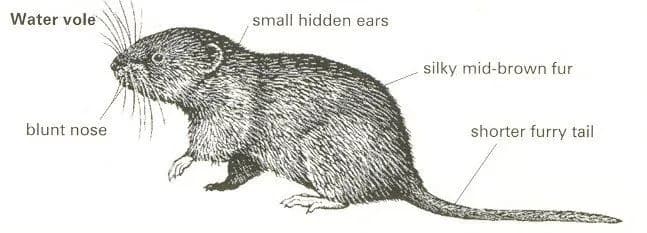
Water voles are frequently mistaken for rats because of their similar size and the fact that both are found near water. However, water voles are a fully protected species under the Wildlife and Countryside Act 1981, and it is a criminal offence to intentionally kill, injure, or disturb them or damage their burrows.
Water voles are smaller and rounder than brown rats, with a blunt face, small rounded ears almost hidden in fur, a short furry tail, and chestnut-brown fur. Their burrows are found in the banks of slow-moving rivers, canals, and ditches — always adjacent to water with a neat, round entrance hole at or just above the water line.
Key differences: water voles have much shorter tails (about half their body length), smaller ears, and rounder faces than rats. They eat vegetation — you may see neat piles of chewed grass stems near their burrows. Rats have longer tails, prominent ears, and pointed snouts. If you are unsure, do not set traps — contact a pest controller who can identify the species before any action is taken.
Need professional help with rat control? BuzzKill Pest Control offers fast, effective treatment with no call-out charge.
Brown Rat vs Black Rat — Key Differences
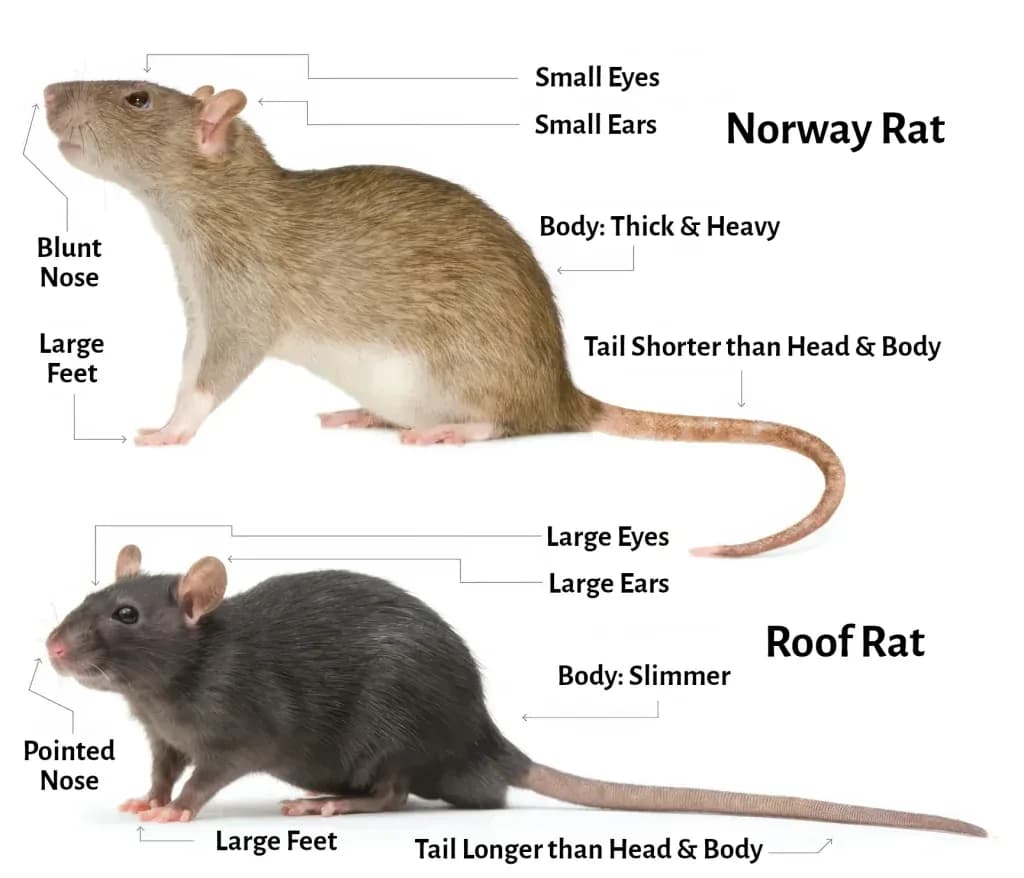
Size: Brown rats are larger (200-500g) than black rats (150-250g). Ears: Brown rats have small ears; black rats have large, prominent ears. Tail: Brown rat tails are thick, scaly, and shorter than their body; black rat tails are thin and longer than their body. Snout: Brown rats have a blunt snout; black rats have a pointed snout.
Habitat: Brown rats burrow at ground level and in sewers. Black rats climb and nest above ground. In practice, this distinction rarely matters because black rats are so uncommon in mainland UK.
Behaviour: Both species are nocturnal and cautious. Brown rats are slightly bolder and more likely to be encountered in domestic settings. Black rats are more agile and better climbers.
Does the Species Affect Treatment?
For brown rats, treatment focuses on ground-level baiting, burrow treatment, proofing at ground level, and drainage investigation. The vast majority of UK rat treatments follow this approach.
For black rats, attention shifts to upper-level harbourage — roof spaces, wall cavities, and climbing routes. Bait stations and traps need to be placed at height rather than at ground level. However, this scenario is very rare outside a few specific locations.
The critical identification issue is distinguishing rats from water voles. Killing or disturbing water voles carries serious legal penalties. If you spot a rodent near water and are unsure whether it is a rat or water vole, do not attempt treatment yourself — call a professional pest controller for identification.
Frequently Asked Questions
Are black rats common in the UK?
No. Black rats are now very rare in mainland UK, found mainly in a few port areas. The brown rat has almost completely displaced them. If you see a rat in your home or garden, it is almost certainly a brown rat.
How do I tell a rat from a water vole?
Water voles have blunt faces, small rounded ears hidden in fur, short furry tails, and chestnut-brown fur. They are always found near water. Rats have pointed snouts, prominent ears, and long scaly tails. If in doubt, do not set traps — water voles are legally protected.
How big can rats get in the UK?
Adult brown rats typically weigh 200 to 500 grams with a body length of 20 to 27cm. Exceptionally large individuals may exceed 500 grams, particularly in urban areas with abundant food. Media reports of giant rats are usually exaggerated by camera angles.
Can rats breed all year round?
Yes. Unlike some rodents, brown rats breed throughout the year if food and shelter are available. A female can produce up to 5 litters per year with 7 to 12 pups each. Breeding peaks in spring and autumn but does not stop in winter if the colony is indoors.
Are sewer rats a different species?
No. Sewer rats are brown rats (Rattus norvegicus) that happen to live in drainage systems. They are the same species as rats found in gardens and buildings. Their association with sewers makes them particularly relevant to urban rat problems linked to drainage defects.
Professional Rat Control Service
Learn more about our rat control service, pricing, treatment methods, and customer reviews.
View Rat Control Service